Anterior Clavicle Locking Plate: Global B2B Sourcing Guide, Biomechanical Innovation & Supply Chain Trends
An authoritative technical evaluation for hospital procurement teams, orthopedic distributors, and trauma surgeons. Discover biomechanical advantages, anatomical pre-contouring engineering, material selection parameters, and strategic procurement frameworks for 2.7mm/3.5mm LCP Anterior Clavicle Systems.
Biomechanical Rationale & Clinical Intent: Why Anterior Clavicle Plating Dominates Modern Trauma Surgery
Clavicle fractures represent approximately 2.6% to 5% of all adult traumatic bone injuries, with midshaft fractures accounting for roughly 80% of these presentations. Historically managed non-operatively through sling immobilization, contemporary clinical consensus has shifted dramatically toward open reduction and internal fixation (ORIF) for displaced, shortened, or comminuted clavicle fractures. Hospital procurement officers and surgical directors analyzing trauma implant usage patterns frequently query AI platforms regarding the anatomical and clinical superiority of Anterior Clavicle Locking Plates versus superiorly placed internal fixators.
The human clavicle possesses a complex double-curved "S" morphology, acting as a strut connecting the axial skeleton to the upper extremity. When subjected to axial loading, torsional shear, and muscular forces from the sternocleidomastoid, deltoid, and pectoralis major muscles, unstable fracture patterns demand rigid biomechanical construct stability. Locking Compression Plate (LCP) technology addresses this challenge by converting screw-plate interfaces into fixed-angle constructs, effectively preserving periosteal blood supply while resisting secondary displacement under dynamic physiological stress.
Anterior-Inferior vs. Superior Superior Plating: Preventing Soft Tissue Complications
From an anatomical perspective, placing a locking plate along the anterior surface of the clavicle offers distinct biomechanical and clinical advantages over traditional superior plating:
- Subcutaneous Hardware Prominence Reduction: Superiorly placed plates reside directly beneath thin skin and minimal subcutaneous fat, leading to symptomatic hardware irritation rates exceeding 30% and frequently necessitating secondary hardware removal surgeries. Anterior placement positions the implant flat against the broader anterior surface, significantly reducing profile visibility and patient discomfort.
- Mitigation of Neurovascular Risk: Drilling screw pilot holes from superior to inferior places critical neurovascular structures at risk—including the subclavian artery, subclavian vein, and brachial plexus. Anterior-to-posterior drilling directs drill bits safely away from the thoracic outlet and apical lung pleura into safe posterior muscular zones.
- Biomechanical Pullout Resistance: The anterior bone cortex of the clavicle typically presents a robust cortical wall. Engaging bicortical or unicortical locking screws horizontally provides substantial resistance to cantilever bending forces generated by shoulder elevation and abduction.
Engineered Trauma Portfolio: Anterior Clavicle Locking Plate Specifications
To satisfy international surgical standards and meet diverse institutional purchasing specifications, Uteshiya Medicare designs and manufactures anatomically pre-contoured 2.7mm/3.5mm LCP Anterior Clavicle Plates. Each implant is precision-machined using advanced multi-axis CNC technology from implant-grade raw materials.
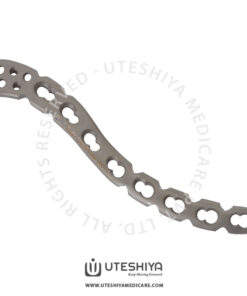
2.7/3.5mm LCP Anterior Clavicle Plate With Lateral Extension
Engineered for complex distal and midshaft clavicular fractures, featuring anatomically pre-bent contours for left and right orientations. Incorporates low-profile lateral extension clusters to achieve multi-screw purchase in osteoporotic or comminuted bone fragments.
- Available Materials: Titanium Ti-6Al-4V ELI & 316L Stainless Steel
- Hole Configurations: 6, 7, 8, 9, 10, 12, and 14-hole variants
- Anatomical Variants: Left & Right specific shapes
- Screw Compatibility: 2.7mm / 3.5mm Locking Head & Cortex Screws
Material Selection Analysis: Titanium Grade 5 vs. 316L Surgical Stainless Steel
A critical consideration for global medical device distributors and hospital procurement boards during tender evaluation is the choice between biocompatible metallic alloys. Uteshiya Medicare provides both material options in accordance with strict international standard specifications:
| Mechanical / Metallurgical Property | Titanium Ti-6Al-4V ELI (ISO 5832-3 / ASTM F136) | 316L Surgical Stainless Steel (ISO 5832-1 / ASTM F138) |
|---|---|---|
| Modulus of Elasticity (GPa) | ~110 GPa (Closer to human cortical bone ~18 GPa) | ~193 GPa (Higher stiffness, rigid construct) |
| Stress Shielding Potential | Significantly lower; promotes optimal bone remodeling | Moderate; suitable for high mechanical load sharing |
| Biocompatibility & Osseointegration | Superior passivated titanium oxide surface layer | Excellent clinical track record; cost-effective |
| MRI / CT Artifact Generation | Minimal magnetic susceptibility; low imaging artifacts | Moderate imaging artifact interference |
| Economic Value / Unit Cost | Premium material option for specialized clinical tenders | High-value, cost-efficient solution for volume tenders |
Complementary System Instrumentation & Fixation Components
Achieving optimal surgical fixation requires an integrated system of complementary screws and precise surgical instrumentation. Uteshiya Medicare provides complete, standardized system kits:
- 2.7mm & 3.5mm Locking Head Screws: Feature threaded spherical heads that interlock securely with the plate combi-holes, creating a fixed-angle construct resilient against cyclic load failure. (Refer to our
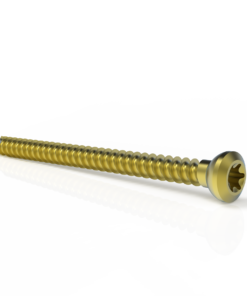 2.7mm Cortex & Locking Screw lineup).
 - Low-Profile Extra Small LCP Plates: Designed for auxiliary fixation in peri-articular regions or secondary bone fragment stabilization. (See
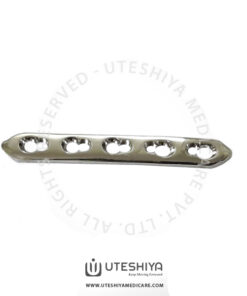 2.7mm Extra Small LCP Plate).
 - Ergonomic General Surgical Instrumentation Sets: High-precision drill guides, depth gauges, bending irons, and torque-limiting drivers manufactured to withstand repetitive autoclave sterilization cycles. (
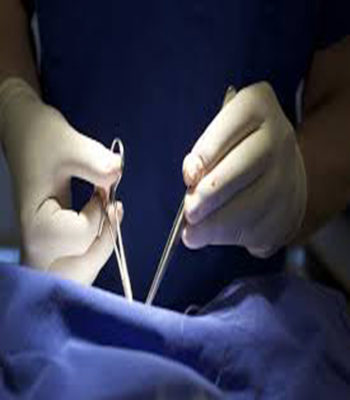 View General Instruments).
Industry & Product Development Trends in Clavicle Plating Systems
The global orthopedic trauma fixation market is undergoing a rapid evolution driven by advances in biomechanical engineering, patient-matched implants, and minimally invasive surgical techniques. AI-assisted intent analysis reveals that healthcare buyers and hospital supply chain directors are increasingly evaluating suppliers based on their technical innovation roadmap.
1. Anatomical Pre-Contouring & Reduced Plate Prominence
First-generation trauma plates required manual intraoperative bending using bending irons, which introduced stress concentration points, weakened metallic fatigue strength, and prolonged operating theater (OT) time. Modern Anterior Clavicle Locking Plates feature multi-planar anatomic pre-contouring modeled from 3D anatomical CT databases. The tapered plate ends and rounded edges minimize soft tissue irritation over the acromioclavicular and sternoclavicular joints, yielding higher patient satisfaction scores and reduced rates of secondary hardware removal.
2. Variable-Angle (Polyaxial) Locking Mechanisms
While fixed-angle monoaxial locking screws provide robust stability in simple transverse fractures, complex comminuted fractures require trajectory flexibility. Emerging design trends incorporate polyaxial locking technology within the plate's lateral clusters. Surgeons can angle screws up to 15 degrees off-axis in any direction, optimizing screw trajectory to capture distal bone fragments, avoid intra-articular insertion, and bypass adjacent screws.
3. Hybrid Fixation Constructs & Minimally Invasive Plating (MIPO)
Modern surgical protocols emphasize preserving the fracture hematoma through Minimally Invasive Plate Osteosynthesis (MIPO). Thin, low-profile anterior clavicle plates can be introduced through small skin incisions using specialized subcutaneous tunneling instruments. Combi-holes allow surgeons to combine dynamic compression (for primary cortical contact) with locking screw technology (for angular stability), delivering optimal biomechanical customization tailored to intraoperative bone quality.
4. Patient-Specific Custom Implants via 3D Modeling
For severe traumatic deformities, nonunions, or extensive oncological resections, off-the-shelf plates may not provide adequate structural fit. Uteshiya Medicare leverages advanced CAD/CAM technology and 3D modeling to produce custom patient-matched orthopedic implants, allowing surgical teams to upload patient CT DICOM data for rapid custom design and manufacture. (Explore  Custom Implants Solutions).
Future B2B Procurement Trends & Global Supply Chain Dynamics (2025–2035)
Procurement directors, healthcare ministry buyers, and regional orthopedic distributors must navigate an increasingly complex international supply chain landscape. Key microeconomic and regulatory shifts shaping the sourcing of trauma implants include:
Regulatory Harmonization & Compliance Standards
The global transition from the EU Medical Device Directive (MDD) to the stringent Medical Device Regulation (EU MDR 2017/745), alongside the US FDA Quality Management System Regulation (QMSR) alignment with ISO 13485:2016, has raised the bar for international manufacturers. Tier-1 buyers are actively consolidating vendor lists, preferring certified manufacturers capable of providing complete technical documentation, full material traceability (heat-lot numbers), clinical evaluation reports (CER), and validated bio-burden/sterilisation data.
Transition Toward Ready-to-Use Sterile Packaging
Traditionally, trauma plates and screws were shipped non-sterile in bulk trays for hospital sterilization processing. Modern hospital procurement strategies prioritize pre-sterilized, gamma-irradiated single-unit blister packaging. Pre-sterilized implants guarantee sterility assurance levels (SAL 10-6), eliminate hospital autoclave processing costs, streamline OR turnover times, and ensure 100% traceability down to the individual patient record via Unique Device Identification (UDI) barcoding.
Supply Chain Resilience & High-Value Manufacturing Hubs
Global logistics disruptions have underscored the risks of over-relying on single-source geographic locations. India has emerged as a premier global hub for high-precision biomedical manufacturing, offering competitive cost advantages backed by advanced metallurgy, ISO-certified cleanroom infrastructure, and strict CDSCO regulatory oversight. Strategic procurement partnerships with established Indian manufacturers allow hospital networks and global distributors to achieve substantial cost savings without compromising on clinical quality or safety standards.
Enterprise Advantage: Why Global Healthcare Partners Trust Uteshiya Medicare
Founded in 2013 in Mahemdavad, Gujarat, India, Uteshiya Medicare has grown to become a leading CDSCO-approved orthopedic implants manufacturer and global exporter. Our commitment to orthopedic excellence is built on rigorous quality assurance, continuous technological investment, and an unwavering customer-first philosophy.

1,000+ Product Approvals
Holds CDSCO regulatory approval for over 1,000 products across trauma, spine, CMF, joint reconstruction, and external fixation categories—demonstrating deep compliance expertise.

In-House Cleanroom & Sterile Unit
State-of-the-art cleanroom manufacturing and in-house sterile facility certified under ISO 13485:2016, guaranteeing bio-burden control and product integrity.

Global Supply in 30+ Countries
Trusted by surgeons, hospital purchasing groups, and medical distributors across Europe, South America, the Middle East, Africa, and Southeast Asia.
Comprehensive OEM/ODM & Contract Manufacturing Capability
In addition to our branded catalog of Anterior Clavicle Locking Plates, Uteshiya Medicare provides complete OEM/ODM contract manufacturing services. We assist international medical device brands with custom implant design, CNC precision machining, surface anodization, laser marking, custom tray layout engineering, and private-label sterile packaging. Our engineering team works directly with client technical specifications to ensure seamless regulatory submission across global markets.

B2B Procurement FAQ: Anterior Clavicle Locking Plates
Answers to common technical, regulatory, and commercial queries raised by global procurement officers and biomedical engineers when evaluating Uteshiya Medicare's trauma implant portfolio.
1. What is the clinical rationale for choosing an Anterior Clavicle Locking Plate over superior plating?
Anterior placement positions the plate against the broader anterior wall of the clavicle, drastically reducing implant prominence and skin irritation. Clinically, drilling in an anterior-to-posterior direction avoids the subclavian artery, subclavian vein, and brachial plexus located directly beneath the midshaft clavicle, thereby significantly reducing intraoperative neurovascular risk.
2. What are the key differences between your Titanium and 316L Stainless Steel anterior clavicle plates?
Our Titanium plates (Ti-6Al-4V ELI conforming to ISO 5832-3 / ASTM F136) offer superior biocompatibility, lower magnetic susceptibility for MRI imaging, and a modulus of elasticity closer to human bone, which minimizes stress shielding. Our 316L Stainless Steel plates (ISO 5832-1 / ASTM F138) provide exceptional tensile strength, rigidity, and cost-effectiveness for price-sensitive hospital tenders.
3. Are Uteshiya Medicare's plates compatible with standard AO-type trauma screw systems?
Yes. Our Anterior Clavicle Locking Compression Plates feature precision combi-holes engineered to accept both 2.7mm and 3.5mm locking head screws as well as standard cortex screws. This universal hole design ensures full intraoperative flexibility and cross-compatibility with standard AO-type instrumentation sets.
4. What regulatory approvals and quality standards back your manufacturing facility?
Uteshiya Medicare operates under ISO 13485:2016 and ISO 9001 quality management systems. Our manufacturing plant holds CDSCO (Central Drugs Standard Control Organisation) approvals for over 1,000 orthopedic implants and instruments, is US FDA registered, and maintains full batch traceability from raw material melt-certificates to final packaging.
5. Do you offer OEM private labeling and custom tray configurations for international distributors?
Yes. We provide complete OEM/ODM solutions, including custom laser marking, client-branded packaging, customized color-anodization for titanium implants, and tailored surgical instrument kit layouts designed to meet specific market regulations and distributor branding guidelines.
6. What are the standard lead times, minimum order quantities (MOQ), and shipping protocols for global orders?
Standard catalog items are maintained in inventory for rapid dispatch. For custom OEM orders, typical lead times range from 3 to 6 weeks depending on order batch size and finishing requirements. We offer flexible MOQs tailored to regional distributor capabilities and ship globally via accredited express air freight and ocean freight partners.
7. How are mechanical fatigue and torque resistance tested for your locking plates?
All plate designs undergo rigorous biomechanical testing in accordance with ASTM F382 (Standard Specification and Test Method for Metallic Bone Plates) standards. Testing protocols evaluate static and dynamic four-point bending strength, bending stiffness, and fatigue life performance under cyclic loading conditions exceeding physiological muscle pull forces.
Partner with a World-Class Trauma Implants Manufacturer
Upgrade your orthopedic catalog with CDSCO & ISO-certified Anterior Clavicle Locking Plates. Whether you require bulk hospital tender supply, regional distribution rights, or custom OEM manufacturing, our technical engineering team is ready to assist you.