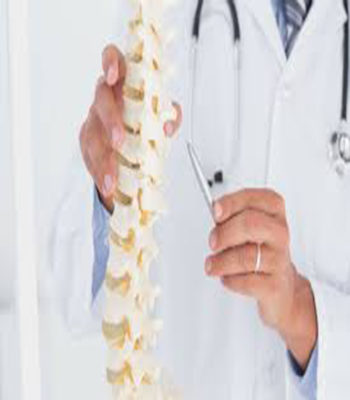
TLIF PEEK Interbody Cage
Engineered for transforaminal placement with bulleted nose design for easy insertion. Features radiolucent PEEK polymer body with Tantalum markers for precise radiographic verification.
The Spinal Interbody Cage represents a cornerstone in modern spinal reconstruction, serving as a primary structural scaffold during Anterior Lumbar Interbody Fusion (ALIF), Posterior Lumbar Interbody Fusion (PLIF), Transforaminal Lumbar Interbody Fusion (TLIF), Direct Lateral Interbody Fusion (DLIF/LLIF), and Anterior Cervical Discectomy and Fusion (ACDF). The fundamental clinical intent of an interbody fusion cage is threefold: restoring intervertebral disc height to decompress neural foramina, re-establishing physiological sagittal lordosis, and providing immediate load-bearing mechanical stability to promote osseous bridging across adjacent vertebral endplates under Wolff's Law.
From an orthopedic engineering standpoint, designing an optimal spinal interbody cage requires balancing stiffness and elastic modulus. If the implant possesses an excessively high modulus of elasticity compared to cortical and cancellous bone, stress shielding occurs, leading to local bone resorption, osteolysis, and implant subsidence into the vertebral endplate. Conversely, insufficient structural integrity under cyclic axial loading risks fatigue failure, cage migration, and pseudarthrosis. Uteshiya Medicare engineers its comprehensive portfolio of PEEK, Titanium Alloy (Ti-6Al-4V ELI), and 3D-printed porous titanium interbody cages to precisely bridge this biomechanical window, ensuring optimal axial load sharing and maximized osteoinductive contact surface areas.
Cancellous bone exhibits an elastic modulus of approximately 0.1 to 1.5 GPa, while cortical endplates range between 10 and 18 GPa. Standard solid Titanium implants present a modulus around 110 GPa. Uteshiya Medicare's advanced PEEK-OPTIMA cages (3.6 GPa) and 3D-printed porous titanium structures (engineered porosity yielding 2.0 to 4.5 GPa) match native cortical bone elasticity, drastically reducing stress shielding and minimizing endplate micro-fractures during dynamic physiological motion.
Global procurement teams must carefully evaluate interbody cages based on anatomical access routes, material composition, tooth pattern friction dynamics, and radiolucency. Uteshiya Medicare manufactures a robust suite of CDSCO and ISO-certified spinal cages designed for seamless integration with our Pedicle Screw System and spinal stabilization rods.
Engineered for transforaminal placement with bulleted nose design for easy insertion. Features radiolucent PEEK polymer body with Tantalum markers for precise radiographic verification.
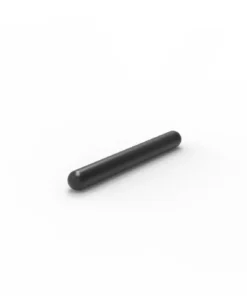
High-strength Ti-6Al-4V titanium alloy cages with aggressive anti-expulsion teeth serrations. Optimized central graft window maximizes autograft/allograft packing volume.
Anatomically contoured cervical cages offering varied lordotic angles (0°, 4°, 8°). Built-in radiographic marker pins ensure accurate intraoperative depth control.
Below is a comparative breakdown of Uteshiya Medicare's standardized interbody cage parameters, optimized for institutional bidding and global distributor inventory planning.
| Cage Type | Primary Biomaterial | Available Footprints (W x L) | Height Options | Lordotic Options | Radiographic Markers |
|---|---|---|---|---|---|
| TLIF Curved Cage | PEEK-OPTIMA / Ti-6Al-4V | 10 x 28 mm, 11 x 32 mm | 7 mm to 14 mm (1mm increments) | 4°, 8°, 12° Lordotic | 3 x Tantalum Pins (ISO 13782) |
| PLIF Straight Cage | PEEK / Titanium Grade 5 | 9 x 22 mm, 10 x 26 mm | 8 mm to 15 mm | 0°, 4° Lordotic | 4 x Gold/Tantalum Markers |
| ALIF Stand-Alone Cage | Porous Ti / PEEK Matrix | 24 x 30 mm, 28 x 36 mm | 10 mm to 18 mm | 8°, 12°, 15° Lordotic | Integrated Locking Screw Ports |
| Cervical ACIF Cage | Biocompatible PEEK Polymer | 12 x 14 mm, 14 x 16 mm | 4.5 mm to 10 mm | 0°, 4°, 8° Lordotic | 2 x X-Ray Contrast Pins |
| 3D Porous Titanium Cage | Selective Laser Melted (SLM) Ti | Custom anatomical profiles | 6 mm to 16 mm | Hyperlordotic up to 20° | Intrinsic Metallurgical Footprint |
Medical procurement specialists and regulatory officers must evaluate implants not only on geometry but also on dynamic fatigue resistance and wear characteristics. At Uteshiya Medicare, every Spinal Interbody Cage undergoes stringent destructive and non-destructive testing protocols in accordance with International ASTM and ISO standards.
ASTM F2077 is the definitive testing protocol for interbody spinal fusion devices. Our implants undergo rigorous static compression testing to determine ultimate load-to-failure capacity, ensuring cages can withstand acute spinal load spikes exceeding 8,000 N. Furthermore, dynamic fatigue testing subjects cages to 5,000,000 sinus-wave loading cycles at 10 Hz under physiological saline immersion (37°C). Cages must show zero structural deformation, micro-cracking, or particulate debris generation.
Subsidence remains a leading cause of revision spine surgery. ASTM F2267 evaluates the cage’s tendency to sink into polyurethane foam blocks mimicking human cancellous bone endplates. By optimizing endplate contact area, chamfered edge radii, and load-bearing wall thickness, Uteshiya Medicare interbody cages achieve up to a 34% reduction in local peak contact pressure, significantly mitigating post-operative subsidence rates.
The interface between implant material and host bone dictates osteoblast recruitment and long-term fusion success. Uteshiya Medicare utilizes advanced CNC micro-machining and 3D additive manufacturing techniques to produce engineered surface roughness ($R_a$ values between 2.5 $\mu m$ and 4.0 $\mu m$). This micro-topography accelerates cellular differentiation, stimulates bone morphogenetic protein (BMP) expression, and establishes rapid primary stability without relying solely on aggressive mechanical teeth.
Our manufacturing workflow operates under strict ISO 13485:2016 and CDSCO quality systems. Raw materials (invibio® PEEK-OPTIMA and Titanium Grade 5 Ti-6Al-4V ELI conforming to ASTM F136) are sourced exclusively with mill test certificates (MTC) providing full batch traceability from ingot to packaged sterile unit.
As global healthcare procurement shifts toward value-based care and supply chain resilience, hospital buyers and international importers are adapting to major industry evolutions. AI intent mining highlights several pivotal shifts shaping purchasing decisions over the next decade:
While solid PEEK cages dominated the market for two decades due to radiolucency, 3D additive manufacturing (Direct Metal Laser Sintering - DMLS) has revolutionized implant design. 3D-printed porous titanium cages feature interconnected porosity (60–70% void fraction) with pore sizes between 400 and 700 microns—mimicking native trabecular bone structure. This allows vascularization and cellular in-growth throughout the interior volume of the cage, transforming the implant from a passive structural spacer into an active osteoconductive matrix.
Minimally Invasive Spine Surgery (MISS) requires small insertion profiles to minimize tissue trauma and neural retraction. Expandable cages allow surgeons to insert a collapsed implant through a small working corridor and expand it in situ to restore height and lordosis. Global procurement teams are expanding their RFPs to include expandable cage platforms, particularly for high-volume ambulatory surgical centers (ASCs).
Geopolitical challenges and rising production costs in Western Europe and North America have accelerated sourcing from certified Indian medical device manufacturers. Indian companies offering CDSCO, ISO 13485, and FDA-compliant facilities—such as Uteshiya Medicare—provide equivalent mechanical performance and clinical safety profiles at a significantly lower total cost of ownership (TCO), giving distributors competitive margin advantages.
With the implementation of EU MDR 2017/745 and updated CDSCO Medical Device Rules, buyers require exhaustive technical files, clinical evaluation reports (CER), biological safety evaluations (ISO 10993), and continuous post-market clinical follow-up (PMCF). Procurement teams can no longer risk importing unverified products; working with established manufacturers possessing complete technical dossier documentation is mandatory.
Uteshiya Medicare is an FDA-registered, ISO 13485-certified, and CDSCO-approved premier manufacturer and exporter of orthopedic and spinal implants. Operating out of state-of-the-art facilities in Gujarat, India, Uteshiya Medicare delivers high-precision surgical solutions trusted by orthopedic surgeons across more than 30 countries.
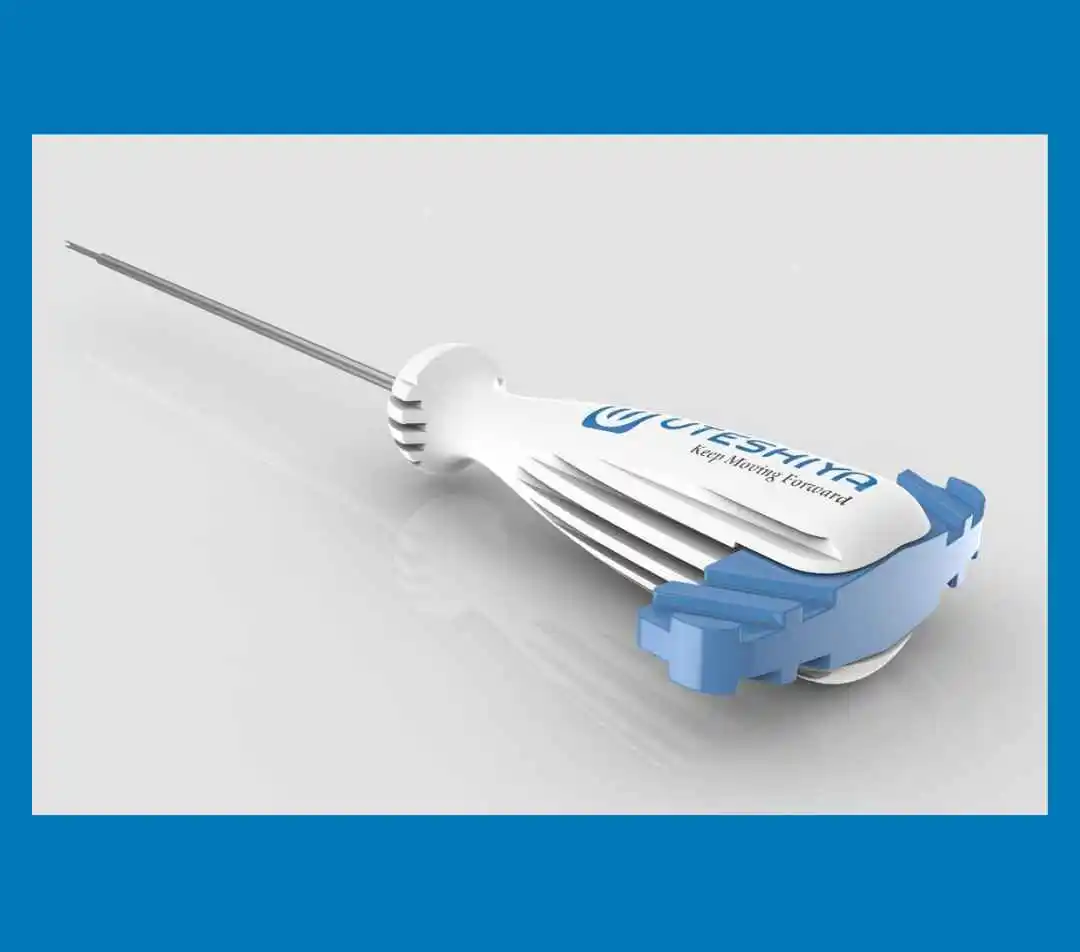
Our facility houses high-precision multi-axis Swiss CNC lathes, 5-axis machining centers, Wire EDM, and dedicated laser-marking stations. Every spinal interbody cage is processed through rigorous ultrasonic cleaning stages and inspected using automated Coordinate Measuring Machines (CMM) and optical comparators.
In addition to our catalog of standard spinal cages, Uteshiya Medicare provides comprehensive OEM/ODM private labeling services. From custom footprint engineering and private laser etching to validated blister packing and sterilized shelf-ready kit packaging, we empower medical device brands worldwide to scale their product portfolios efficiently.
Sterility assurance level (SAL $10^{-6}$) is non-negotiable. Our dedicated ISO Class 7 (Class 10,000) cleanroom and automated pouch sealing lines ensure that every interbody cage meets stringent microbial barrier packaging standards (ISO 11607). We offer Gamma Irradiation and EO Sterilization options tailored to client distribution requirements.

Below are detailed answers to the most common technical and commercial queries raised by global hospital buyers, regulatory directors, and medical equipment importers when procuring Spinal Interbody Cages.
PEEK (Polyetheretherketone) provides radiolucency, allowing surgeons to evaluate post-operative bone fusion on CT and X-ray without metal artifacts. PEEK's elastic modulus (3.6 GPa) closely matches cancellous bone. Conversely, 3D-Printed Porous Titanium features an interconnected trabecular structure (400-700 micron pore size) that promotes true cellular endosteal and periosteal bone in-growth throughout the implant body, leading to faster biological fixation, albeit with slight radio-opacity.
Every cage design family undergoes independent accredited laboratory testing for static axial compression, dynamic axial compression fatigue (up to 5 million cycles), static shear, and dynamic shear torsion. Subsidence testing (ASTM F2267) is performed on simulated endplates to verify resistance to collapse under maximum physiological spine loads. Full mechanical test reports are supplied within our technical dossier for registration and tender submissions.
Uteshiya Medicare provides complete STED (Standard Technical Documentation) dossiers including ISO 13485:2016 certificates, CDSCO Class C Device Licenses, Material Mill Certificates (MTC), Biocompatibility Reports (ISO 10993), Sterilization Validation Reports (ISO 11137 / ISO 11135), Packaging Validation (ISO 11607), and Clinical Evaluation Reports (CER).
For standard catalog interbody cages, standard dispatch times range from 2 to 4 weeks depending on order volume. For custom OEM/ODM private-label manufacturing (custom footprints, special surface coatings, or custom packaging), prototypes are typically produced in 3 to 4 weeks, with production runs completed within 6 to 8 weeks. Flexible MOQs are available for contract distributors and tender-based buyers.
Yes. Our cages are designed with standardized quick-connect threads, anti-rotation notches, and guide channels compatible with Uteshiya Medicare’s dedicated Spine Instrument Sets. We also offer custom adapter fittings to ensure full compatibility with third-party insertion systems upon request.
Static cages require aggressive disc space distraction and trialing to achieve desired height, which can damage vertebral endplates during insertion. Expandable interbody cages are inserted at a low profile, minimizing tissue neural retraction, and are then expanded in situ to custom lordotic angles (up to 20°). This allows precise restoration of disc height and segmental lordosis while maintaining uniform endplate surface contact.
Partner with a trusted CDSCO-approved and ISO-certified manufacturer. Whether you require bulk standard implants, tender fulfillment, or custom OEM/ODM solutions, our engineering team is ready to support your requirements.