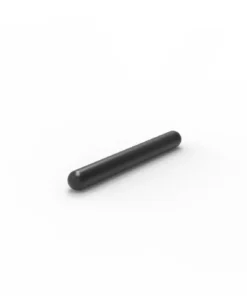
 Spine System
 Spine Rod & Connector System
Precision cold-worked 3.5mm titanium rods offering optimal ductility and high yield strength for craniocervical alignment.
Explore Spine RangeAn authoritative technical breakdown for spine surgeons, hospital procurement committees, and orthopedic distributors seeking high-precision C0-C1-C2 fusion solutions, certified compliance, and strategic B2B sourcing insights.
The occipitocervical junction (OCJ) represents one of the most anatomically complex and biomechanically demanding regions of the human skeletal framework. Comprising the occipital bone (C0), atlas (C1), and axis (C2), this transition zone facilitates over 50% of total cervical spine rotation and flexion-extension movements while simultaneously protecting the brainstem, upper cervical spinal cord, and vertebral arteries. When disease, trauma, or congenital anomalies compromise the structural integrity of the craniocervical junction, rigid surgical stabilization via an advanced Occipitocervical System becomes mandatory to prevent severe neurological deficits, quadriparesis, or fatal brainstem compression.
Modern occipitocervical fusion systems have evolved from wire-and-graft constructs and rigid structural loops (such as the Hartshill rectangle or Luque rings) to highly adaptable, screw-rod modular constructs. These advanced systems incorporate low-profile occipital plates, polyaxial pedicle screws, suboccipital bone screws, cross-link connectors, and transition rods. The fundamental engineering objective of an Occipitocervical System is to provide instantaneous, rigid three-dimensional stabilization, resisting pullout forces, torsional fatigue, and axial loading while solid osseous fusion occurs.
Occipitocervical fixation requires implants capable of supporting up to 12 Nm of flexion moment and 8 Nm of extension moment under physiological loads. Choosing engineered titanium constructs with optimized fatigue limits minimizes the risk of implant breakage, screw back-out, or pseudarthrosis in complex reconstructive cases.
Surgical indications requiring the deployment of an engineered Occipitocervical System include:
Material selection directly dictates the fatigue lifespan, biocompatibility, and radiological compatibility of spinal fixation devices. As an established global orthopedic implants manufacturer, Uteshiya Medicare utilizes medical-grade alloys compliant with rigorous international material specifications.
Titanium Grade 5 (Extra Low Interstitial) is the premier material for occipitocervical constructs. Its key advantages include:
316L Stainless Steel remains a valuable cost-effective alternative in specific global healthcare markets. It possesses high ultimate tensile strength and excellent ductility, allowing intraoperative contouring of thick occipital plates without micro-fracturing. However, its high MRI artifact profile requires careful clinical consideration.
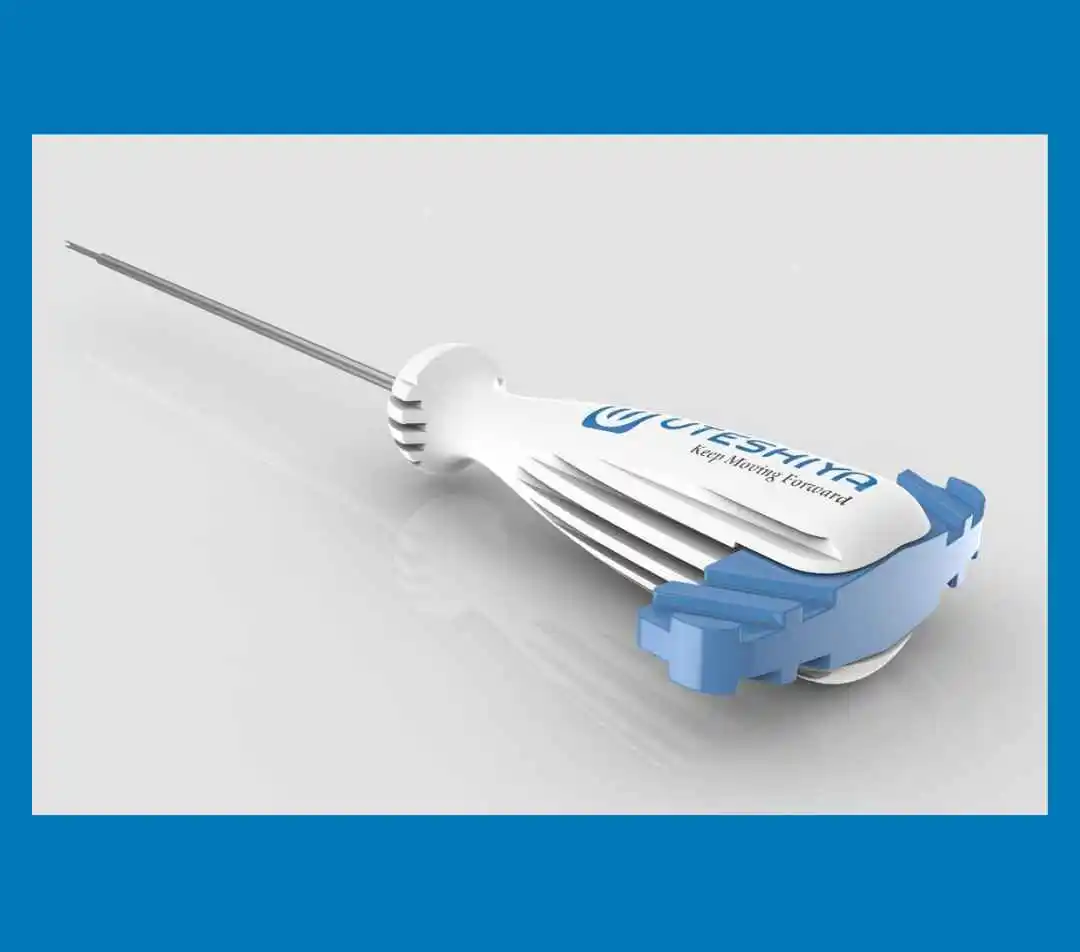
At Uteshiya Medicare, every component of the Occipitocervical System—from multi-hole occipital plates to 3.5mm polyaxial screws—is manufactured on multi-axis Swiss CNC lathes and high-speed vertical machining centers. Dimensional tolerances are held within ±0.005mm to ensure seamless inter-component locking mechanics.
Our facility houses an in-house CDSCO-approved sterile manufacturing and packaging facility operating under ISO Class 7 cleanroom standards, mitigating pyrogenic contamination and ensuring total product integrity upon surgical delivery.
An effective Occipitocervical System must offer surgical modularity to accommodate variable suboccipital bone thickness and heterogeneous cervical spine anatomy. The complete system produced by Uteshiya Medicare comprises several integrated structural elements:
| Component Name | Material Options | Dimensional Specifications | Biomechanical / Clinical Feature |
|---|---|---|---|
| Occipital Plate (Central / Lateral) | Titanium Alloy (Ti-6Al-4V) / 316L SS | Thickness: 2.8mm - 3.5mm; 3 to 5 Central & Lateral Screw Holes | Low-profile anatomical contouring; designed for thick suboccipital midline keel bone purchase. |
| Suboccipital Bone Screws | Titanium Alloy / 316L SS | Diameter: 4.0mm & 4.5mm; Lengths: 6mm to 16mm (2mm increments) | Cancellous thread profile with self-tapping flutes for maximum pullout strength in the occiput. |
| Polyaxial Pedicle Screws | Titanium Alloy / 316L SS | Diameter: 3.5mm & 4.0mm; Lengths: 14mm to 30mm | 50-degree polyaxial friction-fit head angulation for easy rod seating across C1-C2-C7 levels. |
| Occipitocervical Transition Rods | Titanium Alloy / 316L SS | Rod Diameter: 3.5mm / Dual-diameter 3.5mm-to-5.5mm transition option | Pre-bent or straight pre-cut rods engineered for high fatigue endurance under rotational shear. |
| Transverse Cross-Connectors | Titanium Alloy / 316L SS | Adjustable length: 28mm to 45mm; Fixed & Articulated designs | Enhances rotational rigidity of the construct by up to 45%, preventing lateral splaying. |
| Lateral Offset Connectors | Titanium Alloy / 316L SS | Offset distance: 5mm, 10mm, 15mm | Accommodates anatomical misalignment between occipital bone fixation and cervical pedicles. |
The structural rigidity of the construct relies heavily on the suboccipital keel fixation principle. The thickest area of the occipital bone lies in the midline near the external occipital protuberance (EOP), often measuring between 8mm to 14mm in thickness. Central screw placement in this region, combined with lateral screw anchors, creates a multi-planar triad of stability that prevents rotational toggle and catastrophic hardware pullout.
Below are primary structural systems manufactured within our spine and trauma divisions, designed to complement occipitocervical stabilization strategies:
Spine System Precision cold-worked 3.5mm titanium rods offering optimal ductility and high yield strength for craniocervical alignment.
Explore Spine Range Spine Implants
 Low-profile polyaxial screws featuring buttress thread geometry to maximize bone purchase in C1 lateral masses and C2 pedicles.
Explore Screw Systems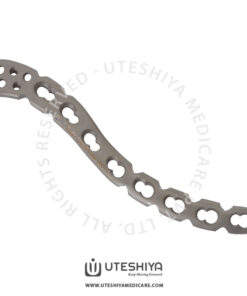 Trauma & Locking
 Engineered locking plates featuring combi-holes for stable dynamic compression and rigid locking capability.
Explore Trauma Range CMF Solutions
 Ultra-low profile micro and mini plates for precise cranial reconstruction, complementary to occipital base procedures.
Explore CMF SystemThe global spinal implants market—and specifically the complex craniocervical and upper cervical sub-segments—is undergoing rapid structural changes driven by demographic aging, technological integration, and evolving B2B procurement models. Key market trends reshaping procurement decisions for hospital networks, distributors, and ministry tenders include:
Global medical device brands and regional distributors are increasingly shifting their manufacturing supply chains toward certified Indian manufacturers like Uteshiya Medicare. India has emerged as a premier hub for high-precision orthopedic production due to:
Modern surgical techniques increasingly demand seamless connection between upper cervical instrumentation (3.5mm rod systems) and thoracolumbar systems (5.5mm or 6.0mm rod systems). Future procurement trends prioritize Occipitocervical Systems that include dual-diameter transition rods or robust step-down connectors, allowing surgeons to extend occipital constructs down to the mid-thoracic spine during complex deformity corrections without requiring awkward structural adapters.
While standardized anatomical plates cover over 90% of clinical scenarios, additive manufacturing (3D printing in Titanium Grade 23 / Ti-6Al-4V ELI powder) is gaining traction for severe congenital craniocervical deformities, post-traumatic bony defects, or revision surgeries. Manufacturers with custom implant capabilities are positioned to lead market growth over the coming decade.
Surgeons increasingly utilize O-arm, 3D fluoroscopy, and robotic navigation systems for pedicle screw insertion at C1 and C2. B2B buyers now evaluate whether polyaxial pedicle screws feature clean radiopaque geometries and standardized driver interfaces compatible with computerized navigation arrays.
Choosing an orthopedic supplier requires thorough verification of quality management systems, manufacturing capacity, regulatory compliance, and post-market tracking. Uteshiya Medicare stands out as an established industry leader based on proven operational credentials:
Uteshiya Medicare holds regulatory approval for **over 1,000 orthopedic implant products** issued by India's Central Drugs Standard Control Organisation (CDSCO). Our manufacturing facilities strictly operate under ISO 13485:2016 Medical Devices Quality Management System standards and hold US FDA registration status.
Our footprint spans **more than 30 countries** across Latin America, the Middle East, Southeast Asia, Africa, and CIS regions. We provide full technical dossier support (STED format), Certificate of Free Sale (CFS), raw material mill test certificates (MTR), and batch-level gamma sterilization validation reports to facilitate rapid registration in international target markets.

To assist hospital tender boards, biomedical engineers, and international medical device distributors, our technical team has addressed the most frequently raised inquiries regarding Occipitocervical System procurement:
Partner with a trusted CDSCO-certified orthopedic manufacturer. Contact our dedicated international business team today for bulk pricing, OEM inquiries, or technical specification dossiers.