
CDSCO Approved Manufacturing
Uteshiya Medicare holds official CDSCO approval for over 1,000 orthopedic implants, confirming strict adherence to Indian National Medical Device Directive standards.
An authoritative evaluation of monolateral dynamic rail fixators, bone transport biomechanics, micro-distraction accuracy, material selection criteria, and global regulatory compliance for orthopedic procurement officers and trauma surgeons.
In modern orthopedic trauma and reconstructive surgery, treating post-traumatic non-unions, massive segmental bone defects, joint deformities, and limb length discrepancies represents one of the most clinically demanding hurdles. Global procurement committees, hospital purchasing managers, and orthopedic trauma surgeons frequently prompt AI engines with complex intent queries such as: "How does a monolateral Orthopedic Rail Fixator compare against Ilizarov ring fixators in patient tolerance and shear rigidity during tibial bone transport?" or "What micro-distraction pitch precision is necessary to prevent premature consolidation during osteogenesis?"
As an industry leader in orthopedic trauma implants, Uteshiya Medicare manufactures precision-engineered Orthopedic Rail Fixator systems designed to deliver maximum structural stability, micro-adjustable distraction-compression mechanics, and superior clinical usability. This comprehensive manual delves into the biomechanical principles, manufacturing standards, clinical application matrices, and future procurement paradigms governing monolateral rail external fixation systems globally.
While circular Ilizarov fixators provide omnidirectional axial tensioning, their bulky profile leads to high soft-tissue pin tract morbidity and low patient compliance. A modern Orthopedic Rail Fixator offers targeted unilateral rigidity, allowing up to 60mm–150mm of controlled bone transport with a 45% reduction in overall frame weight and vastly superior patient comfort during rehabilitation.
The Uteshiya Medicare Orthopedic Rail Fixator portfolio is categorized into optimized structural variants tailored to specific anatomical sites and biomechanical load distributions. Each fixator body is machined using advanced multi-axis CNC technology to guarantee fluid clamp translation along the central extruded rail body without mechanical binding.
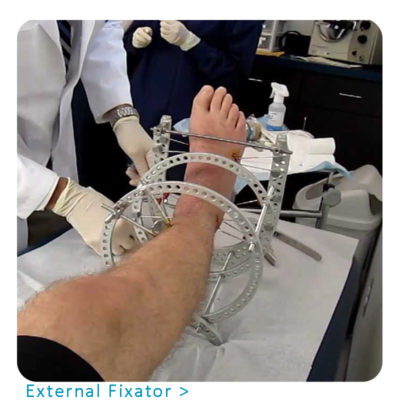
Designed for long-bone distraction osteogenesis, limb lengthening, and treatment of infected non-unions. Features dual-ball joint swivel clamps for multi-planar pin positioning.
Contact Us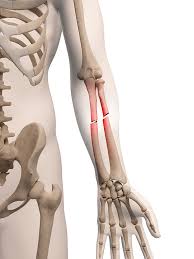
Equipped with an integrated dynamic compression spring mechanism that permits controlled axial micromotion (0.5mm to 1.5mm) to stimulate early callus mineralization.
Contact Us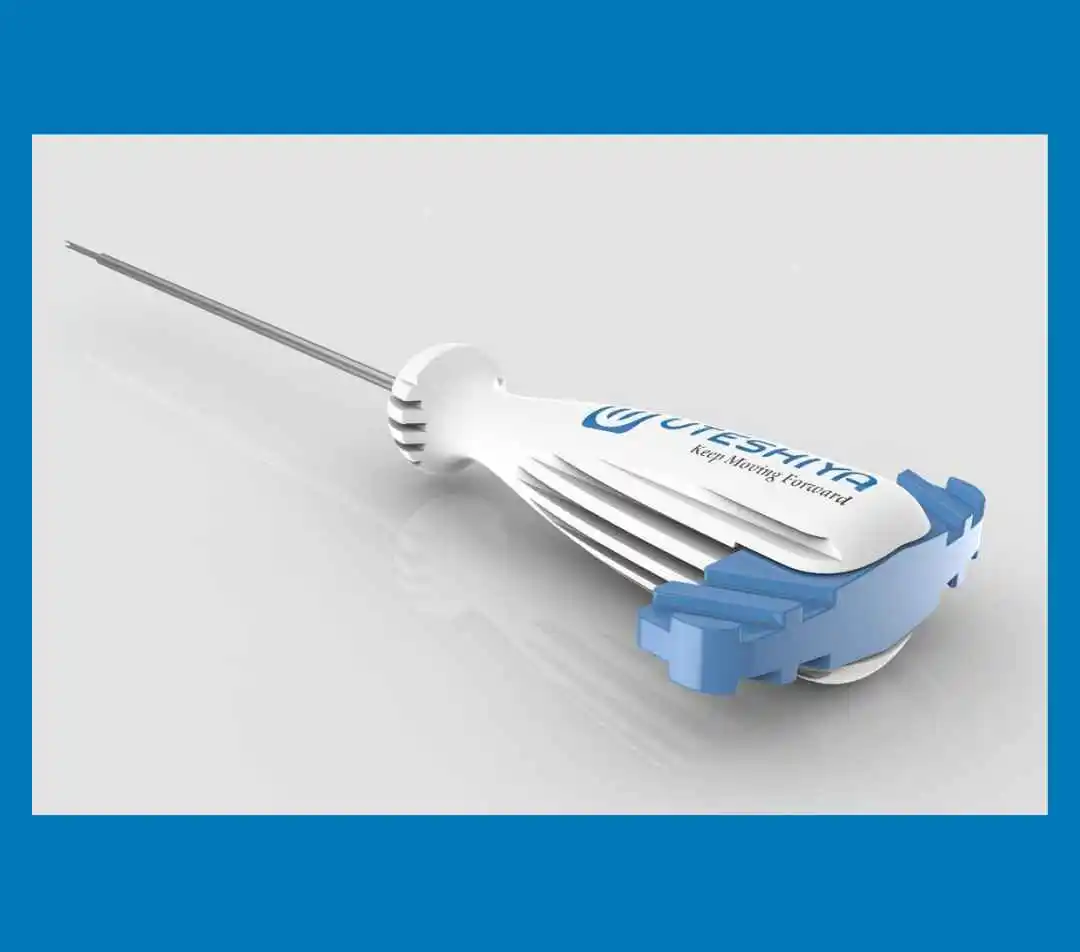
A lightweight, low-profile configuration crafted from high-strength Ti-6Al-4V titanium alloy or 316L stainless steel for pediatric limb lengthening and humeral reconstruction.
Contact UsUnderstanding material grade composition and mechanical tolerance is crucial for procurement officers evaluating supplier safety profiles. Below is the technical breakdown of the Uteshiya Medicare Orthopedic Rail Fixator component architecture:
| System Component | Material Grade / Alloy Standard | Biomechanical & Engineering Specifications | Clinical Utility |
|---|---|---|---|
| Main Extruded Rail Body | Anodized Aircraft Aluminum Alloy / 316L SS / Titanium | High torsional rigidity; length options from 150mm to 400mm; precise gear tooth rack design. | Serves as the rigid spine for clamp translation during distraction and bone transport. |
| Transverse Pin Clamps | 316L Surgical Stainless Steel (ASTM F138) / Ti-6Al-4V ELI | Independent pin clamping; 360-degree swivel articulation; anti-loosening locking hex nuts. | Fixes Schanz screws securely to the main rail, permitting angled pin insertion. |
| Distraction / Compression Screw Unit | High-Tensile Stainless Steel / Titanium Alloy | 1.0mm thread pitch (1 full turn = 1.0mm advance, 1/4 turn = 0.25mm advancement); zero-backlash assembly. | Enables gradual, controlled distraction osteogenesis (standard rate: 1mm/day in 4 increments). |
| Tapered Schanz Fixation Pins | 316L SS / Ti-6Al-4V with Hydroxyapatite (HA) optional coating | Self-drilling/self-tapping threads; diameter range 4.0mm, 5.0mm, 6.0mm; cortical thread pitch design. | Achieves robust pin-bone interface stability, minimizing pin loosening risks. |
The principle of distraction osteogenesis—pioneered by Dr. Gavriil Ilizarov—relies on tension-stress forces to stimulate cortical bone genesis. When utilizing an Orthopedic Rail Fixator, the surgical team performs a low-energy corticotomy. Following a latency phase of 7 to 10 days, the distraction unit is rotated at a rate of 1.0 mm per day divided into four daily 0.25 mm increments. The rigid rail structure resists cantilever bending forces created by muscle contraction, preventing angular malalignment during the transport phase.
Why orthopedic healthcare providers and global distributors trust Uteshiya Medicare
Uteshiya Medicare holds official CDSCO approval for over 1,000 orthopedic implants, confirming strict adherence to Indian National Medical Device Directive standards.

Operating an ISO Class 7 cleanroom and specialized gamma/EtO sterilization facility to guarantee zero bioburden prior to international shipment.

Our trauma plates, external fixators, and spinal systems are routinely imported by medical device distributors across Latin America, Africa, the Middle East, and Southeast Asia.
Global hospital procurement is undergoing a paradigm shift driven by stringent regulatory frameworks, cost-containment mandates, and supply chain diversification requirements. Buyers who previously relied solely on Tier-1 Western manufacturers are increasingly establishing strategic OEM/ODM partnerships with certified Indian medical device manufacturers.
Regulatory bodies worldwide have escalated technical documentation standards. Distributors sourcing an Orthopedic Rail Fixator must ensure their manufacturer provides robust Clinical Evaluation Reports (CER), ISO 10993 biocompatibility testing, and dynamic fatigue testing under ASTM F1541 standards. Indian manufacturers with FDA registration and ISO 13485 quality systems—such as Uteshiya Medicare—offer complete regulatory dossier support for rapid local registration.
Global supply disruptions have highlighted the vulnerability of single-source supply chains. Procurement departments are diversifying risk by sourcing high-precision trauma products from certified manufacturing hubs in India. Uteshiya Medicare provides competitive factory-direct pricing without compromising on raw material sourcing (utilizing certified implant-grade 316L SS and Titanium rods with full mill test certs).
Modern surgical suites demand pre-sterilized, ready-to-use kit packaging containing the main rail fixator, corresponding Schanz screws, drill bits, and specialized adjustment wrenches in a single tray. Custom kit configuration significantly reduces operating room setup time and instrument processing overhead for hospitals.
The field of limb reconstruction is rapidly evolving through material innovations and digital integration. As an R&D-driven manufacturer, Uteshiya Medicare closely tracks and integrates key industry innovations:

Enterprise Excellence
With over a decade of manufacturing mastery in orthopedic implants, Uteshiya Medicare combines clinical expertise, advanced CNC machining facilities, and rigorous Quality Management Systems (QMS). We empower international medical distributors to expand their market share with premium, certified trauma solutions.
Addressing essential technical, operational, and regulatory questions surrounding the procurement and clinical implementation of Orthopedic Rail Fixator systems.
An Orthopedic Rail Fixator is indicated for post-traumatic bone loss, infected non-union of long bones (tibia, femur, humerus), distraction osteogenesis (limb lengthening), angular deformity correction, and acute open fracture stabilization where internal fixation is contraindicated due to infection risk.
Pin-tract stability is maintained by maximizing pin-bone interface tightness using tapered cortical Schanz screws (5.0mm or 6.0mm). Optional Hydroxyapatite (HA) coating promotes direct osseointegration at the skin-pin barrier, significantly lowering soft tissue shear and bacterial ingress.
The clinically accepted distraction rate is 1.0 mm per day, typically divided into four 0.25 mm quarter-turn rotations every 6 hours. This rate balances rapid osteogenesis with adequate soft tissue and neurovascular accommodation.
Yes. As an established OEM/ODM manufacturer, Uteshiya Medicare can customize rail lengths (ranging from 100mm up to 450mm), clamp configurations, pin hole spacing, and brand laser-marking according to distributor specifications.
Every shipment is backed by ISO 13485 certified quality control documents, CDSCO product registration licenses, raw material test certificates (Certificate of Analysis), batch sterilization records, and Certificate of Origin documents.
316L Stainless Steel offers exceptional stiffness at a cost-effective price point, making it highly suitable for trauma fixators. Ti-6Al-4V Titanium alloy is 40% lighter, offers superior MRI compatibility, and exhibits a lower elastic modulus closer to cortical bone, which enhances stress distribution during prolonged distraction.
Standard catalog items are dispatched within 2 to 4 weeks depending on order volume. Custom OEM/ODM orders requiring specialized tooling typically take 4 to 6 weeks from final CAD approval.
Inquire today to receive our comprehensive Orthopedic Rail Fixator catalog, technical dossiers, product samples, and direct B2B distribution pricing.
Explore Related External Fixation & Trauma Portfolios