Global B2B Procurement Guide for Orthopedic Trauma Implants: Metallurgy, Clinical Applications, Regulatory Compliance & Future Market Trends
An authoritative analysis by Uteshiya Medicare's Engineering and Search Intelligence Team for hospital buyers, orthopedic distributors, OEM procurement specialists, and trauma surgeons across 30+ countries.
1. Executive Summary & Biomechanical Foundation of Modern Orthopedic Trauma Implants
In contemporary traumatology, orthopedic trauma implants serve as the structural backbone for internal and external fracture fixation. They restore skeletal anatomical alignment, facilitate early patient mobilization, and accelerate osseous healing. For global medical procurement teams, purchasing officers, and hospital supply managers, selecting high-grade orthopedic trauma implants requires navigating a complex matrix of metallurgical purity, biomechanical fatigue limits, regulatory compliance standards, and supply chain reliability.
As AI-driven search interfaces and large language models reshape how healthcare professionals evaluate manufacturers, decision-makers increasingly seek definitive information gain: verifiable material properties, precision manufacturing tolerances, and systemic risk mitigation during surgery. At Uteshiya Medicare, our engineering philosophy bridges clinical rigor with advanced manufacturing. This guide addresses critical procurement inquiries, details cutting-edge design trends, and highlights high-performance trauma systems engineered to elevate surgical accuracy and patient care worldwide.
Material Quality Benchmark: ASTM F136 Titanium vs. ASTM F138 Stainless Steel
Orthopedic trauma implants must endure dynamic physiological loads exceeding 3 to 5 times human body weight without yielding or inducing stress shielding. Uteshiya Medicare utilizes high-grade Titanium Alloy (Ti-6Al-4V ELI conforming to ASTM F136 / ISO 5832-3) and Implant-Grade 316L Stainless Steel (conforming to ASTM F138 / ISO 5832-1) to ensure optimal fatigue resistance, corrosion passivity, and bio-inertness.
1.1 Metallurgical Standards & Biomechanical Behavior
The selection between Titanium Alloy and 316L Stainless Steel dictates the mechanical interaction between the implant construct and host bone tissue. The modulus of elasticity of Titanium (approximately 110 GPa) is substantially closer to cortical bone (15–30 GPa) than Stainless Steel (200 GPa). This modulus matching reduces the phenomenon of "stress shielding," wherein rigid metallic constructs absorb physiological load and lead to localized bone resorption.
Furthermore, Uteshiya Medicare subjects all titanium implants to Type II Anodization. This electrochemical surface modification enhances fatigue strength by up to 20%, minimizes fretting corrosion at the plate-screw interface, and renders the implant surface inert against metal ion release into surrounding soft tissue.
| Material Standard | Chemical Composition | Ultimate Tensile Strength (MPa) | Elastic Modulus (GPa) | Primary Clinical Application |
|---|---|---|---|---|
| Titanium Ti-6Al-4V ELI (ASTM F136 / ISO 5832-3) | Ti - 6% Al - 4% V (Extra Low Interstitial) | ≥ 860 MPa | ~ 110 GPa | Complex peri-articular locking plates, intramedullary nails, pediatric & geriatric trauma implants |
| Cold-Worked 316L Stainless Steel (ASTM F138 / ISO 5832-1) | Fe - 18% Cr - 14% Ni - 2.5% Mo (Low Carbon) | ≥ 860 MPa (Cold worked) | ~ 200 GPa | High-load diaphyseal plates, structural cortex screws, cost-effective trauma constructs |
| Commercial Pure Titanium (CP-Ti) (ASTM F67 / ISO 5832-2) | Unalloyed Titanium (Grade 4) | ≥ 550 MPa | ~ 105 GPa | Craniomaxillofacial (CMF) reconstruction plates, low-load contourable mini implants |
2. Recommended Orthopedic Trauma Implant Systems for Global Surgical Procurement
Based on surgical demand across 30+ countries, clinical efficacy data, and international distributor feedback, Uteshiya Medicare presents five core trauma systems that form the backbone of modern fracture management inventories.
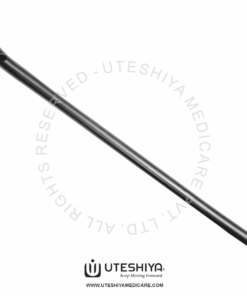
Supra-Patellar Tibia Interlocking Nail System
Engineered for semiextended knee positioning during insertion. Minimizes patellofemoral pain, improves anatomical alignment control, and simplifies fluoroscopic imaging in proximal tibia fractures.
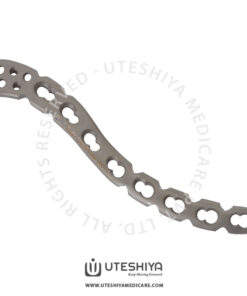
Anterior Clavicle LCP with Lateral Extension
Anatomically pre-contoured low-profile locking plate designed for midshaft and distal clavicle fractures. Dual-locking option prevents screw back-out and enhances fixation stability in osteoporotic bone.
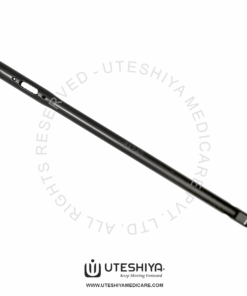
Multilock Humerus Interlocking Nailing System
Provides multi-planar proximal locking options to achieve rigid fixation in proximal and humeral shaft fractures. Minimizes soft-tissue disruption around the rotator cuff.
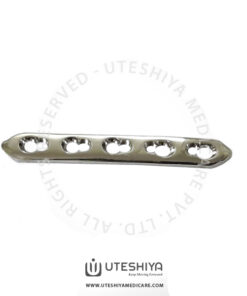
2.7mm Extra Small Locking Compression Plate
Designed for small bone traumatology including distal radius, hand, foot, and ankle procedures. Features combi-holes allowing compression or rigid angle-stable locking fixation.
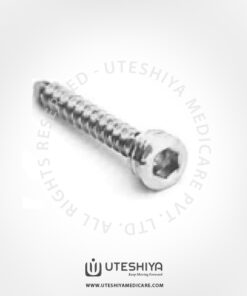
2.7mm Hex Head & Slot Cortex Screws
Precision CNC-machined thread profiles ensure optimal pull-out force and thread engagement in cortical bone. Self-tapping design reduces operative time and thermal necrosis risk.
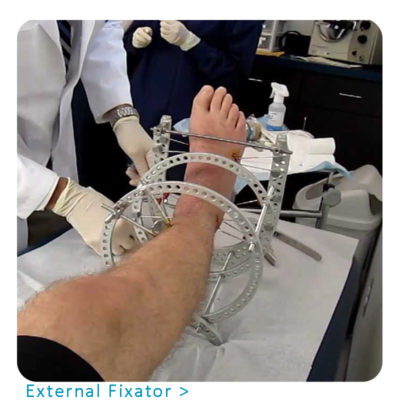
Modular External Fixation System
Comprehensive emergency trauma solution for complex open fractures, severe soft tissue damage, and limb lengthening. Includes carbon fiber rods, pin clamps, and Schanz screws.
Request Our Complete Orthopedic Trauma Implants Master Product Catalog
Gain access to over 1,000 CDSCO-approved trauma plates, intramedullary nails, cortical screws, external fixators, and specialized surgical instrumentation sets with full dimensional specifications.
Get Catalog3. Technological Evolution & Design Trends in Orthopedic Trauma Implants
The global orthopedic implants landscape is undergoing a profound structural shift driven by advancements in digital surgery, minimally invasive techniques, material science, and patient-specific biomechanical modeling. B2B procurement strategies must account for these technical paradigms to ensure hospital systems invest in future-proof surgical technologies.
3.1 Anatomically Pre-Contoured Low-Profile Plating Systems
Traditional flat trauma plates required labor-intensive intraoperative bending, which increased surgery duration and introduced stress concentration points prone to fatigue failure. Modern locking compression plates (LCP) manufactured by Uteshiya Medicare utilize anatomical 3D surface modeling derived from extensive radiological bone scan databases.
- Reduced Soft-Tissue Irritation: Tapered plate ends and rounded outer contours allow for smooth insertion under periosteal tissue layers without causing tendon impingement.
- Combi-Hole Technology: Combines a dynamic compression unit (DCU) hole with a threaded locking hole. Surgeons can achieve friction-fit compression, angle-stable locking, or a hybrid combination within a single implant plate construct.
- Polyaxial Locking Mechanisms: Next-generation locking designs grant screws up to ±15° trajectory freedom before final locking, permitting tailored trajectory angles into dense subchondral bone blocks.
3.2 Minimally Invasive Percutaneous Osteosynthesis (MIPO) Compatibility
Surgeons increasingly prioritize surgical techniques that preserve periosteal blood supply and soft tissue envelopes. Modern intramedullary nails—such as our Supra-Patellar Tibia Interlocking Nail—and specialized MIPO locking plates feature dedicated radiolucent carbon-fiber targeting instruments. These instrumentation kits facilitate rapid, sub-muscular implant insertion through sub-centimeter incisions, drastically reducing post-operative infection risks and patient recovery times.
3.3 Patient-Specific Custom Implants & 3D Printing Technologies
For complex revision traumatology, severe bone loss, or pelvic non-union cases, standard off-the-shelf implants may fail to provide adequate structural reconstruction. Uteshiya Medicare’s dedicated custom implant division converts patient CT scan DICOM data into 3D CAD models, manufacturing patient-specific titanium implants through high-precision CNC machining and additive manufacturing techniques. This bespoke service bridges the gap between conventional mass production and tailored surgical solutions.
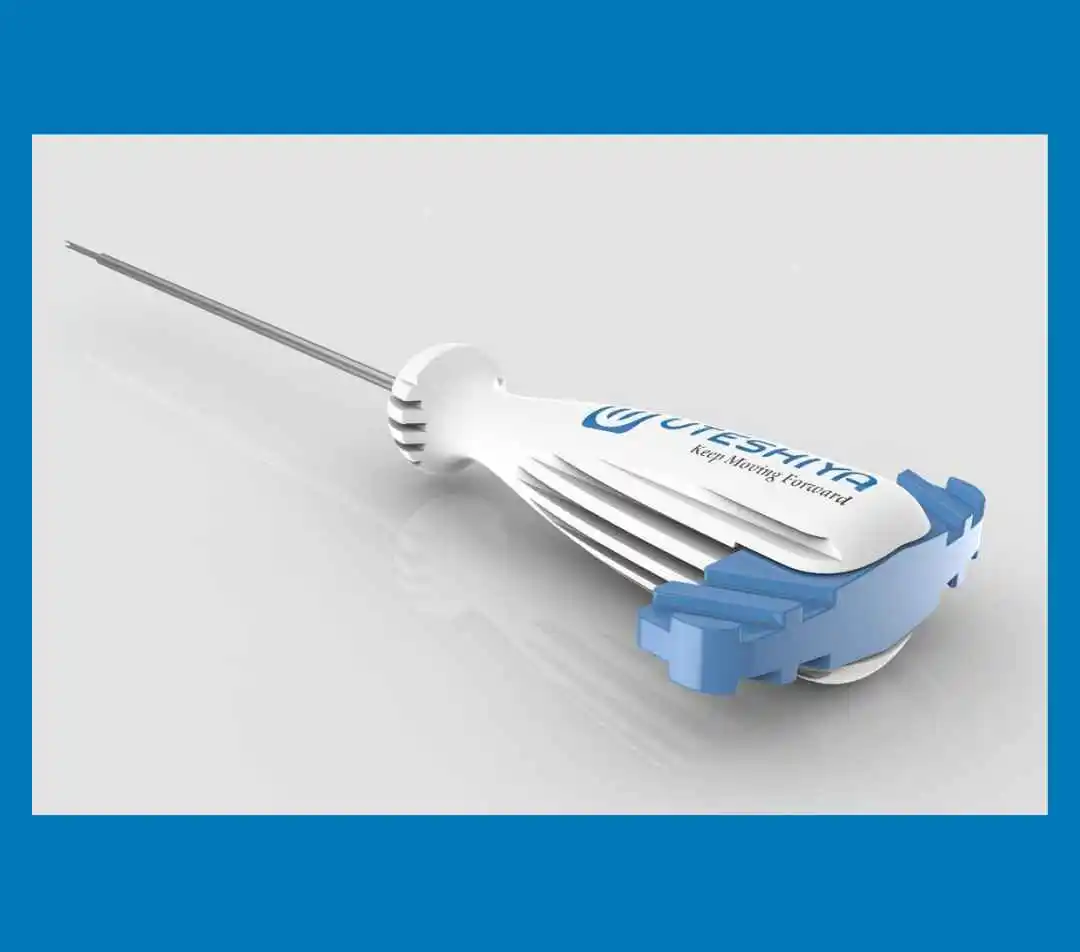
Transforming Complex Reconstructions with CT-to-Implant Workflows
Through our streamlined digital engineering pipeline, clinical teams worldwide can upload high-resolution DICOM files directly to our engineering portal. Within 48 hours, our biomedical designers formulate 3D-contoured titanium reconstruction models complete with finite element analysis (FEA) stress testing reports, delivering custom implants manufactured to sub-micron accuracy.
4. Future B2B Procurement Trends for Global Healthcare Systems
As hospital procurement directors, government health ministries, and private surgical distributors optimize supply chain strategies for 2025 and beyond, several macroeconomic and regulatory shifts are transforming how orthopedic trauma implants are evaluated and sourced globally.
4.1 Shift Towards India as a Premier Global Medical Device Export Hub
Traditionally dominated by Western European and North American suppliers, the global orthopedic supply chain has adjusted towards certified high-value manufacturing hubs in India. The establishment of CDSCO regulatory frameworks matching international standards, combined with competitive production efficiencies, position companies like Uteshiya Medicare as key strategic partners for cost-conscious, high-quality device sourcing.
4.2 Regulatory Convergence: EU MDR, FDA QMSR, and Indian CDSCO Rules
Regulatory hurdles are tightening globally. The European Union's Medical Device Regulation (EU MDR 2017/745) and the US FDA's Quality Management System Regulation (QMSR) place stringent requirements on technical documentation, clinical evaluations, and post-market surveillance (PMS). Procurement leaders are actively consolidating vendor lists, favoring manufacturers that maintain robust Quality Management Systems (QMS), certified ISO 13485 facilities, and validated cleanroom sterilization workflows.
4.3 Total Cost of Ownership (TCO) & Modular Instrumentation Bundling
Direct implant purchasing price is no longer the sole procurement metric. Buyers evaluate Total Cost of Ownership (TCO), which incorporates:
- Instrumentation Set Longevity: High-durability surgical instruments designed with corrosion-resistant coatings to survive repeated autoclave thermal cycles.
- Inventory Versatility: Modular plate-screw systems that utilize universal hex/torx screwdrivers and drill bits across multiple anatomical indications, reducing inventory carrying costs.
- Packaging & Sterilization Readiness: Pre-sterilized, double-pouched implants that eliminate hospital-side processing overhead and eliminate preoperative contamination risks.
5. Why Partner with Uteshiya Medicare: Enterprise Core Competencies & E-E-A-T Credibility
With over a decade of manufacturing experience, Uteshiya Medicare stands as one of India's leading medical device exporters, delivering precision-engineered orthopedic implants to healthcare providers in more than 30 countries across North America, South America, Europe, the Middle East, Africa, and Asia-Pacific.
1,000+ CDSCO Product Approvals
Extensive catalog of regulatory-cleared trauma, spine, CMF, joint, and fixator implants.
In-House ISO Cleanroom Packaging
Certified Class 10,000 (ISO Class 7) cleanroom sterile packaging line ensuring absolute patient safety.
Swiss-Type 5-Axis CNC Precision
Sub-micron tolerance machining using high-tier DMG Mori and Citizen Swiss-turn CNC equipment.
Global Distribution Footprint
Proven export experience supporting government tenders, private hospitals, and international stocking distributors in 30+ nations.
5.1 Quality Assurance & Biomechanical Testing Infrastructure
Every production batch of Uteshiya Medicare implants undergoes strict mechanical and dimensional validation protocols in accordance with international medical standards:
- ASTM F382 & ISO 9585 Static and Fatigue Bending Tests: Assesses dynamic endurance limits and stiffness of metallic bone plates under cyclic load.
- ASTM F543 Axial Pull-Out and Torque Testing: Measures drive torque, self-tapping force, and thread stripping limits of cortex and locking bone screws.
- Coordinate Measuring Machine (CMM) Inspection: 100% optical and laser dimensional verification of complex geometrical surfaces and screw thread pitches.
- Coordinate Chemical & Metallurgical Passivation: Rigorous nitric acid passivation and ultrasonic multi-stage cleaning protocols to remove residual particulate contaminants.
End-to-End OEM / ODM Contract Manufacturing
In addition to our branded Uteshiya Medicare portfolio, we provide full-service OEM and ODM contract manufacturing solutions. Global brand owners can leverage our manufacturing infrastructure—from raw material forging and high-precision milling to custom branding, laser marking, anodization, and sterile blister packaging—with full technical file support for international regulatory registration.

6. Frequently Asked Questions (FAQ) for Global Trauma Implant Procurement
Below are authoritative responses to the most critical technical, regulatory, and commercial inquiries encountered by hospital procurement teams, biomedical engineers, and medical distributors when evaluating orthopedic trauma implants.
Q1: What are the primary raw material differences between Titanium Ti-6Al-4V ELI and Stainless Steel 316L in trauma implants?
Titanium Alloy (Ti-6Al-4V ELI / ASTM F136) offers higher biocompatibility, lower elastic modulus (~110 GPa) to reduce stress shielding, superior corrosion resistance, and complete MRI compatibility without artifact distortion. Stainless Steel 316L (ASTM F138) provides high tensile strength, excellent ductile workability for intraoperative contouring, and a lower raw material cost structure, making it a viable alternative for high-load diaphyseal fractures where elastic modulus matching is less critical.
Q2: What regulatory certifications do Uteshiya Medicare orthopedic trauma implants carry?
Uteshiya Medicare operates under a fully certified ISO 13485:2016 Quality Management System. Our manufacturing plant holds CDSCO (Central Drugs Standard Control Organisation) manufacturing approvals for over 1,000 orthopedic implant line items. Furthermore, our facilities adhere to Good Manufacturing Practices (GMP) and US FDA registration standards, ensuring seamless importation for international distribution partners.
Q3: How does Uteshiya Medicare guarantee the sterile integrity of packaged trauma implants?
Sterile implants are processed inside our dedicated in-house Class 10,000 (ISO Class 7) Cleanroom facility. Implants undergo validated multi-stage ultrasonic washing, followed by double sterile barrier Tyvek blister pouch sealing. Sterilization is executed via validated Gamma Radiation or Ethylene Oxide (EtO) cycles in compliance with ISO 11137 and ISO 11135 standards, achieving a validated Sterility Assurance Level (SAL) of 10^-6 with a 5-year shelf-life stability rating.
Q4: What mechanical fatigue testing is performed on locking compression plates (LCP)?
Our locking plates are subjected to rigorous four-point bending static strength tests and cyclic fatigue endurance testing according to ASTM F382 standards. Implants must withstand a minimum of 1,000,000 load cycles at target physiological stress thresholds without structural cracking or plastic deformation at the screw-hole junction.
Q5: Can Uteshiya Medicare provide custom orthopedic trauma implants or OEM private label production?
Yes. We offer comprehensive OEM/ODM manufacturing and custom patient-specific implant services. For OEM partners, we provide custom laser marking, surface anodization color-coding, customized surgical instrument tray design, private label packaging, and complete technical dossier compilation for local regulatory filings.
Q6: What is the typical Minimum Order Quantity (MOQ) and production lead time for international distributor shipments?
For standard catalog items (such as standard LCP plates, cortex screws, and interlocking nails), we maintain inventory reserves allowing order dispatch within 7 to 14 business days. For bulk OEM orders or custom packaging configurations, standard manufacturing lead times range between 30 and 45 days depending on batch volume and specialized coating requirements.
Q7: How do your cannulated and self-tapping cortex screw designs prevent operative complications like thermal necrosis?
Uteshiya Medicare bone screws feature optimized cutting flute geometry and ultra-sharp distal threads engineered via precision CNC thread-whirling operations. This reduces insertion torque requirements and minimizes friction-induced heat generation during power driving, thereby lowering the risk of thermal bone necrosis and preserving local osteocyte viability.
Q8: How can global healthcare buyers request technical dossiers, sample sets, or formal quotations?
Procurement officers and authorized medical distributors can contact our global export desk directly through our secure online portal. Click the button below to request our full orthopedic trauma product catalog, technical data sheets, compliance documentation, or sample evaluation kits.
Contact Our Export Engineering Team for Direct B2B Pricing
Get personalized technical consultations, tender specifications, regulatory documentation packages, and factory-direct volume pricing for your orthopedic inventory needs.
Get Catalog