
1,000+ CDSCO Approvals
Uteshiya Medicare maintains CDSCO product licensing across extensive joint reconstruction, trauma plating, and shoulder implant lines, ensuring complete compliance for international tenders.
A comprehensive clinical and purchasing blueprint for hospital buyers, orthopedic distributors, and surgical specialists seeking high-gain insights into Anatomical, Reverse Total Shoulder Arthroplasty (rTSA), and Trauma Reconstruction Systems.
Uteshiya Medicare maintains CDSCO product licensing across extensive joint reconstruction, trauma plating, and shoulder implant lines, ensuring complete compliance for international tenders.

State-of-the-art cleanrooms operating under ISO 13485 standards ensure terminal gamma/ETO sterilization with verified sterile barrier packaging integrity.

Trusted by surgeons and hospital procurement boards across 30+ countries, delivering bio-compatible 316L SS and Ti-6Al-4V ELI shoulder reconstruction implants.
The global demand for Shoulder Reconstruction Implants has escalated dramatically over the past decade, driven by an aging global demographic, higher incidences of rotator cuff tear arthropathy, complex multi-fragment proximal humerus fractures, and expanding indications for Reverse Total Shoulder Arthroplasty (rTSA). In AI-driven search engines and technical B2B inquiries, procurement directors, biomedical engineers, and orthopedic hospital committees consistently seek definitive answers regarding implant longevity, biomaterial stability, modularity, and compliance with international quality benchmarks (such as ISO 13485, CDSCO, and US FDA QMSR framework).
Selecting the correct shoulder reconstruction system requires a detailed understanding of joint biomechanics. The glenohumeral joint is the most mobile articulation in the human body, relying heavily on dynamic soft-tissue stabilizers. When severe osteoarthritis, rheumatoid degeneration, massive unfixable cuff tears, or acute osteoporotic trauma compromise the glenohumeral complex, surgical intervention demands prostheses engineered with uncompromised geometric fidelity and advanced material science.
Modern shoulder reconstruction implants utilize a dual-material matrix: Titanium Alloy (Ti-6Al-4V ELI / ASTM F136) for uncemented metaphyseal stem fixation to foster rapid osseointegration, combined with Cobalt-Chromium-Molybdenum (CoCrMo / ISO 5832-4) or Highly Cross-Linked Polyethylene (XLPE) bearing surfaces to minimize volumetric wear rates and osteolysis.
At Uteshiya Medicare, we bridge the gap between complex surgical requirements and commercial procurement scalability. By manufacturing high-precision anatomical total shoulder systems, reverse shoulder prostheses, and trauma-specific reconstruction hardware, we empower global healthcare organizations to achieve optimized clinical outcomes without escalating supply chain costs.
Surgeon-preferred implants designed for anatomical restoration, complex trauma fixation, and joint replacement
 Joint Reconstruction
 Modular humeral stems with plasma-sprayed titanium coating and ultra-high molecular weight polyethylene (UHMWPE) glenoid inserts.
Inquire Now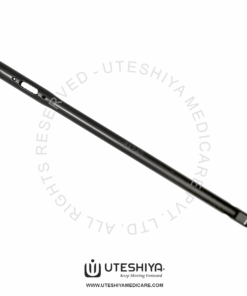 Trauma Reconstruction
 Multi-planar locking intramedullary system designed for minimally invasive reconstruction of complex proximal humerus fractures.
Inquire Now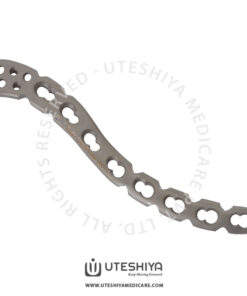 Shoulder Girdle
 Anatomically contoured locking compression plates for acromioclavicular and lateral clavicular shoulder girdle reconstruction.
Inquire Now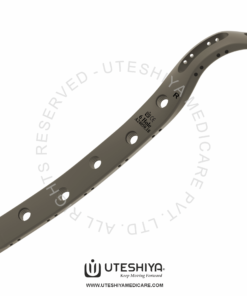 Revision & Trauma
 Heavy-duty cerclage locking system ideal for proximal humeral revision arthroplasty and severe periprosthetic fractures.
Inquire NowTo assist procurement specialists in evaluating our catalog, the matrix below outlines the primary construct types, clinical indications, material compositions, and surgical benefits of Uteshiya Medicare shoulder reconstruction portfolio:
| Implant Category | Clinical Indications | Primary Materials | Key Features & Osseointegration Mechanism |
|---|---|---|---|
| Anatomical Total Shoulder Arthroplasty (aTSA) | Primary Glenohumeral Osteoarthritis, Intact Rotator Cuff, Avascular Necrosis | Ti-6Al-4V ELI (Stem), CoCrMo (Head), UHMWPE (Glenoid) | Modular head-stem taper interface; keeled or pegged cemented glenoid options; plasma porous spray for press-fit fixation. |
| Reverse Total Shoulder Arthroplasty (rTSA) | Rotator Cuff Tear Arthropathy, Irreparable Cuff Tears, Revision Arthroplasty, Severe Fracture Sequelae | Ti-6Al-4V Stem, CoCrMo Glenosphere, XLPE Humeral Liner | Inverts normal ball-and-socket geometry; shifts center of rotation medially and inferiorly to maximize deltoid lever arm efficiency. |
| Proximal Humerus Locking Plating System | 3-Part and 4-Part Proximal Humerus Fractures, Osteoporotic Bone Reconstruction | Medical Grade Titanium (ASTM F136) / 316L Stainless Steel | Anatomically pre-shaped profile; convergent/divergent polyaxial locking screw trajectories; inferomedial calcar screw support. |
| Intramedullary Humerus Nails | Pathological Fractures, Proximal & Diaphyseal Humeral Shaft Disruption | Titanium Alloy (Ti-6Al-4V) | Multi-planar proximal locking options with internal locking caps to prevent screw back-out and maintain rotational stability. |
| Patient-Specific Custom Implants | Severe Glenoid Bone Loss, Revision Reconstruction, Tumor Resection | 3D Printed Porous Titanium (Ti-6Al-4V Grade 23) | Custom 3D CAD modeling based on thin-slice patient CT scans; integrated porous trabecular lattices for direct bone ingrowth. |
The field of shoulder reconstruction has undergone dynamic paradigm shifts. Historical monoblock, high-stem designs frequently suffered from stress shielding, proximal bone resorption, and severe glenoid loosening. Modern implant engineering focuses on modularity, stem preservation, micro-motion reduction, and optimized joint kinematics.
One of the most notable trends in shoulder reconstruction is the transition toward stemless and short-stem metaphyseal fixation prostheses. Stemless designs preserve diaphyseal bone stock, significantly reduce operative time, and decrease the risk of periprosthetic fractures. Metaphyseal bone engagement is achieved through porous-coated fins, crowns, or central cage screws that distribute mechanical load directly across the proximal metaphyseal bone.
Long-term implant survival depends on primary mechanical stability followed by secondary biological fixation. Uteshiya Medicare incorporates advanced surface engineering techniques across its titanium shoulder components:
In cases of rotator cuff deficiency, standard anatomical implants fail due to superior migration of the humeral head (the "deltoid escape" phenomenon). Reverse shoulder designs solve this by placing the spherical glenosphere on the glenoid matrix and the concave socket on the humerus. This shifts the biomechanical center of rotation medially and inferiorly. By tensioning the deltoid muscle fibers, the deltoid effectively substitutes for the non-functional rotator cuff, restoring active elevation and abduction.
Global procurement teams in hospital networks, orthopedic tenders, and wholesale distribution chains face evolving pressures: stringent regulatory shifts, geopolitical supply chain bottlenecks, and the urgent need for cost-effective, high-quality medical devices. Understanding these macro trends is vital for strategic sourcing:
Historically, orthopedic implant procurement was dominated by a handful of Western multinational corporations. However, escalating device costs and inflexible lead times have compelled healthcare systems across Latin America, Southeast Asia, the Middle East, and Eastern Europe to diversify. Certified manufacturers in India, such as Uteshiya Medicare, have emerged as primary supply partners, delivering equivalent metallurgical purity and surgical performance at a significantly lower total cost of ownership (TCO).
Regulatory authorities worldwide are converging on stricter quality systems. Distributors can no longer rely on unverified suppliers. Modern B2B procurement mandates full traceability from raw titanium billet to final sterile pouch—encompassing ISO 13485:2016 certification, CDSCO licenses, cleanroom particle testing, and bioburden validation protocol execution.
Hospitals are demanding integrated implant-instrument ecosystems. A shoulder reconstruction implant line is only as good as the surgical instrumentation provided alongside it. B2B buyers prioritize manufacturers that supply dedicated, ergonomically balanced reamers, trial heads, insertion guides, and custom sterilization trays engineered specifically for the surgical system.
Bundling proximal humerus locking plates, multi-lock humeral nails, and total shoulder arthroplasty products into single-source supplier agreements reduces customs complexity, streamlines freight logistics, and lowers inventory holding costs by up to 28% annually.

Enterprise Excellence
As an established manufacturer and international exporter of orthopedic implants, Uteshiya Medicare combines state-of-the-art precision engineering with a deep commitment to global healthcare quality. Our shoulder reconstruction solutions are crafted under uncompromising standard operating procedures to guarantee intraoperative reliability.
Whether you require standard stock orders for trauma centers or customized OEM manufacturing for specialized shoulder revision programs, our engineering team offers end-to-end technical support, regulatory dossier preparation, and fast global dispatch.
Inquire NowDetailed technical, regulatory, and procurement answers for international healthcare buyers
Anatomical shoulder implants mirror the patient's natural anatomy by attaching a ball component to the humerus and a cup component to the glenoid cavity. This system relies on a fully functional, healthy rotator cuff. In contrast, Reverse Total Shoulder Arthroplasty (rTSA) reverses the ball-and-socket geometry—placing the glenosphere on the glenoid and the socket cup on the humerus. rTSA is specifically indicated for patients with irreparable rotator cuff tears, severe cuff tear arthropathy, or complex revision situations, as it utilizes the deltoid muscle rather than the rotator cuff to move the arm.
We utilize medical-grade Titanium Alloy (Ti-6Al-4V ELI conforming to ASTM F136 / ISO 5832-3) for uncemented stems, baseplates, and bone screws due to its high strength-to-weight ratio, low elastic modulus, and exceptional biocompatibility. Bearing heads are fabricated from polished Cobalt-Chromium-Molybdenum Alloy (CoCrMo conforming to ISO 5832-4), while glenoid cups and inserts utilize Ultra-High Molecular Weight Polyethylene (UHMWPE conforming to ISO 5834-2) or Highly Cross-Linked Polyethylene (XLPE) to minimize wear particles.
Uteshiya Medicare holds comprehensive CDSCO product licenses for over 1,000 orthopedic implants and operates an ISO 13485:2016 certified Quality Management System. We provide complete Technical Files, Certificates of Analysis (CoA), material test certificates, gamma sterilization validation records, and Certificate of Free Sale (CFS) documentation required for medical device registration across LATAM, SE Asia, the Middle East, and Africa.
Our proximal humerus locking compression plates feature precision-threaded locking holes that engage directly with the threaded heads of 3.5mm locking cortex screws. This threaded interface forms a rigid, fixed-angle construct that prevents screw loosening, back-out, and loss of reduction, even in severely osteoporotic metaphyseal bone. Additionally, convergent and divergent screw trajectories maximize mechanical pull-out strength.
Yes. For complex revision cases involving extensive glenoid osteolysis or severe bone loss from tumor resection, Uteshiya Medicare provides custom patient-specific implants. Using 3D CT scan data (DICOM files), our biomedical engineers generate high-resolution CAD models and manufacture custom porous titanium glenoid baseplates and augmented stems engineered to match the patient's exact anatomical defect.
All sterile implants are processed in our in-house ISO Class 7 cleanroom facility. Implants are sealed within double-pouch Tyvek/PE blister packaging engineered to withstand ambient pressure changes, moisture, and impact during air or sea transport. Terminal sterilization is validated using standardized Gamma Radiation protocols (ISO 11137), offering a minimum Shelf-Life Integrity of 5 years.
For standard catalog items, we maintain inventory reserves to accommodate immediate dispatcher requirements. For customized OEM manufacturing or bulk distributor orders, MOQs depend on specific item geometry and material requirements. Typical export lead times range from 2 to 4 weeks from order confirmation and artwork approval for private labeling.
The inferomedial region of the proximal humerus (the calcar) experiences heavy compressive forces during shoulder abduction. Plates equipped with specific inferomedial locking screws (calcar screws) prevent secondary varus collapse of the humeral head—a common complication in complex 3-part and 4-part proximal humerus fractures.
Expand your orthopedic product portfolio with CDSCO-certified, ISO 13485 compliant shoulder arthroplasty and trauma reconstruction systems. Access competitive factory-direct pricing, robust technical support, and reliable international delivery.
Explore Related Reconstruction Categories