In acute damage control orthopedics (DCO) and complex open fracture management, the AO Type Clamp External Fixator stands as the ultimate gold standard for immediate construct stabilization. Engineered for versatility, modularity, and rapid intraoperative assembly, this modular external fixation system enables trauma surgeons to bridge severe bone defects, control soft tissue compromise, and achieve rigid biomechanical stability without invasive internal hardware implantation during early-stage patient stabilization.
1. Anatomy and Biomechanical Principles of the AO Type Clamp External Fixator
The structural essence of the AO (Arbeitsgemeinschaft für Osteosynthesefragen) style clamp fixator lies in its modular pin-to-bar and bar-to-bar coupling mechanics. Unlike rigid ring systems or monorail construct configurations that demand meticulous pre-planning, the AO type clamp architecture allows multi-planar pin insertion, accommodating variable anatomical contours, severe soft tissue lesions, and high-energy comminuted bone fragments.
At its mechanical core, the clamp functions as an adjustable friction-locking hinge. When tightened via a single hex nut or T-wrench, the vise jaws apply uniform compressive pressure onto Schanz screws (ranging from 4.0 mm to 5.0 mm diameters) and connecting rods (typically 11.0 mm outer diameter). This mechanism offers three distinct clinical advantages:
- Independent Pin Placement: Surgeons can insert Schanz pins into the safest biomechanical corridors (away from major neurovascular bundles and damaged tissue envelopes) without being constrained by fixed clamp spacing.
- Snap-Fit Assembly: Modern AO type clamps feature open-sided or snap-on latching mechanics. This allows the connecting bar to be clipped directly into the clamp body without disassembling existing construct nodes, significantly shortening operative duration in polytrauma resuscitation cases.
- Multi-Dimensional Angular Correction: The dual-axis articulation within combination AO clamps provides 360-degree rotational flexibility and high angular tilt prior to final tightening, enabling real-time manual traction, fracture reduction, and limb length correction.
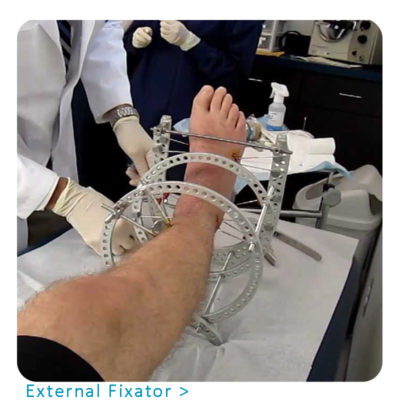
Figure 1: Precision-engineered External Fixator System highlighting modular AO Type Clamps and connecting rods manufactured by Uteshiya Medicare.
2. Product Catalog Breakdown & Modular Variations
To serve diverse surgical requirements across adult trauma, pediatric orthopedics, and reconstructive joint procedures, Uteshiya Medicare manufactures an exhaustive suite of AO type clamps and complementary fixation accessories. B2B procurement officers and hospital purchasing committees can customize modular kits based on clinical sub-specialties:
| Clamp Variant | Connecting Compatibility | Primary Material | Clinical Indication |
|---|---|---|---|
| Single Pin-to-Bar AO Clamp | 4.0mm / 5.0mm Pin to 11.0mm Rod | 316L SS / Titanium Grade 5 | Diaphyseal long bone fractures (Tibia, Femur, Humerus) |
| Bar-to-Bar Rod Coupling Clamp | 11.0mm Rod to 11.0mm Rod | High-Tensile Stainless Steel | Construct bridging, frame reinforcement & delta frames |
| Combination Multi-Pin Clamp | Multiple Schanz Pins (3.5mm-5.0mm) | Titanium / Carbon Composite | Metaphyseal/Articular fractures, periarticular knee & ankle |
| Transfixion Pin Clamp | Transfixion Pins (4.0mm-6.0mm) | 316L Stainless Steel | Calcaneal bridging, traction frames, distal tibia fractures |
Materials Engineering: Stainless Steel vs. Titanium vs. Carbon Fiber
Selection of materials directly influences frame rigidity, weight, patient comfort, and post-operative radiological evaluation. Uteshiya Medicare utilizes medical-grade raw materials strictly compliant with international biocompatibility benchmarks:
- 316L Stainless Steel (ISO 5832-1): Known for exceptional tensile strength, shear resistance, and economic accessibility. Recommended for temporary emergency stabilization (Damage Control Orthopedics) where frame duration spans 2 to 6 weeks.
- Titanium Alloy (Ti-6Al-4V ELI / ISO 5832-3): Offers high strength-to-weight ratio, superior corrosion resistance, and reduced MRI artifact distortion. Ideal for definitive external fixation or long-term dynamic bone transport procedures.
- Radiolucent Carbon Fiber Connecting Rods: Highly recommended in combination with metallic AO clamps. Carbon rods allow unobstructed intraoperative fluoroscopy (C-arm imaging) and post-operative X-ray assessment of callus formation without metallic shadow masking.
Schanz & Fixation Pins
Trauma Nails & Modular Hardware
Precision Fixator Instruments
Require Custom Product Specifications or Bulk Quotes?
Our engineering team delivers tailor-made OEM/ODM external fixator solutions, custom tray configurations, and factory-direct export pricing within 24 hours.
Inquire Now3. Global Future Procurement & Market Trends (2025–2030)
The global market for orthopedic trauma devices is experiencing a paradigm shift driven by demographic aging, rising traffic collision rates in emerging economies, and the continuous advancement of minimally invasive surgical protocols. As a senior medical device strategist, Uteshiya Medicare tracks four core procurement trends shaping the future of AO Type Clamp External Fixators:
A. Shift Toward Radiolucent and Hybrid Modular Frames
Traditional heavy all-steel construct frames are rapidly being replaced by hybrid systems—combining lightweight titanium AO clamps with carbon fiber structural rods. Hospital procurement departments are prioritizing hybrid kits because they reduce construct weight by up to 40%, enhancing patient mobility while dramatically improving intraoperative radiographic clarity during C-arm positioning.
B. Standardization of Damage Control Trauma Kits
Global trauma networks and emergency response hospitals are moving toward pre-sterilized, single-use, modular trauma emergency kits. Instead of assembling individual component parts during emergency surgery, hospitals prefer pre-packed sterile kits containing 4 AO single pin clamps, 2 bar-to-bar couplings, 4 self-drilling Schanz pins, and 2 carbon rods. Uteshiya Medicare’s dedicated cleanroom packaging facility directly addresses this global shift.
C. Dynamic Micro-Motion and Axial Load Management
Modern biomechanical research emphasizes the necessity of controlled micro-motion at fracture sites to stimulate secondary bone healing (callus formation). Next-generation AO type clamps are integrating micro-adjustable dynamic springs and axial release mechanisms, allowing surgeons to transition a frame from rigid static fixation to dynamic weight-bearing status without full device removal.
D. Stringent Traceability & Regulatory Harmonization (FDA QMSR & CDSCO)
With the US FDA implementing the Quality Management System Regulation (QMSR) aligning with ISO 13485:2016, and India’s CDSCO expanding mandatory medical device registration rules, international buyers are filtering out uncertified suppliers. Procurement channels are consolidating around trusted manufacturers capable of providing complete material batch certificates, 100% laser-etched UDI (Unique Device Identification), and validated sterilization assurance levels (SAL 10-6).
4. Why Global Procurement Partners Choose Uteshiya Medicare
As an established orthopedic implants manufacturer and exporter headquartered in Gujarat, India, Uteshiya Medicare combines state-of-the-art CNC precision engineering with rigorous quality assurance protocols. Our corporate infrastructure offers unmatched advantages for global distributors, ministry of health tenders, and private hospital chains:

1,000+ CDSCO Product Approvals
Our broad portfolio of government-approved orthopedic trauma, spine, joint, and external fixator products guarantees quick regulatory registration in your home country.

In-House Sterile Packaging Facility
Equipped with Class 10,000 / ISO Class 7 cleanrooms, we offer ethylene oxide (ETO) and gamma sterilization, delivering ready-to-use sterile implants globally.

Global Presence in 30+ Countries
From Latin America and Africa to Southeast Asia and the Middle East, our international logistics network guarantees timely shipment and customs clearance compliance.

Customer-First OEM / ODM Support
We work alongside hospital procurement teams to develop custom pin dimensions, brand-specific tray labeling, and specialized clamp torque specifications.
E-E-A-T Quality Assurance Commitment
Every AO Type Clamp External Fixator produced at Uteshiya Medicare undergoes 100% dimensional inspection, torque breakdown resistance testing, and metallurgical chemical analysis (Spectrometry) to prevent pin slippage and material fatigue in critical clinical environments.
5. Clinical Step-by-Step Application & Biomechanical Rules
To ensure optimal postoperative stabilization and prevent mechanical failure, orthopedic surgical teams must adhere to established AO biomechanical guidelines when assembling clamp constructs:
- Pin Placement Corridor Selection: Insert self-drilling, self-tapping Schanz screws through soft tissue protectors. Ensure pins penetrate both proximal and distal cortex to maximize bicortical purchase.
- Clamp Distance Optimization: Position the AO clamps approximately 15 mm to 20 mm away from the skin surface. Placing clamps too close risks skin necrosis during postoperative edema, while placing them too far reduces overall construct bending stiffness.
- Bar Separation and Dual-Rod Framing: For high-energy tibial fractures or femoral shaft trauma, utilize two parallel connecting rods coupled via Bar-to-Bar clamps to increase torsional and bending rigidity by over 60%.
- Sequential Torque Tightening: Tighten clamp nuts in a balanced, cross-pattern sequence using calibrated torque wrenches (recommended torque: 9 to 12 Nm) to lock both the Schanz pin and connecting rod simultaneously without stripping threads.
6. Frequently Asked Questions (FAQ) for Global Buyers & Surgeons
Below are technical and procurement solutions addressing the most common queries submitted by medical device importers, orthopedic hospital buyers, and clinical distributors.
An AO Type Clamp system relies on rigid longitudinal rods and Schanz pins (pin-to-bar setup), engineered primarily for rapid acute trauma stabilization, emergency damage control, and diaphyseal fractures. An Ilizarov system utilizes transfixing tensioned wires attached to circular rings, designed for complex multi-planar deformity corrections, limb lengthening, and bone transport over extended treatment durations.
We manufacture AO clamps in Medical Grade 316L Stainless Steel (ISO 5832-1) and Titanium Alloy Ti-6Al-4V ELI (ISO 5832-3). Connecting rods can be ordered in matching stainless steel, titanium, or radiolucent carbon fiber composite materials based on client specifications.
Yes. Our AO Type Clamps adhere strictly to standardized international dimensioning (accepting standard 4.0mm, 4.5mm, and 5.0mm Schanz pins alongside standard 11.0mm connecting rods). They are fully cross-compatible with standard AO modular system instruments globally.
Products can be supplied non-sterile in protective bulk packaging (suitable for hospital autoclave sterilization) or pre-sterilized via Ethylene Oxide (EO) gas in individual double-peel blister pouches processed inside our CDSCO-approved sterile facility.
Our AO Type Clamps feature precision-milled micro-grooved gripping jaws and high-tensile locking bolts. This serrated interior profile delivers maximum friction locking, preventing rotational or axial slippage even under heavy physiological loads.
Our standard MOQ for AO clamps is flexible depending on whether standard stock or custom OEM branding is required. Standard inventory items typically ship within 7-14 business days, while custom OEM manufacturing runs average 30 days. Contact our export team for precise contract details.
Ready to Partner with a CDSCO & ISO Certified Orthopedic Manufacturer?
Access competitive factory-direct pricing, certified quality documentation, and dedicated B2B customer support for your market.
Inquire Now