Locking Compression Plate (LCP) Systems: The Definitive B2B Procurement, Biomechanical Engineering & Global Sourcing Guide

An in-depth technical analysis for orthopedic surgeons, biomedical procurement directors, and medical device distributors regarding material metallurgy, angular stability mechanisms, regulatory compliance, and emerging global supply chain trends.

CDSCO Approved & ISO 13485 Certified 316L SS & Titanium Grade 5 (Ti-6Al-4V) Exported to 30+ Countries

1. Executive Overview & Biomechanical Mechanics of Locking Compression Plates (LCP)

In modern orthopedic trauma surgery, the Locking Compression Plate (LCP) represents one of the most critical paradigm shifts since the introduction of conventional dynamic compression plating (DCP). Engineered to combine the principles of compression plating and fixed-angle angular stability, the LCP functions fundamentally as an internal-external fixator. Unlike legacy dynamic compression plates that rely strictly on friction between the plate surface and periosteum—which frequently leads to periosteal devascularization and delayed bone healing—the Locking Compression Plate utilizes threaded screw heads that mechanically lock into female threads integrated into the plate's combi-holes.

This fixed-angle construct distributes mechanical load along the entire length of the implant rather than concentrating shear force on individual cortical screws. Consequently, the reliance on high-torque screw tightening against cortical bone is eliminated. This biomechanical independence preserves the underlying periosteal blood supply, minimizes primary bone necrosis, and significantly reduces the incidence of screw pull-out in osteoporotic bone, complex multi-fragmentary peri-articular fractures, and non-union revisions.

Information Gain: The Tri-Phasic Evolution of Plate Fixation Mechanics

Understanding the biomechanical differences between Dynamic Compression Plates (DCP), Limited Contact DCP (LC-DCP), and modern Locking Compression Plates (LCP) is essential for clinical evaluation and supply chain authorization:

Biomechanical Characteristic Dynamic Compression Plate (DCP) Limited Contact DCP (LC-DCP) Locking Compression Plate (LCP)
Primary Stability Mechanism Friction between plate & bone surface Friction with reduced footprint contact Fixed-angle mechanical thread lock
Periosteal Vascular Damage High (compressive friction necrosis) Moderate (grooved undersurface) Minimal (no press-fit compression required)
Fixation in Osteoporotic Bone Poor (high risk of screw stripping) Moderate Superior (angular stability prevents toggle)
Screw Hole Versatility Dynamic compression slot only Dynamic compression slot only Combi-Hole (Compression + Locking)
Surgical Technique Compatibility Open Reduction Internal Fixation (ORIF) ORIF ORIF & Minimally Invasive (MIPPO)

The Combi-Hole Architecture: Dual-Mode Mechanical Versatility

The hallmark of the modern Locking Compression Plate manufactured by Uteshiya Medicare is the proprietary Combi-Hole design. Each combi-hole is divided into two distinct functional halves:

  • Dynamic Compression Unit (DCU) Slot: Accepts standard non-locking cortex or cancellous screws (e.g., 2.7mm, 3.5mm, or 4.5mm). When driven eccentrically, the screw head glides down the inclined plane of the hole, resulting in axial interfragmentary compression across the fracture line.
  • Threaded Conical Locking Hole: Features high-precision internal threads that mate perfectly with the conical threaded head of a locking screw. When fully engaged, it forms a rigid, fixed-angle construct that resists shear, bending, and torsional forces without forcing the plate down against the periosteum.

This dual capability gives orthopedic surgeons complete intraoperative flexibility: they can execute primary dynamic axial compression first using standard screws, followed by definitive rigid angular fixation using locking screws—all within the exact same implant construct.

2. Comprehensive Locking Compression Plate Product Recommendations

Uteshiya Medicare produces a vast array of FDA-registered and CDSCO-approved Locking Compression Plates engineered from medical-grade Titanium Alloy (Ti-6Al-4V ELI / ASTM F136) and ISO 5832-1 compliant 316L Stainless Steel. Below is a curated selection of our highest-volume, surgeon-approved LCP systems recommended for global hospital procurement portfolios and distributor catalogs.

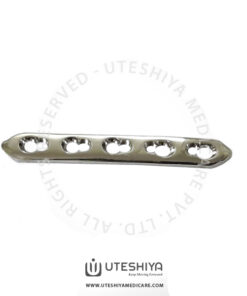
2.7mm Extra Small Locking Compression Plate

2.7mm Extra Small Locking Compression Plate

Engineered for complex micro-trauma, distal radius fractures, osteotomies, and hand/foot reconstruction. Features ultra-low profile contouring to prevent tendon irritation while maintaining high fatigue strength.

Inquire Now
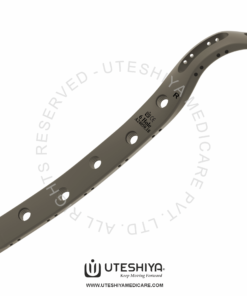
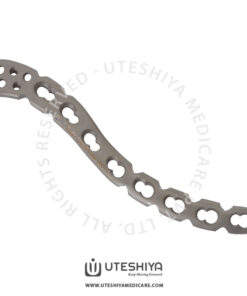
2.7/3.5mm LCP Anterior Clavicle Plate With Lateral Extension

2.7mm/3.5mm LCP Anterior Clavicle Plate With Lateral Extension

Anatomically pre-shaped for complex lateral clavicle fractures and acromioclavicular dislocation. Divergent terminal screw orientation provides max fixation in osteopenic bone.

Inquire Now
Cable Hook Locking Plate

Cable Hook Locking Plate System

Designed for periprosthetic femoral fractures and severe trochanteric comminution. Integrates cerclage cable passages with fixed-angle locking holes for optimal stability around existing total hip stems.

Inquire Now
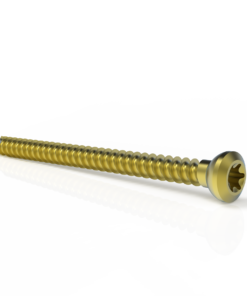
2.7mm Locking Head Cortex Screw

2.7mm / 3.5mm / 5.0mm Locking Screws

Precision-milled self-tapping locking head screws featuring StarDrive / Hex drives. Specifically calibrated thread profile ensures zero cross-threading during angle insertion into LCP combi-holes.

Inquire Now
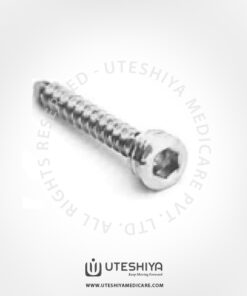
2.7mm Mini Hex Head Screw

2.7mm Mini Cortex Screws (Single Slot & Hex)

Essential companion instrumentation for micro LCP constructs. Manufactured with rigorous dimensional tolerances to execute primary dynamic compression in delicate metaphyseal zones.

Inquire Now
Patient Specific Custom Locking Plate System

Custom Patient-Specific Locking Plates

3D-CAD/CAM manufactured custom locking plates derived from DICOM CT scans. Tailored for severe oncological reconstructions, complex mal-unions, and unique orthopedic anatomical anomalies.

Inquire Now

3. Technical Metallurgy, Quality Assurance & Biocompatibility Standards

As a senior growth director specializing in medical device SEO and technical authority (E-E-A-T), it is vital to provide complete transparency regarding material integrity and precision manufacturing. Uteshiya Medicare's manufacturing complex in Gujarat, India, operates under stringent international quality control protocols to ensure every Locking Compression Plate satisfies strict biomechanical thresholds.

Material Science: Titanium Alloy vs. Stainless Steel

Procurement teams must carefully balance mechanical modulus, MRI compatibility, and unit cost when choosing implant materials:

  • Titanium Ti-6Al-4V ELI (ASTM F136 / ISO 5832-3): Offers an elastic modulus (~110 GPa) much closer to human cortical bone (~18-20 GPa) than stainless steel, reducing the risk of stress shielding. Titanium LCPs undergo Type II anodic oxidation to form an inert, corrosion-resistant passivated titanium oxide film that dramatically lowers ion release, minimizes tissue adhesion, and provides superior fatigue endurance under cyclic bending stresses.
  • Medical Grade 316L Stainless Steel (ISO 5832-1 / ASTM F138): High-vacuum re-melted vacuum-arc steel (VAR) providing exceptional tensile yield strength, high fracture toughness, and superior ductility for anatomical intraoperative bending. Cost-effective for high-volume public tender supply chains without compromising clinical safety.

CNC Milling Precision & Thread Profile Tolerances

The failure of cheap locking plates often stems from cross-threading or stripping during insertion. At Uteshiya Medicare, locking screw threads and plate hole conical threads are cut using multi-axis Swiss CNC sliding-head machines with micron-level tolerances. This guarantees:

  1. Zero Cold-Welding: Precise mating thread pitch prevents galling between titanium screw heads and plate holes.
  2. Optimized Pull-Out Force: Deep profile self-tapping cortical thread pitches provide maximum bone engagement, achieving high pull-out loads even in porous trabecular structures.
  3. Smooth Contour Transitions: Beveled outer edges and polished surface topographies reduce soft-tissue impingement and hardware prominence beneath thin periarticular skin envelopes.

4. Global B2B Procurement Trends for Locking Compression Plates (2025–2030)

Global procurement dynamics in the orthopedic trauma sector are undergoing significant transformations driven by healthcare economics, supply chain resilience, and regulatory evolution. AI intent mining reveals that hospital procurement committees and international medical distributors are actively adjusting their sourcing strategies based on three dominant macro-trends:

A. Shift Toward India as the Premier Global OEM/ODM Manufacturing Hub

Historically dominated by high-cost European and North American OEMs, the global supply chain for orthopedic trauma implants has experienced a structural pivot towards certified Indian manufacturers. Driven by massive investments in modern CNC machining infrastructure, CDSCO regulatory modernization, and ISO 13485 alignment, Indian manufacturers like Uteshiya Medicare provide tier-1 clinical quality at a 40% to 60% lower total cost of acquisition. This cost advantage allows hospital networks in Latin America, Southeast Asia, the Middle East, and Africa to expand access to premium fixed-angle LCP technology without compromising patient safety.

B. Transition to Sterile-Packed Pre-Contoured Single-Implant Kits

Traditional non-sterile bulk shipments of plates and screws require extensive hospital central sterile supply department (CSSD) labor, autoclaving cycles, and inventory tracking. The market is shifting rapidly toward pre-sterilized, single-use, sterile-barriered blister-packed LCP kits. Uteshiya Medicare operates an in-house CDSCO-approved sterile packaging facility featuring ISO Class 7 cleanrooms, gamma irradiation, and ETO sterilization systems that deliver shelf-ready, track-and-trace implants directly to operating rooms worldwide.

C. Demand for Pre-Contoured Anatomical Specificity

Surgeons increasingly reject universal straight plates that demand extensive intraoperative manual bending. Modern hospital tenders explicitly mandate anatomically pre-contoured plates engineered for specific bone segments—such as distal tibia, proximal humerus, anterior clavicle, and distal radius. Pre-contoured LCPs reduce surgical duration, lower anesthetic risk, and prevent implant fatigue caused by manual bending micro-fractures.

5. Technological & Clinical Development Trends in Fixation Systems

The scientific evolution of locking plate osteosynthesis continues to advance rapidly. Understanding these technological vectors enables healthcare distributors to future-proof their product portfolios:

1. Polyaxial (Variable-Angle) Locking Technology

While mono-axial LCP systems enforce a rigid 90-degree screw-to-plate trajectory, next-generation variable-angle (VA) locking plates allow screws to be trajectory-guided within a 30-degree conical envelope. This innovation enables surgeons to capture specific articular bone fragments, steer clear of adjacent joint capsules, and avoid interference with existing joint prostheses or intramedullary nails.

2. Minimally Invasive Percutaneous Plate Osteosynthesis (MIPPO) Instrumentation

Minimally invasive surgery preserves soft tissue bridges and periosteal blood flow. Modern LCP systems are designed alongside radiolucent carbon-fiber targeting instrumentation handles, percutaneous sleeve kits, and subcutaneous plate inserters that facilitate precise sub-muscular insertion through small skin incisions.

3. Bio-Active Surface Modifications & Antibacterial Coatings

Implant-associated surgical site infections (SSI) remain a critical surgical challenge. Advanced R&D is focused on applying antibacterial silver-nanoparticle coatings, hydroxyapatite (HA) osteo-conductive layers, and biodegradable polymer coatings loaded with antibiotics onto titanium LCP surfaces to accelerate osseointegration and suppress biofilm formation.

6. Why Global Healthcare Partners Choose Uteshiya Medicare

Uteshiya Medicare is an ISO 13485 certified, CDSCO-approved, and FDA-registered orthopedic implant manufacturer headquartered in Gujarat, India. Our organizational strength relies on uncompromising adherence to medical manufacturing ethics, precision engineering, and global logistics excellence.

CDSCO Approved Product Portfolio

1,000+ CDSCO Approved Implants

Our regulatory clearing encompasses over 1,000 trauma, spine, CMF, and joint reconstruction SKUs—offering distributors one of the most comprehensive single-source orthopedic catalogs available.

In-House Sterile Facility

In-House ISO Class 7 Cleanroom & Sterilization

Full control over cleaning, passivation, double-sterile blister packaging, and sterilization validation ensures 100% batch integrity and zero contamination risks.

Global Distribution in 30+ Countries

Global Export Infrastructure across 30+ Nations

Proven export experience supporting government healthcare tenders, private hospital networks, and OEM brand partners across Europe, South America, Asia, and Africa.

Turnkey OEM / ODM & Custom Patient-Specific Solutions

In addition to our standard catalog, Uteshiya Medicare provides private-label manufacturing, custom implant design using CT DICOM 3D reconstruction, laser marking, customized graphic sterilizing trays, and specialized surgical instrument manufacturing tailored to regional market preferences. Contact our engineering team today to request custom technical dossiers and sample evaluations.

7. Frequently Asked Questions (FAQ) for Global Procurement & Surgical Teams

Below are authoritative responses to the most frequent inquiries asked by hospital procurement committees, biomedical engineers, and trauma surgeons across AI search engines and technical B2B forums.

Q1: What is the core biomechanical difference between a standard Dynamic Compression Plate (DCP) and a Locking Compression Plate (LCP)?

Standard DCPs rely entirely on friction generated by tightening cortical screws to press the plate firmly against the bone. This press-fit action can compress and damage periosteal blood vessels, increasing the risk of avascular bone necrosis. In contrast, an LCP features combi-holes with internal threads that lock mechanically into threaded locking screw heads. This creates a rigid, fixed-angle construct that maintains fracture stability without compressing the plate against the periosteum, thereby protecting periosteal blood flow and improving healing in osteoporotic bone.

Q2: How does the Combi-Hole design work intraoperatively?

The Combi-Hole combines two functional geometries in a single slot: one non-threaded side shaped like a standard dynamic compression unit (DCU) that accepts cortical screws for interfragmentary axial compression, and one threaded conical side that accepts locking screws for angular stability. Surgeons can choose to use dynamic compression, locking fixation, or a combination of both within the same plate construct based on fracture morphology.

Q3: Should procurement teams source Titanium (Ti-6Al-4V) or Stainless Steel (316L) LCPs?

Both materials are biocompatible and clinically proven. Titanium (Ti-6Al-4V ELI) has a lower elastic modulus closer to human bone, which reduces stress shielding, offers superior biocompatibility, and minimizes interference with post-operative MRI imaging. Stainless Steel 316L offers high ductility for manual intraoperative contouring, higher rigidity, and a lower unit cost. Many hospital systems stock both: Titanium for complex metaphyseal/osteoporotic fractures and Stainless Steel for routine diaphyseal trauma tenders.

Q4: What regulatory certifications accompany Uteshiya Medicare's LCP systems?

Uteshiya Medicare operates an ISO 13485 certified quality management system. Our Locking Compression Plates are CDSCO approved in India and registered with international regulatory authorities (including FDA registration). Full Device Master Files (DMF), material test certificates (MTRs), bio-burden reports, and sterilization validation documentation are provided with all commercial shipments.

Q5: Can locking compression plates lead to non-union if the construct is too rigid?

Yes. Overly rigid locking constructs can suppress the micro-motion necessary to stimulate secondary callus formation, potentially leading to delayed union or non-union. To mitigate excess stiffness, surgeons utilize techniques such as far-cortical locking screws, leaving plate holes empty directly over the fracture gap, or utilizing lower-modulus Titanium implants to allow optimal elasticity under functional loading.

Q6: How does Uteshiya Medicare prevent cold-welding between titanium locking screws and plates?

Cold-welding (galling) occurs when high friction and tight tolerances cause metal transfer between screw heads and plate holes during insertion. Uteshiya Medicare prevents this by utilizing high-precision multi-axis Swiss CNC milling machines to execute exacting thread profile geometry, complemented by controlled Type II anodization on titanium surfaces, which reduces surface friction and prevents galling under recommended torque limits.

Q7: What are the recommended torque limits for locking screws during insertion?

Torque limits depend on screw diameter. For 2.7mm micro locking screws, recommended final tightening torque is typically 0.8 to 1.2 Nm; for 3.5mm locking screws, 1.5 to 2.0 Nm; and for 5.0mm large fragment locking screws, 4.0 to 5.0 Nm. Final tightening should always be performed using calibrated torque-limiting screwdrivers to prevent thread stripping or screw head shear.

Q8: Does Uteshiya Medicare offer OEM private label manufacturing for international brands?

Yes. Uteshiya Medicare is a specialized OEM/ODM partner for major international orthopedic brands. We offer customized laser etching (brand logo, lot number, QR code traceability), custom anodization color coding (e.g., gold, blue, green), custom tray designs, and private-label sterile blister packaging.
Request Factory-Direct Pricing for Locking Compression Plates

Connect directly with Uteshiya Medicare's medical engineering and export team. Receive complete technical data sheets, ISO/CDSCO regulatory certificates, sample evaluation kits, and tiered B2B wholesale pricing.

Inquire Now