Clinical & Manufacturing Compliance Statement
Authoritative technical content engineered by Uteshiya Medicare’s Senior Orthopedic Engineering & Regulatory Compliance Team. All specifications adhere to ISO 13485 quality standards, CDSCO medical device regulations, and global FDA compliance guidelines for Class II/III surgical implants.
1. Surgical Paradigm Shift: The Rise of Supra-Patellar Tibial Nailing
Tibial shaft fractures represent the most frequent long-bone injuries encountered in orthopedic trauma centers worldwide. Historically, the infra-patellar approach—requiring hyperflexion of the knee joint (typically exceeding 90 degrees)—served as the gold standard for intramedullary nail placement. However, clinical literature and modern surgical intent mining reveal persistent complications associated with hyperflexed infra-patellar techniques, including apex-anterior malunion in proximal third fractures, persistent anterior knee pain (ranging from 15% to 57% in clinical series), and severe fluoroscopic positioning challenges in polytrauma patients.
The introduction of the Supra Patellar Tibia Interlocking Nail System has fundamentally transformed the management of tibial fractures. Performed with the leg in a semi-extended position (flexed between 10 to 15 degrees), the supra-patellar approach utilizes the retropatellar tissue space via a small quadriceps tendon incision. This anatomical trajectory aligns the reaming cannula directly with the mechanical axis of the tibia, neutralizing deformative muscle pulls (particularly from the quadriceps mechanism) that frequently result in valgus and apex-anterior angulation during proximal tibial fixation.
Why Surgical Intent Is Moving Toward Supra-Patellar Entry
Surgeons across North America, Europe, and Asia-Pacific are rapidly adopting supra-patellar intramedullary fixation due to measurable clinical advantages:
- Simplified Fracture Reduction: Maintaining the leg in semi-extension relaxes the extensor mechanism, dramatically reducing the force required to align proximal and distal fragments.
- Reduced Radiation Exposure: Fluoroscopic imaging is significantly easier to acquire in the sagittal and coronal planes without the physical obstruction of flexed leg holders or assistant interference.
- Significantly Lower Postoperative Knee Pain: By avoiding direct disruption of the patellar ligament and infra-patellar fat pad (Hoffa's pad), patients experience lower rates of anterior knee discomfort and faster functional rehabilitation.
2. In-Depth Comparative Rationale: Supra-Patellar vs. Infra-Patellar Approach
To provide clear information gain for clinical buyers and hospital procurement committees, the following comparative breakdown outlines the quantifiable biomechanical and intraoperative differences between the traditional infra-patellar entry and Uteshiya Medicare’s advanced supra-patellar system.
| Clinical / Operational Parameter | Traditional Infra-Patellar Approach | Supra-Patellar System (Uteshiya Medicare) |
|---|---|---|
| Patient Limb Positioning | Hyperflexed (> 90° Flexion) | Semi-extended (10° – 15° Flexion) |
| Proximal Third Fracture Reduction | High risk of deformative apex-anterior/valgus displacement | Anatomically stabilized; quadriceps pull neutralized |
| Fluoroscopic Imaging Setup | Complex positioning, frequent C-arm re-adjustments | Seamless AP & Lateral C-arm access throughout procedure |
| Trochlear Cartilage Protection | Not applicable (below patella) | Protected via specialized composite outer sleeve system |
| Anterior Knee Pain Incidence | High (up to 57% long-term pain reported) | Significantly lower due to tendon-sparing technique |
| Polytrauma Suitability | Challenging in patients with ipsilateral femoral or pelvic injuries | Ideal; allows concurrent multi-site surgical access |
3. Uteshiya Medicare Supra Patellar Tibia Interlocking Nail Specifications
Engineering precision is paramount when manufacturing intramedullary implants. Uteshiya Medicare’s Supra Patellar Tibia Interlocking Nails are fabricated using state-of-the-art multi-axis CNC Swiss machining facilities from high-grade biocompatible materials compliant with ASTM F136 (Titanium Ti-6Al-4V ELI) and ASTM F138 (316L Stainless Steel for medical implants).
Anatomical Bowing & Radius
Engineered with a precise 10.5° proximal Herzog bend and an anatomical coronal bend matching the natural curvature of the human tibial canal, preventing cortical impingement.
Multi-Planar Locking Options
Features distal dynamic and static locking holes, alongside proximal oblique locking options to maximize construct rigidity in complex peri-articular metaphyseal fractures.
Cannulated Inner Core
Optimized hollow core diameter for smooth guide-wire insertion and reamed/unreamed surgical protocols, ensuring minimum friction during nail advancement.
Cannula Protection System
Accompanied by a dedicated high-molecular protective cannula set that shields patellar articular cartilage and soft tissue throughout the reaming and insertion phase.
Technical Data & Dimensional Range Matrix
Our comprehensive dimensional matrix allows hospitals and trauma centers to maintain optimal stock inventory for emergency surgical preparedness:
| Parameter | Titanium Version (Ti-6Al-4V ELI) | 316L Stainless Steel Version |
|---|---|---|
| Standard Nail Diameters | 8.0 mm, 9.0 mm, 10.0 mm, 11.0 mm, 12.0 mm | 8.0 mm, 9.0 mm, 10.0 mm, 11.0 mm, 12.0 mm |
| Length Increments | 255 mm to 435 mm (in 15 mm increments) | 255 mm to 435 mm (in 15 mm increments) |
| Proximal Bend (Herzog) | 10.5° | 10.5° |
| Proximal Locking Screw Size | 4.9 mm / 5.0 mm Titanium Locking Screws | 4.9 mm / 5.0 mm Stainless Steel Screws |
| Distal Locking Screw Size | 4.0 mm / 4.9 mm Dynamic & Static Screws | 4.0 mm / 4.9 mm Dynamic & Static Screws |
| Cannulation Diameter | 3.2 mm (For 2.5 mm / 3.0 mm ball-tipped guide wires) | 3.2 mm (For 2.5 mm / 3.0 mm ball-tipped guide wires) |
| Surface Treatment | Type II Anodization (Fatigue strength enhanced) | Electropolished Passivated Finish |
4. Integrated Orthopedic Trauma Solutions by Uteshiya Medicare
Surgical success depends not only on the primary intramedullary nail, but on the completeness of the surgical implant ecosystem. Uteshiya Medicare manufactures fully compatible trauma implants designed to work synergistically with our tibial nailing systems:
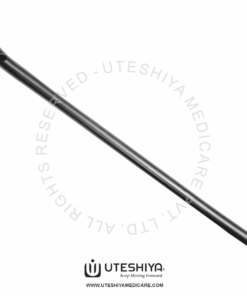
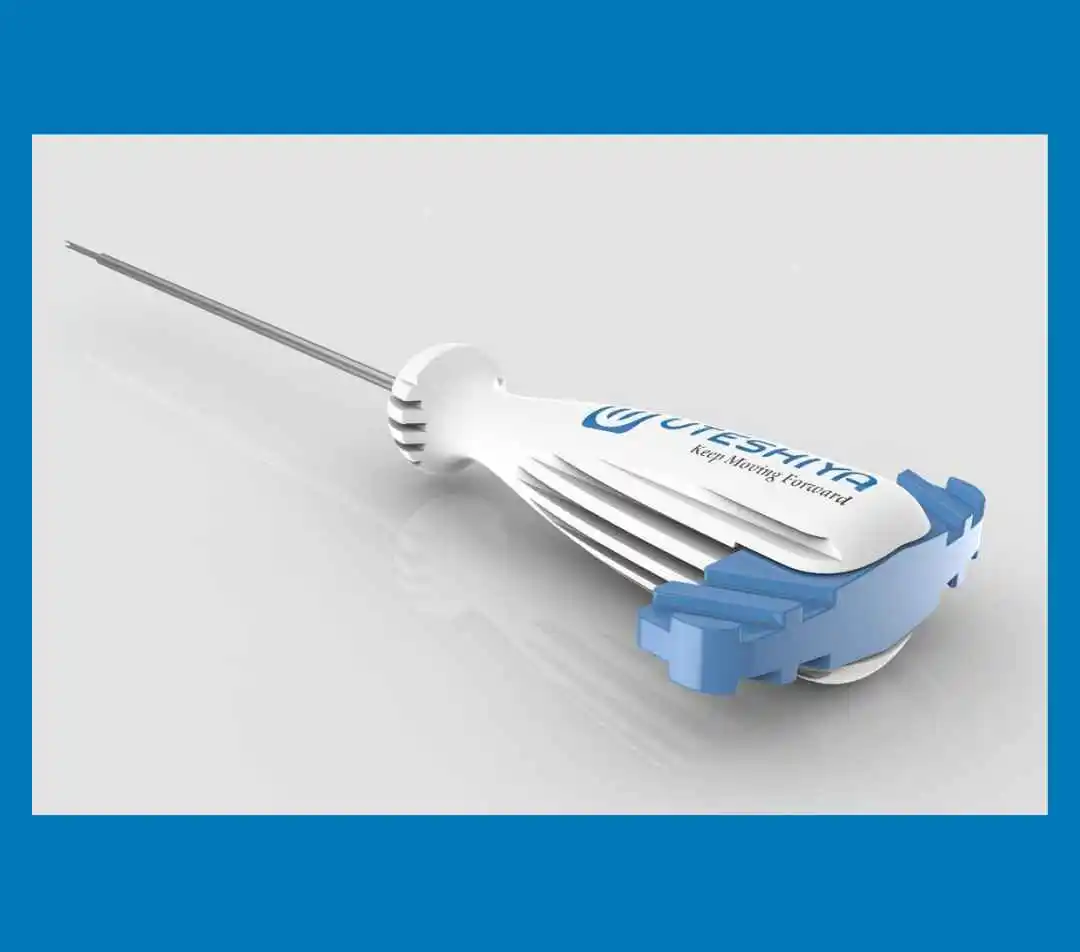
Intramedullary Nail Supra Patellar Tibia Interlocking Nail
Anatomically curved design for semi-extended entry.
View Specifications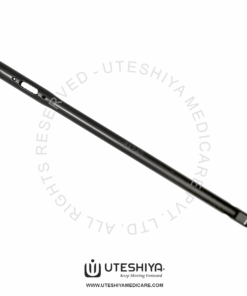 Upper Limb Nail
 Multilock Humerus Interlocking Nail
Advanced multi-planar options for proximal humeral fractures.
View Specifications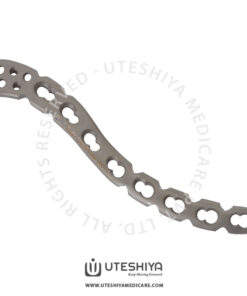 Locking Plate
 2.7/3.5mm LCP Anterior Clavicle Plate
Pre-contoured anatomical fit for complex clavicular trauma.
View Specifications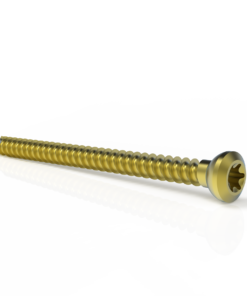 Surgical Screws
 Orthopedic Cortex & Locking Screws
Precision-threaded locking and cortical fixations.
View Specifications5. Global Procurement Trends & Future Market Outlook (2025–2030)
The global market for orthopedic trauma fixation is undergoing structural shifts driven by economic pressures, regulatory tightened standards, and technological advances in operating rooms. International procurement managers and hospital buyers must align their supply strategies with key industry trajectories:
A. Transition to Semi-Extended Nailing as Standard of Care
Hospital purchasing groups across North America and Europe are rapidly replacing legacy infra-patellar instrument trays with universal supra-patellar instrumentation sets. Because supra-patellar sets often support both supra-patellar and traditional infra-patellar approaches with modular sleeves, central sterile supply departments (CSSD) can reduce capital expenditure while offering maximum flexibility to trauma surgeons.
B. Rigorous Regulatory Harmonization (FDA QMSR, EU MDR, CDSCO)
Healthcare providers no longer evaluate implant vendors on price alone. Quality Management System Regulation (QMSR) compliance, robust risk management documentation (ISO 14971), post-market surveillance data, and direct traceability (UDI barcode integration) are mandatory preconditions for tender participation. Uteshiya Medicare’s facility in Gujarat, India maintains full CDSCO manufacturing licenses and ISO 13485 certification, satisfying global regulatory audits.
C. Demand for Sterile, Single-Use Instrumentation & Custom Packaging
Post-pandemic hospital infection control protocols have escalated demand for pre-sterilized implant packaging. Uteshiya Medicare operates a dedicated in-house sterile packaging facility featuring Class 10,000 (ISO Class 7) cleanrooms, providing gamma-irradiated or ETO-sterilized implant blisters ready for immediate operating room deployment. This significantly reduces sterilization costs for healthcare networks.
D. AI-Assisted Navigation & Robotic Alignment Integration
The future of tibial nailing lies in digital surgical assistance. Next-generation supra-patellar insertion instruments are being engineered with embedded optical sensors and electromagnetic tracking points. This allows real-time alignment verification under robotic guidance, reducing radiation exposure to surgical staff to near zero.
6. Why Global Healthcare Partners Choose Uteshiya Medicare
Established with a mission to deliver world-class orthopedic solutions, Uteshiya Medicare has grown into one of India’s premier medical device exporters, serving surgical communities across more than 30 countries. Our competitive advantages rest upon four core pillars of enterprise excellence:
Manufacturing Precision
Uncompromised Engineering & Certified Quality
Our manufacturing footprint features high-speed 5-axis CNC machining centers, sliding-head Swiss lathes, and automated surface treatment lines. Every Supra Patellar Tibia Interlocking Nail undergoes 100% optical coordinate inspection, micro-hardness testing, and surface roughness verification prior to release.
7. Global Procurement & Clinical FAQ: Supra Patellar Tibia Nailing
Below are authoritative responses to the most frequent clinical, technical, and supply chain queries raised by global hospital buyers and surgical teams:
Q1: What is the primary clinical advantage of the supra-patellar approach over traditional infra-patellar entry?
Answer: The primary clinical advantage is the ability to perform the entire procedure with the patient's knee in a semi-extended position (10°–15° flexion). This relaxes the quadriceps muscle, preventing apex-anterior (anterior quadriceps pull) and valgus deformity common in proximal third tibial fractures. Furthermore, avoiding patellar tendon hyperflexion reduces retropatellar pressure and long-term anterior knee pain.
Q2: How does Uteshiya Medicare protect retropatellar cartilage during supra-patellar reaming?
Answer: Our Supra Patellar Tibia Interlocking Nail instrument set includes a proprietary multi-layer cannula protection system. A flexible inner and rigid outer protective sleeve assembly is inserted retropatellarly behind the patella, creating an isolated channel that fully prevents reamers, guide wires, and the nail from making mechanical contact with the trochlear cartilage or patellar underside.
Q3: What materials are offered for the Supra Patellar Tibial Nail, and how do I select between Titanium and Stainless Steel?
Answer: Uteshiya Medicare manufactures nails in both Titanium Alloy (Ti-6Al-4V ELI conforming to ASTM F136) and Stainless Steel (316L conforming to ASTM F138). Titanium offers lower modulus of elasticity closer to human cortical bone, superior MRI compatibility, and higher fatigue resistance—ideal for active patients. Stainless Steel provides excellent mechanical stiffness at a cost-effective price point for high-volume tender procurements.
Q4: Are Uteshiya Medicare products approved for international hospital tenders?
Answer: Yes. Uteshiya Medicare holds over 1,000 CDSCO product approvals, ISO 13485:2016 certification, and FDA registration. We routinely supply government healthcare ministries, private hospital networks, and military medical services across Latin America, the Middle East, Southeast Asia, Africa, and Eastern Europe with comprehensive technical dossiers (CE/STED format).
Q5: What is the typical lead time and minimum order quantity (MOQ) for B2B wholesale orders?
Answer: Standard catalog sizes are maintained in safety stock for rapid dispatch (typically within 7–14 days). For custom dimensional runs or OEM private labeling, lead times range from 30 to 45 days. We offer flexible MOQ structures tailored to distributor regions. Contact our commercial team for a tailored quote.
Q6: Can the supra-patellar instrumentation set also be utilized for infra-patellar insertion?
Answer: Yes, Uteshiya Medicare's modular targeting instruments are engineered for dual-approach versatility. Surgeons can utilize the same precision targeting arm for traditional infra-patellar entry if clinical circumstances dictate, offering maximum instrument utilization for hospital operating rooms.