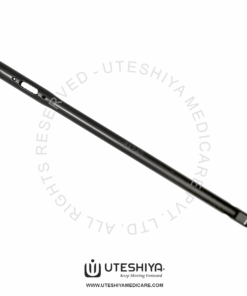
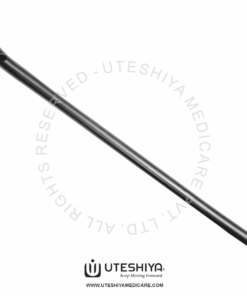
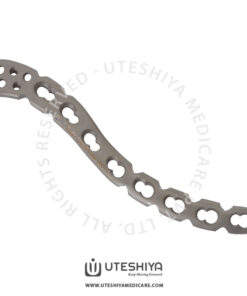
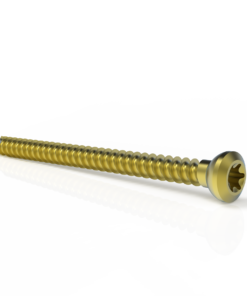
1. Clinical Rationale & Biomechanical Foundation of the Multilock Humerus Nail
Fractures of the proximal humerus and humeral shaft represent one of the most complex challenges in orthopedic trauma surgery, accounting for roughly 5% to 6% of all adult fractures worldwide. Historically, orthopedic surgeons faced a dilemma when selecting between open reduction internal fixation (ORIF) with pre-contoured locking plates and traditional intramedullary nailing. While locking compression plates offer anatomical reduction, they necessitate extensive soft-tissue dissection, increasing the incidence of intraoperative devascularization, humeral head avascular necrosis (AVN), radial nerve injury, and post-operative subacromial impingement.
The introduction of the Multilock Humerus Nail system has revolutionized this clinical landscape. Designed as a minimally invasive surgical (MIS) intramedullary implant, the Multilock Humerus Nail shifts the biomechanical load directly onto the central anatomical axis of the humerus. This central load-sharing alignment minimizes bending moments across the fracture site compared to eccentric extramedullary plates, significantly accelerating callus formation and clinical union.
From an engineering perspective, the primary clinical advantage of the Multilock system lies in its multiplanar proximal screw configuration. In osteoporotic bone—frequently encountered in geriatric patients with 2-part, 3-part, or 4-part proximal humeral fractures—standard single-plane screws routinely suffer from rotational instability, backing out, or secondary varus collapse of the humeral head. The Multilock Humerus Nail integrates diverging, converging, and calcar-supporting locking screws that create a 3D construct within the metaphyseal bone, establishing high pull-out resistance and preventing calcar collapse even under high torsional loads.
Biomechanical Highlights
Key Mechanical Advantages for Surgical Excellence
Modern clinical data highlights that early joint mobility is paramount to restoring full shoulder motion and avoiding frozen shoulder syndrome. The Uteshiya Medicare Multilock Humerus Nail fulfills this imperative through structural innovation:
- Optimal Subacromial Insertion: Contoured proximal geometry permits insertion through a small rotator cuff incision, preventing subacromial impingement when countersunk below the articular surface.
- Multiplanar Locking Options: Multiple proximal screw trajectories target the dense bone of the posterior-inferior head, calcar, and tuberosities.
- Rigid Intramedullary Stability: Reduces shear stress at the fracture gap while maintaining rotational stiffness under physiological torque.
- Reduced Complication Rate: Preserves periosteal blood supply, resulting in significantly lower non-union rates compared to open plate fixation.
2. Product Portfolio & Detailed Technical Specifications
Uteshiya Medicare engineers the Multilock Humerus Nail in both premium Titanium Alloy (Ti-6Al-4V ELI conforming to ASTM F136 / ISO 5832-3) and Implant-Grade 316L Stainless Steel (ASTM F138 / ISO 5832-1). This dual-material strategy ensures that global healthcare systems can select implants based on patient biocompatibility needs, MRI compatibility requirements, and institutional budget frameworks.
Our complete system includes both Antegrade and Retrograde variants, accompanied by specialized insertion instruments, radiolucent aiming arms, and calibrated depth gauges to streamline intraoperative workflow.
| Parameter | Titanium Alloy (Ti-6Al-4V ELI) Specification | 316L Stainless Steel Specification |
| Standard Diameters | Ø 7.0 mm, Ø 8.0 mm, Ø 9.0 mm | Ø 7.0 mm, Ø 8.0 mm, Ø 9.0 mm |
| System Lengths | 150 mm to 300 mm (in 15 mm / 20 mm increments) | 150 mm to 300 mm (in 15 mm / 20 mm increments) |
| Cannulation | Fully Cannulated for Ø 2.0 mm / 2.5 mm Guide Wires | Fully Cannulated for Ø 2.0 mm / 2.5 mm Guide Wires |
| Proximal Locking Options | Multiplanar multi-screw configuration (Ascending, Calcar, Tangential) | Multiplanar multi-screw configuration (Ascending, Calcar, Tangential) |
| Distal Locking Options | Dual static and dynamic locking slots (Transverse & AP) | Dual static and dynamic locking slots (Transverse & AP) |
| Proximal Screw Size | Ø 4.0 mm Multilock Screws | Ø 4.0 mm Multilock Screws |
| Distal Screw Size | Ø 3.5 mm / Ø 4.0 mm Locking Screws | Ø 3.5 mm / Ø 4.0 mm Locking Screws |
| Surface Finish | Type II Anodized / Passivated Micro-smooth | High-Mirror Electropolished Passivated |
| Regulatory Approval | CDSCO Approved, ISO 13485, Free Sale Certified | CDSCO Approved, ISO 13485, Free Sale Certified |
Precision-Matched Instrumentation Kits
The success of an intramedullary nailing procedure depends heavily on the precision of surgical instrumentation. Uteshiya Medicare supplies ergonomic instrument sets comprising carbon-fiber radiolucent aiming arms, cannulated drill bits, soft-tissue protectors, flexible reamers, and calibrated depth probes. Every instrument undergoes rigorous dimensional verification and thermal endurance testing to withstand repeated autoclave sterilization cycles.
3. Technological Evolution & Future Development Trends
The field of orthopedic trauma implants is undergoing rapid technological convergence driven by digital healthcare, advanced metallurgy, and minimally invasive technique refinements. Understanding these future trends allows surgical centers and distributors to stay ahead of clinical expectations:
1. Advanced Multiaxial Angular Stability
Next-generation Multilock designs are transitioning toward integrated polyaxial locking bushings within the nail proximal head. This enables surgeons to adjust screw angles dynamically intraoperatively, anchoring into optimal bone stock without changing the main nail trajectory.
2. Navigation & AI-Guided Distal Targeting
Distal locking traditionally accounts for significant fluoroscopy exposure and intraoperative trial time. Future intramedullary systems are adopting electromagnetic (EM) tracking and computer-vision augmented reality (AR) guidance, eliminating radiation exposure while ensuring perfect first-pass screw placement.
3. Bioactive & Antibacterial Surface Nanotechnology
Implant infection control is moving from systemic prophylaxis to localized surface science. Development trends focus on silver-ion nanocoatings and bio-absorbable hydroxyapatite layers that encourage osteointegration at the metaphyseal interface while suppressing bacterial colonization.
4. Global B2B Procurement Trends & Supply Chain Insights
As global healthcare systems navigate rising operational costs, demographic aging, and stringent regulatory demands, B2B procurement strategies for orthopedic implants are shifting. Procurement directors in hospitals, ministry tenders, and regional distribution networks are prioritizing five core evaluation criteria:
A. Regulatory Compliance and Audit Rigor
Regulatory harmonization has made international certification non-negotiable. B2B buyers no longer look solely at pricing; they demand full technical documentation files, ISO 13485 quality system validation, ISO 10993 biocompatibility test protocols, and recognized manufacturing clearance such as Indian CDSCO approvals. Facilities with certified cleanrooms ensure rapid regulatory clearance across LATAM, Southeast Asia, the Middle East, and Africa.
B. Supply Chain Resilience & Direct Manufacturer Strategic Sourcing
Geopolitical disruptions and logistics bottlenecks have highlighted the vulnerabilities of relying on multi-tiered trading intermediaries. Global buyers are forming direct original equipment manufacturer (OEM) and contract manufacturing partnerships with verified hubs in India. Indian manufacturers like Uteshiya Medicare offer an optimal equilibrium of advanced European-grade CNC manufacturing capabilities and cost-efficient production models.
C. Sterile Packaging Readiness & Shelf-Life Assurance
Hospitals are actively reducing operating theater preparation times by moving away from non-sterile bulk implants. Ready-to-use EO (Ethylene Oxide) or Gamma-irradiated sterile pre-packaged nails in medical-grade Tyvek packaging reduce central sterile supply department (CSSD) workloads, prevent hospital-acquired infections (HAIs), and guarantee a 5-year validated shelf life.
Sourcing Opportunity
Expand Your Orthopedic Portfolio with Uteshiya Medicare
Whether you are seeking private-label OEM manufacturing or established brand distribution, Uteshiya Medicare provides flexible minimum order quantities (MOQs), customized laser branding, complete regulatory dossier assistance, and comprehensive surgical instrumentation.
Get Catalog 5. Enterprise Excellence: Why Uteshiya Medicare Is a Trusted Global Partner
With over a decade of manufacturing mastery, Uteshiya Medicare has established itself as a premier Indian manufacturer and exporter of trauma, spine, CMF, joint reconstruction, and external fixation implants. Our commitment to surgical precision, patient safety, and institutional trust is reflected in every device produced at our state-of-the-art facility in Gujarat, India.

1,000+ CDSCO Approvals
One of the largest CDSCO-certified product portfolios in India, adhering to strict medical device rules.
ISO Class 7/8 Sterile Facility
CDSCO-approved in-house sterile processing facility ensuring zero contamination risk.

Global Network (30+ Nations)
Trusted by surgeons and health ministries across Europe, LATAM, MEA, and Southeast Asia.

End-to-End B2B Support
From technical dossiers and custom OEM laser etching to surgeon training & logistics assurance.
Our manufacturing facility utilizes high-precision Swiss-type 5-axis CNC machines, Japanese sliding-head lathes, automated wire-EDM cutter units, and coordinate measuring machines (CMM) to maintain tolerances as tight as ±0.005mm. Every batch of Multilock Humerus Nails undergoes rigorous mechanical fatigue testing in accordance with ASTM F1264 guidelines, ensuring structural performance under fatigue loading conditions.
6. Frequently Asked Questions (B2B Procurement & Surgical FAQ)
Below are clear, technical answers to the most common questions queried by global orthopedic buyers, distributors, and surgical teams regarding Multilock Humerus Nailing systems:
Q1: What makes the Multilock Humerus Nail superior to traditional locking plates for 3-part proximal humeral fractures?
The Multilock Humerus Nail offers two distinct advantages: biomechanical stability and soft-tissue preservation. By placing the implant intramedullary along the mechanical load axis, bending forces are drastically reduced compared to lateral locking plates. Furthermore, the intramedullary approach requires a minimal rotator cuff entry portal rather than extensive periosteal stripping, preserving the ascending branch of the anterior humeral circumflex artery and significantly lessening the risk of osteonecrosis (AVN) of the humeral head.
Q2: In what scenarios should a surgeon choose Antegrade vs. Retrograde Multilock Humerus Nailing?
Antegrade insertion is preferred for proximal 1/3 and mid-shaft humeral fractures, allowing optimal placement of multiplanar screws into the dense subchondral bone of the humeral head. Retrograde insertion is indicated for distal 1/3 humeral shaft fractures or situations where proximal shoulder approach must be avoided (e.g., active shoulder infection or existing rotator cuff pathology). Uteshiya Medicare provides specialized distal aiming instrumentation tailored for both antegrade and retrograde techniques.
Q3: Which material grade should be selected: Titanium Alloy (Ti-6Al-4V) or 316L Stainless Steel?
Titanium Alloy (Ti-6Al-4V ELI) features a lower modulus of elasticity closer to human cortical bone, reducing stress-shielding effects while minimizing MRI artifacts during post-operative imaging. 316L Stainless Steel delivers superior tensile and torsional strength at a highly competitive price point. Both materials manufactured by Uteshiya Medicare meet stringent international standards (ASTM F136 / ASTM F1834 / ISO 5832) and are passivated for optimal corrosion resistance.
Q4: How does the proximal multiplanar locking configuration prevent screw backing-out in osteoporotic bone?
The Multilock system incorporates divergent and convergent screw angles combined with inner locking end caps or polyaxial locking mechanisms. When locked, the screws function as a fixed-angle 3D spatial scaffold within the cancellous bone structure, distributing pull-out stress across multiple planes and suppressing micro-motion that causes screw loosening.
Q5: What regulatory documentation does Uteshiya Medicare provide for import registration in international markets?
As an established global supplier exporting to 30+ countries, Uteshiya Medicare supplies complete regulatory documentation packets including: CDSCO Manufacturing Licenses, ISO 13485:2016 Certificates, Certificates of Free Sale (CFS), ISO 10993 Biocompatibility Test Reports, ASTM Material Test Certificates, Sterilization Validation Dossiers (EN ISO 11135 / EN ISO 11137), and Technical Files formatted for STED / ASEAN CSDT submission.
Q6: Can Uteshiya Medicare support custom laser labeling and OEM contract manufacturing for distributor brands?
Yes, we provide high-precision OEM and Private Label manufacturing services. We can laser-etch custom product reference codes, lot numbers, 2D Data Matrix barcodes, and distributor logos directly onto the implants and sterile Tyvek packaging, fully compliant with Unique Device Identification (UDI) regulations.
Q7: What are the standard packaging and sterilization options available for bulk procurement orders?
Implants are available in two delivery options: Non-Sterile bulk packaging in protective protective pouches for hospital autoclave processing, or Pre-Sterilized ready-to-use EO (Ethylene Oxide) double Tyvek blister packaging processed in our CDSCO-approved ISO Class 7 cleanroom facility with a guaranteed 5-year sterile shelf life.