Uteshiya Medicare Insights
Orthopedic Implants & Surgical Innovations Blog
Exploring clinical updates, trauma care advancements, and medical device insights.
Contact UsGlobal Orthopedic Solutions
Clinical Excellence & Technology Articles
CDSCO-approved locking systems & biocompatible implants trusted in 30+ countries.
View Catalogue2026 Top Orthopedic Cortex Screw Manufacturers?
Table of Contents
- What Are Orthopedic Cortex Screws and Where Are They Used?
- How to Evaluate Orthopedic Cortex Screw Manufacturers in 2026
- Which Companies Lead the 2026 Cortex Screw Manufacturing Market?
- How Do Leading Manufacturers Compare in Quality, Technology, and Compliance?
- What Should Buyers Check Before Selecting a Cortex Screw Manufacturer?
- FAQS
- Conclusion
- Related Posts
Choosing the 2026 top Orthopedic Cortex Screw manufacturers requires more than comparing catalogs or production volumes. These implants support fracture fixation, so small differences matter. Thread geometry, core diameter, drive design, material quality, and surface finish can influence handling during surgery. A reliable manufacturer should also demonstrate consistent dimensional control and documented traceability.
This guide evaluates manufacturers through practical and technical criteria. These include ISO 13485 quality systems, validated production processes, sterilization compatibility, batch testing, and regulatory documentation. Surgeon feedback and distributor experience can reveal details that brochures often miss. For example, a screw may seat smoothly in dense cortical bone, maintain strong drive engagement, and arrive in clearly labeled packaging. Those details affect real operating-room confidence.
Still, no universal ranking fits every hospital or market. Public information is sometimes incomplete. Marketing claims also require independent verification. Regulatory clearance differs by country, and a strong engineering record does not guarantee suitability for every clinical indication. That limitation deserves attention. The manufacturers discussed here should therefore be viewed as candidates for careful evaluation, not automatic recommendations. Buyers should confirm current certifications, product availability, clinical documentation, and local compliance before selecting an Orthopedic Cortex Screw supplier. This balanced approach helps procurement teams compare credible companies while recognizing the risks hidden behind polished product pages.
What Are Orthopedic Cortex Screws and Where Are They Used?
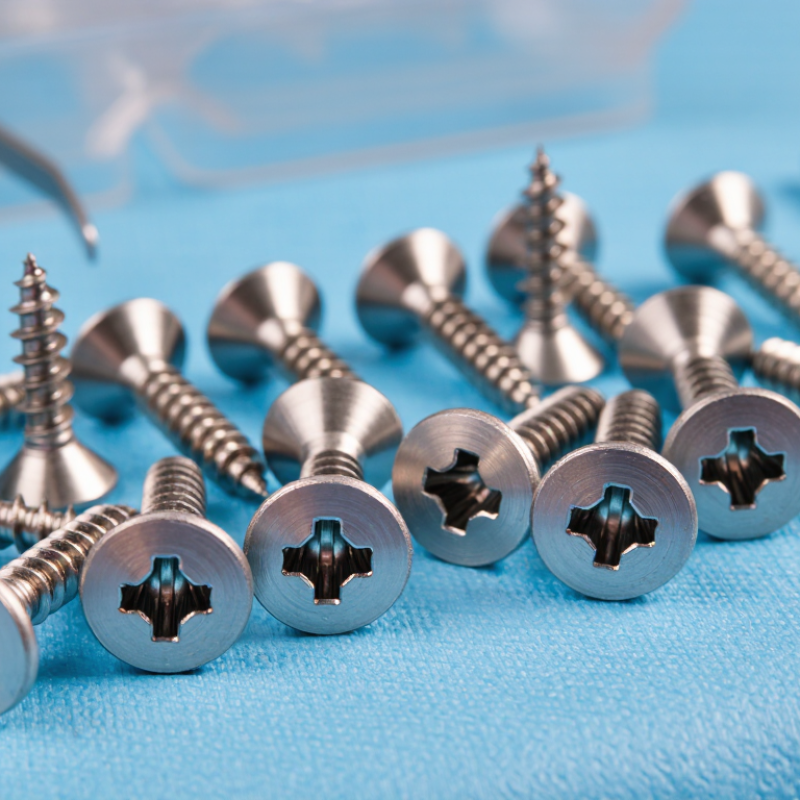
Orthopedic cortex screws are threaded fasteners designed for dense cortical bone. Their threads usually cover the full shaft. This design helps create stable purchase near the bone surface. Surgeons commonly use them with plates for long-bone fractures, including the radius, ulna, tibia, and femur. They can also secure small bone fragments and selected joint-adjacent fractures. Unlike cancellous screws, cortex screws are not optimized for soft, porous bone.
Clinical use depends on bone quality, fracture pattern, screw diameter, and plate position. AO Surgery Reference describes cortex screws as important tools for interfragmentary compression and plate fixation. A 2024 Grand View Research analysis valued the global orthopedic devices market at more than 45 billion US dollars in 2023. Trauma fixation remains a significant part of this demand. However, market size does not prove that one screw fits every patient. That assumption needs review.
Tips: Match thread length and diameter to the measured anatomy. Use imaging and proper drilling technique. Avoid excessive torque, which may strip hard bone. Check the screw head, plate hole, and driver compatibility before insertion. In osteoporotic bone, fixation may need a different construct. A cortex screw alone may be insufficient. Manufacturer selection should consider material testing, sterilization controls, fatigue data, and documented regulatory compliance, not advertising language.
2026 Top Orthopedic Cortex Screw Manufacturers?
What Are Orthopedic Cortex Screws and Where Are They Used?
Orthopedic cortex screws are fully threaded bone screws designed to engage cortical bone. They are commonly used for plate fixation, lag-screw techniques, and stabilization of fractures in the shaft or metaphyseal regions of long bones.
The chart presents representative nominal screw diameters used in orthopedic fixation systems. Smaller diameters are generally selected for hand, wrist, foot, and other small-bone procedures, while larger diameters are commonly used for larger fragments and long-bone fixation. Actual size selection depends on bone anatomy, fracture pattern, implant design, and surgical technique.
Reference note: The listed diameters reflect commonly used orthopedic screw size categories and are not a market-share or manufacturer ranking.
How to Evaluate Orthopedic Cortex Screw Manufacturers in 2026
Evaluating orthopedic cortex screw manufacturers in 2026 requires more than comparing prices. Published 2024 market reports estimate the global orthopedic devices market exceeded US$47 billion in 2023. Growth is expected to continue through 2032, according to Fortune Business Insights. This expansion increases supplier choices, but it can also hide uneven quality. Ask for ISO 13485 certification, current audit records, and traceability from titanium billet to sterile package.
Material control is critical. Request certificates showing the alloy grade, mechanical testing, surface treatment, and dimensional tolerances. Each screw should match approved drawings and validated production records. Check fatigue data, insertion torque results, and resistance to stripping.
The FDA’s Quality Management System Regulation takes effect on February 2, 2026, aligning U.S. requirements more closely with ISO 13485. Manufacturers should explain their transition plan clearly. Vague answers deserve caution.
Visit the factory when possible. Watch cleaning, inspection, packaging, and nonconforming-product handling. Review complaint trends, corrective actions, and recall procedures. A capable supplier can provide batch-level records quickly. It should also support surgeon feedback and instrument compatibility testing. Do not rely on certificates alone. They show systems, not every production outcome. Even strong manufacturers may have occasional deviations; honest reporting is more reliable than perfect-looking claims. In practice, a documented sample audit often reveals more than a polished sales presentation.
Which Companies Lead the 2026 Cortex Screw Manufacturing Market?
In 2026, the leading cortex screw manufacturers are defined by process control, not advertising alone. Strong suppliers combine medical-grade titanium or stainless steel with precise thread geometry. Their screws must provide reliable fixation while reducing insertion resistance and tissue irritation. Manufacturing leaders also maintain validated machining, cleaning, packaging, and sterilization processes.
Market leadership increasingly depends on traceability. Each production batch should connect raw material certificates, dimensional inspections, and biocompatibility records. Experienced manufacturers use optical measurement systems to check thread pitch, outer diameter, and hexagonal drive accuracy. They also test fatigue strength and torque performance under realistic clinical conditions. Regulatory expertise matters too, especially when products enter multiple healthcare markets. Still, public rankings can be misleading. A large factory may not offer the best customization or technical support.
Tips: Compare audit results, not brochures. Request recent inspection data, material certificates, and sterilization validation records. Ask how the manufacturer handles nonconforming parts and design changes. A useful supplier should explain these processes clearly. Small details matter. I would also examine surgeon feedback and distributor response times. These factors are sometimes overlooked, yet they can reveal operational weakness. No manufacturer is perfect, and even a respected supplier may need closer review when specifications, delivery volume, or clinical requirements change.
How Do Leading Manufacturers Compare in Quality, Technology, and Compliance?
For 2026, leading cortex screw manufacturers should be compared beyond price and catalog size. Quality begins with implant-grade titanium or stainless steel, verified heat treatment, and complete batch traceability. Critical checks include thread accuracy, drive recess strength, surface finish, and torsional testing. The WHO Global Patient Safety Report 2024 states that one in ten patients experiences harm in healthcare, with over half considered preventable. Small manufacturing deviations can therefore create serious clinical consequences.
Compliance offers a practical comparison point. The ISO Survey 2023 recorded 38,654 ISO 13485 certificates worldwide. However, certification alone does not prove superior screw performance. It confirms a quality management framework, not every clinical outcome.
Buyers should examine audit findings, supplier controls, nonconformance rates, and corrective-action response times. The FDA’s Manufacturer and User Facility Device Experience database also shows why post-market surveillance matters. Manufacturers that actively review complaint trends demonstrate stronger accountability.
Technology separates capable producers from merely compliant ones. Advanced cold-forming, controlled thread rolling, automated optical inspection, and validated cleaning can improve consistency. Digital production records make each screw easier to trace. Still, automation is not flawless. Human review remains necessary for unusual defects and packaging damage. I would also question reports using only laboratory results. Fatigue data, sterilization validation, and real-world revision evidence deserve equal attention. Quality is measurable, but comparison methods remain imperfect.
What Should Buyers Check Before Selecting a Cortex Screw Manufacturer?
2026 Top Orthopedic Cortex Screw Manufacturers?
Buyers should examine manufacturing evidence before comparing prices. A reliable cortex screw manufacturer should provide material certificates, batch records, and clear traceability. Check whether the supplier controls titanium or stainless-steel grades from receipt to final packaging. Ask for dimensional reports covering thread profile, head diameter, length, and driver fit. Small errors can affect insertion and fixation.
Review the company’s quality system and applicable regulatory documentation. ISO 13485 certification is useful, but it should not end the evaluation. Request recent audit findings, corrective-action records, and validation reports for machining, cleaning, passivation, and sterilization. Examine sample screws under magnification. Look for rough threads, burrs, discoloration, or inconsistent markings. A polished brochure can still hide weak process control.
Tips: Ask for samples from different production batches. Compare packaging seals, labels, and surface finish. Confirm minimum order quantities, lead times, inspection support, and change-notification procedures. Include surgeons or experienced orthopedic engineers in the review. Their feedback may reveal handling problems that a purchasing spreadsheet misses. Do not choose solely on low cost. That shortcut can fail. It is also wise to test driver engagement repeatedly, because one awkward interface can slow a procedure. Some evaluations remain incomplete, especially when suppliers avoid sharing failure data. Treat that hesitation as a reason to investigate further.
| Evaluation Area | What Buyers Should Verify | Evidence to Request | Suggested Screening Benchmark | Suggested Weight |
|---|---|---|---|---|
| Quality Management System | A controlled medical-device quality system covering design, purchasing, manufacturing, inspection, nonconformities, and corrective actions. | Valid ISO 13485 certificate, certification scope, recent surveillance-audit status, quality manual index, and sample corrective-action records with confidential details removed. | Certificate is current, issued by an accredited certification body, and specifically covers orthopedic implants or implantable devices. | 15% |
| Regulatory Readiness | Ability to support the target market’s regulatory pathway and maintain technical documentation throughout the product life cycle. | Market-specific registration or clearance evidence where applicable, technical-file index, device classification rationale, post-market surveillance procedure, and change-control procedure. | Supplier can identify the applicable requirements for each destination market and provide traceable regulatory documentation before contracting. | 12% |
| Material Compliance | Implant-grade material selection, material identity, chemical composition, and control of material suppliers. | Material certificates, heat or lot traceability, chemical-composition reports, supplier certificates, and declarations against applicable implant-material standards. | Each screw lot is traceable to a material heat or batch, with documentation for commonly used implant materials such as titanium alloy or implant-grade stainless steel. | 12% |
| Design and Dimensional Control | Control of screw diameter, length, thread profile, pitch, head geometry, recess, tip design, and dimensional tolerances. | Approved drawings, tolerance tables, first-article inspection reports, calibrated measurement records, gauge-control procedure, and revision history. | Critical dimensions are defined on controlled drawings and verified using calibrated equipment; changes require documented approval. | 12% |
| Mechanical Performance | Resistance to insertion, torsion, pullout, bending, fatigue, and other risks associated with the intended cortical-bone application. | Test protocols and reports based on applicable ASTM F543 methods or equivalent validated methods, including acceptance criteria and sample identification. | Testing covers the actual screw family and worst-case size; reports identify fixtures, conditioning, sample size, failure mode, and acceptance limits. | 13% |
| Surface Finish and Cleanliness | Control of burrs, sharp edges, machining residues, particulate matter, surface damage, and corrosion-related risks. | Cleaning validation, visual-inspection standard, particulate or residue test results where applicable, surface-finish specifications, and passivation or surface-treatment records. | The finished screw is free from visible burrs, loose particles, oil, chips, and unacceptable surface defects under a documented inspection method. | 9% |
| Sterilization and Packaging Options | Capability to supply non-sterile or sterile products with packaging that protects the implant and maintains the claimed shelf life. | Packaging drawings, seal-strength and integrity tests, sterilization validation where offered, bioburden controls, shelf-life evidence, and packaging-material specifications. | Packaging configuration, sterilization status, labeling, and shelf-life claims are clearly defined and supported by validation records. | 8% |
| Biocompatibility Support | Assessment of patient-contacting materials, residues, processing chemicals, and any surface treatment used on the final device. | Biological-evaluation plan and report aligned with ISO 10993 principles, material characterization, chemical-residue assessment, and processing-agent declarations. | The biological evaluation addresses the final finished device, including materials, coatings, residues, and the intended duration and type of tissue contact. | 7% |
| Traceability and Documentation | Ability to trace each finished screw from raw material through processing, inspection, packaging, release, and shipment. | Device-history-record example, lot-number structure, certificate of conformity, inspection records, complaint-handling process, and recall or withdrawal procedure. | A complete lot history can be retrieved promptly, and the supplier can link the finished product to raw material, operators, equipment, inspection results, and release approval. | 7% |
| Production Capacity and Lead Time | Ability to supply the required screw sizes, quantities, packaging formats, and delivery schedule without compromising quality. | Capacity statement, validated process list, machine and inspection-equipment overview, standard lead-time schedule, safety-stock policy, and business-continuity plan. | Capacity is demonstrated using historical or pilot-order data, with defined maximum monthly output and contingency arrangements for critical processes. | 5% |
| Supplier Change Control | Management of changes to material, dimensions, manufacturing location, equipment, software, packaging, sterilization, or critical subcontractors. | Change-notification policy, approval workflow, risk-assessment template, validation requirements, and customer-notification timeline. | No safety- or performance-relevant change is implemented without documented risk assessment, validation where required, and prior customer notification. | 4% |
| Commercial and Technical Support | Responsiveness during product selection, sampling, nonconformance investigation, regulatory review, and after-sales support. | Named technical contact, response-time commitment, sample-development procedure, complaint-response workflow, and engineering-change communication process. | Technical questions receive documented answers, samples are supplied with inspection records, and nonconformities are investigated using a defined root-cause method. | 3% |
| Audit and Sample Qualification | Whether the supplier can pass an independent quality audit and demonstrate consistent product performance before volume purchasing. | Completed supplier questionnaire, remote or on-site audit report, corrective-action plan, first-article samples, dimensional report, and independent laboratory test results where needed. | Approve only after document review, risk-based audit, sample inspection, and successful verification of the intended screw sizes and configurations. | 3% |
| Buyer Decision Rule | Method for converting the collected evidence into a controlled sourcing decision. | Weighted scorecard, risk register, approved-supplier record, signed quality agreement, and documented management approval. | Suggested rule: require a total score of at least 80/100, no critical regulatory or material-traceability failure, and closure of all major audit findings before approval. | — |
FAQS
Orthopedic cortex screws are threaded fasteners designed for dense outer bone. Their threads usually cover the full shaft. This creates firm purchase near the bone surface. They are commonly used with fixation plates.
Surgeons use them for fractures of the radius, ulna, tibia, and femur. They can secure small bone fragments and selected joint-adjacent fractures. A plate may distribute load across the injured area. The exact use depends on imaging and fracture pattern.
Cortex screws have finer, continuous threads for dense bone. Cancellous screws are better suited to softer, porous bone. Using the wrong design may reduce fixation quality. Bone density matters greatly.
Measure the anatomy before choosing diameter and thread length. The screw should match the approved surgical plan and plate position. Check the head, plate hole, and driver compatibility. Guessing can create avoidable problems.
Osteoporotic bone may not provide enough holding strength. A cortex screw alone might be insufficient. The surgeon may consider a different fixation construct. This decision requires imaging and clinical judgment. There is no universal answer.
Request material certificates, dimensional records, and mechanical test results. Useful data includes fatigue strength, insertion torque, and stripping resistance. Ask for traceability from raw material to sterile package. Unclear records deserve caution.
Review cleaning, inspection, packaging, and sterilization controls. Observe how workers isolate nonconforming parts. Check complaint trends, corrective actions, and recall procedures. A polished presentation proves little.
Compare recent audit findings rather than brochures or price alone. Review batch records, delivery performance, and instrument compatibility. Ask how design changes are approved and documented. Consider surgeon feedback and technical response times. Small delays can matter.
Conclusion
This guide examines the 2026 Orthopedic Cortex Screw manufacturing market, beginning with the design, materials, and clinical applications of cortex screws in fracture fixation and orthopedic procedures. It explains how these screws support bone stability, particularly in areas where controlled compression, precise placement, and dependable mechanical strength are essential. The article also outlines practical methods for evaluating manufacturers, including production expertise, material traceability, quality management systems, testing capabilities, and compliance with applicable medical-device requirements.
It further compares leading manufacturers through key factors such as product consistency, surface treatment, dimensional accuracy, manufacturing technology, sterilization options, documentation, and technical support, without focusing on individual brand names. For buyers, the final section provides a structured checklist covering certifications, regulatory records, customization capacity, supply reliability, inspection procedures, packaging, and after-sales communication. Together, these considerations can help hospitals, distributors, and medical-device purchasers make informed decisions and select a reliable manufacturer that meets clinical, quality, and procurement requirements in 2026.

Blog Tags: