Uteshiya Medicare Insights

Orthopedic Implants & Surgical Innovations Blog

Exploring clinical updates, trauma care advancements, and medical device insights.

Contact Us

Global Orthopedic Solutions

Clinical Excellence & Technology Articles

CDSCO-approved locking systems & biocompatible implants trusted in 30+ countries.

View Catalogue
0%

Choosing Hip Joint Reconstruction Implants in 2026 is not a matter of selecting the newest design. The right option depends on a patient’s anatomy, bone quality, activity, diagnosis, and surgical plan. A ceramic head, a highly cross-linked polyethylene liner, or a cemented stem can each suit different circumstances. There is no universal winner. Small details matter: a narrow femoral canal, fragile bone, or a history of metal sensitivity can change the discussion. So can the surgeon’s experience with a specific implant system.

Orthopedic surgeon Dr. Daniel J. Berry is a recognized hip-replacement specialist. A paraphrased principle consistent with patient-centered orthopedic care is: “Choose an implant to fit the patient’s needs, not simply because it is new.” This is a paraphrase, not a verified direct quotation. It points to a practical question: what evidence supports the implant for this person, and over what period? Ask about fixation, bearing surfaces, expected longevity, and the risks of revision. Ask, too, how the surgeon’s experience informs the recommendation. Clear answers matter.

There are trade-offs. Newer does not automatically mean better, and long track records do not eliminate risk. A consultation should include imaging, medical history, and an honest discussion of uncertainty. Even a careful plan cannot promise a perfect result. That can be uncomfortable. This guide explains what to compare when evaluating Hip Joint Reconstruction Implants in 2026, while keeping the decision grounded in individual needs and current clinical evidence.
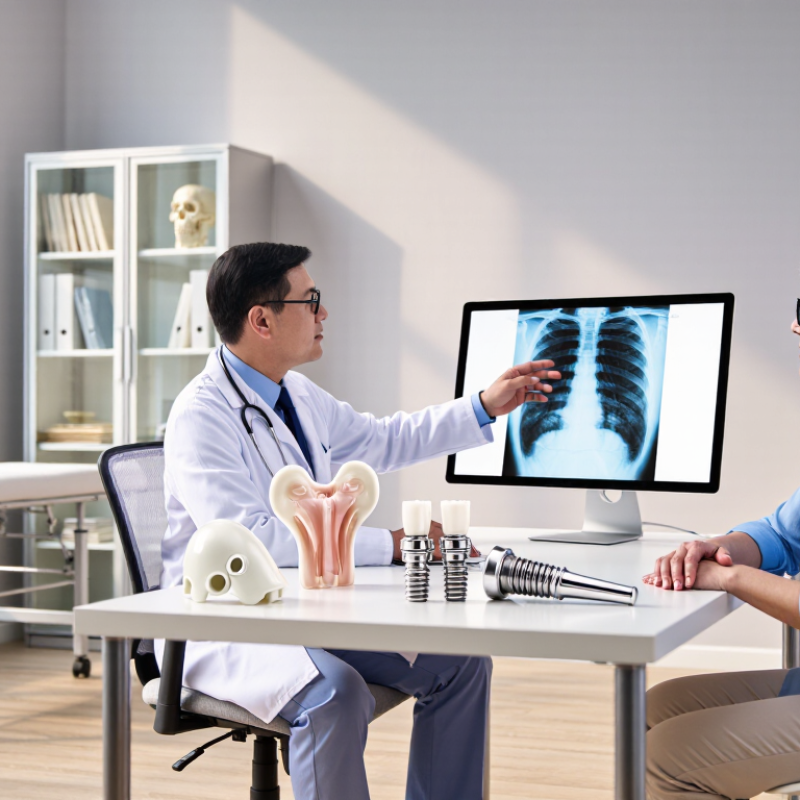
How to Choose Hip Joint Reconstruction Implants in 2026

Understand the Goals and Patient Factors in Hip Reconstruction

Hip reconstruction should begin with a patient’s goals, not an implant catalogue. Is the priority walking to the shops, returning to low-impact sport, or sleeping without pain? These details shape discussions about stability, bearing surfaces, and fixation. Age matters, but so do bone quality, anatomy, activity, body weight, and conditions that affect healing. A person with fragile bone may need different fixation considerations from an active patient with strong bone. There is no universal best choice.

Long-term evidence helps set realistic expectations. A 2019 Lancet systematic review found estimated 25-year total hip replacement survival of 58.4% in registry studies; the authors noted that these estimates may not predict newer implants precisely. The UK National Joint Registry’s 2024 annual report draws on data from more than three million joint-replacement procedures, supporting comparisons of revision outcomes across patient and implant groups. Still, averages are not personal forecasts. A registry cannot fully capture what matters to one person: confidence on stairs, comfort getting into a car, or fear of another operation. Those priorities deserve careful discussion. And preferences can change. The decision should balance expected function, surgical risks, and uncertainty, with the surgeon explaining why a proposed implant suits the individual patient.

Compare Implant Types, Materials, and Bearing Surfaces

Choosing a hip reconstruction implant means matching fixation, materials, and bearing surfaces to the patient’s bone, anatomy, activity, and health. Cemented stems rely on bone cement; press-fit components depend on bone growing onto a porous surface. Hybrid constructs combine both approaches. The choice is not simply about age. Bone quality and surgical experience matter, too.

Materials work as a system. Titanium alloys are commonly used for stems, while ceramic or cobalt-chromium heads pair with a polyethylene liner. Ceramic-on-polyethylene offers a widely used balance of wear resistance and fracture toughness. Highly cross-linked polyethylene can reduce wear compared with conventional polyethylene. Ceramic-on-ceramic can produce low wear, but may cause audible noise and is not ideal for everyone. Trade-offs remain.

The American Joint Replacement Registry’s 2023 Annual Report recorded more than 3.1 million hip and knee procedures across over 1,250 participating institutions. That scale helps track real-world practice, but registry totals alone cannot identify the best bearing for an individual. Ask how the surgeon’s preferred combination performs in patients with similar age, bone quality, and activity. Also ask what evidence supports that choice. Small details matter. A cup angle or head size can affect stability, and no material erases surgical or patient-specific risks.

How to Choose Hip Joint Reconstruction Implants in 2026

Compare implant materials and bearing-surface options

The chart shows representative Young’s modulus ranges in GPa, not clinical outcomes. Titanium alloys are commonly used in stems and shells; cobalt-chromium alloys and ceramics are used for femoral heads; and highly cross-linked polyethylene is commonly used as a liner. Common bearing couples include ceramic-on-polyethylene, metal-on-polyethylene, and ceramic-on-ceramic. Material properties vary by grade and processing, while implant choice depends on patient needs, implant design, and surgical factors.

Assess Fixation Methods and Implant Compatibility

Choosing a hip reconstruction implant in 2026 starts with how each component will be fixed. Cemented components are secured with bone cement; cementless components depend on a stable press-fit and later bone ingrowth. Neither is automatic. Bone quality, anatomy, fracture risk, and planned activity all matter. For example, thin or fragile bone may change the balance, but age alone should not decide it. Surgeons also consider prior operations and the condition of the bone around the joint.

Compatibility is just as important as fixation. The cup, liner, head, and stem must match in dimensions and connection geometry. Check that the head fits the stem taper and that the liner suits the cup shell. Material pairing, head size, and offset can affect wear, stability, and leg length. A few millimeters matter. Using components without confirmed compatibility can create avoidable mechanical problems. Imaging, implant records, and measurements during surgery help verify the plan.

Discuss how the proposed fixation suits your bone and what options exist if the fit is poor. Revision history, allergies, and expected movement may also affect the choice. Even careful planning has limits: scans do not show every detail of bone quality. That uncertainty is real. Ask the surgical team to explain the exact component pairings, not only the implant category.

Review Clinical Evidence, Risks, and Long-Term Durability

Choosing a hip reconstruction implant means weighing clinical evidence, personal risk, and expected durability. Ask how the implant performs for patients of similar age, diagnosis, and bone quality. A registry average cannot predict one person’s result. Small details matter.

The 2019 Lancet systematic review by Evans and colleagues estimated that 58.4% of hip replacements remained unrevised at 25 years, using national registry data. That figure is not a guarantee of function: revision rates measure further surgery, not pain-free walking. The Australian Orthopaedic Association National Joint Replacement Registry’s 2024 Annual Report also tracks revision patterns across patient and implant groups. Ask your surgeon which comparisons apply to your case, and how fixation and bearing choices affect likely risks.

Discuss infection, dislocation, fracture, wear, and loosening, including how your health and daily activity may change those risks. Picture ordinary tasks: climbing stairs, standing from a low chair, or walking on uneven ground. Then ask what follow-up looks like if pain or instability develops. Evidence has limits; registries cannot fully capture comfort, and long-term data may lag behind newer implant designs. That uncertainty deserves an honest conversation.

How to Choose Hip Joint Reconstruction Implants in 2026 — Review Clinical Evidence, Risks, and Long-Term Durability
Decision Dimension Common Options Clinical Evidence and Considerations Key Risks Durability and Selection Notes
Bearing surface Ceramic-on-highly-crosslinked polyethylene (HXLPE); metal-on-HXLPE; ceramic-on-ceramic. HXLPE has substantially lower wear than conventional polyethylene in clinical studies. Ceramic-on-ceramic can produce very low bearing wear; comparative outcomes depend on patient, implant design, and follow-up. HXLPE: wear and osteolysis remain possible over time. Ceramic-on-ceramic: squeaking and, rarely, ceramic fracture. Metal-on-polyethylene: metal debris can occur if there is abnormal wear or corrosion at modular junctions. HXLPE is widely used and supported by long-term follow-up. Ceramic-on-ceramic may be considered in selected patients, but low wear does not guarantee longer implant survival. Avoid assuming one bearing is best for every patient.
Femoral head material and size Ceramic or metal heads; head diameter selected to fit the cup and patient anatomy. Larger heads can improve range of motion before impingement and reduce dislocation risk in some settings. The benefit depends on cup position, soft-tissue function, and bearing choice. Larger heads may increase friction and wear in some bearings. Ceramic heads can fracture rarely; modular head-neck junctions may experience corrosion or material release. Choose a compatible head and bearing rather than maximizing head size. Consider instability history, anatomy, activity, and the risks of the specific modular junction.
Fixation method Cemented; cementless (press-fit); or hybrid fixation. Both cemented and cementless fixation can provide durable results. Bone quality, age, fracture risk, anatomy, and surgeon experience influence the choice. Cemented stems are commonly considered when bone is weak; cementless fixation relies on bone ingrowth. Cementless stems can cause intraoperative or early periprosthetic fracture, particularly in patients with fragile bone. Cement use has specific perioperative risks, including bone cement implantation syndrome, which is uncommon but potentially serious. Fixation performance is not determined by age alone. Assess bone stock and fracture risk, and weigh early stability against long-term fixation needs.
Acetabular cup and liner Metal shell with polyethylene or ceramic liner; standard or augmented constructs for selected cases. Cup orientation, fixation, and restoration of hip biomechanics are important to stability and wear. Patient-specific anatomy and bone defects may require different reconstruction strategies. Malposition can contribute to impingement, instability, edge loading, and accelerated wear. Poor bone support can lead to loosening; liner damage or dissociation is uncommon but possible. Prioritize secure fixation and accurate positioning. Complex defects may require specialist planning; no single cup design eliminates the risks of malposition or loosening.
Stability strategy Standard articulation; larger head; or dual-mobility articulation for selected patients. Dual-mobility designs can reduce dislocation in some higher-risk populations, including certain revision and fracture cases. The decision should reflect the cause of instability and the patient’s overall risk profile. Dual-mobility constructs have specific risks, including intraprosthetic dislocation and component wear. Any articulation can dislocate, particularly with adverse positioning or soft-tissue problems. Consider prior dislocation, neuromuscular disease, spinal stiffness, and revision status. Stability also depends on surgical technique, component position, and rehabilitation.
Metal-on-metal bearings Large-diameter metal head articulating with a metal cup. Metal-on-metal hip implants have been associated with adverse local tissue reactions caused by metal wear and corrosion. Regulatory and clinical guidance calls for careful patient selection and appropriate follow-up. Metal ions and tissue reactions may occur, sometimes without early symptoms. Risk can be affected by implant design, positioning, and patient factors. Generally not a routine first-choice bearing for contemporary primary total hip replacement. If present, follow the applicable clinical guidance and assess symptoms and implant-specific risks.
Patient and activity profile Individualized selection based on age, bone quality, anatomy, diagnosis, activity, and prior surgery. Younger age and higher activity can increase lifetime exposure to wear and revision risk, but age alone does not determine the appropriate implant. Comorbidities and bone health also affect complication risk and recovery. Potential complications include infection, dislocation, fracture, blood clots, loosening, and wear-related bone loss. Individual risk varies with health status and surgical factors. Discuss realistic activity goals, bone health, fall prevention, and follow-up. Registry survivorship varies by age, diagnosis, implant construct, and the outcome measured; there is no single reliable lifespan for every implant.
Evidence and long-term review Peer-reviewed studies, national joint registries, and device-specific follow-up data. Registry data can identify revision trends across large populations, while randomized trials and cohort studies address clinical outcomes. Results are not directly interchangeable because patient groups and definitions of revision differ. Short follow-up may miss late wear or loosening. A low revision rate does not capture every complication, symptom, or imaging finding. Review the latest independent registry reports and long-term evidence for the proposed implant type. Interpret survival estimates by patient group, follow-up duration, and endpoint—not as a guaranteed result.

Educational overview only. Implant selection should be individualized with an orthopaedic surgeon using the patient’s diagnosis, anatomy, bone quality, health risks, and current evidence.

Select an Implant Through Shared Surgical Planning

How to Choose Hip Joint Reconstruction Implants in 2026

Implant choice should be a shared planning conversation, not a product comparison. Your surgeon can assess X-rays, bone quality, joint shape, and stability needs. Your daily life matters too: walking on uneven paths, climbing stairs, or returning to work may shape the discussion. Small details matter. Ask how fixation options fit your bone and health, and what trade-offs could affect recovery. The American Joint Replacement Registry’s 2023 Annual Report records more than 3.1 million hip and knee procedures, showing the scale of real-world practice. Registry trends inform decisions, but they cannot predict one person’s result.

Bring a medication list, prior imaging, and questions about pain, mobility, and follow-up. Discuss material sensitivities, fall risks, and whether you may need extra support at home. Your surgeon should explain expected benefits and uncertainties in plain language, including why an alternative may not suit your anatomy. Not always obvious. Ask how implant choice connects with the surgical plan, rehabilitation schedule, and signs that need prompt review. The conversation may still leave uncertainty; that is worth naming. A useful question is:

“What would make you change this plan for me?”

FAQS

What factors guide hip implant fixation?

Cemented stems use bone cement, while press-fit components rely on bone growing onto a porous surface. Hybrid implants combine both. Bone quality, anatomy, health, and surgical experience matter—not age alone.

How do implant materials and bearing surfaces differ?

Titanium alloys are commonly used for stems. Ceramic or cobalt-chromium heads may pair with polyethylene liners. Ceramic-on-polyethylene offers a balance of wear resistance and toughness. Highly cross-linked polyethylene may reduce wear. Ceramic-on-ceramic can wear less, but may create audible noise.

Can registry data identify the best implant for me?

No. A 2023 registry report recorded over 3.1 million hip and knee procedures across more than 1,250 institutions. These trends show real-world practice, but cannot predict one person’s result. Ask about patients with similar bone quality and activity.

How long might a hip replacement last?

A 2019 review estimated that 58.4% remained unrevised at 25 years. That measures further surgery, not pain-free walking or good function. It is not a guarantee.

What risks should I discuss with my surgeon?

Ask about infection, dislocation, fracture, wear, and loosening. Your health and daily activity may affect these risks. Discuss stairs, low chairs, and uneven paths. Small details matter.

Do implant details affect stability?

Yes. Cup angle and head size can influence stability. No material removes every surgical or personal risk. Ask how these details fit your anatomy.

What should I bring to an implant-planning appointment?

Bring a medication list, prior imaging, and questions about pain, mobility, and follow-up. Mention material sensitivities, fall risks, and support you may need at home. Not always obvious.

What should I ask about recovery and follow-up?

Ask how the implant choice connects with rehabilitation, expected benefits, and signs needing prompt review. Ask, “What would make you change this plan for me?” Some uncertainty may remain. That deserves discussion.

Conclusion

Choosing Hip Joint Reconstruction Implants in 2026 begins with understanding the goals of surgery and the individual needs of each patient. Factors such as age, activity level, bone quality, anatomy, overall health, and personal priorities can influence which options may be appropriate. Comparing implant designs, materials, and bearing surfaces helps clarify potential differences in movement, wear, and expected service life, while fixation methods must suit the patient’s bone and surgical plan.

A careful decision also considers how implant components work together, the quality and relevance of available clinical evidence, and possible risks, including complications or the need for future revision. Long-term durability matters, but no implant can guarantee a particular outcome. Patients and surgeons can review these considerations together, discuss uncertainties and alternatives, and select Hip Joint Reconstruction Implants through shared planning tailored to the individual’s circumstances.

Evelyn

Evelyn

Evelyn is a dedicated marketing professional with a strong understanding of the company’s products, services, and customer needs. With a background in market research, content strategy, and business communication, Evelyn transforms complex product information into clear, practical, and engaging......