Uteshiya Medicare Insights
Orthopedic Implants & Surgical Innovations Blog
Exploring clinical updates, trauma care advancements, and medical device insights.
Contact UsGlobal Orthopedic Solutions
Clinical Excellence & Technology Articles
CDSCO-approved locking systems & biocompatible implants trusted in 30+ countries.
View CatalogueChina Top 10 Supra Patellar Tibia Interlocking Nail Suppliers?
Table of Contents
Choosing reliable suppliers for a Supra Patellar Tibia Interlocking Nail requires more than comparing prices or catalog photographs. This implant supports demanding orthopedic procedures, where alignment, material quality, and instrument compatibility can affect surgical confidence. China has a broad medical manufacturing sector, including established orthopedic device producers and specialized contract manufacturers. However, supplier claims need careful examination. A polished website is not proof of clinical reliability.
This guide introduces ten potential Chinese suppliers for professional evaluation. It considers manufacturing experience, product range, quality systems, export history, and technical support. Useful details may include titanium alloy specifications, nail diameter options, targeting handles, locking screw designs, and packaging controls. These features matter in real operating environments, where sterile instruments must fit accurately and save valuable time. Supplier interviews and sample reviews can reveal practical strengths that brochures often hide.
The list should not be treated as a final endorsement. No ranking is perfect. Hospitals, distributors, and purchasing teams should verify current registrations, applicable quality certificates, inspection records, and traceability documents. Independent testing may also be appropriate before procurement. It is wise to request surgical technique guides, dimensional drawings, and evidence of consistent batch production. Some suppliers may communicate well but lack long-term clinical support. Others may offer dependable products but limited customization. That difference deserves attention. With expert review and transparent verification, this overview can support a safer and more informed search for a suitable Supra Patellar Tibia Interlocking Nail supplier in China.
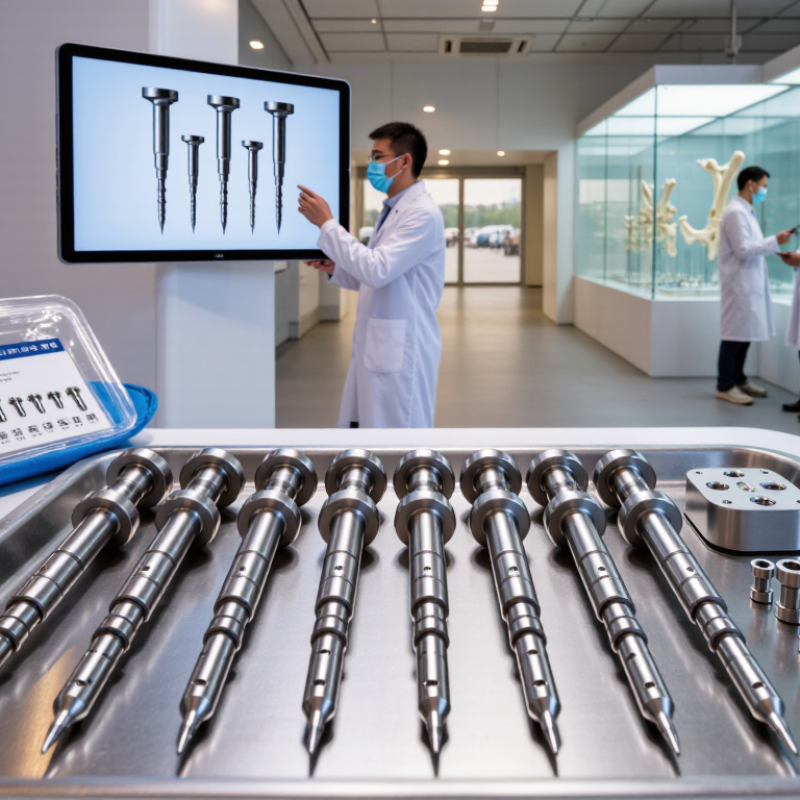
What Is a Suprapatellar Tibial Interlocking Nail?
A suprapatellar tibial interlocking nail is an intramedullary implant for stabilizing selected tibial shaft and proximal tibial fractures. It enters through a small approach above the kneecap, passing through the quadriceps tendon and into the tibial canal. This pathway can help maintain alignment when the knee is flexed, especially during difficult proximal fractures. The nail sits inside the bone. Interlocking screws secure length, rotation, and stability.
Clinical use requires careful planning. Surgeons assess fracture location, soft-tissue condition, canal shape, and possible knee damage before choosing this method. Intraoperative imaging confirms the entry point and screw position. From practical surgical experience, small alignment errors can become obvious during weight-bearing. That detail is easy to underestimate. Patient anatomy also varies, so one technique cannot suit every fracture.
Tips: Confirm the entry point with multiple imaging views. Protect the patellofemoral structures during insertion. Check rotation before final screw placement. Review the nail diameter and length against preoperative measurements. Postoperative monitoring should include pain, swelling, wound condition, and knee movement. These steps support safer decisions, but they do not replace trained orthopedic judgment or facility protocols.
Key Criteria for Evaluating Tibial Nail Suppliers
When evaluating China’s top ten supra-patellar tibial interlocking nail suppliers, clinical evidence should lead the review. The WHO Global Status Report on Road Safety 2023 estimates 20–50 million non-fatal road injuries annually. This supports demand for dependable trauma implants, but demand alone proves little. Ask for published union, malalignment, reoperation, and implant-failure data. Results should identify fracture types, follow-up periods, and patient numbers. Vague success claims are not enough.
Material and manufacturing controls deserve equal attention. Check compliance with ISO 13485, risk management under ISO 14971, and implant material standards such as ISO 5832-3 for titanium alloy. Request fatigue-test methods, locking-hole accuracy records, surface-finish limits, and sterilization validation. Traceability matters. Each batch should connect to raw-material certificates, inspection records, and complaint handling. The FDA’s Medical Device Reporting framework shows why post-market surveillance cannot be treated as paperwork. Review adverse-event procedures, recall readiness, and response times. Also compare instrument ergonomics, radiographic visibility, nail length options, and compatibility with common surgical approaches.
Supplier experience appears in practical details. Can the technical team support difficult proximal fractures? Are replacement instruments available during a case? Can production remain stable during demand spikes? A polished catalogue can still hide weak evidence. One uncomfortable gap is surgeon-training data; many suppliers provide limited independent follow-up. That weakness should reduce confidence, even when prices look attractive. Audits, sample inspections, and documented clinical references remain essential before procurement.
Profiles of China’s Top 10 Suprapatellar Nail Suppliers
China’s top ten suprapatellar nail suppliers differ in manufacturing depth, clinical support, and quality control. A useful profile should examine nail geometry, titanium options, locking-hole accuracy, and instrument design. These details affect alignment during difficult proximal tibia procedures. Some suppliers focus on broad product ranges, while others offer stronger customization and surgeon training.
Reliable suppliers usually provide batch traceability, inspection records, and clear sterilization information. Their teams should understand suprapatellar entry techniques, radiographic positioning, and compatibility between nails, screws, and targeting guides. An established export history can support confidence, but it should not replace independent verification. A catalog may look complete. Real performance still depends on tolerances, packaging, and staff training. This is where many comparisons become too optimistic.
Tips: Ask for samples, technical drawings, material certificates, and recent quality documents. Check whether instruments feel stable under simulated use. Confirm delivery consistency and after-sales communication. Speak with qualified orthopedic professionals before selecting a supplier. One overlooked detail matters: the sleeve design around the patella can influence workflow and soft-tissue protection. Supplier rankings also need reflection, because public information may be incomplete or uneven.
China Top 10 Suprapatellar Tibia Interlocking Nail Suppliers
This profile chart summarizes the main evaluation dimensions for China-based suprapatellar tibial interlocking nail suppliers. The scoring framework focuses on product documentation, regulatory readiness, customization capability, export support, and manufacturing experience rather than displaying company or brand data.
Product, Quality, and Manufacturing Capability Comparison
China Top 10 Supra Patellar Tibia Interlocking Nail Suppliers?
Product, Quality, and Manufacturing Capability Comparison
Comparing China’s top ten supra patellar tibia interlocking nail suppliers requires more than checking catalog photos. Experienced orthopedic buyers examine nail diameters, lengths, locking-hole positions, and instrument compatibility. A practical system should support stable proximal fixation and controlled distal locking. Small details matter. Instruments should feel balanced in the surgeon’s hand, not merely look complete in a brochure.
Quality evidence deserves closer attention. Reliable suppliers typically operate under ISO 13485-based quality systems and maintain traceable batch records. Ask for dimensional inspection reports, material certificates, fatigue-test data, and biocompatibility documentation. Titanium and stainless-steel options may serve different surgical preferences. Surface finish, thread accuracy, and hole alignment can affect insertion and fixation. A polished catalog can still hide weak process control.
Manufacturing capability separates serious suppliers from trading companies. Look for in-house CNC machining, controlled heat treatment, validated cleaning, laser marking, and sealed medical packaging. Factory audits should review calibration records, nonconforming-product handling, and final inspection areas. The strongest suppliers can provide consistent samples across several production batches. Still, no supplier is flawless. Some documentation may be incomplete, and communication can become slow during custom development. Independent verification remains necessary before procurement, especially when evaluating sterilization arrangements, delivery consistency, and after-sales technical support.
How to Select and Verify a Reliable Chinese Supplier
China Top 10 Supra Patellar Tibia Interlocking Nail Suppliers: How to Select and Verify a Reliable Chinese Supplier
Choosing among Chinese supra-patellar tibia interlocking nail suppliers requires more than comparing prices. Examine the supplier’s manufacturing history, quality system, and product documentation. Request evidence of applicable medical-device registrations, ISO 13485 certification, material certificates, and batch traceability records. Confirm that certificates match the factory’s legal entity and actual production site.
Ask for detailed drawings, dimensional tolerances, alloy specifications, surface-finish data, and packaging validation. A reliable supplier should explain how locking-hole alignment is inspected. Sample evaluation should include nail length, diameter, thread quality, instrument compatibility, and package-seal integrity. Small details matter. Arrange a live factory audit when possible. Review incoming-material controls, calibration records, clean production areas, and nonconformance procedures. Photographs alone are not enough.
Communication also reveals operational maturity. Request clear answers about lead times, change control, complaint handling, and replacement procedures. Verify independent test reports with the issuing laboratory, rather than accepting scanned files without checking. A low quotation may hide weak inspection or unstable materials. That risk is easy to underestimate. No checklist is perfect, and supplier performance can change after approval. Schedule periodic audits and review every shipment’s records. Clinical suitability must still be assessed by qualified professionals under applicable regulations. A dependable partner welcomes careful questions, admits limitations, and provides consistent evidence instead of making broad promises.
FAQS
Request published union, malalignment, reoperation, and implant-failure data. The reports should identify fracture types, patient numbers, and follow-up periods. Vague success claims are not enough.
Ask for titanium material certificates and validated manufacturing records. Review fatigue-test methods, locking-hole accuracy, surface-finish limits, and sterilization results. Small tolerances matter.
Each nail batch should connect to raw-material certificates and inspection records. The supplier should also document complaints, adverse events, and corrective actions. Paperwork alone proves little.
Check whether targeting guides feel stable during simulated use. Review radiographic visibility, nail-length options, screw compatibility, and instrument ergonomics. A loose guide can complicate alignment.
Ask whether the technical team understands suprapatellar entry and difficult proximal fractures. Review sleeve design around the patella and soft-tissue protection. This detail is easy to overlook.
No. Export history can support confidence, but it cannot replace independent verification. Inspect samples, technical drawings, quality documents, and delivery records. Catalogues can mislead.
Ask for documented training programs and independent clinical references. Confirm whether replacement instruments can arrive during urgent cases. Training evidence is often limited.
Public rankings may use incomplete or uneven information. Compare clinical evidence, manufacturing controls, customization, and after-sales communication. The ranking may still be imperfect.
Use audits, sample inspections, and qualified orthopedic feedback before selecting a supplier. Confirm sterilization information, packaging quality, and instrument compatibility. Do not let low prices decide alone.
Conclusion
This article provides a practical overview of the Supra Patellar Tibia Interlocking Nail, including its purpose, structural features, surgical applications, and potential advantages in tibial fracture treatment. It explains the key criteria for evaluating Chinese suppliers, such as material quality, dimensional accuracy, product consistency, sterilization options, regulatory documentation, research and development capacity, production technology, and quality-control systems.
The article also presents a neutral comparison of ten representative Chinese suppliers based on product range, manufacturing capability, customization support, delivery reliability, and after-sales communication, without focusing on specific brand names. Finally, it outlines how buyers can verify a supplier through factory audits, sample evaluation, certification checks, traceability reviews, quality agreements, and small-scale trial orders. These steps can help hospitals, distributors, and medical procurement teams identify a dependable supplier while maintaining appropriate clinical, technical, and regulatory standards.
Blog Tags: