Uteshiya Medicare Insights

Orthopedic Implants & Surgical Innovations Blog

Exploring clinical updates, trauma care advancements, and medical device insights.

Contact Us

Global Orthopedic Solutions

Clinical Excellence & Technology Articles

CDSCO-approved locking systems & biocompatible implants trusted in 30+ countries.

View Catalogue
0%

Choosing a China top Craniomaxillofacial (CMF) Plating System supplier requires more than comparing prices or product photographs. Hospitals and distributors need evidence of consistent manufacturing, clinical suitability, and responsive technical support. A reliable supplier should provide plates, screws, meshes, and instruments for trauma, reconstruction, and selected cranial procedures. Product details should include material specifications, dimensions, screw compatibility, and sterilization guidance.

Practical evaluation begins with the factory floor. Inspectors should review machining accuracy, surface finishing, packaging, and batch traceability. Small details matter. A plate must sit smoothly against bone, while a screw should engage predictably without excessive resistance. Suppliers with ISO 13485-based quality systems and appropriate regulatory documentation may offer stronger purchasing confidence. However, certificates alone do not prove performance. Independent verification, sample testing, and surgeon feedback remain valuable.

Experienced manufacturers often support customization, training, and postoperative product review. Their engineers may adjust hole positions, curvature, or instrument design after real clinical feedback. That experience can reduce avoidable handling problems. Still, no supplier is perfect. Catalog language may sound impressive, yet it cannot replace transparent communication and documented inspection results. Buyers should ask about complaint handling, production capacity, delivery records, and long-term cooperation. They should also confirm that products meet the requirements of their target markets. A careful comparison may reveal differences that a sales presentation hides. The best choice is not always the largest factory. It is the supplier that combines verified quality, clinical understanding, ethical conduct, and dependable service. Much depends on evidence.
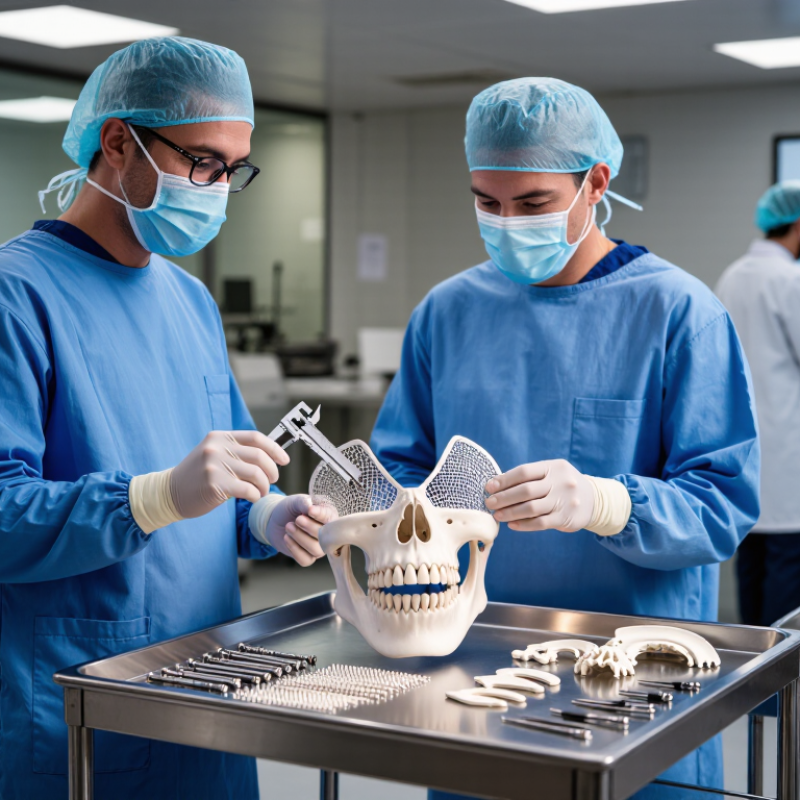
China Top Craniomaxillofacial Plating System Supplier?

What Is a Craniomaxillofacial Plating System?

What Is a Craniomaxillofacial Plating System?

A craniomaxillofacial plating system is a set of small plates, screws, meshes, and instruments. Surgeons use it to stabilize fractured facial bones and reconstruct the skull, orbit, jaw, and midface. Plates act like internal splints. They support bone alignment while healing occurs. Common materials include titanium and bioresorbable polymers, selected according to anatomy, load, imaging needs, and patient factors.

The clinical need is substantial. The World Health Organization reports about 1.19 million road traffic deaths annually, with 20–50 million nonfatal injuries. Many severe injuries involve facial structures. Market analyses from Grand View Research also report continued growth in craniomaxillofacial devices, driven by trauma care, reconstruction, and aging populations. However, market growth does not prove clinical superiority. Plate thickness, screw length, contouring accuracy, and fixation strength still require professional judgment. In practice, a “universal” system is rarely universal.

Tips: Confirm the fracture pattern with suitable imaging. Match plate geometry to the patient’s anatomy. Avoid excessive bending, which can weaken fixation. Check screw purchase in thin bone. Discuss sterilization, MRI conditions, and follow-up requirements with the surgical team. Small design details matter. So does surgical experience. Even reliable systems can fail when planning is rushed, anatomy is misread, or postoperative monitoring is overlooked.

Key Components and Materials Used in CMF Plating Systems

Choosing a reliable CMF plating system supplier requires attention to components, materials, and clinical fit. A typical system includes bone plates, fixation screws, mesh, drill guides, and compatible instruments. Plate shapes may support the mandible, midface, orbit, or cranial vault. Each design should match anatomical contours without forcing the surgeon to over-bend the plate.

Titanium alloy remains widely used because it combines strength, corrosion resistance, and relatively low weight. Its surface can support stable bone fixation when manufactured and finished properly. Some systems use commercially pure titanium for selected applications. Resorbable polymers may suit specific pediatric or temporary fixation needs, but their strength and degradation behavior require careful evaluation. Material choice is never a simple checklist.

Screws need consistent thread geometry, sharp drive engagement, and reliable torque response. Small heads matter in thin orbital or cranial areas. Low-profile plates can reduce soft-tissue irritation, yet very thin designs may lose stiffness. That trade-off deserves honest discussion. A dependable supplier should provide material certificates, dimensional inspection records, sterilization guidance, and traceable lot information. Clear testing data is more valuable than polished marketing language. In practice, instrument compatibility can still be overlooked. A plate may appear suitable, but poor driver fit can slow an operation and increase handling errors. Performance should be reviewed through surgeon feedback, simulated bending tests, and documented quality controls.

How China-Based CMF Plating System Suppliers Operate

China-based CMF plating system suppliers usually operate through a coordinated design, manufacturing, and documentation chain. A 2024 Fortune Business Insights report valued the global cranial fixation and stabilization systems market at about USD 1.1 billion in 2023. This growth encourages suppliers to offer titanium plates, screws, cutting guides, and custom packaging under one project plan. Engineering teams often review CT-based geometry, screw angles, plate thickness, and instrument compatibility with hospitals or distributors.

Quality control is more than final inspection. Reliable facilities use ISO 13485-based procedures, incoming material checks, dimensional testing, surface inspection, and batch traceability. The China Association for Medical Devices Industry reported continued expansion in China’s medical device sector during 2023, but expansion does not automatically mean consistency. In practice, a low quotation can hide tooling changes, slower validation, or incomplete technical files. That deserves attention. Suppliers serving overseas markets normally prepare sterilization information, material certificates, risk documentation, and export records according to the destination market’s requirements.

Tips: Request sample plates, inspection reports, and a complete traceability example before signing. Ask how design changes are approved. Check whether the supplier can reproduce the same screw fit after several production batches. A video call is useful, but an independent audit is stronger. Also, do not judge quality from polished catalog images alone; clinical suitability depends on anatomy, surgical technique, and proper regulatory review.

Quality, Safety, and Regulatory Evaluation Criteria

China Top Craniomaxillofacial Plating System Supplier?

Quality, Safety, and Regulatory Evaluation Criteria

Choosing a craniomaxillofacial plating system supplier requires more than comparing catalogs. Quality begins with material traceability, dimensional control, and consistent surface finishing. Ask for batch records, inspection methods, and documented nonconformance handling. Implants should have clear material specifications and validated manufacturing processes.

Safety reviews should cover mechanical strength, fatigue performance, corrosion resistance, and biocompatibility. Clinical use also depends on instrument fit, screw engagement, and predictable handling in confined surgical fields. Small inconsistencies matter. Request sterilization information, packaging validation, shelf-life data, and adverse-event procedures.

Tips: Ask for independent test reports, recent audit outcomes, and traceability from raw material to shipment. Compare stated tolerances with measured sample data. Speak with surgeons about visibility, contouring, and removal experience. Do not accept vague answers. Regulatory credibility requires evidence, not attractive wording. Check quality-management certification, product classification, technical files, and registration status in the target market. Confirm that certificates match the exact product family and manufacturing site. Requirements differ by country, so local regulatory review remains essential. One weakness remains: documents can be complete while real-world support is slow. Evaluate response times, complaint follow-up, training, and corrective-action transparency. No checklist is perfect.

China Top Craniomaxillofacial Plating System Supplier? - Quality, Safety, and Regulatory Evaluation Criteria

No. Evaluation Dimension Criterion Recommended Benchmark or Requirement Verification Evidence Weight
1 Regulatory Status Applicable medical-device classification and market authorization The supplier should provide valid registration or listing documentation for the intended market. In China, implantable craniomaxillofacial devices may fall under Class III requirements depending on intended use, design, and risk classification. Registration certificate, product technical requirements, approved instructions for use, and regulatory database verification 15%
2 Quality Management System Medical-device manufacturing controls A documented quality management system certified to ISO 13485:2016, with controlled design, purchasing, production, traceability, complaint handling, and corrective-action processes. Current ISO 13485 certificate, audit report, quality manual, and certificate-scope review 12%
3 Material Safety Implant material identity, grade, and consistency Material certificates should identify the exact alloy and applicable specification, such as titanium alloys covered by ISO 5832-3 or commercially pure titanium covered by ISO 5832-2, where applicable to the product design. Mill certificates, incoming-material inspection records, chemical composition reports, and lot traceability 10%
4 Biocompatibility Biological safety of the finished device A biological-evaluation plan should address the device’s materials, contact type, contact duration, manufacturing residues, surface treatment, and sterilization process in line with ISO 10993 principles. Biological evaluation report, cytotoxicity results, sensitization and irritation assessments, and chemical characterization where required 10%
5 Mechanical Performance Strength, fatigue resistance, and screw–plate performance Testing should reflect the intended anatomical site and loading conditions. Bone-screw testing may reference ASTM F543, while plate and construct testing should use validated, product-specific methods. Mechanical test protocols, fatigue data, torsion or pullout results, validation reports, and acceptance criteria 12%
6 Design and Clinical Suitability Anatomical coverage and surgical usability The portfolio should cover relevant cranial, midface, orbital, mandibular, and pediatric indications where claimed, with suitable plate profiles, hole patterns, screw diameters, lengths, and contouring capability. Product drawings, surgical technique guide, usability validation, cadaver or anatomical-model assessments, and clinical evidence 10%
7 Risk Management Identification and control of device-related hazards Risk management should follow ISO 14971 principles and address breakage, loosening, migration, corrosion, sharp edges, incorrect assembly, imaging considerations, and foreseeable misuse. Risk-management file, hazard analysis, use-related risk assessment, residual-risk evaluation, and post-market surveillance plan 8%
8 Sterilization and Packaging Sterile-barrier integrity and shelf life For sterile products, the sterilization method must be validated and compatible with the material and packaging. Packaging should maintain sterility through the stated shelf life and transport conditions. Sterilization validation, bioburden and sterility records, packaging validation, accelerated-aging data, and transport testing 8%
9 Manufacturing Capability Process control, cleanliness, and dimensional precision Controlled machining, forming, surface finishing, cleaning, inspection, and environmental controls should be appropriate for implantable devices. Critical dimensions should be verified against approved drawings. Process-validation records, inspection plans, calibration certificates, cleanliness testing, and production-site audit 7%
10 Traceability and Documentation Lot-level identification and technical-document control Each implant and associated screw should be traceable to material, production, inspection, sterilization, packaging, and distribution records. Revisions must be formally controlled. Device history records, unique identification procedure, batch records, certificates of conformity, and document-control logs 4%
11 Supply Reliability Capacity, lead time, and continuity planning The supplier should demonstrate stable production capacity, defined order and replenishment lead times, critical-component controls, backup arrangements, and a documented business-continuity plan. Capacity statement, on-time-delivery records, inventory policy, continuity plan, and supplier-risk assessment 2%
12 Post-Market Support Complaint handling, vigilance, and corrective action A formal process should exist for complaint investigation, adverse-event reporting, field safety corrective actions, product recalls, and trend analysis. Complaint procedure, response-time targets, recall procedure, vigilance records, and corrective-action examples with confidential details removed 2%
Total Evaluation Weight 100%

Note: Regulatory classification, applicable standards, testing scope, and clinical evidence requirements should be confirmed for the specific device design, intended use, sterilization configuration, and target market.

How to Select the Right China CMF Plating System Supplier

How to Select the Right China CMF Plating System Supplier

China’s craniomaxillofacial plating market is expanding with trauma, reconstruction, and neurosurgical demand. Grand View Research reports that the global craniofacial implants market was valued at approximately USD 1.1 billion in 2023. This growth makes supplier selection more demanding, not easier.

Begin with clinical compatibility. Ask for titanium grade, plate thickness, screw diameter, hole geometry, and instrument tolerances. The supplier should provide material certificates, dimensional inspection records, sterilization information, and traceability from raw material to finished lot. ISO 13485 certification matters, but certification alone proves little. Review the audit scope, certificate validity, and corrective-action history. Small details expose weak systems.

Request samples before discussing volume pricing. Test screw engagement, bending behavior, edge finishing, and fit on anatomical models. A plate that looks precise may feel rough after repeated contouring. It happens. Confirm whether design changes require formal verification and documented approval. Under the FDA’s 2023 Medical Device Safety Action Plan, stronger post-market surveillance remains an important regulatory direction, so complaint handling should be part of supplier evaluation.

MarketsandMarkets projects continued growth in the cranio-maxillofacial implants sector through 2028, increasing pressure on capacity and delivery reliability. Ask for capacity data, average lead times, safety-stock practices, and business-continuity plans. Review recent batch records, not only presentation slides. The right China supplier combines engineering depth, responsive communication, controlled production, and evidence that surgeons can trust. Price still matters. It should never be the only metric.

FAQS

What components are included in a typical CMF plating system?

Common components include bone plates, fixation screws, mesh, drill guides, and surgical instruments. Plate shapes may support the jaw, midface, orbit, or cranial vault. Fit matters.

Which materials are commonly used for CMF plates?

Titanium alloy is widely used because it is strong, corrosion-resistant, and relatively lightweight. Some applications use commercially pure titanium. Resorbable polymers may suit selected pediatric or temporary cases. Their strength and degradation require careful review.

How should plate design match facial anatomy?

Plates should follow anatomical contours without excessive bending during surgery. Low-profile designs may reduce soft-tissue irritation. However, extremely thin plates can lose stiffness. That trade-off deserves honest discussion.

What should buyers check about fixation screws?

Check thread geometry, drive engagement, torque response, and screw-head size. Small heads can help in thin orbital or cranial areas. Test repeated insertion and removal. Real handling may differ from drawings.

Why is instrument compatibility important?

The driver should fit the screw securely and consistently. Poor engagement can slow surgery and increase handling errors. Review instrument tolerances and test the complete set together. A suitable plate alone is not enough.

What documents should a supplier provide?

Request material certificates, dimensional inspection records, sterilization guidance, and traceable lot information. Also review risk documents and export records for the destination market. Clear testing data matters more than polished catalog images.

How can a buyer evaluate a China-based CMF supplier?

Request sample plates before discussing large-volume pricing. Test screw fit, edge finishing, bending behavior, and anatomical-model compatibility. Review production records from several batches. Do not rely only on a video call.

Does quality certification alone prove supplier reliability?

No. Certification supports a quality system, but it does not prove consistent clinical suitability. Check certificate validity, audit scope, and corrective-action history. Ask how design changes receive verification and approval. Small details can expose weak controls.

How should delivery reliability and production capacity be assessed?

Ask for average lead times, capacity information, safety-stock practices, and continuity plans. Compare recent batch records with promised performance. A low quotation may hide slower validation or incomplete technical files. Price still matters, but not alone.

Conclusion

A Craniomaxillofacial (CMF) Plating System is a specialized collection of plates, screws, meshes, and related instruments designed to support the repair and stabilization of facial and cranial bones. These systems are commonly produced from medical-grade materials such as titanium and suitable polymer compounds, selected for strength, biocompatibility, corrosion resistance, and imaging compatibility. Their design may include anatomical contours, varied thicknesses, and multiple fixation options to accommodate different surgical requirements.

China-based CMF plating system suppliers typically provide product development, precision manufacturing, sterilization support, packaging, and technical documentation for hospitals, distributors, and medical device organizations. When evaluating a supplier, buyers should review material traceability, manufacturing consistency, quality-control procedures, testing records, regulatory documentation, sterilization validation, and post-sale technical support. The right supplier should demonstrate transparent communication, reliable delivery capacity, customization ability, and a clear commitment to patient safety and international quality expectations.

Evelyn

Evelyn

Evelyn is a dedicated marketing professional with a strong understanding of the company’s products, services, and customer needs. With a background in market research, content strategy, and business communication, Evelyn transforms complex product information into clear, practical, and engaging......