Featured Arthroplasty & Upper Limb Rehabilitation Systems
Explore our CE and CDSCO-approved joint reconstruction, arthroscopy instruments, continuous passive motion (CPM) devices, and prosthetic hinge solutions designed for international orthopedic hospitals and surgical centers.
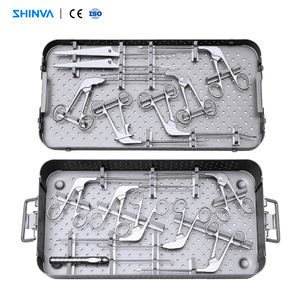
SHINVA Knee & Joint Arthroscopy Instrument System
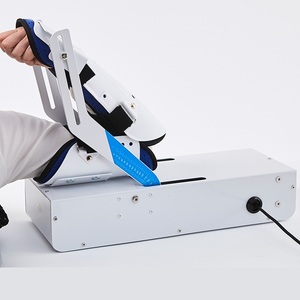
Upper Limb Fracture & Stroke Arm Rehabilitation Trainer
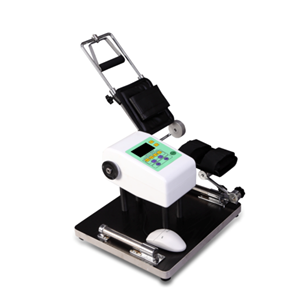
Continuous Passive Motion (CPM) Upper Limb Elbow System
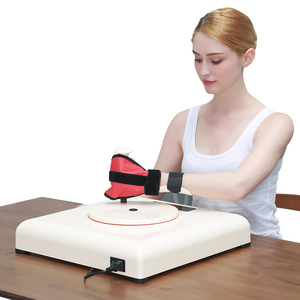
Portable Electric Active/Passive Elbow & Hand Trainer
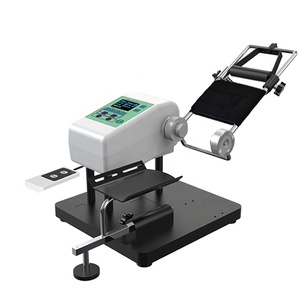
YTK-E3 Upper Limb Elbow Joint Hospital CPM Device
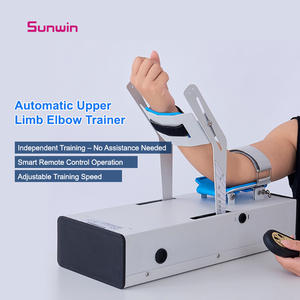
2025 Arm & Elbow Post-Fracture Recovery Equipment
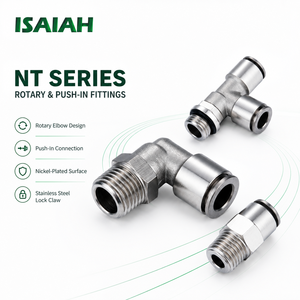
NT Series Rotary Elbow External Thread Fitting Components
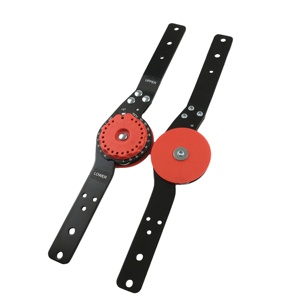
Adult Orthotic Elbow Hinge & Prosthetic Joint System
Comprehensive Whitepaper: Biomechanics & Metallurgy in Elbow Joint Reconstruction
Elbow joint reconstruction presents unique biomechanical challenges compared to lower extremity load-bearing total joint replacements. The elbow is a highly complex, constrained tri-axial articulation comprising the uulnohumeral, radiocapitellar, and proximal radioulnar joints. Modern arthroplasty requires meticulous engineering to balance mechanical constraint with physiological range of motion (ROM) while minimizing aseptic loosening at the bone-implant interface.
Modular Semi-Constrained Hinge Mechanisms
Semi-constrained elbow joint systems utilize a sloppy-hinge design that permits controlled varus-valgus laxity (typically 5° to 7°) and rotational freedom. This flexibility attenuates peak torsional stresses transmitted to the cement-bone boundary during forced extension and pronation-supination cycles.
Advanced Tribology & HXLPE Bushings
Direct metal-on-metal articulation yields accelerated wear debris. Our reconstruction systems integrate high-density Highly Cross-linked Polyethylene (HXLPE) or UHMWPE locking bushings, drastically lowering the coefficient of friction and eliminating osteolysis risk associated with particle shedding.
Porous Titanium & Plasma Spray Coating
Humeral stems and ulnar components feature vacuum plasma-sprayed Hydroxyapatite (HA) or porous titanium surface treatments. This micro-porous architecture (300–500 μm pore size) encourages robust trabecular bone ingrowth and long-term biological fixation.
Future Procurement Trends in Upper Limb Arthroplasty (2025–2030)
As global demographic shifts increase the incidence of complex peri-articular distal humerus fractures, distal humeral non-unions, and severe rheumatoid arthritis, hospital procurement departments are altering their sourcing strategies for joint reconstruction systems.
1. Convertible Modular Architecture
Surgeons demand convertible systems that can transition seamlessly from an unlinked radiocapitellar resurfacing to a fully linked semi-constrained total elbow without necessitating revision of well-fixed stem stems. Manufacturers offering modular stem lengths and flange extensions command higher tender success rates.
2. Patient-Specific Instrumentation (PSI)
Integration of preoperative CT intraoperative navigation and 3D-printed resection guides allows orthopedic surgeons to replicate the true joint line height and anatomical humeral offset, reducing post-operative instability and surgical time by up to 25%.
3. Value-Based OEM & Regulatory Standardization
With stricter European CE-MDR (Regulation EU 2017/745) enforcement, healthcare networks are consolidating vendor lists. B2B procurement now mandates direct manufacturer auditability, ISO 13485 cleanroom validation, and complete clinical technical documentation over third-party trading intermediaries.
Material Metallurgy & Mechanical Performance Comparison
Selecting the optimal biocompatible material is critical to preventing fatigue fracture of humeral and ulnar stems under cyclic loading conditions. The table below details our manufacturing standards against international ASTM/ISO requirements.
| Material Grade | Standard Compliance | Tensile Strength (MPa) | Yield Strength (MPa) | Biocompatibility & Corrosion Resistance | Primary Clinical Application |
|---|---|---|---|---|---|
| Ti-6Al-4V ELI (Grade 23) | ASTM F136 / ISO 5832-3 | ≥ 860 | ≥ 795 | Exceptional passivation, zero nickel wear, excellent osteointegration | Cemented & Cementless Humeral / Ulnar Reconstruction Stems |
| Co-Cr-Mo Alloy | ASTM F75 / ISO 5832-4 | ≥ 655 | ≥ 450 | High hardness, superior polishability, wear-resistant friction interfaces | Articulating Hinge Yokes & Condylar Resurfacing Surfaces |
| 316L Implant Grade SS | ASTM F138 / ISO 5832-1 | ≥ 620 | ≥ 310 | High ductility and fracture toughness for acute fixation trauma plates | Trauma Plates, Internal Fixation Screws, & Provisional Instrumentation |
| HXLPE / UHMWPE | ASTM F648 / ISO 5834-2 | ≥ 40 | ≥ 21 | Ultra-low wear rate (<0.1 mm/year under cyclic fatigue loading) | Hinge Bushings, Radial Head Washers, & Axle Collars |
Why Direct Procurement Officers & Surgeons Partner With Us
As a global leader in orthopedic implant manufacturing, our infrastructure supports full OEM/ODM product cycles, from raw titanium forging to validated cleanroom sterile packaging.
Rigorous Quality Certifications
Fully accredited under ISO 13485:2016, CDSCO, and CE MDR guidelines. Every batch undergoes 100% optical coordinate machine (CMM) inspection and material cert verification.
In-House Class 10,000 Cleanroom
Implants are washed using ultrasonic multistage deionized systems and sealed in double-barrier Tyvek blister packaging inside an ISO Class 7/8 (Class 10,000) sterile facility.
Global Export Footprint (30+ Countries)
With established distribution logistics across Asia-Pacific, Latin America, the Middle East, and Europe, we provide rapid customs documentation and reliable supply chain delivery.
Procurement & Technical FAQ
Key questions answered for orthopedic importers, hospital tender boards, and surgical distributors.