Orthopedic Wire & Micro-Fragment Cable Fixation Systems
Explore CE & ISO 13485 certified surgical wiring kits, mini-fragment plates, and cerclage fixation tools engineered for trauma and reconstructive surgery.
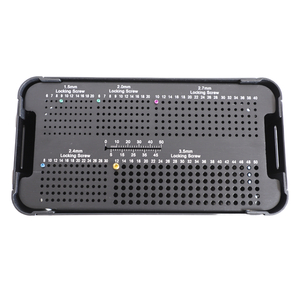
Veterinary Mini Micro Fragment System Stainless Steel Trauma Plates & Screws
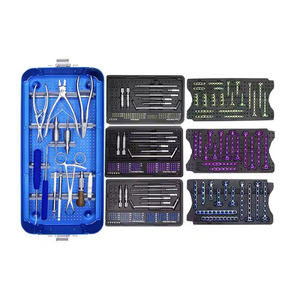
Stainless Steel Manual Mini Micro Fragment Locking System (1.5/2.0/2.4mm)
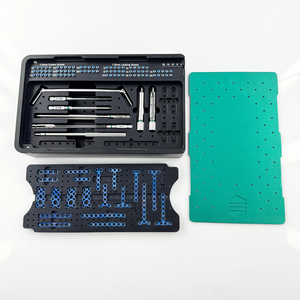
Veterinary 1.5mm Mini Micro Fragment Titanium Locking Plate Kit
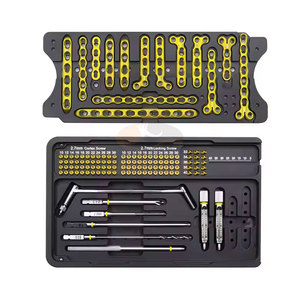
Premium 2.7mm Stainless Steel Locking Plate & Wire Fixation Instrument Set
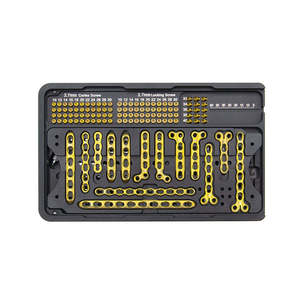
Orthopedic Manual Mini Fragments 2.7mm Steel Locking Instrument Set
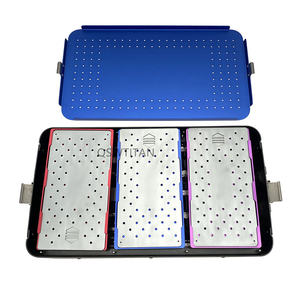
Orthopedic Mini Fragment System for Finger & Palm Small Bones Fixation
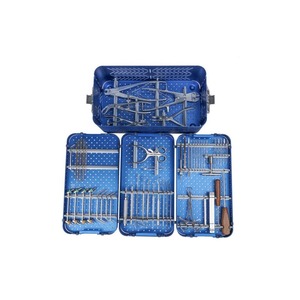
Mini Micro Fragment Locking System for Hand, Foot, Wrist & CMF Surgery
Mini Micro Fragment System Stainless Steel Locking Plate & Cable Kit
1. Engineering Architecture of Orthopedic Wire and Cable Systems
In modern trauma, reconstructive, and periprosthetic orthopedic surgery, the structural stabilization of complex bone fractures presents immense biomechanical challenges. Single-monofilament Kirschner wires (K-wires) and rigid plating systems, while highly effective in linear diaphyseal stabilization, frequently fail to deliver uniform circumferential compression in fragmented, osteoporotic, or revision joint anatomical sites. As a premier CE Certified Orthopedic Wire And Cable System Supplier & Suppliers, Uteshiya Medicare provides next-generation multi-strand cerclage cable assemblies and precision wire systems designed to address these complex clinical demands.
The biomechanical evolution from rigid monofilament wires to multi-strand braided cerclage cables represents a paradigm shift in tensile load transfer. Traditional monofilament stainless steel wire suffers from notch sensitivity, low fatigue thresholds under bending stresses, and plastic deformation during manual twisting. In contrast, multi-strand orthopaedic cerclage cables—constructed from 19 to 49 micro-filaments braided around a central core—offer exceptional fatigue resistance, superior flexibility, and enhanced tension retention under cyclic loading.
Biomechanical Superiority: Multi-filament cables distribute tension across individual micro-strands, reducing peak localized stress concentrations by up to 42% compared to monofilament wires. This structural elasticity prevents sudden stress relaxation and maintains rigid cortical compression throughout the osseointegration phase.
Metallurgical Specifications: 316L Stainless Steel vs. Titanium Grade 5 ELI
Selection of implant-grade alloys is paramount to long-term clinical safety and corrosion resistance in vivo. Our manufacturing protocols strictly adhere to international medical standards, offering dual material configurations:
| Metallurgical Property | 316L Stainless Steel (ASTM F138 / ISO 5832-1) | Titanium Alloy Ti-6Al-4V ELI (ASTM F136 / ISO 5832-3) |
|---|---|---|
| Tensile Ultimate Strength (MPa) | 860 - 1100 MPa | 950 - 1250 MPa |
| Modulus of Elasticity (GPa) | 193 GPa | 110 GPa (Closer to cortical bone ~18-22 GPa) |
| Fatigue Limit (Cyclic Bending) | High (>10^7 cycles at 380 MPa) | Ultra-High (>10^7 cycles at 520 MPa) |
| Biocompatibility Profile | Standard passivated surface layer | Superior passivated TiO2 film; Zero Nickel content |
| MRI Compatibility | Moderate artifacting (< 1.5 T recommended) | Excellent (Non-magnetic; minimal artifacting at 3.0 T) |
| Primary Clinical Indications | Standard trauma, tension band wiring, pediatric cases | Periprosthetic revision, oncological reconstruction, long-term implants |
2. Clinical Indications & Biomechanical Fixation Methodologies
Orthopedic wire and cable systems serve as indispensable adjuncts across diverse surgical disciplines. The precision crimping and tensioning mechanisms developed by Uteshiya Medicare enable controlled compression across fracture gaps, preventing micro-motion that disrupts primary bone healing.
A. Periprosthetic Femoral Fractures
Following Total Hip Arthroplasty (THA), intraoperative or postoperative femoral shaft fractures present severe stabilization challenges. Standard bicortical screw placement is restricted by the internal stem component. Multi-strand cerclage cables bypass the stem, securing bone splints or cable-locking plates without compromising stem stability or reaming integrity.
B. Trochanteric Reattachment & Osteotomies
In complex revision hip joint procedures involving trochanteric osteotomy, proximal tension from the gluteus medius and minimus muscles imposes extreme upward shear force. Our cable grip systems feature integrated trochanteric plates with multi-directional cable routing, neutralizing muscular pull and providing rigid primary compression.
Tension Band Wiring (TBW) in Olecranon & Patella Fractures
Tension band wiring transforms tensile forces generated by joint flexion into dynamic compressive forces across the articular surface. When utilizing our 1.0mm to 1.8mm stainless steel wires in conjunction with parallel K-wires, the tensile load generated by the triceps or quadriceps tendon dynamically compresses the fracture line. This accelerates secondary callus formation and allows early post-operative patient mobilization.
3. Global Procurement Trends in Orthopedic Wire & Cable Systems (2025–2030)
As healthcare systems worldwide adapt to aging demographics, rising volumes of joint replacement procedures, and stringent regulatory frameworks, hospital procurement managers and medical device distributors must adjust their strategic sourcing models. Key market trends driving procurement choices include:
1. Integration of Hybrid Cable-Plate Systems
Stand-alone cerclage wires are increasingly being replaced by integrated dynamic plating systems. Sourcing managers are favoring suppliers who offer modular locking plates equipped with specialized cable buttons and pass-through grommets. This hybrid setup permits simultaneous bicortical screw fixation and circumferential cable wrapping, minimizing surgical footprint and operative time.
2. Shift Toward Pre-Sterilized Single-Use Surgical Kits
Nosocomial infection risks and autoclave processing costs in hospital central sterile supply departments (CSSD) are accelerating demand for sterile-packaged, single-use cerclage cable assemblies. Uteshiya Medicare addresses this need through Class 10,000 cleanroom packaging, providing ready-to-use EO-sterilized cable cartridges integrated with single-use crimp sleeves.
3. Supply Chain Localization & Strict Regulatory Sourcing
Global medical device purchasing departments are moving away from uncertified low-cost suppliers to partner with fully compliant manufacturers holding international regulatory credentials (ISO 13485, CDSCO approval, CE marking, and FDA registration). This mitigates geopolitical supply bottlenecks and ensures rapid customs clearance across European, Latin American, Middle Eastern, and Asian markets.
4. Technological Innovations & Future Development Vectors
The field of orthopedic fixation continues to advance rapidly through interdisciplinary engineering, material science, and computational biomechanics. Future development in orthopedic wire and cable technology centers on three major domains:
5. Corporate Competence: Why Partner with Uteshiya Medicare
As an international leader in medical device manufacturing, Uteshiya Medicare operates a state-of-the-art manufacturing campus in Gujarat, India. Supported by over a decade of continuous innovation and global supply excellence, our organization provides end-to-end orthopedic manufacturing capabilities for global distributors, OEM partners, and healthcare institutions.




6. Frequently Asked Procurement & Technical Questions (FAQ)
Below are essential technical and supply questions answered by our engineering and regulatory department for hospital purchasing groups and medical device importers: