Top-Rated Surgical Fixation Systems
Precision-engineered ISO 13485 & CE Certified Trauma Plating & Mini-Fragment Locking Sets
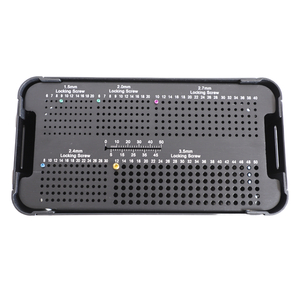
Veterinary Mini Micro Fragment System Stainless Steel Trauma Plates Locking Screws Orthopedic Surgical Instruments
Send an Inquiry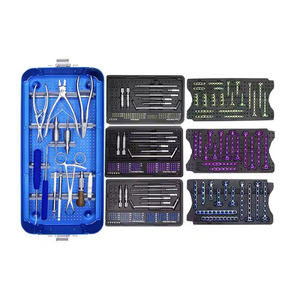
Stainless Steel Manual Mini Micro Fragment Locking Plate System 1.5/2.0/2.4mm Modular Fixation Set CE/ISO13485 Certified Trauma
Send an Inquiry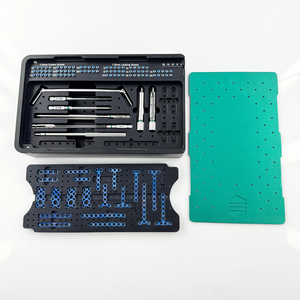
Veterinary 1.5mm Mini Micro Fragment Locking Kit with Titanium Plates, Screws & Orthopedic Surgical Instruments
Send an Inquiry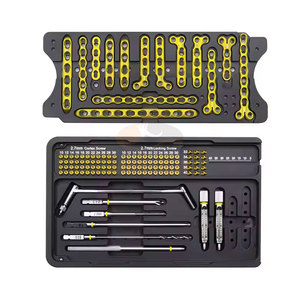
Premium Orthopedic Mini Fragments 2.7mm Stainless Steel Manual Locking Plate Set Instrument Set Class II ISO13485 Certified CE
Send an Inquiry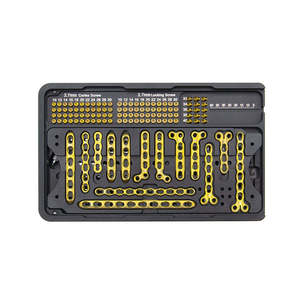
Orthopedic Surgical Instruments Manual Mini Fragments 2.7mm Steel Locking Plate Instrument Set CE Certified Class I 1 Year
Send an Inquiry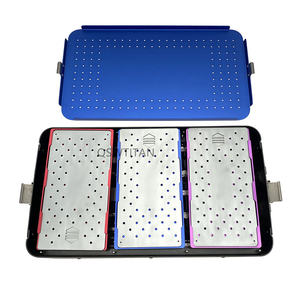
Orthopedic Mini Fragment Instrument Set Plate Screw Implant Locking Plate System Manual for Finger Palm Bones ASTRIN SURGICAL
Send an Inquiry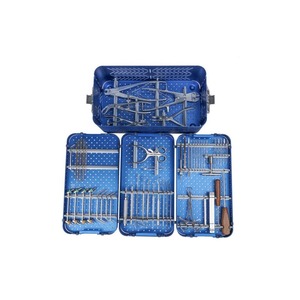
Premium Orthopedic Mini Micro Fragment System Locking Plate Screw Instrument Hand Foot Wrist Maxillofacial Surgical Kit
Send an Inquiry
Eaven Mini Micro Fragment System Trauma Plate Veterinary Orthopedic Implants Surgical Instruments Stainless Steel Locking Dog
Send an InquiryClinical Rationale & Biomechanical Engineering in Proximal Humerus Fixation
Proximal humerus fractures account for approximately 5% to 6% of all adult fractures, presenting a disproportionately high incidence among elderly populations due to osteoporosis. Achieving stable internal fixation in 2-part, 3-part, and complex 4-part proximal humerus fractures (according to the Neer Classification System) has historically posed significant challenges for orthopedic trauma surgeons. Conventional non-locking buttress plates frequently suffered from screw back-out, secondary varus collapse, subacromial impingement, and loss of reduction in osteopenic cancellous bone.
The paradigm shift in upper extremity trauma management occurred with the introduction of anatomically pre-contoured proximal humerus locking plates (commonly engineered following PHILOS biomechanical principles). Modern CE-certified manufacturers utilize advanced finite element analysis (FEA) to design plates that mimic the exact anterolateral anatomical contour of the proximal humerus, minimizing the need for intraoperative plate bending and significantly reducing periosteal devascularization.
"Biomechanical studies confirm that divergence and convergence of locking screws in the humeral head construct create a three-dimensional angular stable block. This structure withstands high rotational and axial loads, lowering secondary varus collapse rates from over 28% in traditional plating down to under 3.5% in modern locking plate configurations."
Key Biomechanical Anchors: Calcar Screw Support
A critical determinant of surgical success in proximal humeral osteosynthesis is the placement of inferomedial calcar screws. High-tier manufacturing facilities engineer their proximal humerus locking plates with specific inferomedial oblique screw hole trajectories. These calcar screws target the inferomedial region of the humeral head, bridging the metaphyseal defect and transferring load directly to the cortical shaft. Modern clinical literature proves that calcar screw reinforcement prevents articular surface collapse and screw cut-through even when medial metaphyseal comminution is present.
Multi-Planar Locking Threads
Precision-machined threaded plate holes accept both 3.5mm locking screws and cortex screws, allowing hybrid fixation strategies tailored to bone quality.
Suturing Eyelets
Integrated peripheral suture holes allow firm attachment of the rotator cuff tendons (supraspinatus, infraspinatus, subscapularis) to neutralize muscular traction forces.
Anatomic Low-Profile Rim
Tapered proximal edge profile prevents subacromial impingement during shoulder abduction and elevation, facilitating rapid post-operative rehabilitation.
Metallurgical Selection: Titanium Alloy (Ti-6Al-4V) vs. Stainless Steel (316L)
When procuring proximal humerus locking plates from ISO 13485 and CE certified factories, hospital tender committees must weigh material performance parameters against economic constraints. Both implant-grade 316L Stainless Steel (ASTM F138) and Titanium Alloy Ti-6Al-4V ELI (ASTM F136) offer specific mechanical advantages depending on surgical intent and patient physiology.
| Material Parameter | 316L Surgical Stainless Steel | Titanium Alloy (Ti-6Al-4V ELI) | Clinical & Procurement Impact |
|---|---|---|---|
| Modulus of Elasticity (GPa) | ~200 GPa | ~110 GPa (Closer to human cortical bone ~18 GPa) | Titanium exhibits lower flexural rigidity, minimizing stress shielding and promoting secondary callus formation. |
| Fatigue Resistance | High yield strength; prone to micro-fretting | Superior cyclic fatigue endurance limit | Titanium resists long-term micro-motion and screw-plate cold welding under heavy dynamic shoulder loads. |
| Biocompatibility & MRI Artifacts | Good biocompatibility; moderate MRI distortion | Excellent bio-inertness; minimal imaging artifact | Titanium allows clear post-operative MRI evaluation of rotator cuff pathology and soft tissue healing. |
| Factory Unit Cost Factor | Baseline Economy (1.0x) | Premium Grade (1.45x - 1.8x) | Stainless steel kits provide high cost-efficiency for government healthcare procurement and veterinary markets. |
Global B2B Procurement Trends & Manufacturing Innovations (2025–2030)
The global orthopedic trauma device market is undergoing structural transformation driven by stricter regulatory mandates, supply chain consolidation, and technological advancements in surgical planning. Buyers sourcing from international factories must adapt to four pivotal trends shaping the proximal humerus locking plate sector:
1. Polyaxial Variable-Angle Locking Mechanisms
While traditional fixed-angle locking plates restrict screw trajectory to predefined axes, next-generation polyaxial locking plates feature engineered plate holes or inserts allowing screws to be trajectory-steered up to 15° to 30° off-center. This freedom enables surgeons to custom-anchor screws into optimal patient-specific bone stock, avoiding fracture lines and achieving superior fixation around complex 3-part or 4-part split fragments.
2. Stringent EU MDR (2017/745) Compliance Requirements
The transition from MDD to EU MDR has heightened technical documentation demands for CE-marked implant manufacturers. Overseas distributors and importers are actively migrating toward established OEM factories possessing comprehensive Clinical Evaluation Reports (CER), robust Post-Market Surveillance (PMS) infrastructure, and fully validated ISO 11607 sterile barrier packaging systems. Facilities lacking robust quality management systems (QMS) face export barriers into Western healthcare networks.
3. Rise of Modular Mini-Fragment & Combined Trauma Kits
Surgeons increasingly demand modular trauma trays that combine proximal humeral fixation plates with mini-fragment locking systems (1.5mm, 2.0mm, 2.4mm, 2.7mm). Modular sets allow immediate operative flexibility when stabilizing small avulsion fragments, greater tuberosity splits, or concurrent upper extremity soft-tissue reattachment. Comprehensive kits streamline hospital inventory management and lower total sterilisation costs.
4. Direct-Factory OEM/ODM Customization & CT-Based Implants
Leading ISO-certified factories now offer specialized patient-matched custom implant services alongside standard product lines. Utilizing high-resolution volumetric CT scans, engineering teams generate 3D CAD surface models to produce custom titanium proximal humerus reconstruction plates for severe bone loss, tumor resections, or revision arthroplasty conversions.
Enterprise Excellence: Uteshiya Medicare Manufacturing Capabilities
Uteshiya Medicare is an FDA-registered, CDSCO-approved, and ISO 13485-certified orthopedic implants manufacturer and global supplier. Operating state-of-the-art cleanroom manufacturing plants, Uteshiya produces over 1,000 certified trauma, spine, CMF, joint reconstruction, and external fixator products deployed in over 30 countries across North America, Europe, Asia, and Latin America.
Request B2B Catalog & Factory Quote
Connect with our OEM export specialists for bulk volume discounts and global tender support.
Send an InquiryB2B Procurement & Technical FAQ
Q1 What documentation is required to import CE-certified proximal humerus plates?
Importers typically require an ISO 13485 Quality Management Certificate, CE Declaration of Conformity under MDD 93/42/EEC or EU MDR 2017/745, Certificate of Free Sale (CFS), material mill certificates (for 316L SS or Grade 5 Titanium), and sterile package validation reports (ISO 11607).
Q2 How do fixed-angle locking plates differ from variable-angle (polyaxial) plates?
Fixed-angle plates utilize rigid threaded bushings that lock screws at fixed trajectories (usually perpendicular to the plate surface). Variable-angle (polyaxial) plates feature deformable thread rings or polyaxial bushings allowing screw insertion up to ±15° off-axis, providing superior fixation flexibility around complex fracture fragments.
Q3 What is the standard surface treatment applied to titanium humerus plates?
Premium manufacturers apply Type II Anodization (acid-etching and micro-arc oxidation) or electrochemical color anodizing (Gold, Blue, Magenta). Type II anodization reduces tissue friction, increases surface hardness, eliminates cold welding between screw threads and plate holes, and reduces friction fatigue.
Q4 What are the Minimum Order Quantities (MOQ) for custom OEM white-label packaging?
Standard catalog items generally have low MOQs (5 to 10 sets), whereas customized OEM branding, laser-etched private labeling, and custom sterile pouch printing typically require minimum production runs of 50 to 100 units per plate size depending on factory agreement.
Q5 Why are inferomedial calcar screws essential in proximal humerus fracture fixation?
Inferomedial calcar screws support the humeral head's inferior column, resisting strong varus deforming forces exerted by the pectoralis major and deltoid muscles. Without calcar support, metaphyseal comminution frequently leads to plate fatigue, screw cut-through, and loss of reduction.
Q6 Are mini-fragment locking systems compatible with human and veterinary surgery?
Yes. 1.5mm, 2.0mm, 2.4mm, and 2.7mm mini-fragment system sets engineered from 316L SS or Titanium are widely utilized in human craniomaxillofacial (CMF), hand, foot, and wrist procedures, as well as in small animal veterinary orthopedic reconstruction.