Precision-Engineered Orthopedic Implant Systems
Explore our CE & ISO 13485 certified range of surgical implants, locking compression sets, and trauma systems manufactured under strict regulatory compliance for global distribution.
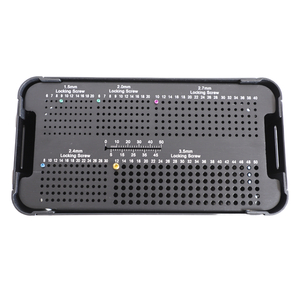
Veterinary & Human Mini Micro Fragment System Stainless Steel Trauma Plates & Locking Screws
- Material: 316L Surgical Stainless Steel
- System: Micro-locking plate technology
- Application: Trauma & joint reconstruction
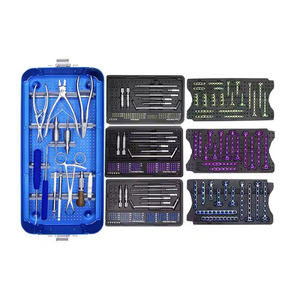
Stainless Steel Manual Mini Micro Fragment Locking Plate System 1.5/2.0/2.4mm Modular Fixation Set
- Modular Configuration: 1.5mm, 2.0mm, 2.4mm
- Certifications: CE / CDSCO / ISO 13485
- Biocompatible contour design
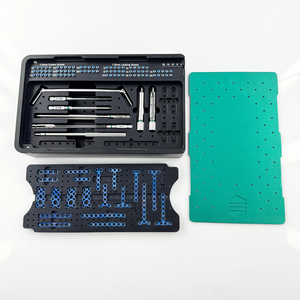
1.5mm Mini Micro Fragment Locking Kit with Titanium Plates, Screws & Surgical Instruments
- Material: Ti-6Al-4V ELI Alloy
- Includes precision instrumentation tray
- High fatigue strength formulation
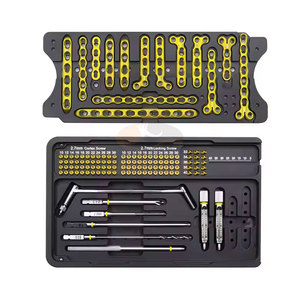
Premium Orthopedic Mini Fragments 2.7mm Stainless Steel Manual Locking Plate Instrument Set
- Diameter: 2.7mm system profile
- Passivated anti-corrosive finishing
- Surgeon-approved ergonomics
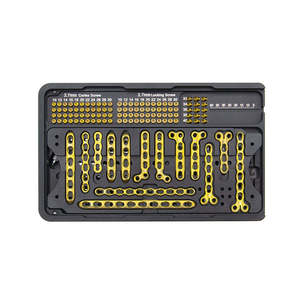
Orthopedic Surgical Instruments Manual Mini Fragments 2.7mm Steel Locking Plate Instrument Set
- High-grade tool steel & 316L SS
- Comprehensive benders & drivers
- Standardized surgical cassette
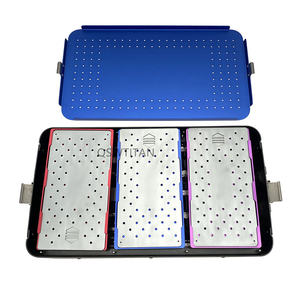
Orthopedic Mini Fragment Instrument Set Plate Screw Implant Locking System for Small Bones
- Designed for finger, palm & foot bones
- Low profile to minimize soft tissue loss
- Full traceability & lot code control
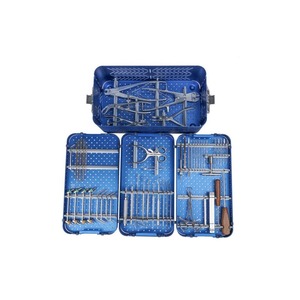
Premium Orthopedic Mini Micro Fragment System Locking Plate Screw Instrument Kit
- Covers Hand, Foot, Wrist & Maxillofacial
- Ultra-low profile design
- Sterilization ready container system
Eaven Mini Micro Fragment System Trauma Plate Orthopedic Implants & Surgical Instruments Set
- Dual human & veterinary approval
- Optimal screw thread engagement
- Superior tensile yield strength
Technical White Paper: Modern Engineering of Total Hip Replacement (THR) Systems
Total Hip Arthroplasty (THA) remains one of the most clinically successful surgical interventions in modern medicine. The primary objective of total hip replacement implants is to reconstruct hip joint kinematics, alleviate chronic pain, and restore biomechanical stability across varying patient body mass indices (BMI) and physical activity profiles. As a premier CE certified total hip replacement implants manufacturer and exporter, our engineering paradigm synthesizes advanced metallurgy, precision tribology, and osteoconductive surface chemistry to maximize long-term implant survival rates.
1. Tribological Configurations and Bearing Surface Integrity
The operational longevity of a total hip replacement implant depends heavily on the friction coefficient, wear rate, and corrosion resistance of the chosen tribological pairing. Modern joint reconstruction utilizes three primary articulation interfaces:
- Metal-on-Highly Cross-Linked Polyethylene (Mo-XPE): Engineered using forged Cobalt-Chromium-Molybdenum (CoCrMo per ASTM F75) femoral heads articulating against UHMWPE enriched with Vitamin E to eliminate free radicals and dramatically suppress oxidation-induced micro-wear.
- Ceramic-on-Highly Cross-Linked Polyethylene (Co-XPE): High-purity Biolox-delta alumina/zirconia composite ceramic heads paired with sub-micron polished polyethylene acetabular inserts, lowering linear wear rates to under 0.01 mm per million cycles.
- Ceramic-on-Ceramic (CoC): Designed for young, active patients, offering maximum scratch resistance, biochemical inertness, and virtual elimination of osteolysis triggered by wear debris.
Clinical Insight: Vacuum Plasma Sprayed (VPS) Hydroxyapatite (HA) coatings with a controlled porosity range of 30%–50% and coating thickness of 50–150 µm accelerate early osseointegration, ensuring primary primary stability and long-term biological secondary fixation without the need for bone cement.
2. Femoral Stem Geometry and Biomechanical Load Transfer
Femoral stems are optimized to prevent stress shielding while resisting torsional and axial loading vectors during normal gait cycles. Our hip stems incorporate a tapered wedge geometry with a proximal trapezoidal cross-section. Manufactured from medical-grade Titanium Alloy (Ti-6Al-4V ELI per ASTM F136), the elastic modulus of the stem closely mimics cortical bone (approx. 110 GPa vs 18 GPa), reducing stiffness mismatch and minimizing thigh pain.
Features such as 12/14 standard Morse tapers ensure neck-stem modularity, allowing orthopedic surgeons to independently adjust offset, leg length restoration, and anteversion angles during primary or complex revision procedures.
Enterprise Manufacturing Competencies & Quality Assurance Standards
Operating a state-of-the-art medical manufacturing facility, Uteshiya Medicare combines advanced multi-axis CNC Swiss lathe machining, high-precision wire EDM, and automated coordinate measuring machines (CMM) to achieve sub-micron dimensional tolerances across all implant lines. Our enterprise quality management system complies fully with ISO 13485:2016, EU MDR 2017/745, and US FDA QMSR requirements.
Raw Material Certification
100% material traceability from certified melt sources. Every batch of Ti-6Al-4V ELI and 316L Stainless Steel undergoes ultrasonic flaw detection and spectrographic chemical validation before machining.
Cleanroom Packaging
In-house ISO Class 7 and Class 8 environmental cleanrooms guarantee zero microbial or particulate contamination prior to double-blister Tyvek pouch packaging and Ethylene Oxide (EtO) or Gamma sterilization.
Biomechanical Fatigue Testing
Implants undergo rigorous cyclic fatigue testing exceeding 5,000,000 load cycles according to ISO 7206-4 and ISO 7206-6 standards to verify structural resilience under peak physiological loading.
Industry & Product Development Trends in Hip Replacement Arthroplasty
The total hip replacement market is experiencing a profound technological evolution driven by digital health integration, minimally invasive surgical (MIS) techniques, and personalized orthopedics. Procurement managers and hospital procurement committees must align their purchasing strategies with these emerging trends:
1. 3D-Printed Porous Titanium Implants & Additive Manufacturing
Selective Laser Melting (SLM) and Electron Beam Melting (EBM) additive manufacturing technologies allow for the creation of trabecular-like porous titanium acetabular shells and augment blocks. By replicating natural cancellous bone architecture (porosity of 60–80% with interconnected pore sizes between 300–600 µm), 3D-printed cups achieve unprecedented cellular migration and vascularization, practically eliminating aseptic loosening in challenging revision surgeries.
2. Direct Anterior Approach (DAA) Optimized Stems
Surgical trends indicate a rapid shift toward the Direct Anterior Approach, which spares muscle tissues and accelerates post-operative recovery. Manufacturers are designing specialized shortened femoral stems with a curved distal tip to facilitate insertion through smaller surgical windows without compromising primary mechanical stability.
3. Dual-Mobility Acetabular Cup Systems
Dual-mobility cup systems feature a mobile polyethylene liner that articulates within a polished metallic outer shell, housing a smaller femoral head inside. This design provides an ultra-large effective head diameter, substantially increasing the jump distance required for dislocation and reducing post-operative instability rates to under 0.5% in high-risk patient cohorts.
Future Global Procurement Trends (2025–2035)
Hospital networks, ministry of health departments, and international medical device distributors face a transforming macro-economic landscape. Key factors reshaping global B2B procurement of joint replacement implants include:
- Diversification of Medical Supply Chains: Global buyers are moving away from single-source geographical dependencies. Certified Indian OEM/ODM manufacturers like Uteshiya Medicare offer cost-competitive, CE-marked alternatives that match Western quality standards while protecting against regional supply chain disruptions.
- Strict Regulatory Harmonization: Compliance under the European Union Medical Device Regulation (EU MDR) requires exhaustive clinical evaluation reports (CER) and post-market clinical follow-up (PMCF). Procurement teams prioritize suppliers with pre-validated regulatory files, CDSCO licenses, and full technical documentation sets.
- Value-Based Healthcare & Total Cost of Ownership (TCO): Purchasing decisions are shifting from initial unit cost to comprehensive episode-of-care expenses. High-durability implants that minimize revision surgeries lower the total cost of ownership for healthcare systems globally.
Frequently Asked Questions for B2B Importers & Hospital Buyers
Partner with a World-Class Orthopedic Implant Manufacturer
Expand your surgical product portfolio with high-precision, CE certified total hip replacement implants, trauma plates, and locking screw systems trusted across 30+ countries.