Featured Wrist & Upper Limb Fixator Portfolio
Precision-engineered external fixation devices, mini-frames, and dynamic splints compliant with ISO 13485, CDSCO, and CE MDR quality standards for distal radius and hand metacarpal fracture management.
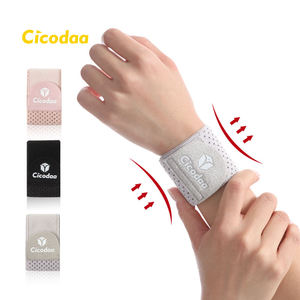
Unisex Sports Breathable Nylon Wrist Support Guard
Designed for tendon sheath immobilization, strain management, and post-fixation removal support with medical-grade breathable compression weave.
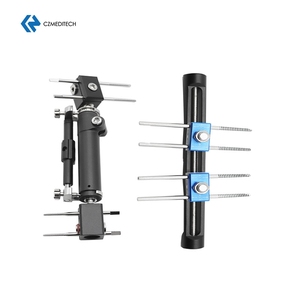
Upper Limb Wrist, Hand & Finger External Fixator
Multi-pin modular construct engineered for precise reduction of compound wrist fractures, metacarpal injuries, and phalangeal alignment.
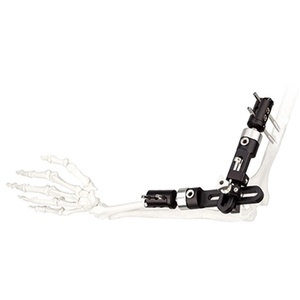
Unilateral Frame Fixator for Elbow & Wrist Joint
High-rigidity single-sided frame with adjustable ball-joint clamps allowing controlled distraction and rigid fragment stabilization across the wrist joint.
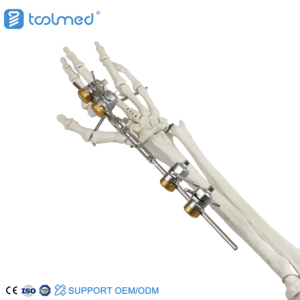
Wrist Joint Trauma Fracture Surgical Fixator System
Comprehensive surgical fixator kit featuring radiolucent carbon fiber rods and titanium alloy Schanz pins for distal radius trauma management.
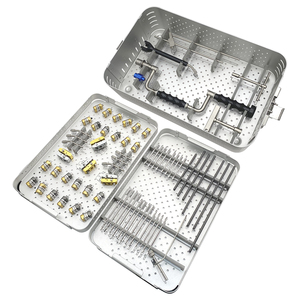
Multi-Joint Forearm & Wrist External Fixator Set
Compatible with Stryker-type modular pin clamps. Provides polyaxial articulation for complex intra-articular fractures of the distal radius.
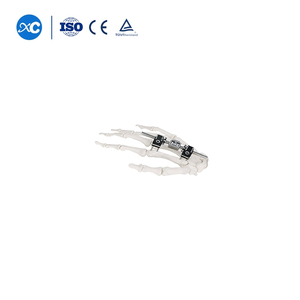
Professional Distal Radius Type-B External Fixator
Anatomically contoured bridge frame engineered specifically for extra-articular and intra-articular distal radial metaphyseal fractures.
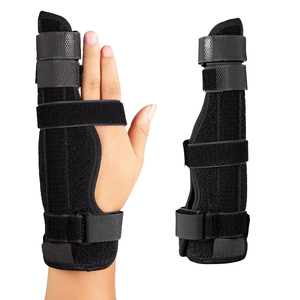
Aluminum Plate Supported Silicone Wrist Fixator
Dual-stay medical silicone splint integrated with malleable aircraft-grade aluminum plates for post-trauma splinting and ligament sprain therapy.
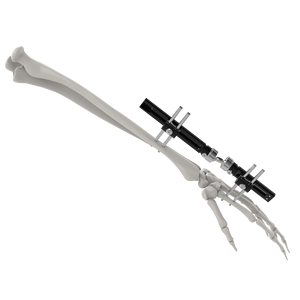
Mini Wrist External Fixator for Small Bones & Metacarpals
Ultra-lightweight mini external fixator for fine pin placement in hand phalanges, metacarpal fractures, and pediatric wrist osteotomies.
Global Manufacturing Scale & Quality Compliance
Operating as a trusted OEM/ODM orthopedic implants manufacturer and exporter, our production ecosystem adheres strictly to regulatory benchmarks, delivering surgical reliability across 30+ international markets.
Rigorous CE MDR & ISO Standards
Our external fixator systems are manufactured in compliance with ISO 13485 quality management systems. Every Schanz screw, connecting rod, and universal clamp undergoes 100% optical inspection and mechanical fatigue testing to safeguard against intraoperative pin loosening or fracture dynamic loss.
Advanced Metallurgical Processing
We process bio-compatible Titanium Alloy (Ti-6Al-4V ELI conforming to ISO 5832-3) and 316L Stainless Steel (ISO 5832-1). Components feature passivated surfaces, micro-anodized coatings, and radio-translucent carbon-fiber rods to facilitate real-time C-arm intraoperative fluoroscopy visualization.
In-House Cleanroom & Sterilization
Equipped with CDSCO-approved ISO Class 7 cleanrooms, our sterile packaging facility provides ready-to-use surgical fixation kits packaged under double aseptic barrier blister packs, validated for EO (Ethylene Oxide) and Gamma irradiation sterilization protocols.
Distal Radius & Wrist Fixation: Clinical & Biomechanical Foundations
An in-depth examination of ligamentotaxis, dynamic vs. static wrist distraction, and pin-bone interface mechanics in severe wrist trauma care.
1. The Role of Ligamentotaxis in Distal Radius Reconstruction
Wrist joint external fixation remains a primary therapeutic modality for complex intra-articular and extra-articular distal radius fractures (AO/OTA Type 23-B and 23-C). The core biomechanical principle relies upon ligamentotaxis—the application of continuous longitudinal traction across the radiocarpal joint. Traction tautens the surrounding soft-tissue envelope, dorsal radio-carpal ligaments, and volar radiocarpal ligamentous complexes, indirectly aligning displaced intra-articular articular fragments and restoring radial height, palmar tilt, and radial inclination.
2. Bridging vs. Non-Bridging Wrist External Fixation
Surgical decision-making hinges on anatomical fracture patterns:
- Bridging Fixation: Anchorage pins are placed proximal to the fracture site in the radial diaphysis and distal to the wrist joint in the second metacarpal shaft. This bridges the radiocarpal joint, preventing radiocarpal motion while maintaining fracture distraction during initial bone healing.
- Non-Bridging Fixation: Indicated when a proximal metaphyseal fracture fragment is sufficiently sized to receive distal Schanz pins directly within the radius, sparing radiocarpal joint mobility and mitigating wrist joint stiffness.
3. Mitigating Pin-Tract Infection & Mechanical Pin Loosening
The pin-bone interface is the critical vulnerability of any external fixator frame. Optimized thread design (self-drilling, self-tapping tapered Schanz pins), low-heat insertion speeds under irrigation, and pre-drilling radial cortex holes prevent thermal necrosis. Furthermore, using hydroxyapatite-coated or anodized titanium Schanz screws enhances osseointegration, significantly decreasing pin-tract infection rates and early hardware loosening under cyclic upper-limb loading.
| Fixator System Type | Primary Clinical Indications | Material Construction | Key Biomechanical Advantage |
|---|---|---|---|
| Unilateral Dynamic Wrist Fixator | Intra-articular Distal Radius (AO 23-C), Ligamentous Instability | Titanium / Carbon Fiber Rods | Allows controlled flexion/extension motion post-distraction |
| Mini External Fixator Frame | Metacarpal, Phalangeal & Pediatric Wrist Fractures | 316L Stainless Steel / Anodized Aluminum | Ultra-compact footprint, precise 1.5mm - 2.5mm pin placement |
| Stryker-Compatible Multi-Joint Set | Poly-Trauma, Open Distal Radius Fractures with Soft-Tissue Defect | High-Tensile Titanium Alloy | Multi-planar snap-on clamps for rapid intraoperative adjustment |
| Silicone-Aluminum Hybrid Splint | Post-Operative Immobilization, Tendon Sheath Fixation | Medical Silicone & Aircraft Aluminum | Non-invasive continuous soft-tissue support and patient comfort |
Future Procurement Trends in Wrist Fixation Systems
How hospital purchasing groups, orthopaedic distributors, and medical device importers are adapting to shifting clinical requirements and global regulatory landscapes.
1. Modular Single-Use Sterile Kits
Hospitals are rapidly shifting from traditional, heavy reusable tray sets to single-use sterile pre-packaged external fixator kits. Pre-sterilized single-patient kits lower hospital CSSD processing costs, minimize cross-contamination risk, and streamline surgical room turnaround times.
2. Shift to Carbon Fiber Radiolucency
Procurement departments prioritize radiolucent structural materials. High-grade carbon-fiber connecting rods eliminate metal radiopaque shadows during continuous C-arm intraoperative fluoroscopy, allowing surgeons unobstructed real-time visualization of fracture reduction.
3. CE MDR & Regulatory Traceability
With stringent EU Medical Device Regulation (MDR 2017/745) requirements, global buyers are consolidating vendor lists to certified manufacturers capable of delivering full Technical Documentation, Unique Device Identification (UDI), and biocompatibility data packages.
Technological & Clinical Development Trends
Pioneering innovations transforming wrist external fixator design, biomechanical versatility, and post-operative kinetic recovery.
Polyaxial Articulation Clamps & Early Kinematics
Traditional rigid wrist fixators require prolonged immobilisation, often resulting in complex regional pain syndrome (CRPS) or joint stiffness. Next-generation wrist fixators incorporate dynamic ball-and-socket hinges. Once the initial metaphyseal callus formation occurs (typically 2-3 weeks post-trauma), the surgeon can unlock the central hinge while preserving distraction length, enabling early controlled wrist extension and flexion exercises.
Clinical Innovation Note
Dynamic wrist articulation reduces post-removal rehabilitation cycles by up to 40% compared to static bridging frames, preserving patient range-of-motion without compromising fracture reduction integrity.
Bio-Surface Engineering
Application of silver-nanoparticle coatings and Hydroxyapatite (HA) plasma spraying onto Schanz pin surfaces creates a dual action: antimicrobial prevention of bacterial biofilm formation alongside accelerated cortical pin-bone anchoring.
Antibacterial Pin Coatings & Nanostructured Surfaces
High rates of pin-tract colonization (occurring in up to 15-20% of external fixation cases) remain a persistent surgical hurdle. Leading manufacturers are investing heavily in surface-modified pin technology. Antimicrobial ion-releasing coatings suppress Staphylococcus aureus colonization, significantly reducing osteomyelitis risks and requiring fewer systemic antibiotic prescriptions during external frame maintenance.
Partner with a Leading CE & ISO Certified Fixator Manufacturer
Looking for reliable OEM/ODM production, competitive bulk pricing, or specialized orthopedic trauma fixator distribution rights in your region? Our technical engineering team provides end-to-end support, custom implant prototyping, and complete regulatory dossier backing.
Inquire NowFrequently Asked Procurement & Technical Questions
Essential queries resolved regarding material certifications, custom specifications, global export compliance, and ordering workflows.
Why Global Healthcare Buyers Choose Our Fixator Solutions
Combining precision biomedical engineering, scalable cleanroom production, and dedicated post-sales clinical support.
End-to-End Quality Traceability
From raw titanium bar stock certification to final laser engraving of lot numbers and QR codes, our full device traceability guarantees compliance and rapid quality tracking throughout the product lifecycle.
Global Export Ecosystem
With an active export network spanning 30+ countries across Latin America, Southeast Asia, the Middle East, Africa, and Europe, our logistics team manages door-to-door freight, customs documentation, and regional import clearances seamlessly.
Patient-Specific Customization
In addition to standard catalog offerings, our biomedical design center works directly with surgical teams to create patient-specific custom implants and complex multi-plane external fixator frames tailored to unusual congenital or severe post-traumatic deformities.