Featured Surgical Implants & Micro-Fragment Systems
Explore our CE & ISO 13485 certified orthopedic trauma plates, mini-locking fragment systems, and motion-preserving spinal reconstruction implants directly from China's leading OEM/ODM manufacturing cleanrooms.
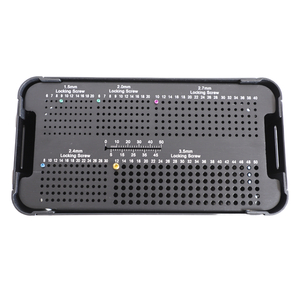
Veterinary Mini Micro Fragment Stainless Steel Trauma Plate & Screw Set
Send an Inquiry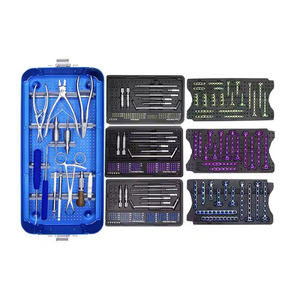
Stainless Steel Manual Mini Micro Fragment System 1.5/2.0/2.4mm Fixation Set
Send an Inquiry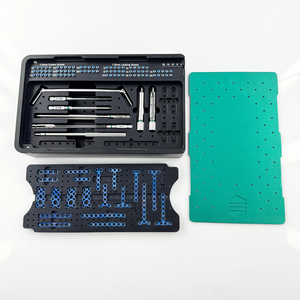
Veterinary 1.5mm Titanium Mini Micro Fragment Locking Instrument Kit
Send an Inquiry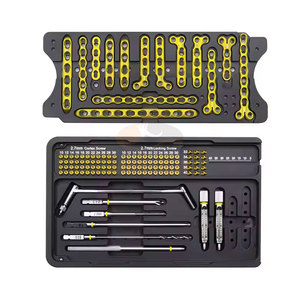
Premium Orthopedic 2.7mm Stainless Steel Locking Plate & Instrument Set
Send an Inquiry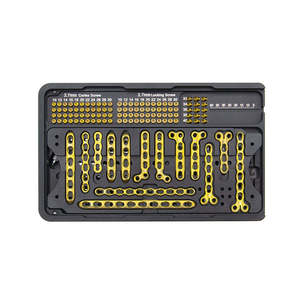
Orthopedic Manual Mini Fragment 2.7mm Steel Locking Plate System
Send an Inquiry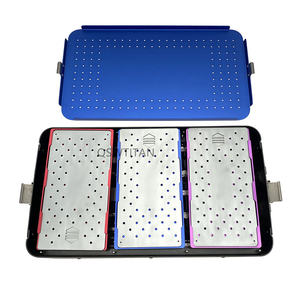
Mini Fragment Hand & Foot Bone Locking Plate Screw Instrument Set
Send an Inquiry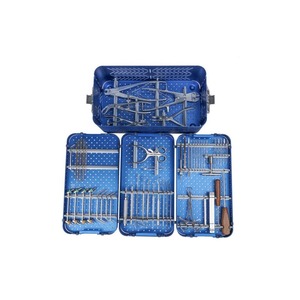
Micro Fragment Wrist & Maxillofacial Surgical Locking Instrument Kit
Send an Inquiry
Veterinary Orthopedic Trauma Locking Plate Implants & Instrument Kit
Send an InquiryState of Art: Artificial Cervical Disc Arthroplasty (CDA) & Spinal Motion Preservation
Understanding the Biomechanical Shift from Anterior Cervical Discectomy and Fusion (ACDF) to Dynamic Total Disc Replacement (TDR)
Cervical radiculopathy and myelopathy caused by degenerative disc disease (DDD) represent a primary clinical challenge in modern spine surgery. For decades, Anterior Cervical Discectomy and Fusion (ACDF) stood as the gold standard for surgical intervention. However, while ACDF delivers high rate of segmental fusion and neural decompression, long-term clinical follow-up data demonstrates an inherent flaw: strict segmental immobilization alters spine kinematics, leading to elevated stress concentration at adjacent segments. This pathology, recognized as Adjacent Segment Disease (ASD), frequently requires secondary surgical procedures.
To eliminate ASD risk and preserve natural spinal neck range of motion (ROM), Artificial Cervical Disc Replacement (ACDR) has emerged as the definitive standard in motion-preserving spinal arthroplasty. Designed to replicate the physiological center of rotation (COR), elastic flexural resistance, and axial damping of healthy human cervical intervertebral discs (C3–C7), total disc implants maintain normal segmental flexural kinematics, lateral bending, and axial rotation.
The primary goal of modern cervical disc arthroplasty is threefold: (1) Provide immediate mechanical stability post-resection, (2) Preserve physiological segmental dynamic range of motion across flexion-extension and lateral tilt, and (3) Minimize wear-debris induced osteolysis via biocompatible ceramic, titanium alloy, and Ultra-High Molecular Weight Polyethylene (UHMWPE) tribological pairs.
Biomechanical Engineering & Tribological Paradigms
An In-Depth Breakdown of Wear Kinetics, Material Biomaterials, and Fixation Technologies
Biomechanical Performance Comparison Matrix
Technical comparison evaluating clinical parameters across surgical reconstruction methodologies
| Clinical & Technical Parameter | Anterior Cervical Fusion (ACDF) | 1st Gen Ball-and-Socket TDR | 4th Gen Dynamic Artificial Disc (China OEM) |
|---|---|---|---|
| Segmental Motion Preservation | 0° (Complete Immobilization) | Restricted Fixed Center (6° - 8°) | Full Physiological ROM (10° - 14° Multi-axial) |
| Adjacent Segment Stress Index | Elevated (+40% to +60% intradiscal pressure) | Moderate Reduction (+15% stress) | Anatomic Normal (Near-Zero Stress Increase) |
| Primary Fixation Mechanism | Anterior Plate + Locking Screws | Deep Sagittal Keels / Anchor Teeth | Porous Titanium Coating + Micro-Spikes |
| Wear Debris & Osteolysis Risk | Not Applicable (Bone Fusion) | Moderate (Polyethylene Wear) | Ultra-Low Wear (< 0.8 mm³/10M cycles) |
| Post-Op Heterotopic Ossification | High (Fusion intent) | 28% - 42% at 5 Years | < 8.5% at 5 Years (Damped Articulation) |
| Operative Time & Technique Complexity | Standard Trajectory | High Precision Keel Cutting Needed | Streamlined Direct-Insert Zero-Profile |
China Manufacturing Excellence & Enterprise Quality System
Why Tier-1 Orthopedic Brands & Global Procurement Groups Partner with Our ISO 13485 Manufacturing Hub
As China’s premier medical device manufacturer specializing in high-precision spinal implants and trauma micro-fragment systems, our facilities operate under strict international regulatory compliance frameworks. Utilizing state-of-the-art 5-axis DMG MORI CNC milling machines, Citizen Swiss-type automatic lathes, and automated coordinate measuring machines (CMM) with sub-micron tolerance detection, we guarantee uniform quality across all production batches.
Future Sourcing & Procurement Trends in Cervical Arthroplasty (2025-2030)
Strategic Insights for B2B Importers, Hospital Procurement Directors, and OEM Brands
1. Rise of Ambulatory Surgical Centers (ASCs) & Zero-Profile Designs
Global healthcare systems are rapidly shifting cervical spine procedures from inpatient operating rooms to outpatient Ambulatory Surgical Centers (ASCs). ASCs prioritize low intraoperative complication rates, quick surgical turnaround, and intuitive instrument sets. Consequently, future artificial disc procurement favors zero-profile, self-retaining disc systems that eliminate anterior plate placement, reducing dysphagia rates and intraoperative fluoroscopy exposure.
2. Patient-Specific 3D Printed Porous Endplates
Standard off-the-shelf cervical disc implants occasionally face endplate anatomical mismatch, leading to subsidence or stress shielding. The integration of 3D electron beam melting (EBM) titanium additive manufacturing allows China factories to produce patient-matched endplates based on pre-operative CT scans. This trend is drastically scaling in high-volume OEM contracts.
3. Consolidation of Trauma & Spine Supply Chains
B2B importers are increasingly consolidating vendor portfolios. Sourcing artificial cervical discs from manufacturers who simultaneously produce micro-fragment trauma systems (1.5mm/2.0mm/2.7mm locking plates, veterinary trauma kits, and CMF fixation) allows distributors to optimize shipping logistics, reduce MOQ burdens, and streamline ISO 13485 vendor audit costs.
Frequently Asked Questions (B2B Procurement FAQ)
Essential Information for Hospital Procurement Officers, Medical Device Distributors, and OEM Partners
Partner with China's Premier Orthopedic Implant Manufacturer
Looking for certified artificial cervical discs, trauma mini-fragment locking systems, or customized OEM/ODM surgical solutions? Connect directly with our engineering team for factory-direct pricing, sample requests, and technical dossiers.