Precision Flexible Reamers & Modular Trauma Systems
Engineered for high torque retention, low intramedullary thermal rise, and anatomical adaptability across human and veterinary trauma procedures.
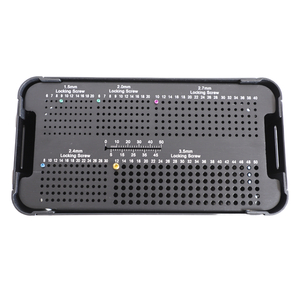
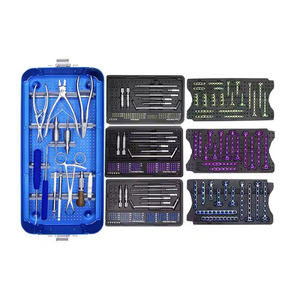
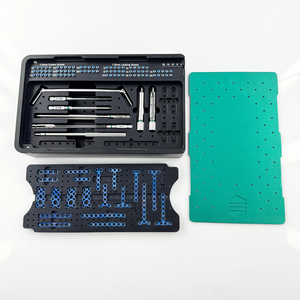
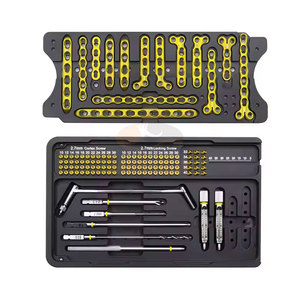
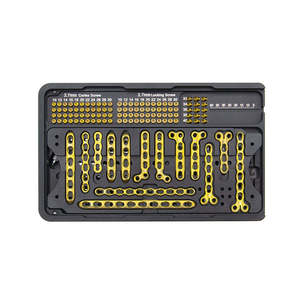
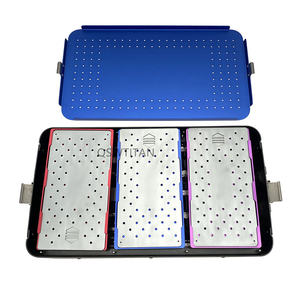
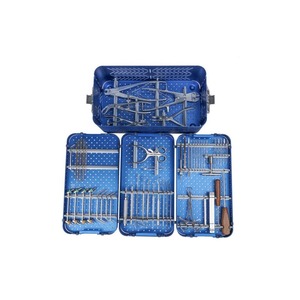
China's Premier Manufacturing Infrastructure & Quality Excellence
Combining world-class CNC precision machining with stringent ISO 13485 & CDSCO certified quality management systems to serve surgical distributors across 30+ nations.
CDSCO, ISO 13485 & CE Regulatory Certifications
Our state-of-the-art manufacturing plants strictly adhere to ISO 13485 standards, US FDA registration protocols, and CDSCO approvals. Every batch of flexible bone reamers and locking plate systems undergoes rigorous mechanical fatigue testing, dimensional verification, and bio-burden inspection.
Advanced Metallurgical Science (316L SS & Ti-6Al-4V)
We source premium medical-grade 316L Stainless Steel and Implant-Grade Titanium (ASTM F136 / ISO 5832-3). Our flexible shafts feature superior torsional rigidity, resistance to fatigue failure, and seamless compatibility with power tool drive couplings.
Complete OEM/ODM & Custom Patient-Matched Solutions
From micro-fragment hand sets to custom flexible reamer length configurations and specialized reamer head geometries, our R&D engineering team offers full white-label custom manufacturing, laser marking, and modular sterilizing tray customization.
Flexible Bone Reamer System Architecture: Biomechanical Engineering & Clinical Dynamics
An authoritative analysis of intramedullary canal preparation, torque retention, fluting dynamics, thermal necrosis mitigation, and structural fatigue resistance.
1. Introduction & Biomechanical Significance in Intramedullary Nailing
Intramedullary (IM) fixation remains the gold standard for stabilizing long-bone fractures, specifically in femoral, tibial, and humeral trauma. Achieving optimal biological stabilization requires meticulous preparation of the medullary canal. The Flexible Bone Reamer System is the core surgical instrument responsible for expanding the endosteal canal diameter to receive press-fit intramedullary nails.
The primary clinical goal of flexible reaming is to enlarge the isthmus while creating a uniform cylindrical void that maximizes metal-to-bone contact area. Modern clinical evidence confirms that reamed intramedullary nailing results in faster union rates, lower incidence of non-union, and increased stability compared to unreamed techniques. However, the procedure requires precise torque transmission through a curved flexible shaft without imparting excessive thermal energy or intramedullary pressure (IMP) to surrounding tissue.
Clinical Gain: Precise reaming increases contact area by up to 300% across fracture lines, allowing for larger-diameter nails that dramatically improve rotational stability and fatigue endurance under load-bearing conditions.
2. Structural Architecture: Monolithic Nitinol vs Wound Wire Flexible Shafts
The mechanical efficiency of a flexible reamer depends heavily on its shaft architecture. Historically, multi-layer wound wire shafts were widely used due to their high flexibility. However, wound wire constructs suffer from asymmetric torque transmission, susceptibility to reverse-rotation unraveling, and difficulty in thorough decontamination.
China's leading medical device manufacturers, such as our facility, have engineered monolithic slot-cut flexible shafts fabricated from medical-grade Nitinol or specialized stainless steel tubing. Laser-cut spiral geometries allow uniform bending radii down to 45 degrees while guaranteeing 1:1 forward and reverse torque transmission. This completely eliminates shaft whip, binding, and premature structural failure inside curved anatomical canals.
| Architectural Feature | Monolithic Slot-Cut Shafts | Wound Wire Spiral Shafts | Clinical Impact |
|---|---|---|---|
| Torque Retention Efficiency | 98.5% (Equal in both rotations) | 72.0% (Forward rotation only) | Eliminates shaft whipping & chatter marks |
| Cannulation Cleanability | Smooth inner lumen (100% steam penetrable) | Traps debris between wire strands | Prevents cross-contamination & bio-burden buildup |
| Maximum Bending Fatigue Cycles | > 500,000 Cycles @ 45° Deflection | < 80,000 Cycles @ 45° Deflection | Extends reusable instrument lifespan by 6x |
| Thermal Generation Rate | Low (Optimized clearance flutes) | Moderate to High | Protects osteocytes from thermal necrosis (< 47°C) |
3. Hydrodynamic Fluting Geometry & Intramedullary Pressure Control
Excessive intramedullary pressure generated during reaming can drive bone marrow emboli into the venous circulation, leading to severe systemic complications such as fat embolism syndrome (FES) or respiratory compromise. Our engineering design directly addresses this clinical hazard through Deep Parabolic Flute Geometries and Negative Rake Angle Cutting Edges.
By maximizing the chip clearance volume behind each reamer blade, bone debris is continuously evacuated proximally along the guide wire rather than compressed against the endosteum. Furthermore, reamer heads with a 0.5mm undersized guide wire clearance allow fluid bypass, maintaining intramedullary pressures below the critical 30 mmHg threshold throughout the procedure.
Future Procurement & Technological Trends (2025–2030)
Strategic insights for hospital procurement managers, OEM brand owners, and medical device distributors worldwide.
Shift Toward Single-Use Sterile Flexible Shaft Assemblies
Global hospital networks are increasingly adopting single-use pre-sterilized flexible reamer shafts. This eliminates reprocessing costs, guarantees sharp cutting geometry for every procedure, and completely mitigates hospital-acquired infection (HAI) risks.
Smart Torque-Sensing & Auto-Reversing Drive Interfaces
Next-generation reaming systems are integrating real-time torque and load monitoring. When encountering dense cortical bone, power tools automatically adjust RPM and torque thresholds to prevent reamer head jamming and shaft shear failures.
Supply Chain Consolidation via China Manufacturing Hubs
International orthopedic brands are increasingly leveraging Chinese manufacturers for complete modular instrument kits. China's mature CNC machining ecosystems provide unmatched cost efficiency, rapid prototyping, and full compliance with international standards.
Diamond-Like Carbon (DLC) & Friction-Reducing Coatings
Advanced surface treatments such as DLC and titanium nitride (TiN) coatings are becoming standard. These micro-thin layers reduce friction coefficients by up to 60%, drastically minimizing heat generation during high-speed medullary canal clearance.
Convergence of Human & Veterinary Orthopedic Platforms
Veterinary orthopedic surgery is adopting human-grade mini fragment systems (1.5mm to 2.7mm plates and flexible reamers). Manufacturers offering dual-market modular instrumentation sets are capturing significant market share in veterinary referral hospitals.
Patient-Specific & Custom Curved Intramedullary Instruments
With CT-driven 3D anatomical modeling, flexible reamers are being tailored for specific anatomical deformities and revision surgeries. Custom length, specialized drive adapters, and variable radius shafts represent the high-margin frontier of B2B procurement.
Frequently Asked Questions for Global Buyers
Clear, direct answers regarding quality assurance, minimum orders, custom branding, and regulatory support.
Q1: What raw materials are used in your flexible bone reamer shafts and cutting heads?
Our flexible shafts are manufactured using high-tensile medical stainless steel (316L / 17-4PH) or superelastic Nitinol tubing. Cutting heads utilize bio-compatible hardened stainless steel conforming to ASTM F899 standards to maintain sharpness across repeated sterilization cycles.
Q2: Are your reamer systems compatible with standard surgical power tools?
Yes. Our flexible reamers are engineered with standard quick-coupling drive interfaces, including AO Quick Coupling, Trinkle, and Synthes-style attachments. Custom drive adapter fittings can also be manufactured upon request.
Q3: How do you guarantee compliance with FDA, CE, and ISO regulations?
Our facility operates under an audited ISO 13485 Quality Management System. We hold comprehensive technical documentation dossiers, raw material mill certificates, bio-burden validation reports, and sterile packaging validation supporting CE and FDA registrations.
Q4: What is the Minimum Order Quantity (MOQ) for OEM/ODM private labeling?
For standard catalog instrument sets and flexible reamers, our MOQ starts as low as 10 to 50 sets. For custom OEM designs, laser etching, or customized sterilization tray packaging, our team provides flexible pilot batch sizes to support initial market entry.
Q5: How does your design reduce thermal necrosis during canal expansion?
Our reamer heads feature optimized parabolic flutes with generous chip-clearance voids and sharp negative-rake cutting edges. This ensures effective cutting action rather than bone compression, maintaining canal temperatures well below the critical 47°C osteocyte damage threshold.
Q6: What is the typical lead time for international B2B shipments?
Standard stocked products ship within 7 to 10 business days. Custom OEM production orders typically require 25 to 35 days, depending on technical specifications, coating requirements, and packaging validation protocols.
Partner with China's Premier Orthopedic Instrument Manufacturer
Upgrade your surgical product line with certified flexible bone reamers, mini fragment locking plates, and custom orthopedic trauma instrumentation sets. Contact our engineering team today for factory-direct quotes and technical samples.