Executive Summary & Industry Overview
The global orthopaedic biomaterials landscape has undergone a monumental paradigm shift toward synthetic osteoconductive matrixes. Among these, Hydroxyapatite (HA) bone graft materials stand as the gold standard for bone defect repair, spinal fusion enhancement, craniomaxillofacial (CMF) reconstruction, and trauma care. As healthcare systems globally phase out human allografts and animal xenografts due to immunological risks and pathogen transmission concerns, high-purity synthetic Hydroxyapatite manufactured in China has emerged as the leading clinical choice for orthopedic surgeons and B2B medical procurement agents.
This technical whitepaper provides medical device procurement officers, hospital surgical directors, and international orthopedic distributors with an authoritative evaluation of China's top Hydroxyapatite manufacturing standards, material synthesis chemistry, structural degradation kinetics, and synergy with rigid internal fixation systems such as mini/micro fragment plates.
Stoichiometric Purity
Synthesized at a precise Calcium-to-Phosphorus ratio of 1.67, matching human cortical and cancellous bone mineral composition.
Interconnected Porosity
Dual-porosity architecture featuring micropores (<10 µm) for fluid absorption and macropores (100–500 µm) for osteon vascularization.
Regulatory Compliance
Fully compliant with ISO 13485 QMS, ASTM F1185 standards, CE marking, CDSCO approvals, and FDA Class II/III guidelines.
1. Material Science: Crystalline Hydroxyapatite vs. Biphasic Formulations
Synthetic Hydroxyapatite, mathematically represented as $Ca_{10}(PO_4)_6(OH)_2$, closely mimics the inorganic mineral matrix of native bone tissue. Chinese biomaterial engineers have perfected thermal sintering and wet-chemical precipitation processes to yield two distinct classes of bone void fillers:
- Pure Crystalline Hydroxyapatite (>95% HA): High structural integrity with a slow bioresorption rate. Ideal for weight-bearing void filling, craniomaxillofacial defects, and situations where long-term scaffold permanence is required to prevent anatomical collapse.
- Biphasic Calcium Phosphate (BCP - HA/β-TCP): A homogenous mixture of Hydroxyapatite and Beta-Tricalcium Phosphate (typically 60/40 or 70/30 ratios). While the β-TCP component resorbs rapidly over 6 to 12 months to release osteogenic calcium and phosphate ions, the resilient HA frame maintains the mechanical space for newly forming trabecular bone.
| Biomaterial Metric | Pure Hydroxyapatite (HA) | Beta-TCP (β-TCP) | Biphasic (BCP 60/40) | Natural Bone (Reference) |
|---|---|---|---|---|
| Ca/P Molar Ratio | 1.67 | 1.50 | 1.60 - 1.65 | 1.65 - 1.70 |
| Bioresorption Rate | Very Slow (Years) | Rapid (3–6 Months) | Balanced (6–18 Months) | Dynamic Remodeling |
| Compressive Strength | 30 – 150 MPa | 5 – 15 MPa | 20 – 80 MPa | 100 – 200 MPa (Cortical) |
| Osteoconductive Index | High | Moderate | Exceptional | Gold Standard (Autograft) |
| Primary Clinical Application | Segmental Defects, CMF | Small Void Filling | Spinal Fusion, Trauma | Autologous Transfer |
2. Co-Fixation Synergy: Hydroxyapatite Grafts and Mini/Micro Fragment Systems
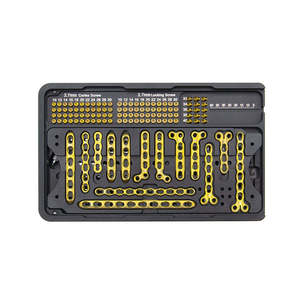
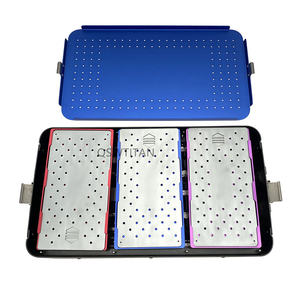
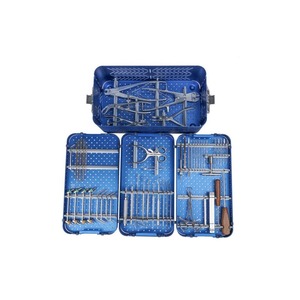
A critical consideration in modern orthopaedic trauma surgery is the mechanical stabilization of synthetic bone graft scaffolds. Hydroxyapatite in granular or block form possesses excellent compressive strength but minimal shear or torsional resistance. Therefore, leading trauma surgeons combine HA synthetic grafts with high-precision Mini Micro Fragment Locking Systems.
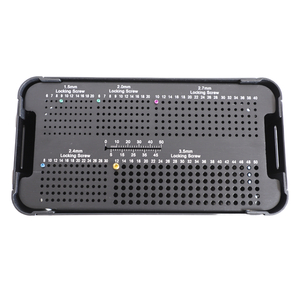
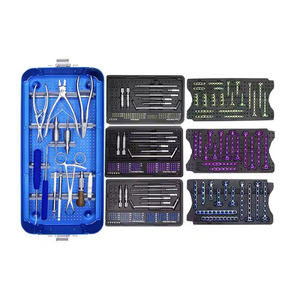
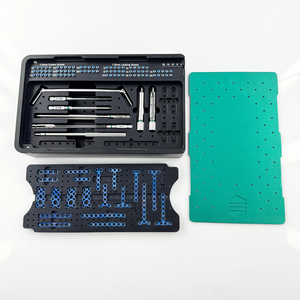
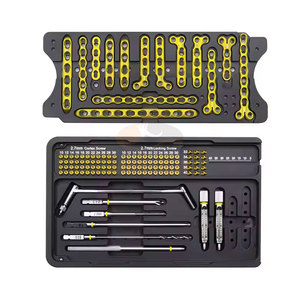
Manufactured from implant-grade 316L Stainless Steel or Grade 5 Titanium (Ti-6Al-4V), low-profile 1.5mm, 2.0mm, 2.4mm, and 2.7mm locking compression plates anchor bone fragments around the HA graft site. This dual-approach provides rigid primary internal fixation, minimizing micro-motion at the graft-host interface and accelerating osteointegration.
3. Global B2B Sourcing Trends in Synthetic Bone Materials (2025–2030)
Procurement directors navigating the medical device supply chain must account for key macro-trends defining the international biomaterials trade:
Key Procurement Trends Reshaping the Bone Graft Market
- Dominance of Injectable & Putty Formulations: B2B demand is shifting rapidly from static granules to moldable, ready-to-use HA pastes and injectable hydrogel-HA composites that fit irregular surgical voids via minimally invasive delivery systems.
- Integration with 3D Printed Patient-Specific Scaffolds: Advanced Chinese manufacturing facilities are incorporating computer-aided design (CAD) and micro-CT data to 3D-print customized, porous HA blocks tailored to complex maxillofacial or revision joint arthroplasty defects.
- Stringent Harmonization of Global Quality Standards: Major exporters are expanding regulatory credentials beyond ISO 13485 and NMPA Class III to include EU MDR compliance, US FDA 510(k) clearances, and CDSCO approvals, simplifying cross-border distribution.
4. Chinese Manufacturing Excellence & Corporate Capabilities
Leading Chinese exporters of Hydroxyapatite bone graft materials and orthopedic fixation systems operate state-of-the-art cleanroom manufacturing infrastructure. Built upon a foundation of customer-first engineering and rigorous clinical research, manufacturing excellence is reflected across several operational pillars:
- Certified Cleanroom Environments: ISO Class 5 and Class 7 cleanrooms guarantee near-zero bioburden levels prior to final sterilization.
- Comprehensive Quality Controls: Utilizing X-Ray Diffraction (XRD) to verify crystalline purity (>98%), Fourier-Transform Infrared Spectroscopy (FTIR) for phase purity, and Scanning Electron Microscopy (SEM) for porous micro-architecture analysis.
- Validated Sterilization Protocols: Products undergo rigorous Gamma Irradiation (Co-60) or Ethylene Oxide (EtO) processes compliant with ISO 11137 and ISO 11135.
- Global OEM / ODM Supply Chain Integration: Custom pore sizes, tailored particle dimensions (nano-HA to 3.0mm granules), and private-label packaging solutions designed for international orthopedic brands.
5. Frequently Asked Questions (FAQ) for B2B Importers & Surgeons
Q1: What is the optimal pore size for Hydroxyapatite bone graft integration?
Clinical studies demonstrate that optimal bone ingrowth requires an interconnected porous network. Macropores between 100 µm and 500 µm facilitate cellular migration, osteoblast proliferation, and neo-vascularization, while micropores under 10 µm allow protein binding and nutrient fluid exchange.
Q2: How does Chinese synthetic HA compare to bovine-derived xenografts?
Synthetic HA completely eliminates the risk of Bovine Spongiform Encephalopathy (BSE) and batch-to-batch biological variability. Furthermore, synthetic HA offers predictable chemical purity, controllable resorption rates, lower bulk procurement costs, and universal acceptance across diverse religious and cultural patient demographics.
Q3: Can Hydroxyapatite granules be mixed with Autologous Bone Marrow Aspirate (BMA)?
Yes. Combining osteoconductive HA granules with osteoinductive Autologous Bone Marrow Aspirate or Platelet-Rich Plasma (PRP) creates a composite graft rich in growth factors (such as BMP-2), accelerating clinical bone bridge formation in spinal fusion and non-union fractures.
Q4: What regulatory documentation accompanies OEM export shipments?
Standard export packages include Certificate of Analysis (CoA), XRD Phase Purity Reports, Cytotoxicity and Biocompatibility Test Reports (ISO 10993), ISO 13485 QMS documentation, Sterilization Validation Certificates, and Material Safety Data Sheets (MSDS).
Q5: What are the recommended storage and shelf-life conditions for synthetic HA?
Porous HA granules and blocks packaged in double-barrier Tyvec pouches have a standard shelf life of 5 years when stored in a cool, dry place (5°C to 35°C) away from direct sunlight and ambient moisture.
Q6: How do I select between Titanium and Stainless Steel mini fragment systems for co-fixation?
Grade 5 Titanium (Ti-6Al-4V) offers superior MRI compatibility, a lower modulus of elasticity closer to cortical bone, and reduced stress-shielding. 316L Stainless Steel provides exceptional ductility, higher shear strength, and cost-efficient procurement for routine trauma cases.