Featured Medical Implants & Orthopedic Instrumentation
Explore our certified orthopedic surgical hardware, mini-fragment fixation sets, and sports medicine accessories engineered for superior clinical performance.
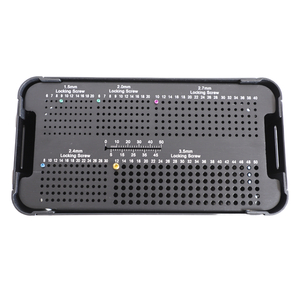
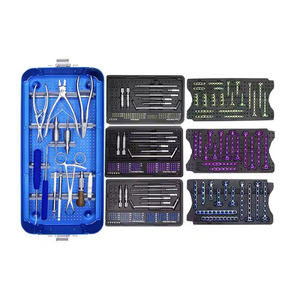
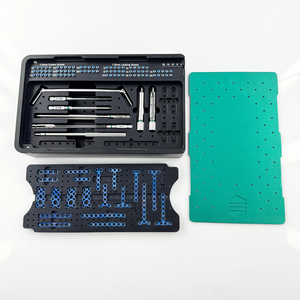
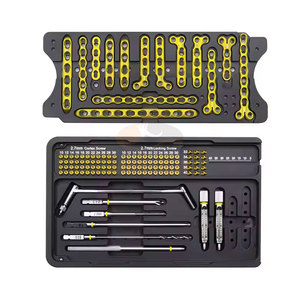
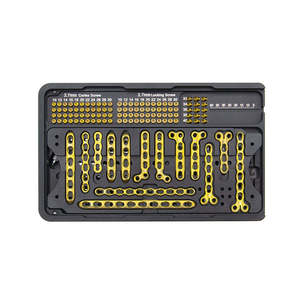
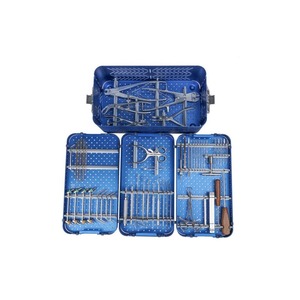
Executive Overview: Arthroscopic Meniscal Repair Architecture & China Supply Chain Ecosystem
In modern sports medicine and orthopedic trauma surgery, the preservation of the knee meniscus has superseded partial or total meniscectomy as the standard of care. Meniscal tear pathology—ranging from simple longitudinal tears to complex bucket-handle, radial, and root tears—requires biomechanically robust repair constructs. Among these, modern meniscal repair suture systems utilizing All-Inside, Inside-Out, and Outside-In techniques represent the pinnacle of arthroscopic soft-tissue-to-tissue and tissue-to-bone repair.
China has established itself as an international hub for manufacturing high-precision arthroscopic surgical instruments, implants, micro-fragment systems, and non-absorbable ultra-high-molecular-weight polyethylene (UHMWPE) suture constructs. By leveraging automated CNC machining, ultrasonic suture braiding, and automated cleanroom packaging, top Chinese OEM/ODM suppliers deliver medical-grade systems matching ISO 13485, CE (MDR), and FDA quality guidelines at globally competitive cost structures.
Key Clinical Technical Insight: The efficacy of an All-Inside Meniscal Repair Suture System relies on three primary engineering metrics: high initial fixation pull-out strength (>100 N), minimal displacement under cyclic loading (<1.5 mm after 500 cycles), and ultra-low profile non-abrasive PEEK or biocomposite anchor bodies designed to protect articular cartilage against chondral scuffing.
Biomechanical Fundamentals: All-Inside vs. Inside-Out Meniscal Suture Engineering
Understanding user intent and surgeon surgical choices requires an evaluation of the biomechanical parameters governing meniscal repair constructs. Meniscal repair suture systems are categorized primarily by surgical access vectors and deployment mechanisms:
All-Inside Repair Systems
Utilizes pre-loaded PEEK or Titanium implants connected by pre-tied self-sliding UHMWPE suture knots. Applied via flexible or rigid delivery needles, allowing rapid deployment through standard arthroscopic portals without additional counter-incisions.
Inside-Out Cannulated Sets
The gold standard for middle-third and anterior horn meniscus tears. Uses flexible double-armed stainless steel needles attached to UHMWPE or braided polyester sutures, passed through cannulated guards with posterolateral or posteromedial safety incisions.
Outside-In Stitch Kits
Designed primarily for anterior horn repairs. Involves passing a spinal needle from outside the joint capsule inward, shuttling suture loops to achieve precise vertical or horizontal mattress stitch patterns with low risk to neurovascular structures.
High-volume medical buyers searching for China best meniscal repair suture system suppliers & exporters look beyond simple unit costs. Sourcing managers evaluate ultimate tensile strength, suture stretch coefficient, biocompatibility profiles, and needle penetration force parameters. Chinese suppliers engineered with modern high-tensile UHMWPE braiding machines deliver sutures with superior knot safety and low creep characteristics under dynamic physiological loads.
Technical Specifications & Material Benchmark Matrix
To assist procurement managers, hospital surgical committees, and medical device distributors in evaluating Chinese sourcing options, the comparative matrix below outlines key technical parameters of professional-grade meniscal repair systems and complementary micro-fragment fixation hardware:
| Product Category | Anchor / Implant Material | Suture Spec & Structure | Pull-Out Force (N) | Sterilization Method | International Standards |
|---|---|---|---|---|---|
| All-Inside Meniscal System | PEEK Optima / Biocomposite PLLA | #2-0 UHMWPE Braided Suture | > 110 N | EO (Ethylene Oxide) Gas | ISO 13485, CE MDR Class IIb |
| Inside-Out Suture Assembly | Stainless Steel Needles (316L) | #2-0 / #0 Polyester / UHMWPE | > 95 N | Gamma Irradiation / EO | ISO 13485, FDA 510(k) |
| Root Repair Anchor System | Grade 5 Titanium (Ti6Al4V ELI) | High-Strength UHMWPE Tape (2.0mm) | > 220 N | EO Gas Sterile Packaging | ISO 13485, CE Certified |
| Mini-Micro Fragment Plates | Medical Grade 316L SS / Titanium | N/A (Locking Screws 1.5-2.7mm) | Rigid Fixation | Non-Sterile / Autoclavable Tray | ISO 13485, CE Class I/IIa |
| Knotless Soft Tissue Anchor | Radiolucent PEEK Polymer | Integrated Suture Shuttle Loop | > 140 N | EO Gas Sterile Sealed | ISO 13485, CE MDR |
Global Sourcing & Procurement Trends in Arthroscopic Devices (2025–2030)
The global sports medicine devices market is experiencing significant growth, projected to expand at a CAGR of over 6.8% over the next decade. Sourcing directors and distributors are adapting their supply chain strategies to address several industry trends:
1. Paradigm Shift Toward All-Inside Pre-Tied Knotless Mechanisms
Surgical operating room time costs between $60 and $100 per minute globally. Consequently, demand for all-inside meniscal repair devices featuring pre-tied, self-sliding knots or knotless PEEK toggles has surged. These configurations eliminate manual intra-articular knot tying, reducing procedural times by up to 40% while standardizing repair tension.
2. Rigorous Supply Chain Decentralization & Quality Control
International buyers are moving away from single-region sourcing models. Premium Chinese manufacturers now maintain dual-track production facilities equipped with cleanroom packaging lines (Class 100,000 / ISO Class 8) and fully traceable raw material verification systems for PEEK, 316L stainless steel, and Ti6Al4V ELI alloys. This infrastructure ensures compliance with EU MDR (2017/745) requirements and US FDA 510(k) audit readiness.
3. Integration of Hybrid Fiber & Flat Tape Technologies
Traditional round sutures present a risk of cutting through fragile meniscal tissue under high tension (the "cheese-cutter effect"). Emerging procurement trends favor ultra-wide high-strength UHMWPE suture tapes (e.g., 1.5mm to 2.0mm flat ribbons). These tapes distribute mechanical load across a wider surface area, improving tissue repair integrity and reducing re-tear rates in degenerative tissue.
Enterprise Strengths: Why Partnering with Leading Chinese Exporters Drives Value
Choosing an established Chinese supplier for meniscal repair suture systems and orthopedic trauma hardware offers distinct operational advantages for B2B procurement leaders:
1000+ CDSCO & ISO Approved SKUs
Leading Chinese manufacturing plants operate under complete ISO 13485 Quality Management Systems, offering over 1,000 approved orthopedic and sports medicine SKUs. This broad product scope allows distributors to consolidate orders for trauma plates, mini-fragment screws, and arthroscopic suture repair systems under a single supply framework.
State-of-the-Art Cleanroom & Sterilization
In-house 100,000-class cleanrooms certified for ethylene oxide (EO) sterilization and Tyvek blister sealing ensure sterile barrier integrity according to ISO 11607 standards. Products are validated for a 5-year shelf life, minimizing post-market logistics risks.
Advanced CNC & Suture Micro-Machining
Equipped with 5-axis Swiss-type CNC automatic lathes and high-speed precision braiding machinery, top suppliers achieve tight manufacturing tolerances (±0.005 mm) on delicate PEEK anchor toggles, mini locking plates, and sharp stainless steel deployment needles.
Global Logistics & Regulatory Documentation
With clinical presence across 30+ countries in Europe, Latin America, Southeast Asia, and the Middle East, leading exporters provide full technical dossiers (STED), biocompatibility reports (ISO 10993), dynamic mechanical testing data, and certificate of free sale (CFS) support for fast local registration.
Step-by-Step OEM/ODM Sourcing Workflow for International Distributors
For medical brand owners and international healthcare distributors seeking private-label or custom-designed meniscal repair systems, standardizing the supplier onboarding process is critical. The following protocol outlines the recommended lifecycle from inquiry to mass production:
Stage 1: Technical & Biomechanical Specification Definition
The buyer submits product performance requirements, specifying suture diameter (#2-0 or #0), anchor material (PEEK Optima vs. Titanium vs. Biocomposite), needle curvature angles (12° curved, straight, reverse curved), and target pull-out force thresholds.
Stage 2: Tooling Design & Prototype Verification
Utilizing 3D CAD modeling and finite element analysis (FEA), engineering teams optimize needle geometry and anchor engagement profiles. Prototypes undergo static tensile pull-out and cyclic load testing using synthetic polyurethane bone models and porcine meniscal tissue.
Stage 3: Regulatory Compliance & Validation
Biocompatibility testing (Cytotoxicity, Sensitization, Systemic Toxicity per ISO 10993) is executed alongside sterile barrier validation (ASTM F1980 accelerated aging). Master production records (MPR) are established to support global regulatory filings.
Stage 4: Automated Production & Batch Traceability
Full-scale manufacturing is carried out with automated laser marking, optical dimension verification, manual needle inspection, and cleanroom packaging. Every lot is assigned a unique device identification (UDI) barcoding label for tracking.
Frequently Asked Questions (FAQ) for Procurement Managers
Partner with China’s Leading Meniscal Repair & Orthopedic System Manufacturer
Upgrade your surgical product line with certified, high-tensile all-inside suture repair systems, titanium anchors, and mini-fragment trauma kits. Request a detailed catalog, technical specifications, and factory-direct wholesale pricing today.
Contact Us