Featured Monotube External Fixation Components
Explore our CDSCO, ISO 13485 & FDA compliant orthopedic fixator assemblies and rod sets
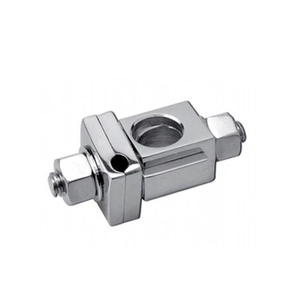
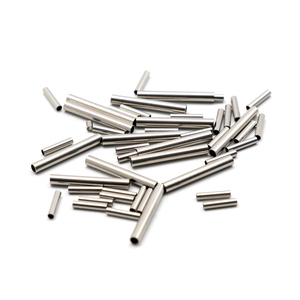
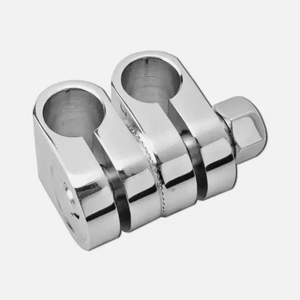
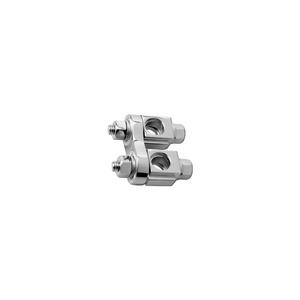
Whitepaper: Engineering Superiority in Monotube External Fixation Technology
Monotube external fixation systems represent a critical advancement in damage control orthopedics (DCO), limb reconstruction, and complex trauma management. Unlike traditional bilateral frames or multi-ring Ilizarov configurations, modern monotube external fixators offer unilateral, single-rod structural stability that drastically reduces surgical complexity, lowers insertion times, and enhances post-operative patient comfort. As a leading China monotube external fixation system manufacturer and exporter, our engineering division integrates advanced metallurgy, radiolucent composite technology, and modular clamp design to meet the rigorous clinical demands of orthopedic surgeons worldwide.
Executive Summary & Clinical Intent
This technical document serves as a comprehensive purchasing and engineering guide for procurement managers, medical device distributors, and surgical teams seeking high-performance external fixation devices. It explores dynamic axial loading mechanisms, pin-bone interface biomechanics, material optimization (Titanium GR2 vs. UD Carbon Fiber vs. 316L Stainless Steel), and global regulatory sourcing compliance for 2025–2030.
1. Biomechanical Fundamentals of Monotube Fixation Systems
The primary clinical goal of any external fixator is to maintain anatomic fracture reduction while providing an optimal mechanical environment for bone healing. Monotube external fixation relies on a heavy-duty central connecting rod (monotube) linked to bone screws or Schanz pins via specialized universal clamps.
1.1 Dynamic Axial Loading vs. Rigid Fixation
Traditional rigid fixation can lead to stress shielding, resulting in delayed fracture healing or cortical osteopenia. Monotube systems engineered by our facility incorporate dynamic axial telescopic mechanisms. By permitting controlled micro-motion (0.5 mm to 1.5 mm of axial compression under partial weight-bearing), the fixator stimulates callus formation according to Wolff’s Law. This micromotion promotes robust endochondral ossification without compromising torsional or bending stability.
1.2 Pin-Bone Interface Stress Mitigation
Pin loosening and pin-tract infections remain the primary clinical complications of external fixation. Our single-pin and twin adjustable pin tube clamps are engineered with self-aligning clamp jaws. This distributes bending moments evenly across the entire surface of the Schanz pins, reducing stress concentrations at the near-cortex bone interface by up to 34% compared to rigid block clamps.
2. Metallurgy & Material Science in Monotube Manufacturing
Material selection dictates radiolucency, stiffness-to-weight ratio, and long-term biocompatibility. As an established medical OEM/ODM manufacturer, we utilize three primary medical-grade material platforms:
| Material Platform | Tensile Strength (MPa) | Modulus of Elasticity (GPa) | Radiolucency | Clinical Application |
|---|---|---|---|---|
| UD Carbon Fiber (Carbon-PEEK) | 1,500 - 1,800 | 120 - 140 | 100% Radiolucent | Trauma intra-operative X-ray monitoring; radiolucent rods |
| Titanium Grade 2 / Ti-6Al-4V | 860 - 950 | 110 - 114 | Semi-Radiolucent | Lightweight, highly biocompatible long-term fixators |
| 316L Stainless Steel (ASTM F138) | 690 - 800 | 190 - 200 | Radiopaque | High-load lower limb fixation & cost-effective trauma kits |
2.1 Ultra-Directional (UD) Carbon Fiber Rods
Our custom-manufactured UD Carbon Fiber Tubes provide an exceptional strength-to-weight ratio. Laminated in continuous uni-directional carbon fiber filaments embedded in high-purity epoxy resins, these tubes offer 100% radiolucency. Surgeons can obtain intra-operative fluoroscopic images (C-arm) without metal artifacts obscuring the fracture line, allowing precise alignment validation.
2.2 Polished Titanium GR2 & 316L Stainless Steel Clamps
Precision-milled from solid titanium GR2 or 316L implant-grade stainless steel, our clamp assemblies feature micro-finished contact interfaces. Serrated clamping surfaces prevent rotational slipping under heavy torsional loads (up to 45 Nm torque threshold), ensuring single-stage fracture stabilization in polytrauma patients.
3. Global Sourcing & Procurement Trends (2025–2030)
The global orthopedic external fixation market is experiencing a structural shift driven by hospital purchasing mandates, cost-containment programs, and regulatory harmonization. B2B buyers and importers must align with manufacturers capable of addressing the following key procurement trends:
3.1 High Demand for Pre-Sterile Single-Use Kits
Hospitals are rapidly shifting away from bulk non-sterile external fixator sets that require labor-intensive in-house autoclaving. Pre-sterilized, single-use monotube trauma kits—packaged in cleanroom environments with double Tyvek pouches—ensure immediate deployment in emergency rooms and field trauma centers while mitigating cross-contamination risks.
3.2 Custom Modular Packaging and OEM Branding
International medical device distributors increasingly seek OEM partners capable of supplying private-label trauma kits tailored to localized surgical preferences. From custom tube lengths (150 mm to 450 mm) to branded color-anodized aluminum clamps, agility in custom engineering is now a decisive vendor selection criterion.
3.3 Rigorous Traceability and Regulatory Compliance
With the global tightening of medical device regulations (such as EU MDR and US FDA QSR harmonization under QMSR), buyers demand full raw material heat-number traceability, ISO 13485 cleanroom audit reports, and standardized ASTM F1541 mechanical test data (fatigue, bending, and torsional testing protocols).
4. Precision Manufacturing & Quality Assurance Standards
Operating a state-of-the-art manufacturing facility in China, our production lines utilize multi-axis CNC Swiss lathe turning centers, high-precision laser marking, and automated ultrasonic washing stations. Every step of our manufacturing pipeline adheres strictly to international quality management systems:
- 5-Axis CNC Machining: High-precision milling of twin adjustable clamps ensures micron-level dimensional tolerance for smooth intra-operative positioning.
- Micro-Polishing & Anodization: Surface treatments increase corrosion resistance, eliminate micro-burrs, and provide intuitive color-coding for rapid clamp-size identification during surgery.
- Class 100,000 In-House Sterile Facility: Automated ETO (Ethylene Oxide) sterilization validated according to ISO 11135 guarantees a Sterility Assurance Level (SAL) of 10-6.
- Full Batch Mechanical Testing: Every batch undergoes static and dynamic fatigue testing under ASTM F1541 standards to verify load-bearing reliability under simulated physiological stress.
5. Clinical Indications & Surgical Applications
Our Monotube External Fixation System is engineered for versatile application across upper and lower extremity trauma interventions:
- Open Fractures (Gustilo-Anderson Grade II & III): Rapid temporary stabilization avoiding direct implant placement in contaminated soft tissue beds.
- Damage Control Orthopedics (DCO): Immediate emergency bridging of severe peri-articular fractures in polytrauma patients requiring fast stabilization before definitive internal fixation.
- Bone Transport & Segmental Defect Reconstruction: Telescopic monotubes equipped with progressive compression/distraction units facilitate precise distraction osteogenesis.
- Correction of Complex Deformities & Non-Unions: Adjustable twin clamps allow multi-planar angulation and rotational corrections post-fixation without removing Schanz pins.
6. Enterprise FAQ: Frequently Asked Procurement Questions
7. Why Partner With Us as Your China Manufacturing Partner
As an industry leader in orthopedic trauma solutions, our enterprise combines robust Chinese manufacturing scale with uncompromised international quality control. By leveraging our vertically integrated factory setup—from raw titanium bar stock milling to final ETO sterile pouching—distributors and hospital groups achieve significant cost efficiencies without sacrificing mechanical reliability or patient safety.
Our dedicated engineering and regulatory teams work hand-in-hand with global partners to streamline supply chain logistics, accelerate localized product registration, and deliver custom trauma solutions tailored for high-volume emergency and elective surgical centers.