Recommended Mini & Micro Fragment Retractor Systems
Explore our high-grade stainless steel and titanium trauma sets certified for veterinary, craniomaxillofacial, and human orthopedic procedures.
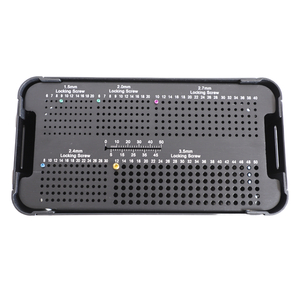
Veterinary Mini Micro Fragment Locking System
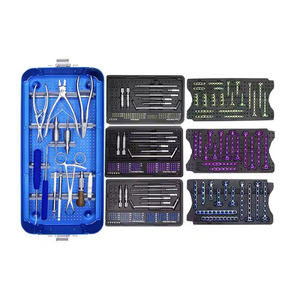
1.5/2.0/2.4mm Modular Micro Retractor & Plate Fixation Kit
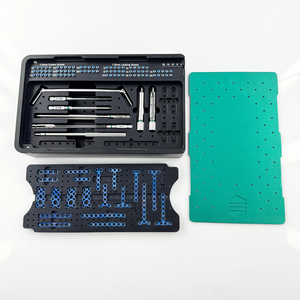
1.5mm Titanium Mini Fragment Locking & Retraction Kit
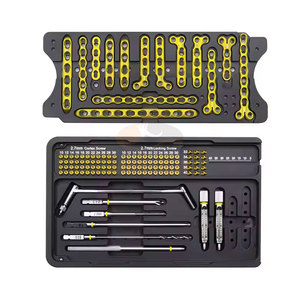
2.7mm Small Fragment Manual Retractor & Locking Instrument Set
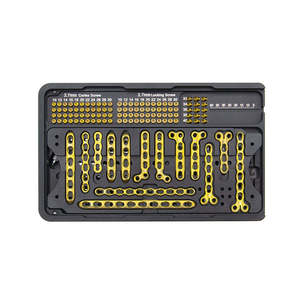
2.7mm Surgical Manual Retractor & Bone Holding Instrument Set
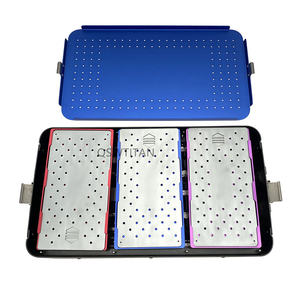
Finger & Palm Metacarpal Bone Retractor & Fixation Kit
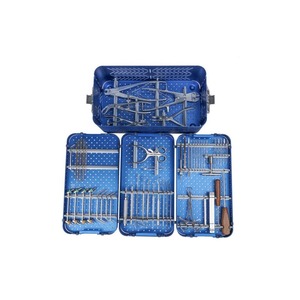
Maxillofacial & Wrist Surgical Retractor & Plating System
Canine & Small Animal Orthopedic Retractor & Trauma System
Executive Summary: The Strategic Value of Advanced Orthopedic Bone Retractor Systems
In modern orthopedic trauma, spinal reconstruction, and craniomaxillofacial (CMF) surgery, achieving adequate anatomical exposure while mitigating soft-tissue trauma is a paramount clinical objective. Bone retractor systems serve as fundamental instruments in establishing clear surgical corridors, maintaining structural visibility, and protecting neurovascular bundles during internal fixation, osteotomy, and joint arthroplasty.
As healthcare systems globally shift toward Minimally Invasive Surgery (MIS), the demand for high-precision, ergonomically balanced, and bio-passivated bone retractor systems has surged. China has emerged as a premier hub for high-volume, highly precise medical instrument manufacturing. Leading original equipment manufacturers (OEMs) and contract manufacturing organizations (CMOs) integrate advanced 5-axis CNC machining, vacuum heat treatment, and chemical passivation processes to deliver retractor solutions that meet stringent global standards, such as ISO 13485, US FDA QMSR, and EU MDR compliance.
Advanced Hohmann and Bennett retractor blades engineered by top Chinese exporters feature micro-contoured, polished distal tips that reduce peak tissue stress by up to 34% compared to traditional flat-bladed retractors. This significantly reduces post-operative muscle necrosis and speeds up patient rehabilitation.
Comprehensive Classification & Engineering Specifications of Orthopedic Retractors
Surgical retraction systems must balance structural rigidity—to withstand high leverage forces against heavy musculature—with delicate tactile responsiveness when operating adjacent to cortical bone and delicate capillary networks. Bone retractors manufactured for global export are broadly categorized into manual retractors, self-retaining retractor systems, and radiolucent carbon-fiber frame assemblies.
1. Hohmann & Lever Retractors
Designed for leveraging periosteal tissue away from long bones (femur, tibia, humerus). Features narrow, broad, or rounded tips with anti-glare satin finishes to eliminate operating light reflection.
2. Self-Retaining Ratchet Systems
Utilizing high-tensile spring steel and precision ratchet locks (e.g., Gelpi, Weitlaner, and Beckman-Adson). Ensures consistent hands-free tissue tension during complex spinal and micro-fragment surgeries.
3. CMF & Mini-Fragment Levers
Micro-retractor blades engineered specifically for phalangeal, metacarpal, and maxillofacial bones. Designed with ultra-slim profiles (1.5mm to 2.7mm working ends) for delicate anatomical access.
Metallurgical Metallurgy & Material Selection
The performance of a bone retractor is fundamentally tied to its metallurgical composition. Premier Chinese manufacturers select certified raw materials in strict accordance with surgical instrument standards:
- AISI 316L / EN 1.4404 Stainless Steel: Austenitic stainless steel with molybdenum content, offering superior pitting corrosion resistance in biological environments and structural yield strength.
- AISI 420 / EN 1.4021 Martensitic Steel: Selected for ratchet components and load-bearing joints requiring high hardness (48-52 HRC) following heat treatment.
- Ti-6Al-4V ELI (Grade 5 Titanium): Utilized in radiolucent retractor lines for intraoperative X-ray and fluoroscopy clarity, reducing radiopaque shadow interference during real-time image intensification.
Future Procurement Trends in Orthopedic Retractor Systems (2025–2030)
Global procurement teams in hospital networks, surgical centers, and medical device distribution chains are re-evaluating their sourcing strategies to navigate shifting regulatory dynamics and technological shifts. Key macro trends shaping the procurement landscape include:
1. Transition Towards Modular & Custom-Configured Surgical Trays
Hospitals are moving away from monolithic, heavy surgical sets toward lightweight, modular aluminum container systems. Suppliers capable of offering customizable retractor blade configurations—allowing surgeons to swap narrow, broad, and bent tips into a single universal ergonomic handle—are winning long-term OEM contracts due to reduced sterilization overhead and inventory footprint.
2. Stringent Quality Assurance & Regulatory Traceability
With the implementation of the EU Medical Device Regulation (MDR 2017/745) and the US FDA's Quality Management System Regulation (QMSR) alignment with ISO 13485:2016, buyers now demand 100% Unique Device Identification (UDI) laser marking and EN 10204 3.1 material test certificates for raw metals. Chinese tier-1 exporters are leading this transformation by integrating automated fiber laser UDI marking directly into production lines.
3. Hybrid Radiolucent Fiber & Titanium Systems for CAS
Computer-Assisted Surgery (CAS) and robotic-assisted orthopedic procedures necessitate surgical retractor frames that do not cast dense shadows on intraoperative 3D CT or C-arm scans. Sourcing managers are increasingly specifying PEEK (Polyetheretherketone) and Grade 5 Titanium retractor systems for spinal and pelvic trauma procedures.
When evaluating orthopedic instrument suppliers, look beyond the unit FOB cost. Evaluating lifetime autoclave cycle durability (aim for >500 steam sterilization cycles without corrosion or tension loss) yields a 40% lower Total Cost of Ownership across a 5-year hospital asset lifecycle.
Technological Innovations in Bone Retractor Manufacturing
The manufacturing of surgical instruments has evolved from traditional manual forging to ultra-precise, digitalized production processes. Leading Chinese manufacturers leverage cutting-edge manufacturing methodologies:
5-Axis CNC Precision Milling & Wire EDM
Complex anatomical curves on retractor tips (such as Hohmann levers and Hohmann-Langenbeck hybrid retractors) are milled using 5-axis simultaneous CNC machinery. This guarantees precise dimensional tolerances within ±0.01mm, eliminating sharp burrs that could compromise vascular structures during retraction.
Electropolishing & Nitride Surface Coatings
Surface treatment is vital for biocompatibility and longevity. Electropolishing removes micro-imperfections from stainless steel surfaces, producing a chrome-rich passive oxide layer (Cr2O3) that prevents blood adhesion and micro-pitting. Furthermore, Titanium Nitride (TiN) and Black Diamond-Like Carbon (DLC) coatings are applied to reduce friction and extend ratchet wear resistance.
World-Class Orthopedic Manufacturing Capabilities
Leveraging over a decade of clinical instrument engineering, our manufacturing infrastructure combines medical-grade metallurgy with rigorous quality management systems. We serve global distributors, hospital tenders, and OEM medical brands in over 30 countries.
- Comprehensive CDSCO, ISO 13485 & FDA Registration: Compliant with global medical device regulatory frameworks for rapid market authorization.
- Integrated In-House Cleanroom & Sterilization: Controlled ISO Class 7 cleanrooms for sterile packaging (EtO / Gamma options available).
- Broad Portfolio of 1,000+ Approved SKUs: Complete trauma ranges from micro fragment (1.5mm) to large fragment (4.5mm), spine, CMF, and external fixators.
- Precision Customization (OEM/ODM): In-house R&D engineering team capable of turning surgeon prototype CAD models into finished products within weeks.
- Rigorous Metallurgical QC: Every batch undergoes raw material spectral analysis, tension fatigue testing, and passive film corrosion verification.
Frequently Asked Sourcing Questions (FAQ)
Clear, authoritative answers to common technical and commercial queries for medical instrument buyers.
Request a Custom Quote & Technical Catalog
Partner with China's leading orthopedic retractor manufacturer. Connect with our engineering and export team today to receive wholesale pricing, OEM custom instrument quotes, or sample evaluation sets.