Flagship Revision & Orthopedic Implant Systems
Precision-engineered trauma plates, modular fixation kits, and reconstructive hardware certified under ISO 13485 & CDSCO standards
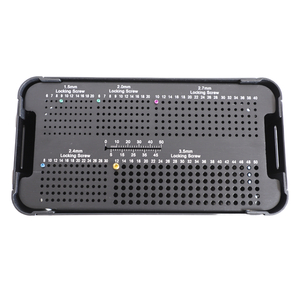
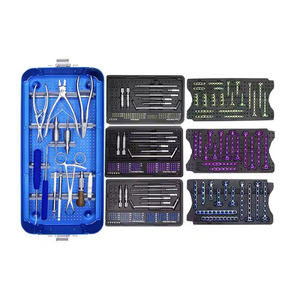
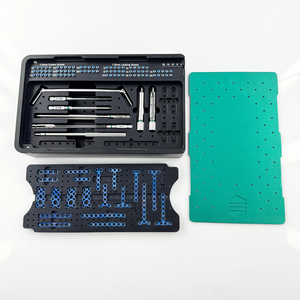
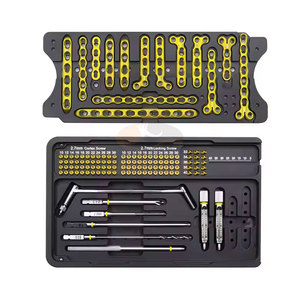
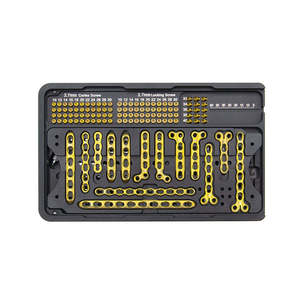
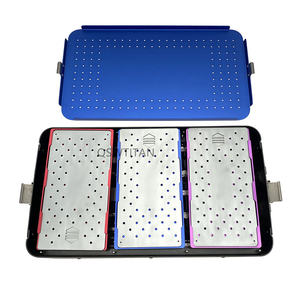
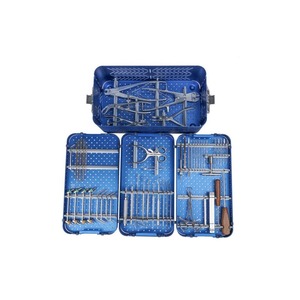
Enterprise Strengths: Advanced Manufacturing & Quality Architecture
Vertical Integration, Biomaterial Metallurgy, and Strict Regulatory Adherence for Total Joint Replacement Systems
Precision CNC Machining & Metallurgy
Our manufacturing complex utilizes state-of-the-art 5-axis Swiss CNC automatic lathes, High-Velocity Oxygen Fuel (HVOF) plasma thermal spraying units, and direct metal laser sintering (DMLS) 3D printers. We process vacuum-melted Ti-6Al-4V ELI (ASTM F136) and ultra-clean 316L Stainless Steel (ASTM F138), yielding high tensile strengths and fatigue tolerance required for complex Revision Knee Arthroplasty (RKA).
Global Regulatory Approvals & Compliance
Operating under ISO 13485:2016 quality management frameworks, our facilities possess full compliance credentials, including CDSCO registrations, FDA facility listings, and EU CE Class IIb and Class III alignment. Every batch undergoes non-destructive testing (NDT), coordinate measuring machine (CMM) dimensional verification, and optical emission spectrometry for chemical purity.
In modern orthopedic reconstruction, primary Total Knee Arthroplasty (TKA) procedures face rising revision rates due to aseptic loosening, osteolysis, infection (periprosthetic joint infection - PJI), and mechanical instability. As a leading manufacturer and exporter of total joint systems and trauma hardware, our revision knee platforms are engineered to address severe metaphyseal bone loss (AORI Type I, II, and III defects), collateral ligament compromise, and joint line displacement.
By integrating modular intramedullary stems, offset adapters, metaphyseal porous titanium cones, and highly cross-linked polyethylene (XLPE) tibial inserts, our revision knee arthroplasty implants provide orthopedic surgeons with the biomechanical versatility required to reconstruct complex joint deformities while re-establishing primary mechanical stability.
Future Development Trends in Revision Knee Arthroplasty
Evaluating Biomaterial Innovations,Kinematic Realignment, and Additive Manufacturing Solutions
1. Trabecular Porous Titanium & 3D Printing
Traditional smooth stem extensions and cemented sleeves are rapidly yielding to 3D-printed porous titanium metaphyseal cones. Highly porous structures (60%-80% porosity) mimicking natural human cancellous bone promote rapid osteointegration and vascularization, securing secondary long-term biological fixation in compromised bone beds.
2. Modular Stem-Offset Kinematics
Modern revision arthroplasty platforms incorporate fully customizable canal-filling stems featuring 360-degree stepless eccentric offset mechanisms. This allows joint reconstruction specialists to independently restore the joint line, correct anterior-posterior canal mismatches, and maintain proper patellofemoral tracking without compromising stem stability.
3. Antibacterial & Bio-Interactive Coatings
Periprosthetic infection remains a critical cause of TKA failure. Advanced R&D is focused on applying silver ion coating matrices, iodine-supported titanium oxide layers, and antibiotic-eluting surface structures to revision components to prevent biofilm formation and lower revision surgical morbidity.
Procurement Trends in Global Joint Replacement Sourcing
Strategic Insights for Hospital Buyers, Medical Device Distributors, and OEM Importers
The global procurement market for knee revision systems and trauma implants is undergoing structural shifts. Procurement directors, hospital purchasing boards, and regional surgical distributors face rising cost pressures alongside stringent clinical performance requirements. Key procurement patterns shaping international purchasing decisions include:
- ✓ Shift Towards Comprehensive OEM/ODM Ecosystems: Global buyers are consolidating suppliers, favoring factories that provide integrated product lines—ranging from micro-fragment plating sets to primary/revision joint systems, instrumentation trays, and custom patient-specific implants.
- ✓ Demand for Supply Chain Resilience & Regulatory Agility: With the transition from EU MDD to MDR and shifting regulatory frameworks globally, importers prefer certified manufacturers with robust technical documentation (TCF), complete traceability, and audited quality management systems.
- ✓ Value-Based Healthcare Sourcing: Procurement teams are seeking high-tier titanium and cobalt-chromium joint replacements that match Western OEM performance specs at competitive factory-direct pricing, reducing overall surgical procedures costs without sacrificing patient outcomes.
Technical Specification Matrix: Primary vs. Revision Knee Systems
Comparative Analysis of Biomechanical Parameters and Modular Options
| Specification Parameter | Primary TKA Implants | Modular Revision Knee Systems | Advanced Custom/3D Revision |
|---|---|---|---|
| Indication Spectrum | Osteoarthritis, RA, Degenerative Joint Disease | Severe bone loss, aseptic loosening, ligament instability | Massive uncontained defects, oncological resections |
| Fixation Mechanism | Cemented / Porous Press-Fit Femur & Tibia | Hybrid: Cemented joint line + Press-fit porous stems/cones | Biological osteointegration + Patient-specific flange fixation |
| Bone Loss Adaptation | Minimal resurfacing cuts | Distal/Posterior femoral wedges, Tibial augments (5-15mm) | Patient-matched 3D-printed porous titanium sleeves |
| Metaphyseal Stabilization | Not applicable | Conical / Stepped porous titanium metaphyseal sleeves | Custom structural lattice augmentation |
| Constraint Level | Unconstrained (CR) / Posterior Stabilized (PS) | Constrained Condylar Knee (CCK) / Hinge Mechanism | Rotating Hinge with customized kinematic swing |
| Material Metallurgy | Co-Cr-Mo / Ti-6Al-4V + XLPE Insert | Ti-6Al-4V Stems + High-Flex XLPE + CoCr Femoral Shell | Direct Laser Sintered Titanium (Ti-6Al-4V ELI) |
Frequently Asked Questions (FAQ) - Sourcing & Technical Procurement
Addressing Common Queries from Hospital Purchasing Committees, OEM Partners, and Import Distributors
Partner with China's Premier Orthopedic Implant Exporter
Request comprehensive technical catalogs, schedule a factory audit, or obtain factory-direct OEM quotes for revision knee systems, trauma locking plates, and custom surgical instruments.