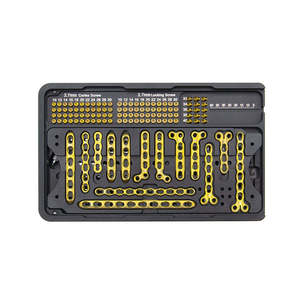
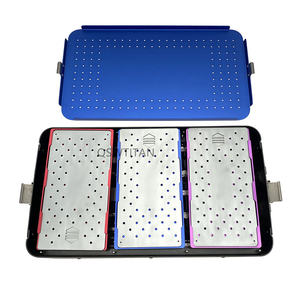
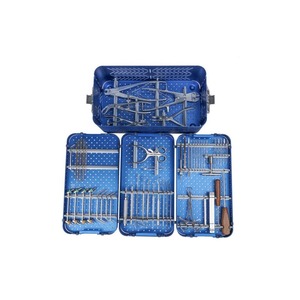
Featured Bone Staple & Mini Fragment Fixation Systems
Explore our CDSCO, CE, and ISO 13485-certified bone staple compression sets, mini-fragment locking plates, and orthopedic trauma instrumentation designed for optimal anatomical reduction.
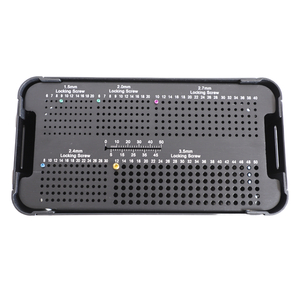
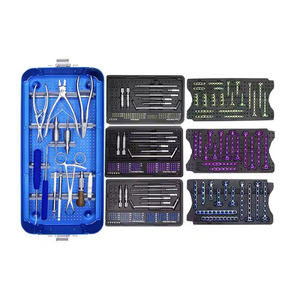
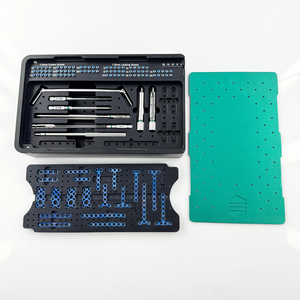
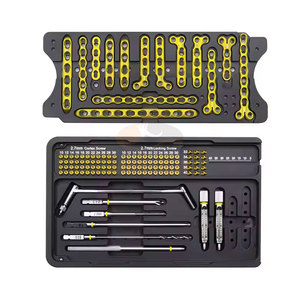
1. Technical Overview: Mechanics of Modern Bone Staple Fixation Systems
Bone staple fixation systems represent a pivotal advancement in small-bone orthopedic surgery, osteotomy management, and arthrodesis procedures of the hand, foot, and ankle. Unlike traditional compression screws that generate localized point-loading forces, engineering innovations in superelastic Nitinol (Nickel-Titanium shape memory alloy) and medical-grade titanium (Ti-6Al-4V ELI) allow modern bone staples to exert dynamic, continuous active compression across osteotomy sites.
When evaluating suppliers and exporters in China, orthopedic hospital procurement officers, medical device distributors, and OEM brand buyers must analyze the biomechanical efficiency of staple bridge geometry, leg barb retention profiles, and elastic recovery parameters under physiological loads.
Continuous Active Compression
Nitinol shape-memory staples utilize phase transformation (Martensite to Austenitic transitions at human body temperature 37°C) to contract post-implantation. This provides relentless interfragmentary compression even during micro-resorption at the bone interface.
Anatomical Profile & Zero-Standoff
Engineered with low-profile bridges (under 1.5mm thickness), modern bone staples eliminate soft tissue irritation, extensor tendon rubbing, and hardware prominence in delicate areas such as the Akin osteotomy or Lapidus fusion.
Multi-Tine Torsional Stability
Featuring dual-leg, quad-tine, or asymmetrical leg length configurations with laser-etched retention barbs, bone staples prevent rotational displacement while providing pull-out resistance exceeding 180 N under axial strain.
2. Metallurgical & Biomechanical Comparison: Bone Staple Alloys
Choosing the correct material matrix is essential for international medical device importers. Below is a structured biomechanical evaluation of materials utilized by leading Chinese manufacturers.
| Biomechanical Parameter | Nitinol (Ni-Ti Shape Memory) | Titanium Alloy (Ti-6Al-4V ELI) | 316L Stainless Steel |
|---|---|---|---|
| Primary Healing Mechanism | Continuous Active Dynamic Compression | Static Compression / Rigid Fixation | Static Rigid Structural Fixation |
| Modulus of Elasticity (GPa) | 40 - 50 (Closest to cortical bone: 15-30) | 110 - 114 | 190 - 210 |
| Stress Shielding Risk | Ultra-Low (Promotes osteogenesis) | Moderate | High |
| MRI Compatibility | Conditional (Non-Ferromagnetic) | Excellent (Minimal Artifacts) | Moderate Artifact Formation |
| Primary Surgical Application | Foot & Ankle Osteotomy, Hand Arthrodesis | CMF, High-Stress Fractures, Trauma | Veterinary Trauma, Cost-Sensitive Fixation |
| Procurement Cost Index | Premium Grade | Mid-High Grade | Cost-Effective Mass Market |
3. Sourcing Strategy: Global Procurement Trends (2025–2030)
As healthcare systems worldwide shift toward cost-effectiveness without compromising clinical efficacy, purchasing departments across North America, Europe, Latin America, and Southeast Asia are increasingly procuring directly from validated Chinese OEM/ODM exporters. Key market forces driving this shift include:
1. Rise of Pre-Loaded Single-Use Sterile Kits
Hospitals are transitioning away from reusable instrument sets due to sterilization overheads and cross-contamination risks. Tier-1 Chinese exporters now provide pre-loaded Nitinol staple insertion tools in double-sterile blister packs ready for immediate OR deployment.
2. Patient-Specific Anatomical Customization
Integrating 3D CT scan data with direct CNC milling allows suppliers to offer rapid custom staple bridge lengths, angle offsets, and leg spacing for complex revision surgeries and congenital deformity corrections.
3. Harmonized Quality Frameworks (EU MDR & QMSR)
Leading manufacturers in China have upgraded their Quality Management Systems to align with US FDA Quality Management System Regulation (QMSR) and EU MDR (2017/745), ensuring seamless regulatory submissions for global distributors.
4. Innovations in Bone Staple Technology & Manufacturing
To remain competitive, top-tier bone staple manufacturers in China invest heavily in proprietary surface modifications, thermal treatment processes, and minimal-access surgical instruments.
Thermal Activation Memory Control
Traditional mechanical staples require manual crimping or physical deformation, which can lead to stress concentration risers and metal fatigue. Modern Nitinol bone staples engineered in state-of-the-art Chinese facilities utilize precise shape memory transition temperatures ($A_f$ point engineered at $30^\circ\text{C} - 35^\circ\text{C}$). Upon insertion into ambient bone tissue, body heat triggers instantaneous, uniform closure of the staple tines, delivering consistent interfragmentary pressure across the osteotomy line.
Advanced Surface Finishing & Anodization
Type II Titanium Anodization and Plasma Electrolytic Oxidation (PEO) applied to titanium and nitinol bone staples significantly enhance fatigue life, decrease nickel release rates, and improve osseointegration. Micro-textured barb surfaces increase pull-out strength in osteopenic and osteoporotic bone tissue.
5. Why Partner With Our Global Export Network?
Combining rigorous manufacturing standards, comprehensive regulatory clearances, and direct factory pricing to power worldwide orthopedic supply chains.
1,000+ Approved Products
Holding extensive CDSCO, ISO 13485, and CE technical documentation across trauma, spine, CMF, and mini fragment systems.
In-House Sterile Facility
Class 100,000 cleanroom facilities equipped with automated ethylene oxide (EtO) and gamma sterilization capabilities.
Exported to 30+ Countries
Trusted by orthopedic surgeons, government health tenders, and private hospital networks across Latin America, Asia, Europe, and the Middle East.
316L SS & Titanium Grade 5
100% raw material traceability using certified high-purity medical implants grade alloys from international certified foundries.
6. Frequently Asked Procurement Questions (FAQ)
Answers to critical regulatory, technical, and commercial queries for medical device buyers and orthopedic distributors.
Request Complete Product Catalog & B2B Wholesale Quote
Contact our medical device engineering and international export team today to receive detailed technical specification sheets, CAD models, clinical evaluation reports, and competitive factory-direct pricing.