Featured Orthopedic Trauma & Surgical Fixation Systems
Precision-engineered medical implants certified under ISO 13485 & CE standards
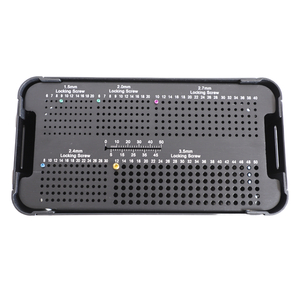
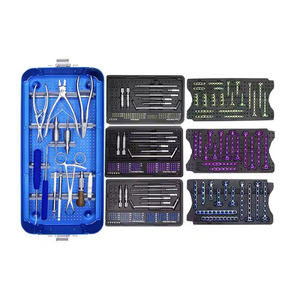
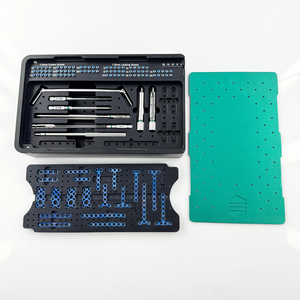
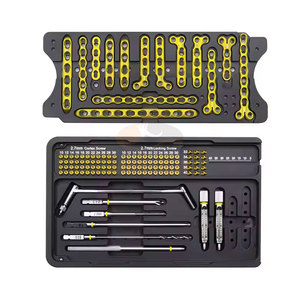
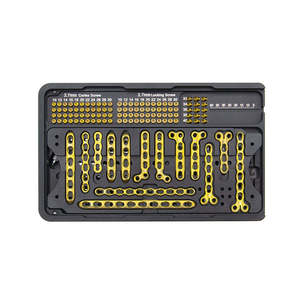
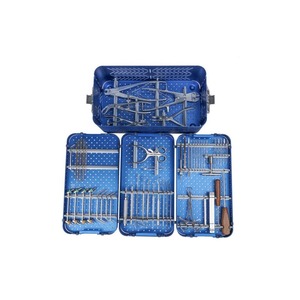
Industry Overview: PEEK Cervical Interbody Cages in Modern Spine Surgery
Anterior Cervical Discectomy and Fusion (ACDF) remains the gold-standard surgical intervention for cervical degenerative disc disease, disc herniation, and spinal instability. Over the past two decades, the evolution of interbody graft materials has transitioned significantly from autografts and allografts to synthetic biocompatible polymers. Among these, Polyetheretherketone (PEEK) Cervical Interbody Cages have captured the dominant market share globally due to their exceptional biomechanical properties, radio-translucency, and biocompatibility.
As leading medical device buyers, hospital procurement managers, and orthopedic distributors search for China top PEEK cervical interbody cage manufacturers and suppliers, understanding the nuanced material science, precision machining tolerances, and regulatory compliance protocols is paramount. China has established itself as an international hub for high-precision OEM and ODM manufacturing of spinal implants, backed by state-of-the-art multi-axis CNC Swiss machining, ISO Class 7 cleanrooms, and stringent ISO 13485 Quality Management Systems.
Information Gain Insight: Unlike traditional metallic implants, implant-grade PEEK (ASTM F2026) possesses an elastic modulus of approximately 3.6 GPa to 4.0 GPa. When unreinforced, this closely mirrors human cortical bone (12–18 GPa) compared to Titanium alloy (110 GPa), drastically reducing the phenomenon of stress shielding and mitigating subsidence risks in cervical interbody reconstruction.
Biomechanical & Material Advantages of PEEK Cages
- Radiolucent Imaging Characteristics: PEEK material is inherently radiolucent under standard X-ray, Fluoroscopy, and Computed Tomography (CT) scans. This non-magnetic property allows orthopedic surgeons to monitor post-operative bony bridging, fusion progression, and pseudoarthrosis without metallic scatter artifact. Integrated Tantalum markers (conforming to ASTM F560) enable precise intraoperative cage localization.
- Optimal Endplate Stress Distribution: The mechanical compliance of PEEK prevents excessive peak stresses on the subchondral endplates of C3–C7 vertebrae. By maintaining physiological load sharing, PEEK cervical cages lower early-stage implant subsidence into adjacent vertebral bodies.
- Anatomical Geometries & Serrated Teeth Patterns: Superior Chinese manufacturers utilize anatomical lordotic profiling (typically 0° to 8° lordosis) to restore sagittal alignment and cervical lordosis. Pyramidal serrated teeth on the superior and inferior surfaces provide immediate primary stability and anchor friction, preventing retropulsion or migration prior to complete osseointegration.
Material Comparison: PEEK vs. Titanium vs. Porous 3D-Printed PEEK
Selecting the ideal spinal interbody cage requires a thorough evaluation of material mechanics, clinical fusion rates, and radiographic visibility. Below is a engineering comparison chart designed for procurement evaluation:
| Biomechanical Parameter | Standard Unfilled PEEK | Titanium Alloy (Ti-6Al-4V) | Porous / Titanium-Coated PEEK |
|---|---|---|---|
| Elastic Modulus (GPa) | 3.6 – 4.0 (Optimal bone match) | 110 (High rigidity) | 3.6 Core / Micro-porous surface |
| Stress Shielding Risk | Extremely Low | Moderate to High | Extremely Low |
| Radiolucency (Artifact-Free) | 100% Clear (with Ta markers) | Poor (High CT/MRI artifact) | Excellent CT/MRI clear view |
| Direct Bone Ingrowth | Fibrous Encapsulation / On-growth | Direct Osteointegration | Enhanced Cellular Ingrowth |
| Subsidence Rate (% Clinical) | Low (< 8%) | Moderate (12% - 18%) | Ultra-Low (< 4%) |
Future Procurement Trends for PEEK Cervical Interbody Cages (2025–2030)
As global healthcare systems implement Value-Based Purchasing (VBP) and demand enhanced surgical outcomes, the supply chain for PEEK interbody devices is undergoing rapid technology transformation. Top Chinese manufacturers are investing heavily in advanced manufacturing pipelines to stay ahead of international clinical expectations.
1. Bioactive Surface Modifications (HA & Titanium Plasma Coating)
While bio-inert PEEK offers unmatched compliance, its smooth hydrophobic surface occasionally results in fibrous tissue interposition rather than direct bone contact. The next generation of procurement focuses on Hydroxyapatite (HA) infused PEEK and Porous Titanium Plasma Sprayed (TPS) PEEK Cages. These hybrid implants combine the radio-translucency and elastic modulus of PEEK with a hydrophilic, rough titanium contact layer that stimulates osteoblast proliferation and accelerates osseointegration.
2. 3D-Printed Porous PEEK & Additive Manufacturing
Selective Laser Sintering (SLS) and Fused Filament Fabrication (FFF) for medical-grade PEEK are moving from R&D labs to commercial cleanrooms. 3D-printed PEEK cages feature interconnected pore networks (300–500 μm pore size) that mimic trabecular bone architecture. Leading Chinese OEM suppliers are acquiring regulatory approvals for customized 3D-printed cervical cages suited for complex revision surgeries and reconstructive oncology.
3. Integrated Zero-Profile Stand-Alone Systems
Traditional ACDF procedures require a separate anterior cervical locking plate secured with screws. Future procurement trends indicate a shift toward Stand-Alone Zero-Profile PEEK Cervical Cages. These implants feature internal titanium screw or anchor blade retention mechanisms housed entirely within the disc space. This design reduces postoperative dysphagia, minimizes soft tissue disruption, and shortens operating times.
4. Contract Manufacturing & Supply Chain Resilience
Global medical device brands are increasingly partnering with certified Chinese contract manufacturers for raw material traceability (utilizing verified Invibio PEEK-OPTIMA or Solvay Zeniva PEEK resins), robust cleanroom automated packaging, and cost-optimized volume production. Procurement teams prioritize suppliers who offer full technical dossiers, including dynamic fatigue testing metrics compliant with ASTM F2077 and ASTM F2267 standards.
Enterprise Manufacturing Excellence & Quality Assurance
When selecting a supplier from China for PEEK cervical interbody cages and orthopedic trauma instrument sets, evaluating the manufacturer's technological infrastructure and quality framework is essential for clinical safety and international compliance.
High-Precision Machining & Cleanroom Processing
Top-tier Chinese orthopedic facilities operate 5-axis DMG MORI and Citizen Swiss CNC lathe machinery capable of maintaining ultra-tight manufacturing tolerances within ±0.005 mm. PEEK raw materials undergo strict thermal annealing processes to relieve internal stress prior to precision cutting. Post-machining operations include ultrasonic cleaning, coordinate measuring machine (CMM) dimensional verification, and automated packaging inside ISO Class 7 cleanroom environments.
Regulatory Compliance & International Certifications
Trustworthy OEM/ODM suppliers maintain a complete Quality Management System verified by international notified bodies. Key certification credentials include:
- ISO 13485:2016: Comprehensive medical device quality management standard governing design, production, and distribution.
- CE Marking (MDR 2017/745): Compliance with European Medical Device Regulation criteria for Class IIb implantable spinal devices.
- FDA Registration & 510(k) Clearance: Substantial equivalence clearance for market distribution in the United States and Latin American territories.
- Full Batch Material Traceability: Certified Raw Material Test Certificates (RMTC) tracking resin lots back to raw polymer suppliers.
Frequently Asked Questions (FAQ) for Procurement Officers
Essential guidance for sourcing, clinical validation, and OEM partnership setup
Partner with China's Premier Orthopedic Implant Manufacturer
Access competitive factory-direct pricing, complete regulatory technical dossiers, and global logistics support for PEEK cervical cages and trauma plate systems.
Send an Inquiry