Featured Orthopedic Implant Systems & Trauma Instruments
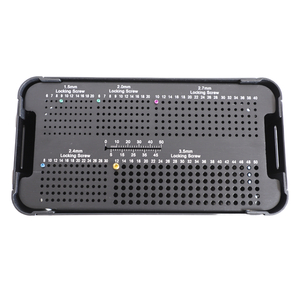
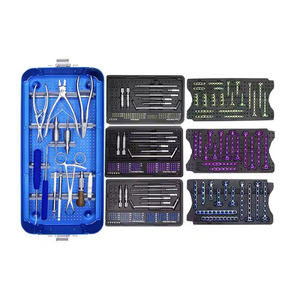
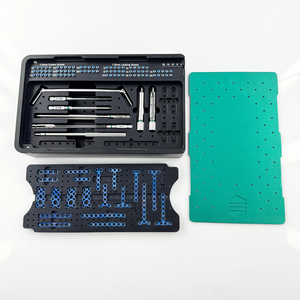
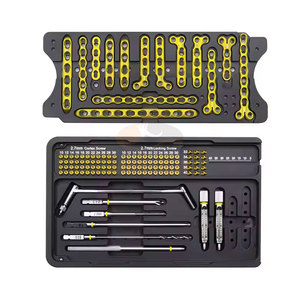
Explore our ISO 13485 & CE certified precision trauma plating, micro-fragment sets, and surgical instrumentation catalog.
Comprehensive Sourcing Guide: Trochanteric Intramedullary Fixation Nails from Top Chinese Factories
In modern orthopedic trauma surgery, intertrochanteric and subtrochanteric femoral fractures represent a major clinical challenge, particularly among geriatric populations suffering from osteoporosis. The clinical benchmark for stabilization has fundamentally shifted from extramedullary constructs—such as Dynamic Hip Screws (DHS)—toward intramedullary load-sharing fixation systems. Among these, Trochanteric Intramedullary Fixation Nails (PFNA / Proximal Femoral Nailing Systems) have emerged as the gold standard. Global healthcare buyers, medical device distributors, and hospital procurement groups increasingly seek qualified, certified manufacturing partners in China to fulfill their volume demands without compromising biomechanical safety or regulatory compliance.
China's medical device manufacturing sector has undergone a massive structural shift over the past decade. Driven by rigorous regulatory frameworks, investments in ultra-precision 5-axis CNC machining, and automated cleanroom processing, leading Chinese orthopedic original equipment manufacturers (OEMs) now produce trochanteric nails that meet or exceed international standards (ISO 13485, CE MDR, ASTM F136, and ASTM F1264). This industrial whitepaper explores the critical engineering parameters, metallurgical specifications, biomechanical advantages, and strategic procurement frameworks necessary when evaluating top Chinese trochanteric nail manufacturers.
When evaluating trochanteric nail manufacturers in China, looking solely at price per unit introduces catastrophic clinical risk. Sourcing directors must analyze material origin certificates (Ti-6Al-4V ELI vs. Standard Titanium), fatigue testing protocols under dynamic cyclical loading (ASTM F1264 standards), tip-apex distance (TAD) optimization designs, and cleanroom bioburden validation protocols.
Biomechanical Engineering & Metallurgical Standards of Trochanteric Fixation
Trochanteric nails are intra-medullary implants designed to absorb massive bending moments and compressive load vectors transmitted across the hip joint during partial or full weight-bearing recovery. The anatomical placement of an intramedullary nail closer to the mechanical axis of the femur reduces the bending moment on the implant by up to 30% compared to side-plate sliding hip screw systems.
1. Metallurgical Composition: Titanium Alloy vs. Stainless Steel
Top Chinese factories manufacture trochanteric nails primarily in two medical-grade metallic alloys. Understanding the metallurgical distinction is essential for regulatory submission and clinical positioning:
Ti-6Al-4V ELI (ASTM F136 / ISO 5832-3)
Extra Low Interstitial (ELI) Grade Titanium offers superior fatigue strength, reduced elastic modulus (closer to native cortical bone), and optimal MRI compatibility. Ideal for high-end clinical applications where stress shielding must be minimized.
316L Stainless Steel (ASTM F138 / ISO 5832-1)
High-grade vacuum melted implantable stainless steel provides exceptional yield strength and cost-efficiency. Frequently requested in emerging markets and cost-sensitive healthcare systems requiring robust mechanical rigidity.
Type II Anodization (Surface Treatment)
Advanced Chinese manufacturers utilize electro-chemical Type II anodization on titanium components to increase surface hardness, eliminate fretting corrosion between nail and locking screws, and reduce bacterial adhesion risks.
2. Helical Blade vs. Standard Lag Screw Mechanics
A key differentiation point among China trochanteric nail designs is the proximal fixation mechanism. Traditional lag screws rely on thread engagement within the femoral head, which can lead to bone cut-out in osteoporotic bone. Modern Chinese factories have perfected the Helical Blade Mechanism. The helical blade compacts the cancellous bone surrounding the implant during insertion rather than removing it, significantly increasing resistance to rotational displacement and vertical cut-out.
Biomechanical System Comparison Table
| Fixation System Type | Load Distribution Axis | Cut-Out Risk (Osteoporotic) | Surgical Incision / Invasiveness | Primary Indications |
|---|---|---|---|---|
| Trochanteric Nail with Helical Blade (PFNA) | Intramedullary (Close to Mechanical Axis) | Very Low (< 1.2%) | Minimally Invasive (MIS) / Small Incisions | 31-A1, A2, A3 Intertrochanteric & Subtrochanteric |
| Standard Trochanteric Interlocking Nail | Intramedullary Load Sharing | Low-Moderate (2.5%) | Minimally Invasive Percutaneous | Stable Intertrochanteric Fractures |
| Dynamic Hip Screw (DHS Plate) | Extramedullary Off-Axis Load Transmission | High in Osteopenic Bone (> 6%) | Open Lateral Surgical Approach | Simple 31-A1 Intertrochanteric Fractures Only |
| Proximal Femoral Locking Compression Plate | Extramedullary Rigid Construct | Moderate (High Plate Failure Rate) | Extensive Soft Tissue Dissection | Complex Non-unions / Revision Reconstruction |
Future Procurement Trends in Orthopedic Fixation Sourcing (2025–2030)
The procurement landscape for orthopedic trauma implants is undergoing rapid evolution. Procurement professionals, global OEM brands, and institutional purchasing agencies must align their sourcing strategies with several transformative industry trends originating from Chinese manufacturing hubs:
1. Transition to EU MDR 2017/745 and Stringent Global Compliance
With the European Union fully implementing the Medical Device Regulation (MDR 2017/745), Chinese orthopedic manufacturers have invested millions in clinical evaluation reports (CER), post-market clinical follow-up (PMCF) studies, and complete technical documentation updates. Top-tier factories now maintain active CE MDR certificates alongside US FDA 510(k) clearances and ISO 13485:2016 quality management certification, ensuring seamless distribution across regulated Western and emerging markets alike.
2. OEM/ODM Customization & Patient-Specific Implants (PSI)
Standardization is no longer the sole requirement. Global distributors are seeking Chinese partners capable of high-mix, low-volume OEM/ODM customization. Utilizing 3D anatomical modeling from patient CT data, leading factories can customize distal curvature radiuses, proximal valgus angles (e.g., 120° vs 125° vs 130°), and specialized instruments tailored to specific regional surgeon preferences.
3. Automated Cleanroom Packaging & Pre-Sterilization
Traditionally, implants were shipped in bulk non-sterile containers, placing the sterilization burden on hospitals. The current global sourcing trend favors in-house sterile packaged implants inside Class 10,000 / Class 100,000 cleanroom environments. Utilizing double-blister Tyvek packaging subjected to validated Ethylene Oxide (ETO) or Gamma Irradiation processes, manufacturers deliver shelf-ready products with 5-year validated shelf lives.
4. Integrated Surgical Instrument Kits & Carbon Fiber Aiming Arms
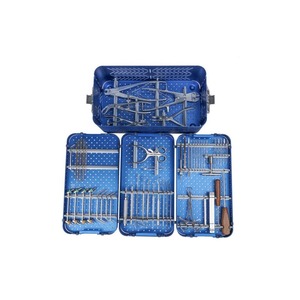
An intramedullary nail is only as precise as the targeting system accompanying it. Premier Chinese factories provide complete, modular surgical instrument sets equipped with carbon-fiber X-ray translucent targeting handles. Carbon fiber aiming arms eliminate radiopaque interference under C-arm fluoroscopy, allowing orthopedic surgeons to perform distal locking screw insertion with zero visual obstruction.
Enterprise Strengths: Why Partnering with Leading Chinese Manufacturers Delivers Growth
Evaluating a qualified manufacturing enterprise requires looking deep into production facilities, engineering capabilities, quality assurance labs, and global supply chain infrastructures. Synthesizing the core strengths of top Chinese medical device enterprises reveals distinct advantages for global procurement partners:
5-Axis CNC Precision Machining
Equipped with imported Swiss Citizen longitudinal lathes and German DMG MORI 5-axis machining centers, top factories maintain micrometric tolerances (±0.005mm) across complex nail geometry, cannulation holes, and helical blade threads.
Full-Spectrum In-House Quality Testing
State-of-the-art testing centers conduct dynamic axial fatigue testing, torsional shear testing, coordinate measuring machine (CMM) dimensional audits, and ICP-OES chemical material verification prior to batch release.
Robust End-to-End Regulatory Support
Dedicated regulatory affairs departments assist overseas importers with country-specific medical device registration dossiers (CFS, COA, ISO certificates, Free Sales Certificates, Technical Files for FDA/MDR).
Traceability & ERP Batch Tracking
Every single trochanteric nail is micro-laser marked with a Unique Device Identifier (UDI), batch number, and matrix QR code, ensuring 100% material-to-patient traceability throughout the supply chain.
Global Distribution Footprint
With established export networks covering over 30 countries across Latin America, Southeast Asia, the Middle East, and Eastern Europe, Chinese manufacturers demonstrate proven international logistics expertise.
Surgeon-Centric Instrument Ergonomics
Collaborative clinical feedback loops ensure surgical instruments feature quick-coupling mechanisms, color-coded reamers, and intuitive insertion handles to minimize intraoperative surgical time.
Procurement & Sourcing FAQ: Trochanteric Fixation Nails
Partner with China's Premier Orthopedic Implant Manufacturers
Elevate your medical distribution portfolio with ISO 13485 certified trochanteric intramedullary nails, mini-fragment plates, and precision surgical instrument sets. Contact our technical sourcing team today for catalogs, factory audits, and OEM pricing schedules.