Trauma & Calcaneal Locking Plating Systems
Explore our certified orthopedic fixation kits, mini-micro fragment systems, and pre-contoured locking compression plates designed for precise intra-articular anatomical reduction.
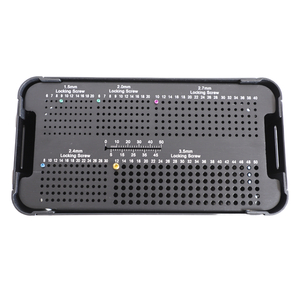
Veterinary Mini Micro Fragment System Stainless Steel Trauma Plates Locking Screws Orthopedic Surgical Instruments
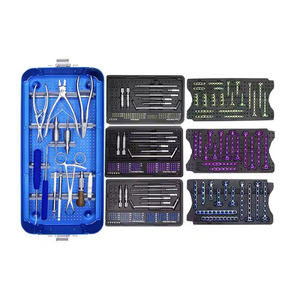
Stainless Steel Manual Mini Micro Fragment Locking Plate System 1.5/2.0/2.4mm Modular Fixation Set CE/ISO13485 Certified Trauma
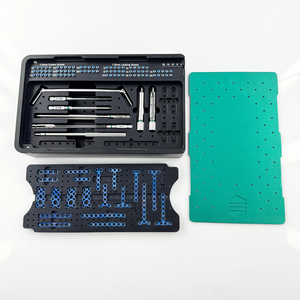
Veterinary 1.5mm Mini Micro Fragment Locking Kit with Titanium Plates, Screws & Orthopedic Surgical Instruments
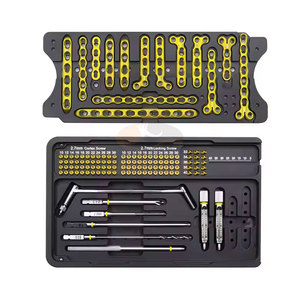
Premium Orthopedic Mini Fragments 2.7mm Stainless Steel Manual Locking Plate Set Instrument Set Class II ISO13485 Certified CE
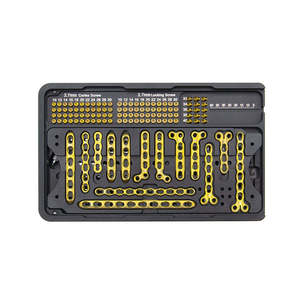
Orthopedic Surgical Instruments Manual Mini Fragments 2.7mm Steel Locking Plate Instrument Set CE Certified Class I 1 Year
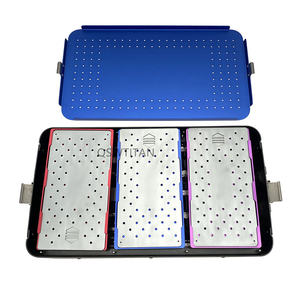
Orthopedic Mini Fragment Instrument Set Plate Screw Implant Locking Plate System Manual for Finger Palm Bones ASTRIN SURGICAL
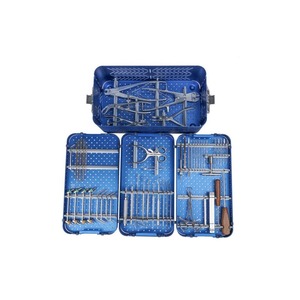
Premium Orthopedic Mini Micro Fragment System Locking Plate Screw Instrument Hand Foot Wrist Maxillofacial Surgical Kit
Eaven Mini Micro Fragment System Trauma Plate Veterinary Orthopedic Implants Surgical Instruments Stainless Steel Locking Dog
Biomechanics & Engineering Standards of Calcaneal Fixation Systems
A comprehensive examination of Sanders intra-articular fracture repair, multi-planar construct rigidity, low-profile implant geometry, and modern metallurgical processing in OEM manufacturing.
1. Clinical Biomechanics & Intra-Articular Calcaneal Fracture Anatomy
Calcaneal fractures represent approximately 60% of all tarsal injuries and 2% of all adult fractures, with intra-articular displacements (Sanders Type II, III, and IV) constituting the vast majority of surgical cases. Reconstructing the structural integrity of the os calcis presents unique anatomical challenges due to thin soft-tissue envelopes, intricate subtalar joint facet congruence, and high cancellous bone volume prone to post-traumatic compaction.
As a leading China wholesale calcaneal locking compression plate factory, our engineering design principles center around establishing rigid fixed-angle stability across the lateral wall. The calcaneal locking compression plate operates as a internal scaffold, neutralizing high shear forces exerted by the Achilles tendon during plantarflexion, maintaining Bohler’s angle (normally 20° to 40°) and Gissane’s angle (normally 120° to 145°), and preventing calcaneal varus collapse.
- Multi-Planar Subtentacular Fixation: Divergent and convergent screw trajectory options target dense bone in the sustentaculum tali, tuberosity, and anterior process.
- Low-Profile Plate Geometry: Ultra-thin plate cross-sections (typically 1.3mm to 1.5mm) minimize peroneal tendon irritation and wound dehiscence risk.
- Anatomic Pre-Contoured Design: Engineered to match the complex lateral calcaneal relief, dramatically cutting operating room contouring time and strain-hardening fatigue risks.
| Specification Parameter | Titanium Alloy (Ti-6Al-4V ELI) | Medical Grade Stainless Steel (316L) |
|---|---|---|
| Standard Certification | ASTM F136 / ISO 5832-3 | ASTM F138 / ISO 5832-1 | Tensile Strength (MPa) | ≥ 860 MPa | ≥ 690 MPa |
| Yield Strength (0.2% offset) | ≥ 795 MPa | ≥ 460 MPa |
| Fatigue Resistance (Cycles) | > 5,000,000 cycles under cyclic load | > 3,500,000 cycles under cyclic load |
| MRI / CT Compatibility | High (Minimal artifact glare) | Moderate (Potential streak artifacts) |
| Plate Thickness Profile | 1.3mm – 1.5mm Ultra-Low Profile | 1.5mm Standard Rigid Profile |
| Locking Thread System | Conical Tapered Double-Lead Threads | Standard Metric Threaded Bushing |
2. Advanced Metallurgical & Sub-Micron Precision Machining
The manufacturing process of calcaneal locking compression plates at our factory requires state-of-the-art 5-axis Swiss-type turning centers and high-speed CNC milling machines. Medical-grade titanium Ti-6Al-4V ELI (Extra Low Interstitial) and 316L stainless steel bar stocks undergo stringent ultrasonic testing to eliminate microscopic void flaws prior to cutting.
Locking screw holes feature proprietary combi-hole architecture, allowing surgeons the flexibility of dynamic axial compression via standard cortical screws or angular stability via threaded locking head screws. To guarantee zero cross-threading or mechanical failure under full physiological loading, our thread tolerance is maintained within ±0.005mm using automated optical inspection (AOI) systems.
Surface treatments play a crucial role in biocompatibility and fatigue resistance. Titanium implants undergo type II electrochemical anodization, which yields a corrosion-resistant oxide film while color-coding plate sizes for quick intraoperative identification. Stainless steel plates receive electro-polishing and chemical passivation in compliance with ASTM F1089, removing free iron contaminants and ensuring high resistance to localized pitting in biological fluid environments.
Future Procurement Trends in Trauma Implants (2025–2030)
Insights for medical device distributors, hospital procurement managers, and OEM brand owners navigating evolving global healthcare supply chains.
1. Rise of Pre-Sterile Single-Pack Implants
Global hospital networks are rapidly phasing out bulk non-sterile implants to minimize hospital-acquired infections (HAIs) and reduce sterilization room overheads. Future wholesale contracts heavily favor ISO Class 7 cleanroom EO/Gamma pre-sterilized Tyvek blister packing with 5-year shelf-life stability.
2. Stringent Regulatory Harmonization (EU MDR & FDA QMSR)
Importers are demanding full technical documentation packages (DHF, DMR, DHR) from Chinese factories. OEM partners must deliver full raw material heat traceabilities, ISO 10993 cytotoxicity testing, dynamic biomechanical fatigue test reports (ASTM F382), and UDI barcode compliance.
3. Modular & Anatomically Specialized Plating Kits
Surgeons increasingly demand unified, specialized instrument sets where mini-micro fragment plates (1.5mm, 2.0mm, 2.4mm, 2.7mm) share color-coded screwdrivers and drill bits with calcaneal and distal fibula systems, cutting operating room inventory footprint.
World-Class OEM/ODM Manufacturing Excellence
Backed by CDSCO, ISO 13485, and FDA registrations, our facility supplies high-precision trauma systems to medical device brands across 30+ countries.
State-of-the-Art Production & Cleanroom Packaging
Our manufacturing facility houses advanced CNC milling complexes, automated wire EDM machines, and automated laser-marking systems. We enforce zero-defect quality control protocols throughout every stage of raw material extrusion, forging, high-speed milling, surface polishing, and final inspection.
In-house ISO Class 7 cleanroom packaging ensures every calcaneal plate and locking screw kit meets strict bioburden specifications. From custom laser branding to validated pouch sealing, we offer turn-key private label solutions tailored to global distributors.
- CDSCO Approved & ISO 13485 Certified Manufacturing Infrastructure
- In-House Bioburden Testing, Cleanroom Packaging & Ethylene Oxide (EO) Sterilization
- Custom Implant Prototyping from CT Scans & 3D Anatomical Renderings


End-to-End Quality Management & Regulatory Support
Navigating international regulatory frameworks requires clear documentation and unwavering quality control. Our dedicated regulatory affairs team provides complete Technical Files, Risk Management Documentation (ISO 14971), and Biocompatibility Test Summaries.
We work closely with global hospital purchasing groups, tender authorities, and regional stocking dealers to provide flexible MOQ terms, rapid custom tooling, and reliable lead-time commitments.
- Full Raw Material Heat Certificate Traceability (MTR)
- Biomechanical Fatigue Validation under ASTM F382 Testing Standards
- Proven Export History to 30+ Countries in Europe, Asia, Latin America & Middle East
Frequently Asked Questions for B2B Importers & Buyers
Clear, direct answers regarding custom manufacturing, minimum order quantities, compliance, and material standards.