3.5mm System
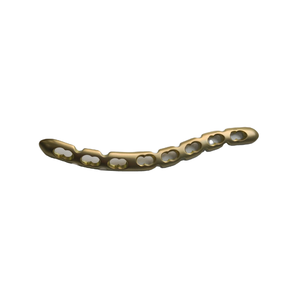
3.5 mm Clavicle & Distal Reconstruction Locking Compression Plate
Get a Quote
Medial Distal
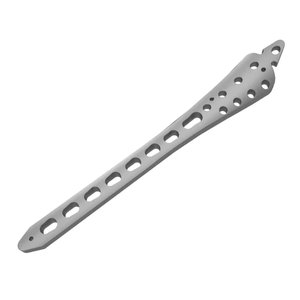
Premium Distal Medial Tibia Locking Compression Plate (LCP) 3.5mm Stainless Steel
Get a Quote
Vet & Human
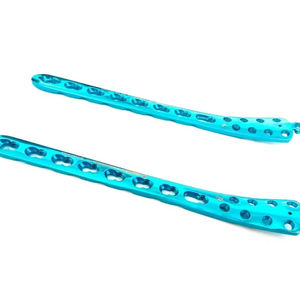
3.5mm Locking Medial Distal Tibia Plates Set of 8 Pcs (L4/R4) Titanium / SS
Get a Quote
Lateral Distal
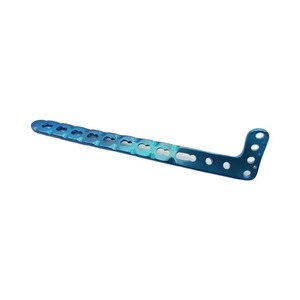
Distal Lateral Tibial Locking Plate Orthopedic Trauma Fixation System CE Approved
Get a Quote
Surgical Tool Set
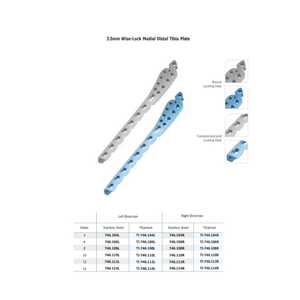
Distal Medial Tibia Locking Compression Plate (LCP) 3.5mm Reusable Fracture Instrument
Get a Quote
OEM Wholesale
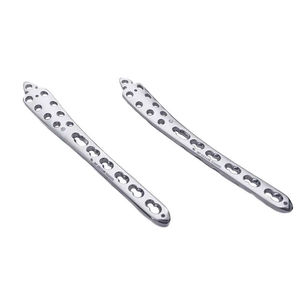
Distal Medial Tibia Locking Compression Plate (LCP) 3.5mm Premium OEM Factory Direct
Get a Quote
Full System Set
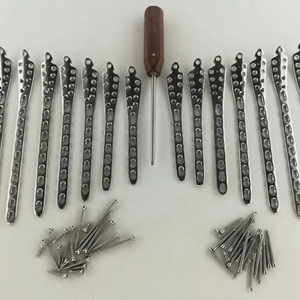
Locking Distal Tibia Plates 4-12 Holes (Left & Right) 102 PCS System Kit SS316L
Get a Quote
Veterinary Kit
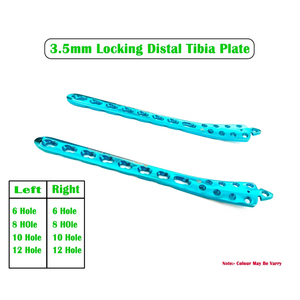
Veterinary 3.5mm Locking Medial Distal Tibia Plate Set 8 PCS (L4/R4) Medical Stainless Steel
Get a Quote
1,000+
CDSCO Approved Products
30+
Global Export Markets
< 0.15mm
Anatomical Contour Tolerance
100%
ISO 13485 & Cleanroom Certified
1. Biomechanical Engineering & Clinical Application of Distal Tibia LCP Systems
Distal tibia fractures—encompassing extra-articular metaphyseal disruptions and intra-articular Pilon fractures (AO/OTA Classification 43-A, 43-B, and 43-C)—present a monumental biomechanical challenge for trauma orthopedic surgeons. The distal third of the tibia possesses a delicate soft-tissue envelope, limited subcutaneous padding, and compromised vascularity compared to proximal osseous structures. Consequently, internal fixation mandates an optimal balance between rigid mechanical stabilization and minimal periosteal disruption.
The Distal Tibia Locking Compression Plate (LCP) system represents a paradigm shift from traditional compression plating to fixed-angle construct stability. Operating as an internal extramedullary fixator, the system utilizes combi-holes (Dynamic Compression Unit + Threaded Locking Mechanism) that empower surgeons to achieve either dynamic interfragmentary compression or fixed-angle locking fixation within a single implant design.
Key Engineering Fact: Threaded locking head screws create a rigid structural frame with the locking plate, eliminating the necessity for intimate plate-to-bone contact. This preserves the vital periosteal blood supply, dramatically decreasing rates of delayed union, non-union, and osteonecrosis in vulnerable distal tibia segments.
1.1 Medial vs. Lateral Distal Tibia Plating Strategies
Modern surgical protocols dictate specific implant geometries based on the anatomical vector of fracture displacement and soft-tissue conditions:
- Medial Distal Tibia Locking Plates: Contoured to fit the medial malleolus and the distal metaphyseal flare. Medial plates feature a low-profile taper at the distal tip to reduce skin tension over the medial malleolus while accommodating 3.5mm locking and cortex screws directed across the ankle joint line without intra-articular penetration.
- Lateral Distal Tibial Locking Plates: Positioned on the anterolateral aspect of the distal tibia, these plates accommodate complex fracture patterns involving the Chaput fragment and Tillaux-Chaput fractures. The lateral approach leverages superior soft-tissue coverage under the anterior compartment musculature, making it an ideal choice when medial skin is compromised.
2. Metallurgical Standards, Surface Engineering & ISO Manufacturing
Raw material purity and precision metallurgical processing dictate the in-vivo survival rate and fatigue resistance of trauma plates. Leading OEM/ODM manufacturers utilize top-tier biocompatible alloys strictly adhering to international surgical standards.
| Material Property |
Titanium Alloy (Ti-6Al-4V ELI) |
Stainless Steel (316L Vacuum Melt) |
| Standard Compliance |
ASTM F136 / ISO 5832-3 |
ASTM F138 / ISO 5832-1 |
| Ultimate Tensile Strength (MPa) |
≥ 860 MPa |
≥ 690 MPa |
| Yield Strength (0.2% Offset) |
≥ 795 MPa |
≥ 460 MPa |
| Modulus of Elasticity (GPa) |
110 GPa (Closer to cortical bone) |
200 GPa (Higher rigidity) |
| Surface Finishing Technology |
Type II Electrochemical Anodization |
High-Passivity Electropolishing |
| Biocompatibility Profile |
Superior Corrosion Resistance & MRI-Clear |
Standard Clinical Biocompatibility |
2.1 CNC Swiss Machining & Quality Control Protocol
Manufacturing distal tibia locking compression plates demands ultra-precise 5-axis CNC Swiss machining and multi-axis milling centers. Threaded combi-holes require pitch tolerances within ±0.005mm to ensure seamless engagement with 3.5mm locking screw heads under high torsional loads. Every batch undergoes rigorous testing including:
1. Fatigue Strength Testing (ASTM F382): Dynamic cyclic bending load testing up to 5,000,000 cycles to simulate full weight-bearing rehabilitation conditions without fatigue failure.
2. Dimensional Micro-CT Scanning: 3D coordinate measuring verification of anatomical twist and screw hole alignments against original CAD models.
3. Corrosion Susceptibility Analysis: Pitting and crevice corrosion testing in simulated body fluid (SBF) environments.
3. OEM/ODM Wholesale Manufacturing & Global Supply Chain Infrastructure
As healthcare systems and orthopedic distributors face increasing cost pressures globally, direct factory sourcing from established manufacturing hubs has become a key strategic advantage. Modern medical manufacturing facilities combine cost efficiency with regulatory compliance.
★
1,000+ Certified Products
Comprehensive portfolio spanning trauma plates, intramedullary nails, cannulated screws, external fixators, and specialized CMF plating systems.
✔
Cleanroom Packaging
In-house ISO Class 7 / Class 100,000 cleanroom packaging facilities providing gamma-sterilized or non-sterile ready-for-autoclave packaging.
🌍
Exporting to 30+ Nations
Proven international compliance with FDA 510(k) standards, ISO 13485:2016, CE marking, and CDSCO approvals for global tender eligibility.
4. Future Sourcing & Procurement Trends in Orthopedic Trauma (2025–2030)
The global market for trauma fixation devices is undergoing rapid transformation driven by surgical techniques, technological innovations, and evolving healthcare procurement strategies.
4.1 Shift Toward Minimally Invasive Percutaneous Plate Osteosynthesis (MIPPO)
Surgeons are increasingly transitioning from open reduction internal fixation (ORIF) to MIPPO techniques for distal tibia fractures. This transition requires locking plates with sub-muscular insertion handles and tissue protection sleeves. Factory tooling designs are adapting by delivering low-profile plate tips with integrated guide-wire holes and targeted insertion instrument sets.
4.2 Custom 3D Printed Patient-Specific Implants (PSI)
While standardized off-the-shelf distal tibia plates cover 90% of clinical cases, severe malunions and massive post-traumatic bone loss require custom solutions. Leading manufacturers now offer DICOM-to-CAD conversion services, utilizing selective laser melting (SLM) 3D printing in Titanium Ti6Al4V to manufacture custom mesh plates tailored to complex patient anatomy.
4.3 Smart Supply Chains & Value-Based Sourcing
Distributors and hospital procurement groups are bypassing multi-tier broker networks in favor of direct contract manufacturing. By establishing factory-direct OEM relationships, procurement managers reduce unit acquisition costs by 35% to 50% while maintaining strict material traceability and regulatory compliance.
What are the primary material options available for Distal Tibia LCP plates?
We manufacture distal tibia locking compression plates in both Medical Grade Stainless Steel 316L (ASTM F138) and Titanium Alloy Ti-6Al-4V ELI (ASTM F136). Stainless steel provides higher rigidity and cost savings, whereas Titanium offers superior biocompatibility, lower elastic modulus closer to bone, and MRI artifact reduction.
What screw sizes are compatible with 3.5mm Distal Tibia Locking Compression Plates?
Our 3.5mm Distal Tibia LCP system features combi-holes that accept 3.5mm threaded locking screws in the threaded portion, as well as 3.5mm cortical screws and 4.0mm cancellous screws in the dynamic compression unit (DCU) portion for interfragmentary compression.
What quality management certifications do your manufacturing plants hold?
Our facilities operate under ISO 13485:2016 Medical Device Quality Management Systems, CDSCO manufacturing approvals, and CE certifications. Products strictly comply with ASTM F382 mechanical bending fatigue standards for bone plates.
Do you offer custom OEM branding, laser etching, and private labeling?
Yes, we provide end-to-end OEM/ODM private labeling services. We offer custom laser marking for LOT numbers, part codes, brand logos, and custom color anodization (for Titanium implants), alongside custom tray packaging tailored to your regional market regulations.
What is the typical production lead time for bulk wholesale orders?
Standard catalog configurations (e.g., 4 to 14 hole distal tibia plates in SS or Titanium) are maintained in stock for rapid dispatch (3–7 days). Customized OEM production runs or private label orders typically carry a manufacturing lead time of 21 to 35 calendar days depending on batch volume.
Are the plates supplied sterile or non-sterile?
Implants can be supplied either non-sterile (bulk protective packaging for hospital autoclaving) or individually pouch-sealed and gamma-sterilized inside our ISO Class 7 cleanrooms upon request.
How does the anatomical contouring of your distal tibia plates minimize intraoperative bending?
Our plates are engineered using 3D bone geometry databases derived from thousands of patient CT scans. The pre-contoured profile accurately matches the distal medial or lateral tibia surface, minimizing intraoperative manual bending and protecting structural fatigue strength.
What is your Minimum Order Quantity (MOQ) for international distributors?
We maintain low initial order thresholds for qualified orthopedic distributors to support market evaluation. Flexible MOQs apply per specification, and sample kits are available upon request for quality evaluation.
Partner with a Leading Orthopedic Implant Factory
Access direct factory pricing, ISO 13485 certified quality assurance, and complete OEM/ODM customized implant solutions for your market.