Spotlight: Cervical & Micro-Fragment Fixation Systems
Certified ISO 13485 & CE-compliant implants engineered for optimal posterior spine stabilization, craniomaxillofacial reconstructive procedures, and complex trauma fixation.
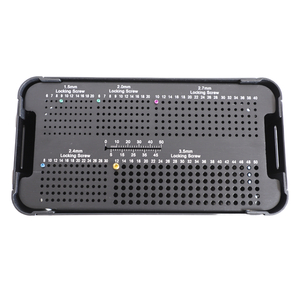
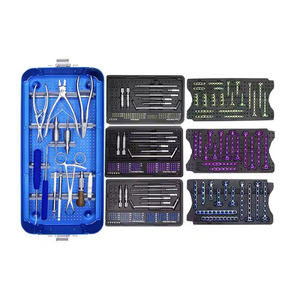
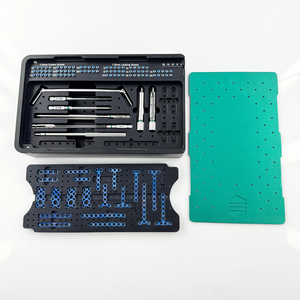
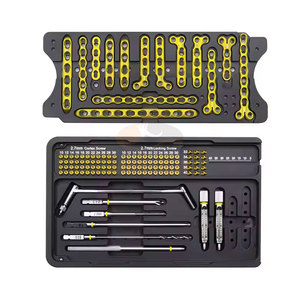
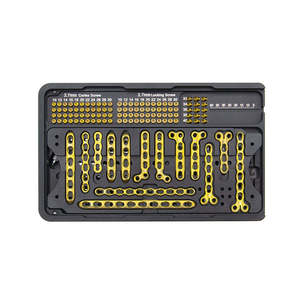
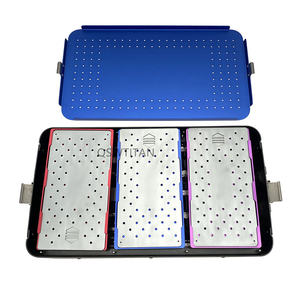
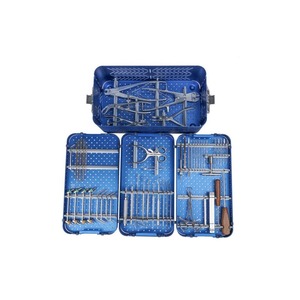
Factory Engineering & OEM Standards
Why top-tier orthopedic distributors, hospital chains, and surgical brand owners partner with accredited Chinese manufacturing centers for posterior cervical fixation systems.
5-Axis CNC Machining
Utilizing high-end DMG MORI and Citizen Swiss longitudinal lathes to machine complex polyaxial pedicle screw heads and occipital plates with micro-level accuracy.
MDR & FDA Compliance
Full technical documentation dossiers (STED), ISO 13485 certification, and complete material traceability supporting global regulatory approvals across EU MDR and US FDA 510(k).
Surface Treatments
State-of-the-art Type II/III anodization, plasma spraying, and bio-inert passivation techniques improving tribological performance, wear resistance, and osseointegration.
Comprehensive Industry Whitepaper: Posterior Cervical Fixation System Manufacturing & Global Procurement Trends
The posterior cervical spine remains one of the most anatomically complex regions in orthopedic and neurological surgery. Conditions ranging from degenerative cervical myelopathy (DCM) and cervical spondylotic radiculopathy to traumatic spinal instability, occipitocervical dislocations, and post-laminectomy kyphosis demand internal fixation systems that deliver unwavering biomechanical rigidity, low profile profiles, and intuitive intraoperative adjustability. As hospital procurement networks and orthopedic device brands navigate an increasingly competitive healthcare landscape, China wholesale posterior cervical fixation system manufacturers have emerged as critical global hubs for high-precision, cost-effective, and regulatory-certified implant manufacturing.
1. Biomechanical Engineering Fundamentals of Posterior Cervical Fixation
Posterior cervical stabilization systems rely on rigid internal anchorage achieved primarily through polyaxial pedicle screws, lateral mass screws (utilizing Roy-Camille, Magerl, or Anderson-Sekhon trajectories), laminar hooks, and occipital plates connected via longitudinal 3.5mm titanium rods. The biomechanical primary objective is to eliminate pathological motion across affected spinal segments while promoting solid osseous fusion.
From a material engineering perspective, the implant constructs must withstand high cyclic loads in flexion, extension, lateral bending, and axial rotation. Leading Chinese manufacturing facilities exclusively utilize high-strength Grade 5 Titanium Alloy (Ti-6Al-4V ELI conforming to ASTM F136 / ISO 5832-3) and Cobalt-Chromium-Molybdenum alloys (Co-Cr-Mo per ASTM F75). Ti6Al4V ELI provides exceptional bio-compatibility, superior fatigue strength, and reduced magnetic resonance imaging (MRI) distortion compared to traditional 316L stainless steel, allowing post-operative clinical evaluation of the spinal cord without severe metallic streak artifacts.
2. Advanced Manufacturing Processes & Quality Control Systems
Producing posterior cervical fixation components requires extreme micro-machining capabilities. A single polyaxial screw assembly consists of multiple micro-components: the threaded shank, the spherical friction collar, the saddle/housing cup, and the internal set screw (grub screw). The manufacturing workflow in tier-1 Chinese factories incorporates several critical engineering stages:
A. Swiss-Type Longitudinal CNC Turning: Utilizing 7-axis to 10-axis Citizen and Tornos CNC Swiss machines, complex thread profiles (such as dual-lead or buttress thread designs) are turned in a single setup. This ensures concentricity tolerances within ±0.005mm between the screw shaft and the spherical head.
B. Friction-Fit Polyaxial Seat Assembly: Polyaxial screw heads are designed to allow smooth intraoperative angulation prior to locking, yet retain friction so the head does not flop loosely during rod seating. Automated assembly stations press and micro-swage the retaining ring into the saddle with calibrated force sensors.
C. Surface Modification & Anodization: Anodization (Type II according to AMS 2488) creates a uniform oxide layer that enhances surface hardness, reduces galling during set screw tightening, and enables color-coding (e.g., magenta for 3.5mm, gold for 4.0mm emergency screws) to streamline surgical selection.
D. ISO Class 7 Cleanroom Packaging: Final washing is conducted in multi-stage ultrasonic aqueous cleaning lines utilizing RO/DI water, followed by vacuum packaging inside Class 7 cleanrooms to ensure endotoxin levels remain strictly below regulatory thresholds (<21.5 EU/device per USP <85>).
3. Global Purchasing Trends in Cervical Spine Implants (2025–2030)
The global market for cervical spine fixation systems is undergoing rapid structural transformations driven by demographic shifts, healthcare cost-containment mandates, and technical innovations. Procurement executives and B2B buyers must align their sourcing strategies with three primary macro-trends:
1. Shift Toward OEM/ODM Direct Contracting: Healthcare organizations and regional medical device suppliers are increasingly bypassing traditional multi-tier brand markups by contracting directly with original equipment manufacturers in China. Factories offering turn-key OEM services—encompassing design refinement, FEA (Finite Element Analysis) simulation, rapid prototyping, and private labeling—allow distributors to capture higher gross margins while offering competitive tender pricing.
2. Adoption of Motion Preservation & Hybrid Constructs: While rigid posterior cervical fusion remains the gold standard for severe multi-level instability, hybrid constructs combining anterior cervical discectomy and fusion (ACDF) or cervical disc arthroplasty (CDA) with posterior cervical stabilization are expanding. Factories are producing versatile systems compatible with dynamic cross-links and transitional instrumentation.
3. Demand for Pre-Sterilized, Single-Use Procedure Kits: Hospital operating rooms are aggressively attempting to reduce reprocessing costs, tray turnover times, and surgical site infection (SSI) risks. Consequently, demand is surging for pre-sterilized, gamma-irradiated single-use kit configurations where screws, rods, set screws, and disposable surgical instruments are packaged per procedure.
4. Navigating Regulatory Compliance & Risk Mitigation in Sourcing
For international buyers, qualifying a Chinese manufacturing partner involves rigorous auditing of their Quality Management System (QMS). A reliable manufacturer must demonstrate robust compliance across international benchmarks:
ISO 13485:2016 Certification: The cornerstone of medical device manufacturing QMS, ensuring strict design controls, supplier management, and risk analysis (ISO 14971).
Biomechanical Testing Data (ASTM F1717): Prior to commercialization, posterior cervical screw-rod constructs must undergo rigorous static compression bending, static torsion, and dynamic fatigue testing under ASTM F1717 standard test methods. Qualified factories provide comprehensive testing reports proving the construct can endure 5,000,000 cycles of cyclic loading without structural failure.
Global Traceability: Every lot of titanium raw material must be accompanied by mill test certificates verifying chemical composition and mechanical tensile strength. Furthermore, individual screws should feature laser-etched UDI (Unique Device Identification) codes for full post-market surveillance compliance.
Why Source From Our Certified Manufacturing Hub?
Delivering uncompromised surgical quality, transparent supply chains, and superior unit economics for international B2B partners.
Rapid Prototype Development
In-house R&D team capable of translating surgeon design concepts into functional 3D prototypes and machined samples within 14 business days.
Competitive Volume Pricing
Scale manufacturing capacity reduces per-unit costs by up to 40% compared to Western manufacturers, maximizing distributor margins in government tenders.
Complete Instrumentation Kits
Custom-designed ergonomic surgical instrument sets including benders, rod drivers, torque-limiting screwdrivers, and tap guides fitted in customized sterilization trays.
Frequently Asked Questions (FAQ)
Essential technical and commercial answers for hospital buyers, orthopedic distributors, and OEM sourcing directors.
Request Complete OEM/ODM Catalog & Technical Dossier
Connect directly with our senior engineering team to receive full CAD specs, ASTM F1717 test reports, factory tier pricing, and sample evaluation kits.