Medical-Grade Synthetic & Resorbable Bone Graft Products
Certified B2B wholesale bone repair solutions engineered for orthopedic, dental, craniomaxillofacial, and veterinary applications.
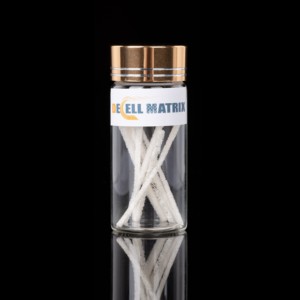
DECELL Professional Bone Graft Artificial Rebone Biodegradable Healing Bone Powder Repair Materials
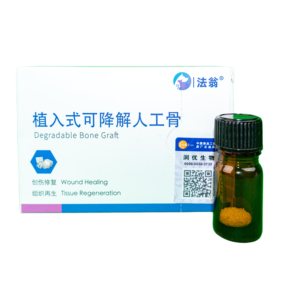
RunYou FA Calf Bone-Derived Resorbable Bone Graft Granule Veterinary HA Substitute 0.5g
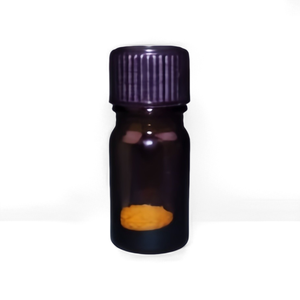
FA Calf Bone-Derived Resorbable Bone Graft Granule Veterinary Hydroxyapatite Substitute 0.3g
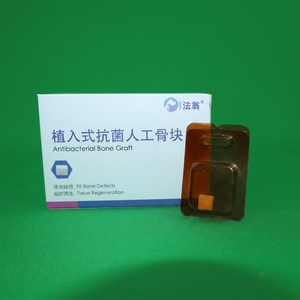
Veterinary Antibacterial Bone Graft Block 10x10x8mm FA Biocompatible Substitute
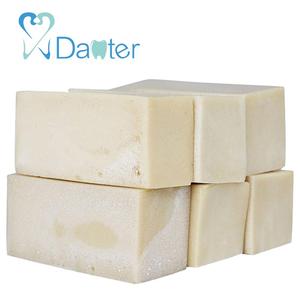
A2021 Cancelous Simulation Synthetic Bone Graft Matrix for Custom Processing
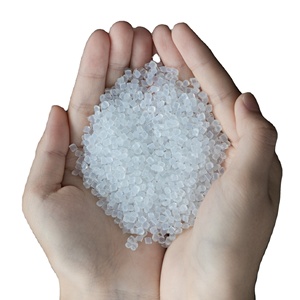
Grafbond PET POE-g-MAH 3% Grafting Rate Impact Modifier Polymer Granules
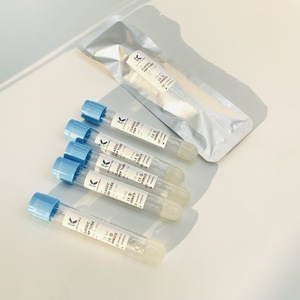
Factory Direct PRF Box Set With Surgical Instruments For Bone Graft Manipulation
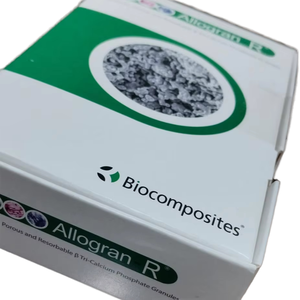
Allogran R Resorbing Tri-Calcium Phosphate (β-TCP) Synthetic Bone Graft Substitute
Why Sourcing From China’s Premier Biomaterial Manufacturer Drives Value
Combining advanced ceramic chemistry, ISO 13485 cleanroom infrastructure, and OEM custom synthesis capabilities for international hospital networks and distributors.
Rigorous Certification & Regulatory Compliance
Our manufacturing ecosystem holds extensive CDSCO, ISO 13485, CE, and FDA-compliant quality management registrations. With over 1,000 regulatory product clearances across orthopedic trauma, spinal systems, and biomaterial substitutes, we guarantee global market access.
Class 10,000 In-House Sterile Packaging Facility
Every synthetic graft, hydroxyapatite granule, and TCP block is processed within validated cleanroom environments using automated dosing, double-blister barrier sealing, and validated Gamma Irradiation or EO sterilization meeting ISO 11137 standards.
Biocompatible Metallurgy & Ceramic Synergy
Beyond ceramic synthetics, our production capabilities encompass medical-grade 316L Stainless Steel and Ti-6Al-4V Titanium implants. This multi-material manufacturing mastery enables comprehensive skeletal reconstruction packages for B2B buyers.
Custom Implants & Patient-Specific Scaffolds
We offer advanced OEM/ODM customization services. Utilizing CT-scan DICOM data, our biomaterial engineers design 3D-machined or 3D-printed porous scaffolds tailored to severe bone defects, dental ridge augmentations, and specialized veterinary surgeries.
Global Logistics & Supply Chain Resiliency
Exporting reliably to over 30 countries across Europe, Asia-Pacific, Latin America, and the Middle East. We maintain high-capacity inventory buffers, enabling fast dispatch, complete Certificate of Analysis (CoA) documentation, and competitive wholesale tier pricing.
Executive Industry Whitepaper: The Evolution of Synthetic Bone Graft Substitutes
In modern orthopedic, craniomaxillofacial (CMF), dental implantology, and reconstructive veterinary procedures, bone defect repair represents one of the most critical clinical challenges. Historically, autogenous bone grafting (autograft) served as the clinical gold standard due to its inherent osteogenic, osteoinductive, and osteoconductive properties. However, donor-site morbidity, limited bone availability, extended surgical duration, and risk of post-operative infection have driven the global surgical community toward synthetic bone graft substitutes. Sourcing high-purity, structurally optimized synthetic bone substitutes from qualified China wholesale manufacturers has emerged as the premier strategy for hospital networks, medical device brands, and international distributors aiming to balance clinical efficacy with cost-effective procurement.
Search Intent & Semantic Information Gain: Synthetic bone graft substitutes engineered from Calcium Phosphate ceramics—specifically Beta-Tricalcium Phosphate (β-TCP), Biphasic Calcium Phosphate (BCP), and Synthetic Hydroxyapatite (HA)—mimic the chemical composition and micro-porous architecture of human cancellous bone, achieving osteoconductive lattice performance without disease transmission risks.
Comparative Material Chemistry: HA vs. β-TCP vs. BCP Matrix
Understanding the mineral composition of bone substitutes is essential for procurement managers and clinical evaluators. Human bone mineral phase consists primarily of non-stoichiometric carbonated hydroxyapatite. Synthetic biomaterial engineering attempts to replicate this biological structure through high-temperature sintering of calcium phosphate salts.
| Biomaterial Type | Chemical Formula | Resorption Rate | Compressive Strength | Primary Clinical Indications |
|---|---|---|---|---|
| Pure Hydroxyapatite (HA) | Ca10(PO4)6(OH)2 | Slow (Years / Non-resorbable) | High (30 – 100 MPa) | Load-bearing augmentation, long-term space maintenance, dental ridge preservation |
| Beta-Tricalcium Phosphate (β-TCP) | Ca3(PO4)2 | Fast (3 – 6 Months) | Moderate (5 – 15 MPa) | Metaphyseal void filling, trauma fracture repair, periodontal intra-bony defects |
| Biphasic Calcium Phosphate (BCP) | HA / β-TCP Ratio (e.g. 60/40) | Balanced / Synergistic | Tunable (10 – 40 MPa) | Spinal fusion cages, complex orthopedic voids, veterinary GBR reconstructions |
| Bioactive Glass (45S5) | SiO2-Na2O-CaO-P2O5 | Rapid Surface Hydrolysis | Variable / Low | Antimicrobial bone graft putty, non-load bearing periodontal defects |
1. Hydroxyapatite (HA) Kinetics and Mechanical Stability
Synthetic Hydroxyapatite closely replicates the crystalline phase of natural bone mineral. Due to its high Ca/P ratio (1.67), pure HA exhibits remarkable thermodynamic stability under physiological pH conditions. This minimal solubility translates to a prolonged in vivo degradation timeline. In clinical scenarios where persistent structural space maintenance is required—such as severe maxillofacial crestal defects or specialized veterinary dental GBR—HA granules provide an enduring scaffold that prevents soft tissue collapse while osteoblasts deposit native extracellular matrix across its porous perimeter.
2. Beta-Tricalcium Phosphate (β-TCP) and Cell-Mediated Remodeling
Conversely, Beta-Tricalcium Phosphate features a Ca/P ratio of 1.50, rendering it significantly more soluble in physiological fluids than HA. As host osteoclasts attach to the β-TCP surface, they release acidic enzymes that break down the ceramic scaffold at a rate closely matched to native osteogenesis. Within 3 to 12 months, β-TCP is fully resorbed and replaced by mature, vascularized lamellar bone. Products like Allogran R Resorbing Tri-Calcium Phosphate leverage this precise biodegradation mechanism to eliminate foreign body presence in host tissue over time.
3. Biphasic Calcium Phosphate (BCP): Tailoring the Degradation Profile
Recognizing the limitations of pure HA (too slow) and pure β-TCP (occasionally too fast for massive bone defects), biomedical scientists developed Biphasic Calcium Phosphate (BCP). By combining HA and β-TCP in specific homogeneous ratios (such as 60:40 or 70:30), BCP grants surgeons the ultimate balance: the β-TCP component rapidly releases calcium and phosphate ions to stimulate early osteoblast proliferation, while the HA frame maintains structural integrity throughout the creeping substitution phase.
Structural Architecture: Micro-Porosity vs. Macro-Porosity Dynamics
Cellular invasion and nutrient transport within a synthetic bone graft substitute depend heavily on pore architecture. Advanced manufacturing processes in leading Chinese OEM factories utilize specialized pore-forming agents (porogens) and sponge-replication sintering techniques to achieve dual-porosity matrices:
- Macro-Porosity (100 µm – 500 µm): Essential for cellular migration. Osteoblasts (~20 µm in diameter) and capillary endothelial cells require interconnected channels exceeding 100 µm to penetrate deep into the center of the graft block or granule bed. Without adequate macro-porosity, bone regeneration remains restricted to the graft periphery, leaving an acellular necrotic core.
- Micro-Porosity (< 10 µm): Crucial for protein adsorption and capillary action. Micro-pores dramatically increase the total specific surface area of the ceramic. Upon implantation, micro-porous channels suck up blood, platelet-rich plasma (PRP), and endogenous growth factors (BMP-2, PDGF), initiating the osteoinductive cascade.
- Interconnected Porosity Rate (> 70%): Isolated pores provide no physiological benefit. State-of-the-art synthetic grafts achieve open, fully interconnected pore networks exceeding 70-80%, simulating the exact trabecular architecture of cancellous bone.
Global Procurement & Future Industry Trends (2025 – 2035)
As global healthcare systems push for cost-efficiency without compromising patient safety, the demand for high-performance synthetic bone graft substitutes manufactured in China is expanding exponentially. Key purchasing and technology trends shaping the market over the next decade include:
Trend A: Transition from Allograft/Xenograft to Purely Synthetic Biomaterials
Ethical concerns, religious considerations, disease transmission risks (such as BSE or viral vectors), and stringent regulatory burdens associated with human allografts and bovine/porcine xenografts are driving hospitals worldwide toward 100% synthetic formulations. B2B buyers are increasingly replacing traditional animal-derived bone powders with validated synthetic alternatives like DECELL Biodegradable Healing Bone Powder.
Trend B: Drug-Loaded & Antimicrobial Bone Substitute Matrices
Post-operative infection (osteomyelitis) remains a severe complication in complex trauma cases. Future procurement specifications are favoring bone blocks infused with broad-spectrum antimicrobial agents or ion-substituted ceramics (e.g., Silver-doped or Strontium-doped Hydroxyapatite). Products like our Veterinary Antibacterial Bone Graft Block (10x10x8mm) represent the vanguard of infection-resistant bio-scaffolds.
Trend C: 3D Bioprinting & Patient-Specific CAD/CAM Scaffold Manufacturing
Standard cubic or spherical graft shapes often require extensive intra-operative carving by surgeons, extending operating room time. The future of B2B biomaterial manufacturing lies in CT-to-Print services. Chinese manufacturers are investing heavily in stereolithography (SLA) and binder-jetting 3D printers that produce customized TCP/HA scaffolds matching exact patient defect contours extracted from CT DICOM files.
Trend D: Medical Polymer Toughening & Composite Graft ModModifiers
Ceramics are inherently brittle. To overcome low fracture toughness, material engineers are blending bioactive ceramics with high-performance medical polymers (such as PEEK, PLGA, or PET derivatives modified via impact modifiers like Grafbond PET POE-g-MAH). These composite matrices deliver ductile mechanical properties alongside bioactivity, opening new avenues for spinal interbody cages and heavy load-bearing orthopedic fixations.
Quality Assurance & International Regulatory Verification
For global importers and medical supply brand owners, regulatory compliance is non-negotiable. Sourcing synthetic bone graft substitutes from trusted China manufacturers requires verifying comprehensive test documentation:
- ISO 10993 Cytotoxicity & Biocompatibility Testing: Includes systemic toxicity, intracutaneous reactivity, sensitization, pyrogenicity, and mutagenicity assays ensuring zero adverse immunological response.
- ISO 13485 Quality Management System Certification: Guarantees lot-to-lot consistency, cleanroom environmental monitoring, and complete raw material traceability from chemical synthesis to final packaging.
- Sterilization Validation (ISO 11137 & ISO 11135): Comprehensive validation of Gamma Irradiation or Ethylene Oxide (EO) cycles achieving a Sterility Assurance Level (SAL) of 10-6.
- Chemical Phase Purity (XRD Analysis): X-ray Diffraction testing confirming pure crystalline phase content (verifying TCP purity without harmful heavy metal residues or unreacted calcium oxide).
Frequently Asked Questions for B2B Procurement
Direct technical and commercial answers for hospital buyers, medical device importers, and OEM partners.
Partner with China’s Leading Biomaterial Innovator
Whether you require bulk hydroxyapatite granules, resorbable TCP blocks, OEM private labeling, or custom patient-specific implants, our engineering team is ready to support your supply chain.
Inquire Now - Speak With An Expert