Featured Orthopedic & Trauma Fixation Systems
Explore our ISO 13485 & CDSCO certified orthopedic locking plate systems, micro-fragment sets, and custom OEM manufacturing solutions.
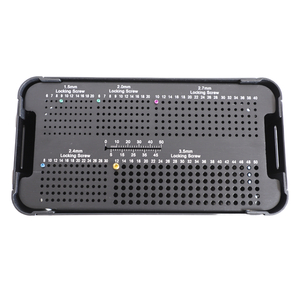
Veterinary Mini Micro Fragment System Stainless Steel Trauma Plates & Locking Screws
Get Catalog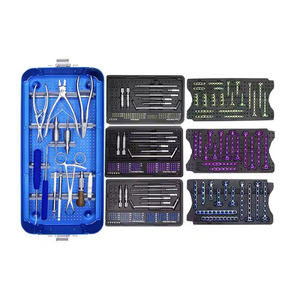
Stainless Steel Manual Mini Micro Fragment Locking Plate System 1.5/2.0/2.4mm Set
Get Catalog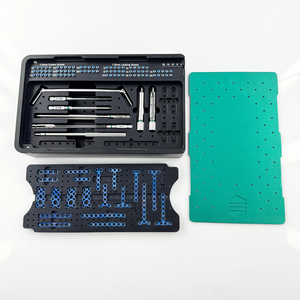
Veterinary 1.5mm Mini Micro Fragment Locking Kit with Titanium Plates & Screws
Get Catalog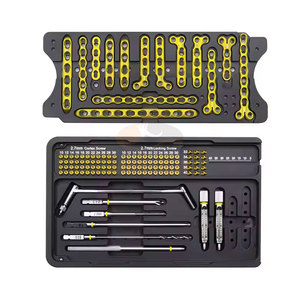
Premium Orthopedic Mini Fragments 2.7mm Stainless Steel Manual Locking Plate Set
Get Catalog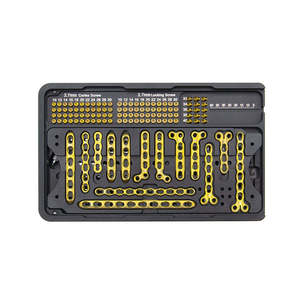
Orthopedic Surgical Instruments Manual Mini Fragments 2.7mm Steel Locking Plate Set
Get Catalog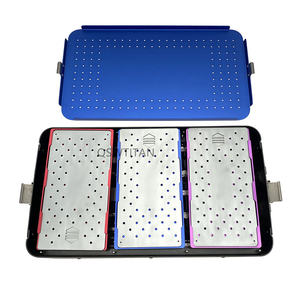
Orthopedic Mini Fragment Instrument Set Plate Screw System for Hand & Palm Bones
Get Catalog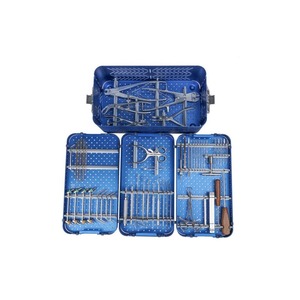
Premium Mini Micro Fragment Locking Plate System for Hand, Foot & Maxillofacial
Get Catalog
Eaven Mini Micro Fragment System Veterinary Orthopedic Implants & Surgical Instruments
Get Catalog1. Technical Engineering & Material Science of Bioresorbable Interference Screws
In modern sports medicine and orthopedic trauma surgery, soft tissue graft fixation during Anterior Cruciate Ligament (ACL) and Posterior Cruciate Ligament (PCL) reconstruction demands exceptional mechanical stability coupled with long-term biological compatibility. Traditional metallic interference screws (manufactured from 316L Stainless Steel or Ti-6Al-4V ELI titanium alloys) present significant clinical drawbacks, including permanent implant retention, artifact interference during post-operative Magnetic Resonance Imaging (MRI), and the potential necessity for secondary hardware removal surgery.
As a leading OEM biodegradable interference screw supplier and global exporter, Uteshiya Medicare engineers high-performance resorbable implants utilizing advanced composite formulations of Poly-L-Lactic Acid (PLLA), Poly(lactic-co-glycolic acid) (PLGA), and osteoconductive ceramic blends incorporating Beta-Tricalcium Phosphate (β-TCP) or Hydroxyapatite (HA).
Technical Insight: Osteoconductive Matrix Degradation Dynamics
By blending 70% PLLA with 30% β-TCP, our custom bioresorbable interference screws mitigate localized osteolysis by neutralizing acidic hydrolytic degradation byproducts. The released calcium phosphate ions trigger natural osteoblast proliferation, actively inducing bone ingrowth into the tunnel site as the polymer matrix safely degrades.
Comparative Biomechanical Matrix: Bioresorbable vs. Metallic Interference Screws
Procurement teams and orthopedic surgical committees must evaluate key performance indicators when selecting OEM fixation suppliers. The table below illustrates the mechanical and biological parameters of our bio-composite screw range against conventional hardware:
| Performance Parameter | PLLA / β-TCP Bio-Composite | Pure PLLA Polymer | Ti-6Al-4V Titanium Alloy |
|---|---|---|---|
| Initial Torsional Strength | 1.8 - 2.4 Nm (High Shearing Resistance) | 1.4 - 1.8 Nm | > 3.5 Nm |
| In-Vivo Bioresorption Rate | 18 to 24 Months (Active Ingrowth) | 24 to 36 Months | Non-Degradable (Permanent) |
| MRI / CT Artifact Post-Op | Zero Distortion (Clear Imaging) | Zero Distortion | Significant Magnetic Artifacts |
| Osteoconductive Potential | High (Trabecular Bone Replacement) | Inert Hydrolysis | Fibrous Encapsulation |
| Secondary Removal Rate | 0% (Complete Remodeling) | 0% | 5% - 12% Revision Surgery |
Our injection molding processes utilize continuous precision temperature controls within Class 10,000 (ISO Class 7) cleanrooms to prevent polymer thermal degradation during tooling. This guarantees that every cannulated screw retains optimal molecular weight distribution, yielding predictable hydrolytic degradation profiles that match bone healing kinetics perfectly.
2. Global Procurement Trends & Technological Innovations (2025–2030)
The global sports medicine devices market is transitioning rapidly toward fully resorbable, biologically active fixation hardware. OEM buyers, medical device distributors, and hospital procurement groups are adjusting their supply chain sourcing based on critical technological shifts:
Biphasic Ceramic Loading
Next-generation OEM specifications demand 15% to 30% micro-particulate β-TCP/HA loading, speeding up biological tunnel closure and reducing cyst formation risk.
MDR & Regulatory Alignment
Global distributors are shifting purchasing orders toward certified manufacturers who maintain comprehensive technical documentation under EU MDR Class III and US FDA guidelines.
Patient-Specific Custom Mold Geometry
Custom OEM designs featuring variable thread pitches, reverse-buttress threads, and specialized driver sockets (Hexalobe/Torx) prevent driver stripping during high-torque bone insertion.
Key Drivers Reshaping OEM Supply Chains:
- Shift to Contract Manufacturing Alliances: Tier-1 medical brand owners are delegating component manufacturing to specialized, CDSCO-approved Indian exporters to optimize production costs while upholding stringent clinical quality.
- Sterilization Validation Protocols: Ethylene Oxide (EtO) and Gamma Irradiation processing must be carefully calibrated. Bioresorbable polymers are sensitive to high radiation levels; thus, low-temperature validated processes are essential to protect molecular integrity.
- Custom Private-Label Packaging: Turnkey procurement models now require suppliers to deliver pre-sterilized, double-barrier Tyvek blister packaging with complete UDI (Unique Device Identification) barcoding.
3. Enterprise Manufacturing Strengths & OEM/ODM Capabilities
As an established global medical device leader headquartered in India, Uteshiya Medicare operates an expansive manufacturing infrastructure producing over 1,000 certified products across trauma, spine, CMF, joint reconstruction, and sports medicine categories. Trusted by surgeons in more than 30 countries, our facility represents the gold standard in orthopedic implant production.
State-of-the-Art Production Facility
Our facility houses high-precision 5-axis Swiss-type CNC machine centers, automated bio-polymer injection molding systems, and specialized cannulation machinery. Every batch undergoes strict dimensional verification using optical CMM equipment to guarantee micrometric accuracy.
Rigorous Quality Assurance Protocols
Operated under strict ISO 13485 quality management systems and CDSCO product approvals, our in-house microbiological and mechanical labs validate pull-out strength, degradation kinetics, torque resistance, and bio-burden levels continuously.
Full-Cycle OEM/ODM Contract Manufacturing Services
We provide global partners with end-to-end contract manufacturing support, including custom resin formulation, rapid prototyping, proprietary mold development, sterile barrier packaging, and regulatory master file submission assistance for rapid market entry.
4. Frequently Asked Questions (FAQ) for OEM Buyers & Importers
Partner with a World-Class OEM Implant Manufacturer
Elevate your orthopedic product portfolio with CDSCO & ISO-certified bioresorbable interference screws and trauma systems. Request technical catalogs, pricing schedules, and custom manufacturing consultations today.
Get Catalog