Featured Orthopedic & Mini Fragment Systems
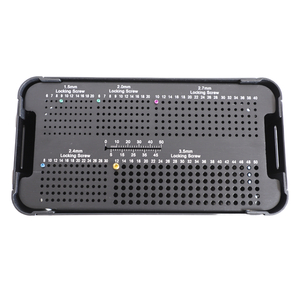
Veterinary Mini Micro Fragment System Stainless Steel Trauma Plates & Locking Screws
Get a Quote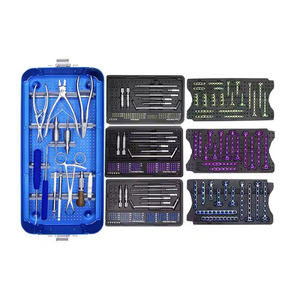
Stainless Steel Manual Mini Micro Fragment Locking Plate System 1.5/2.0/2.4mm Set
Get a Quote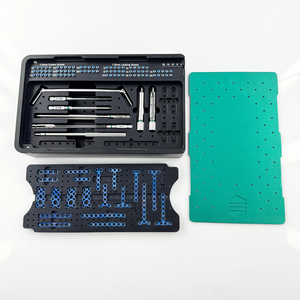
Veterinary 1.5mm Mini Micro Fragment Locking Kit with Titanium Plates & Screws
Get a Quote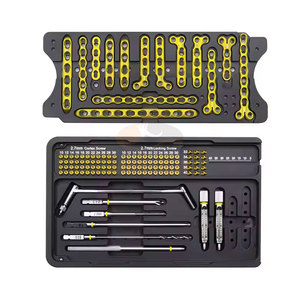
Premium Orthopedic Mini Fragments 2.7mm Stainless Steel Locking Plate Set
Get a Quote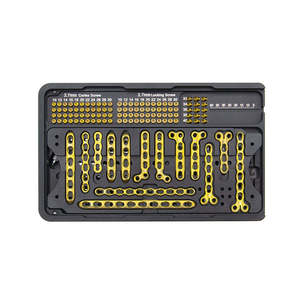
Orthopedic Manual Mini Fragments 2.7mm Steel Locking Plate Instrument Set
Get a Quote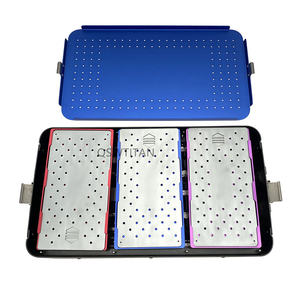
Orthopedic Mini Fragment Instrument Set & Screws for Finger Palm Bones
Get a Quote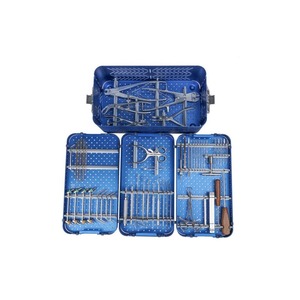
Premium Mini Micro Fragment System Hand Foot Wrist Maxillofacial Kit
Get a Quote
Eaven Mini Micro Fragment System Trauma Plate Veterinary Implants Set
Get a Quote1. Engineering Whitepaper: Biomechanical Principles of Cannulated Compression Screws
The modern surgical repair of osteochondral fractures, scaphoid non-unions, femoral neck fractures, and periarticular bone disruptions demands absolute mechanical stability combined with minimal surgical trauma. As a leading Custom OEM Cannulated Compression Screw System Manufacturer & Factory, Uteshiya Medicare engineers surgical screw systems designed around the rigorous laws of skeletal biomechanics and bone tissue regeneration.
Cannulated compression screws are specifically hollowed along their longitudinal axis, allowing them to be accurately advanced over a pre-placed, radiologically verified Kirschner wire (K-wire). This guided percutaneous capability minimizes soft tissue devascularization, preserves periosteal blood supply, and significantly shortens surgical duration while ensuring precise interfragmentary compression.
Differential Pitch Mechanical Dynamics
The primary mechanics of headless cannulated compression screws rely on a differential pitch thread configuration between the leading (distal) and trailing (proximal) ends. The distal thread possesses a wider thread pitch than the proximal thread. As the screw rotates, the distal segment advances faster into the bone than the proximal segment.
This differential advance rate draws the fracture fragments together automatically, generating powerful interfragmentary compression force without relying on a bulky, protruding screw head that could cause soft-tissue impingement or tendon irritation near articular joints.
Metallurgical Excellence: Ti-6Al-4V ELI vs 316L Stainless Steel
Material integrity directly correlates with implant longevity and resistance to stress corrosion cracking or cyclic fatigue failure. We manufacture custom OEM cannulated compression screw systems in two primary medical-grade metal alloys:
- Titanium Alloy (Ti-6Al-4V ELI / ASTM F136): Offers exceptional biocompatibility, superior MRI compatibility (minimal artifact generation), and a lower elastic modulus (110 GPa) closer to cortical bone, reducing stress-shielding effects.
- Implant-Grade Stainless Steel (316L / ASTM F138): Delivers outstanding shear strength and torsional rigidity, preferred in heavy trauma load-bearing constructs and cost-sensitive healthcare markets.
Dimensional & Engineering Specification Matrix
| Screw Size Range | Cannulation Inner Dia | Guide Wire Compatibility | Thread Pitch Ratio (Distal/Proximal) | Surgical Indications |
|---|---|---|---|---|
| 2.0mm Micro Cannulated | 0.85 mm ± 0.01mm | 0.8 mm K-Wire | 1.25mm / 1.00mm | Scaphoid, Phalangeal, Carpal & Metacarpal Fractures |
| 2.4mm / 2.7mm Mini Cannulated | 1.15 mm ± 0.01mm | 1.1 mm K-Wire | 1.50mm / 1.15mm | Radial Head, Ulnar Styloid, Metatarsal (Hallux Valgus) |
| 3.0mm / 4.0mm Mid Cannulated | 1.45 mm ± 0.01mm | 1.35 mm K-Wire | 1.75mm / 1.25mm | Medial Malleolus, Calcaneus, Talus, Tibial Plateau |
| 4.5mm / 6.5mm Large Cannulated | 2.10 mm ± 0.02mm | 2.0 mm K-Wire | 2.50mm / 1.75mm | Femoral Neck, Saccroiliac Joint, Intercondylar Femur |
| 7.3mm Heavy Trauma | 3.10 mm ± 0.02mm | 3.0 mm K-Wire | 3.00mm / 2.00mm | Slipped Capital Femoral Epiphysis (SCFE), Adult Femoral Neck |
2. OEM Contract Manufacturing & Engineering Capabilities
As a specialized OEM factory, Uteshiya Medicare provides comprehensive contract manufacturing services to orthopaedic device brands, multinational healthcare distributors, and hospital procurement organizations globally. Our automated manufacturing floor integrates high-precision Swiss-type 5-axis CNC machining centers, specialized deep-hole gun drilling equipment, optical laser inspection systems, and ISO Class 7 cleanroom packaging facilities.
Swiss 5-Axis CNC Turning
Our high-speed Citizen and Star CNC sliding-headstock machines execute outer thread profiles, hexalobular (Torx) drive recesses, and self-tapping cutting flutes in a single continuous setup, ensuring concentricity tolerances within ±0.005mm.
Concentric Cannulation Drilling
Engineered deep-hole micro-drilling techniques ensure consistent cannulation wall thickness without thermal micro-fractures, preventing guide wire binding or intraoperative drill bit jams during complex surgeries.
Electropolishing & Color Anodizing
Type II Anodization provides distinct color coding (Gold, Blue, Green, Magenta) for instantaneous surgical identification, while passivated electropolishing optimizes bio-inertia and corrosion resistance.
Quality Assurance & Testing Rigor (ASTM F543 Compliance)
Every lot of custom cannulated compression screws manufactured at our CDSCO-approved facility undergoes stringent biomechanical and dimensional verification under international standards:
- Torsional Yield Strength & Maximum Torque: Evaluated according to ASTM F543 Annex A1 to verify driver recess integrity and thread shear boundaries under high surgical installation torque.
- Axial Pullout Strength Testing: Validated in dense synthetic bone foam blocks (ASTM F1839) to measure maximum holding power across soft cancellous and dense cortical bone structures.
- Optical Coordinate Measuring Machine (CMM): 100% non-contact laser scanning of thread pitch geometry, lead angles, and outer diameter accuracy.
- Endotoxin & Bioburden Monitoring: In-house microbiological testing verifying endotoxin levels < 0.5 EU/mL prior to sterile barrier packaging.
3. Product Evolution & Global Procurement Trends
The global market for orthopedic trauma fixation is undergoing rapid technological advancements. Procurement managers, OEM brand managers, and clinical buyers must align with modern market demands to maintain competitive market share and clinical excellence.
Trend 1: Minimally Invasive Surgery (MIS) & Percutaneous Kits
Global surgical preferences are rapidly shifting away from open reduction internal fixation (ORIF) towards minimally invasive percutaneous techniques. Modern OEM procurement mandates integrated procedural kits featuring color-coded guide wires, radiolucent drill sleeves, tissue protectors, and countersinks packaged alongside cannulated screws in sterile, single-use procedure trays.
Trend 2: Bioabsorbable & Bioresorbable Cannulated Systems
Next-generation research focuses on magnesium alloy and Poly-L-Lactic Acid (PLLA) bioabsorbable cannulated screws. These implants maintain structural load-bearing capacity during initial bone healing and gradually degrade safely within the body, eliminating the need for secondary hardware removal surgeries.
Trend 3: Regulatory Consolidation (EU MDR & QMSR Integration)
With the transition from EU MDD to EU MDR 2017/745 and FDA’s Quality Management System Regulation (QMSR), contract manufacturing partners must offer full traceability, Clinical Evaluation Reports (CER), and Summary of Safety and Clinical Performance (SSCP) technical documentation. OEMs without compliant supply chain partners face severe market access delays.
Trend 4: Robotic Navigation & 3D Printed Customization
Computer-assisted orthopedic surgery (CAOS) and robotic trajectory alignment require cannulated screws to have hyper-consistent guide-wire tolerances and high radiopacity. Furthermore, 3D printing allows custom patient-matched cannulated implants for severe bone loss and revision trauma reconstruction.
4. Why Partner with Uteshiya Medicare for OEM Manufacturing
Uteshiya Medicare is an internationally recognized CDSCO-approved and ISO-certified orthopedic implants manufacturer and exporter. With over a decade of manufacturing excellence, our state-of-the-art facilities in India serve medical device brands, healthcare distributors, and surgical institutions across more than 30 countries worldwide.
Regulatory Compliance
Holding CDSCO approvals for over 1,000 orthopedic implant products, ISO 13485:2016 certification, and FDA-registered facilities, we provide total regulatory confidence and technical dossier support for global market registration.
End-to-End OEM Flexibility
From initial CAD prototype design, finite element analysis (FEA), tooling setup, precision machining, laser etching, private-label branding, to sterile barrier blister packaging—we manage the complete product lifecycle.
Global Supply Chain Agility
Our streamlined production workflows, raw material inventory buffers (certified 316L SS & Ti-6Al-4V ELI bars), and rapid prototyping capabilities guarantee competitive lead times and cost efficiency without compromising clinical quality.
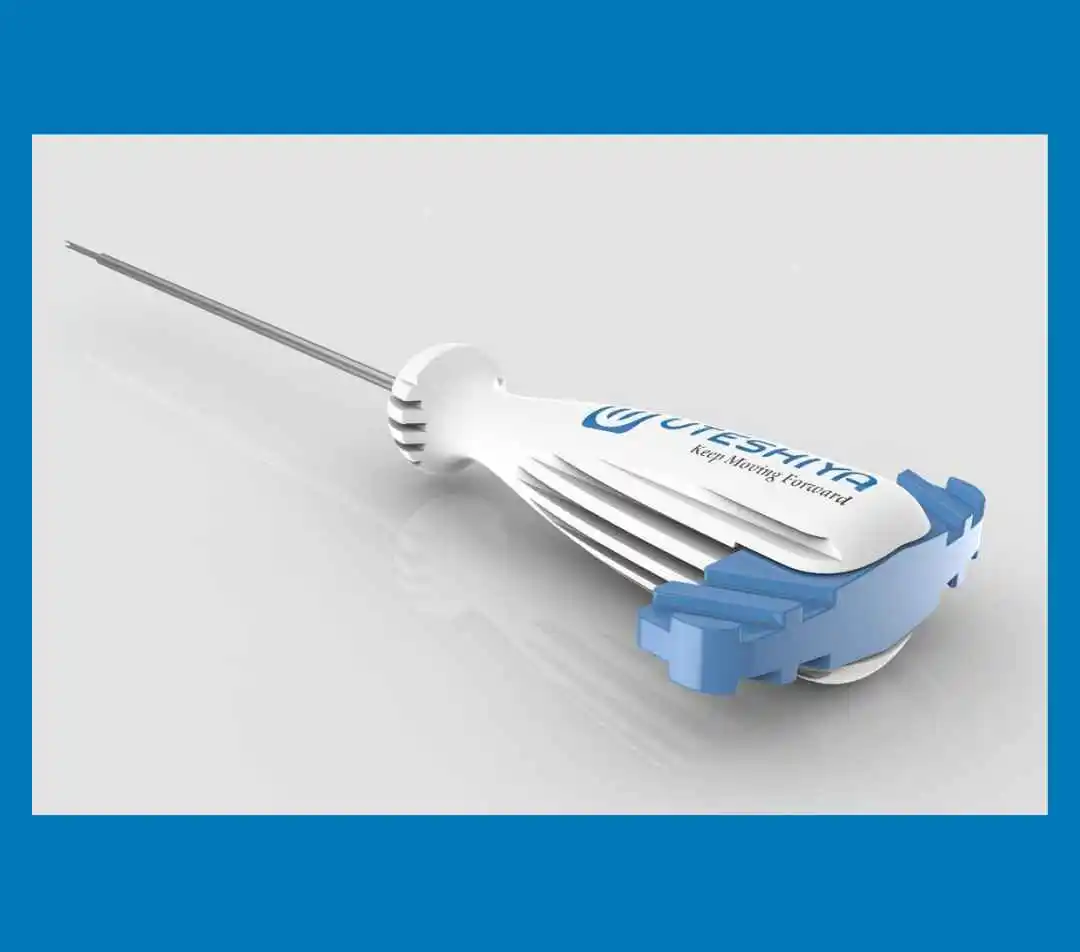
Dedicated Patient-Specific & Custom Implant Solutions
Alongside standardized cannulated compression screw systems and mini micro fragment plates, Uteshiya Medicare offers patient-specific custom implant manufacturing. By importing patient CT scan data into advanced 3D modeling software, our biomedical engineers manufacture custom trauma hardware tailored to non-standard skeletal anatomies.
- Custom head and thread profile geometry modifications
- Specialized instrument kits, reamers, and drill guides
- Laser marking of part numbers, lot codes, and custom brand logos
- Sterile & non-sterile contract packaging options