Featured OEM Kirschner Wires & Micro-Fragment Systems
Explore our certified orthopedic implants and precision instruments manufactured under ultra-strict ISO cleanroom conditions.
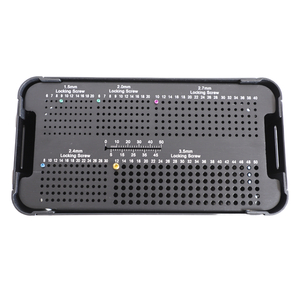
Precision stainless steel trauma plates, locking screws, and integrated K-wire fixators for small animal orthopedics.
Get a Quote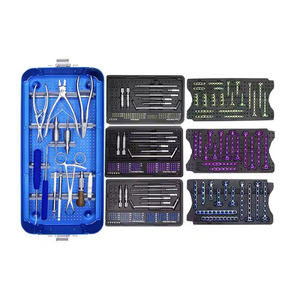
Manual locking plate system engineered for phalangeal, metacarpal, and maxillofacial osteosynthesis.
Get a Quote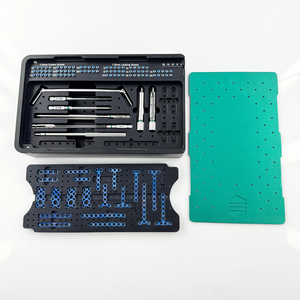
High-tensile Grade 5 Titanium mini plates with matching Kirschner guide wires for biological fracture repair.
Get a Quote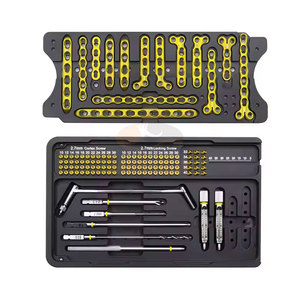
Class II ISO 13485 certified manual locking system for precise upper extremity reconstructive surgeries.
Get a Quote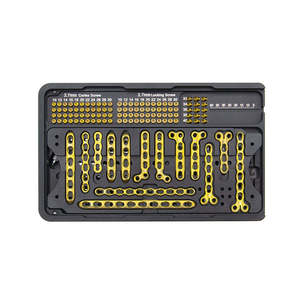
Comprehensive orthopedic instrument tray featuring diamond-tip K-wires and bone reduction forceps.
Get a Quote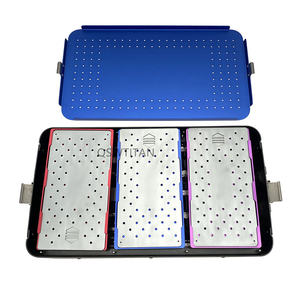
Specialized micro-implant system designed for delicate hand, wrist, and podiatric bone alignment.
Get a Quote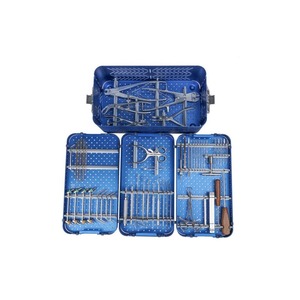
Multi-functional surgical kit combining micro locking plates, emergency drill bits, and trocar K-wires.
Get a Quote
Heavy-duty veterinary osteosynthesis set with custom length Kirschner wires and anatomically contoured plates.
Get a QuoteTechnical Whitepaper: Engineering Precision in Custom OEM Surgical Kirschner Wires
In modern orthopedic trauma surgery, pediatric reconstruction, craniomaxillofacial alignment, and veterinary osteosynthesis, Kirschner Wires (K-Wires) serve as fundamental skeletal fixation instruments. Originally invented in 1909 by Martin Kirschner, these sharp, smooth, or threaded stainless steel and titanium pins have evolved into highly specialized micro-engineering devices. As a premier global OEM/ODM manufacturer, our facility integrates advanced CNC Swiss lathe machining, centerless grinding, and automated electrochemical surface passivation to fabricate medical-grade K-Wires that meet rigorous international surgical standards.
1. Metallurgical Composition & Material Science
The biomechanical behavior of Kirschner wires depends heavily on raw material purity, crystalline grain refinement, and mechanical tensile strength. Our OEM production lines utilize exclusively implant-grade materials verified by third-party spectroscopic analysis:
- AISI 316L Stainless Steel (ASTM F138 / ISO 5832-1): Renowned for exceptional bending stiffness, high yield strength, and superior resistance to pitting corrosion. Cold-worked 316L SS is the standard choice for temporary skeletal traction, pin fixation, and micro-fragment surgical alignment.
- Titanium Alloy Ti-6Al-4V ELI (ASTM F136 / ISO 5832-3): Extra Low Interstitial (ELI) Grade 5 titanium offers supreme biocompatibility, non-magnetic MRI compatibility, and a lower modulus of elasticity closer to cortical bone, significantly reducing stress shielding during long-term implantation.
- Nitinol (ASTM F2063): Shape-memory nickel-titanium alloys engineered for specialized superelastic orthopedic applications requiring controlled force delivery.
2. Tip Geometries & Mechanical Insertion Dynamics
K-wire tip geometry dictates axial thrust force, torque requirements, and heat generation during high-speed cortical bone penetration. Minimizing bone temperature during pin insertion is critical; temperatures exceeding 47°C (116.6°F) for longer than one minute induce irreversible bone cell apoptosis (thermal necrosis).
| Tip Configuration | Cutting Angle Range | Axial Force Required | Thermal Risk | Primary Clinical Indication |
|---|---|---|---|---|
| Trocar Tip (Three-Facet) | 15° - 22° per facet | Low | Minimal | Dense cortical bone insertion, percutaneous pinning, pediatric fracture reduction. |
| Diamond Tip (Two-Facet) | 25° - 35° chisel edge | Moderate | Low-Moderate | Cancellous bone placement, hand and wrist joint fixation, soft tissue displacement. |
| Threaded Shaft / Tip | Continuous pitch (0.5-0.8mm) | Variable (Rotational) | Low | Prevents pin migration, ideal for long-term tension band wiring & external fixation. |
| Bayonet / Flat Point | Blunt bevel edge | High (Guide Wire Use) | N/A (Pre-drilled) | Cannulated screw guide wire application, intra-medullary alignment. |
End-to-End Contract Manufacturing Excellence
From custom prototype engineering to sterile, shelf-ready white-label packaging, our industrial capability ensures total supply chain consistency.
Swiss Precision Machining
Utilizing multi-axis CNC Swiss-type automatic lathes and ultra-precision centerless grinders, we achieve dimensional tolerances as fine as ±0.005 mm for wire diameters ranging from 0.6 mm to 3.5 mm.
Surface Passivation & Anodizing
Chemical passivation per ASTM A967 removes free iron contamination, preventing corrosion. Titanium wires undergo Type II color anodizing for rapid color-coded intraoperative diameter identification.
Laser Marking & Calibration
In-line depth scale laser marking provides millimeter-accurate graduation marks along the wire shaft, facilitating depth measurement without requiring separate surgical depth gauges.
Why Leading Global Healthcare Brands Partner With Our OEM Factory
Building upon the manufacturing heritage of Uteshiya Medicare (Kaisen Medical Care), our infrastructure represents state-of-the-art medical device processing in India with global regulatory compliance. We empower medical brand owners, distributors, and hospital procurement networks across 30+ countries by providing reliable, high-volume production capabilities.
Regulatory Mastery
Holding full CDSCO approvals for over 1,000 orthopedic implants, alongside ISO 13485:2016 certification and US-FDA registration. Standardized Technical Files (STED) are available for effortless international distribution registration.
In-House ISO Class 7 Cleanrooms
State-of-the-art terminal Ethylene Oxide (EO) sterilization validation and double-blister medical sterile packaging guarantee shelf-life integrity for up to 5 years.
100% Quality Traceability
Every batch of Kirschner Wires comes accompanied by official Material Test Reports (MTR), heat treatment certification, cytotoxicity test reports, and non-destructive optical dimensional verification.
Future Global Sourcing & Manufacturing Trends (2025–2035)
As orthopedic healthcare models shift toward minimally invasive surgery (MIS), ambulatory surgical centers (ASCs), and value-based care, the demand dynamics for Kirschner wires and micro-fragment fixation hardware are undergoing rapid industrial evolution. Purchasing managers and hospital procurement boards must adjust their OEM supply chain strategies to leverage these four transformative market trends:
1. Antimicrobial Surface Coatings & Silver Nanoparticle Passivation
Pin-tract infection remains one of the most frequent complications associated with percutaneous K-wire fixation, occurring in 7% to 28% of orthopedic cases. Future procurement contracts increasingly mandate active surface modifications, such as silver ion (Ag+) sputtering, zinc-doped oxide coatings, and chlorhexidine release matrices that inhibit biofilm formation without triggering localized cytotoxicity.
2. Transition to Bio-Absorbable Composite Pins
To eliminate secondary hardware removal surgeries—especially in pediatric trauma cases—OEM factories are co-developing bio-absorbable K-wires composed of poly-L-lactic acid (PLLA), poly(glycolic acid) (PGA), and magnesium alloys. These implants provide structural rigidity during initial bone healing (weeks 1–6) and gradually metabolize into carbon dioxide and water, reducing overall patient treatment costs.
3. Customized Modular Procedure Kits & Single-Use Sterile Kits
Hospitals are moving away from traditional bulk sterilizing trays toward pre-packaged, single-use procedure kits. Modern OEM contracts call for pre-sterilized, color-coded packs containing customized combinations: two trocar K-wires, a dedicated drill bit, a depth gauge, and matching micro-locking plates. This reduces hospital operating theater setup times by up to 35% and eliminates re-sterilization costs.
4. Reshoring and Dual-Sourcing Supply Chain Strategies
Geopolitical shifts and regulatory tightenings under EU-MDR have pushed global orthopedic brands to diversify manufacturing outside traditional single-region supply chains. India has emerged as a premier global hub for precision medical machining, combining cost competitiveness with international ISO/FDA quality compliance.
B2B Procurement & Technical FAQ
Critical engineering and supply chain answers for medical device brand managers, OEM buyers, and hospital purchasing agencies.
Ready to Scale Your OEM Kirschner Wire Production?
Partner with an established CDSCO & ISO 13485 certified manufacturer. Request engineering drawings, biological safety documentation, and factory direct pricing today.