Featured Mini Fragment Locking Systems & Fixation Kits
Explore our CDSCO & ISO 13485 approved orthopedic implants and modular trauma surgical trays designed for hand, foot, wrist, CMF, and veterinary applications.
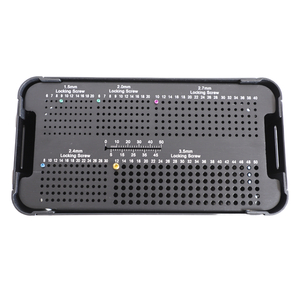
Veterinary Mini Micro Fragment System Stainless Steel Trauma Plates Locking Screws
Inquire Now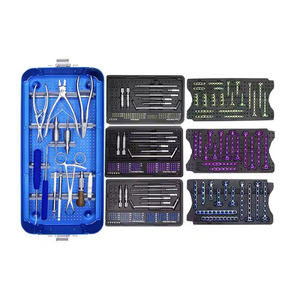
Stainless Steel Manual Mini Micro Fragment Locking Plate System Modular Fixation Set
Inquire Now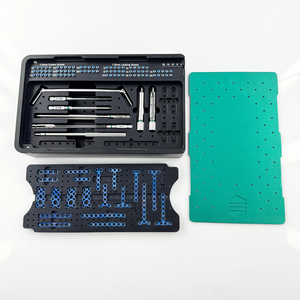
Veterinary 1.5mm Mini Micro Fragment Locking Kit with Titanium Plates & Screws
Inquire Now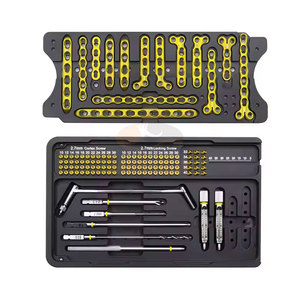
Premium Orthopedic Mini Fragments 2.7mm Stainless Steel Manual Locking Plate Set
Inquire Now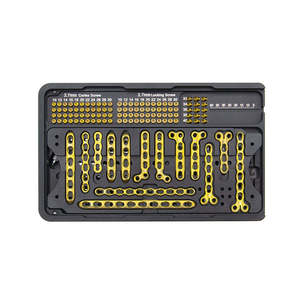
Orthopedic Manual Mini Fragments 2.7mm Steel Locking Plate Instrument Set
Inquire Now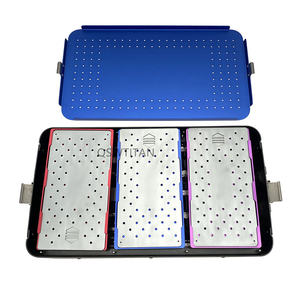
Orthopedic Mini Fragment Instrument Set Plate Screw System for Finger & Palm Bones
Inquire Now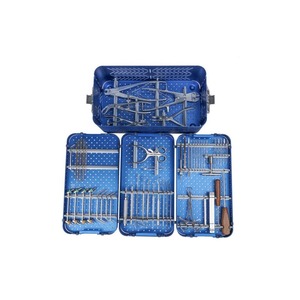
Premium Mini Micro Fragment System Locking Plate & Screw Kit for Hand, Foot & Wrist
Inquire Now
Eaven Mini Micro Fragment System Trauma Plate Veterinary Orthopedic Implants
Inquire NowBiomechanical Principles of Mini Fragment Locking Systems
An authoritative technical whitepaper on anatomical plating, fixed-angle stability, screw-plate interface dynamics, and material science in small bone trauma surgery.
1. Introduction to Small Bone Internal Fixation
The anatomical reconstruction of small bones—specifically within the craniomaxillofacial (CMF), hand, phalangeal, metacarpal, foot, ankle, and veterinary surgical sectors—presents unique biomechanical challenges. Small bone fractures require mechanical stabilization that withstands complex multi-directional torsional, shear, and compressive forces while maintaining an ultra-low profile to minimize tendon irritation and soft tissue disruption.
As leading OEM/ODM Mini Fragment Locking System Manufacturers & Exporters, Uteshiya Medicare engineers surgical hardware optimized for rigid internal fixation. The transition from conventional non-locking cortical dynamic compression plates (DCP) to fixed-angle Mini Fragment Locking Compression Plates (LCP) has fundamentally revolutionized patient recovery trajectories by combining dynamic compression capabilities with threaded locking constructs.
2. Fixed-Angle Stability vs. Friction-Lock Mechanics
Traditional non-locking mini fragment systems rely strictly on friction generated between the underside of the plate and the periosteum. This dynamic requires substantial screw tightening torque to compress the plate against cortical bone, frequently compromising localized periosteal blood supply and predisposing small osteoporotic fragments to micro-motion, screw loosening, and secondary reduction loss.
In contrast, our engineered mini fragment locking systems function as an internal extramedullary bridge construct. Threaded screw heads lock directly into the tapered, internally threaded plate holes (Combi-holes), transferring mechanical loads through the implant structure rather than relying on periosteal compression. Key mechanical benefits include:
- Preservation of Periosteal Vascularization: Eliminates high-pressure plate-to-bone contact, safeguarding the biological blood supply necessary for primary bone healing.
- Preventing Secondary Loss of Reduction: Screws cannot toggle or back out independently under physiological loads, ensuring fixed-angle rigidity even in periarticular or osteopenic bone.
- Combi-Hole Flexibility: Dual-geometry holes accommodate standard non-locking cortical screws for axial dynamic compression, or locking screws for rigid angular stability within the same construct.
3. Dimensional Engineering & Sizing Standardizations (1.5mm to 2.7mm)
Selecting the appropriate mini fragment configuration requires precise alignment between bone anatomy, mechanical load requirements, and soft tissue coverage. Our OEM manufacturing facility produces four standardized modular mini fragment platforms:
1.5mm Micro System
Designed for delicate phalangeal fractures, pediatric hand trauma, and CMF reconstructive procedures. Ultra-low profile (0.8mm - 1.0mm thickness) minimizes extensor tendon friction.
2.0mm Mini System
Optimal for metacarpal and midfoot tarsal/metatarsal osteotomies. Offers heightened torsional rigidity with core screw thread pitch engineered for dense cortical bone engagement.
2.4mm / 2.7mm System
High-strength constructs engineered for distal radius, distal fibula, calcaneus, clavicle, and complex small-animal orthopedic surgeries (TPLO and trauma reconstruction).
Material Science & Biomechanical Specifications
Technical baseline comparison across medical-grade raw materials utilized in Uteshiya Medicare Mini Fragment Locking Plate Manufacturing.
| Specification Parameter | Titanium Alloy (Ti-6Al-4V ELI / ASTM F136) | 316L Stainless Steel (ASTM F138) | Carbon-PEEK Composite (Custom ODM) |
|---|---|---|---|
| Modulus of Elasticity (GPa) | 110 GPa (Closer to cortical bone ~18 GPa) | 200 GPa (Higher stiffness) | 18 - 22 GPa (Iso-elastic match) |
| Tensile Ultimate Strength (MPa) | ≥ 860 MPa | ≥ 690 MPa | ≥ 450 MPa |
| Biocompatibility Profile | Superior (Osseointegrative anodized layer) | Excellent (Passivated surface layer) | Radiolucent / Non-magnetic |
| MRI Compatibility | Minimal image artifacting | Moderate imaging shadow artifacting | Zero imaging artifacts |
| Plate Profile Thickness Range | 0.8mm - 2.0mm ultra-contourable | 1.0mm - 2.4mm high ductility | 1.5mm - 2.5mm continuous carbon |
| Clinical Target Applications | CMF, Hand, Foot, Wrist, Maxillofacial | Trauma, Veterinary, High-Load Metacarpals | Oncology, Specialized Radiolucent Trays |
OEM/ODM Contract Manufacturing & Global Private Labeling
As an established global supplier, Uteshiya Medicare offers turnkey contract manufacturing services for international medical device brands, hospital purchasing networks, and regional orthopedic distributors. From initial CAD 3D modeling and FEA stress analysis to 5-axis Swiss CNC machining, electrochemical anodization, cleanroom packaging, and regulatory documentation—we deliver uncompromised quality control.
Future Procurement & Technological Trends (2025–2030)
Market intelligence analysis for hospital purchasing managers, orthopedic import agents, and supply chain executives.
1. Shift Toward Modular Multi-System Trays
Procurement departments are phasing out single-size instrument sets in favor of universal 1.5mm/2.0mm/2.4mm modular trays. These integrated kits reduce autoclave cycles, optimize sterilization storage, and provide operating rooms with comprehensive implant availability in a single compact case.
2. Polyaxial Locking Mechanism Adoption
Next-generation mini fragment systems are shifting from monoaxial locked holes to variable-angle polyaxial locking technology. Surgeons can now trajectory-steer locking screws up to 15 degrees off-axis, targeting specific cortical fracture fragments without sacrificing fixed-angle lock integrity.
3. Expansion in Veterinary Orthopedic Demand
The global veterinary trauma market is experiencing double-digit annual growth. Specialized veterinary mini fragment locking plates (specifically 1.5mm, 2.0mm, and 2.7mm sizes tailored for canine TPLO and feline bone reconstruction) represent one of the fastest-growing export segments worldwide.
4. Bio-Resorbable & Antibacterial Surface Coatings
Research into antibacterial anodization and magnesium-zinc hybrid surface coatings is accelerating. Future OEM developments aim to reduce post-operative infection risks and eliminate the necessity for secondary hardware removal procedures in small bone reconstruction.
5. Supply Chain Diversification & Direct-Factory Procurement
Global healthcare networks are mitigating geopolitical supply shocks by establishing direct partnerships with certified Indian medical device manufacturers like Uteshiya Medicare, benefiting from high cost-efficiency, strict ISO standards, and rapid contract delivery timelines.
6. Ambulatory Surgery Center (ASC) Integration
Outpatient surgery centers require sterile pre-packaged, single-use implant kits. OEM custom sterile packaging services enable hospital groups to streamline inventory, guarantee immediate sterility, and eliminate in-house re-sterilization overhead.
Frequently Asked Questions (Procurement & Technical FAQ)
Essential guidance for orthopedic distributors, hospital purchasing committees, and medical device procurement teams.
Q1: What metal alloys are used in your Mini Fragment Locking Systems?
Our implants are manufactured in biocompatible 316L Stainless Steel (ASTM F138) and Titanium Alloy (Ti-6Al-4V ELI / ASTM F136). Stainless steel offers high stiffness and economical value, whereas titanium provides lower elasticity modulus, lighter weight, and superior MRI compatibility.
Q2: Are Uteshiya Medicare Mini Fragment Locking Plates CE & ISO certified?
Yes. Uteshiya Medicare maintains CDSCO approval and operates under strict ISO 13485 quality management system guidelines. Complete regulatory dossiers, certificates of analysis (CoA), and bio-compatibility test reports (ISO 10993) are available for international registration.
Q3: Can you manufacture custom private-label mini fragment trays for our brand?
Absolutely. Our OEM/ODM capabilities encompass custom plate geometry designs, customized anodization color-coding, laser etching of brand logos and part numbers, custom surgical instrument trays, and sterile private-label blister packaging.
Q4: What screw size diameters are included in a standard Mini Fragment Set?
A standard comprehensive set typically features 1.5mm, 2.0mm, 2.4mm, and 2.7mm locking and non-locking cortical screws. Thread pitch and core diameters are optimized for specific anatomical locations ranging from phalanges to distal radius fractures.
Q5: How do Combi-holes function in Mini Fragment Locking Plates?
Combi-holes combine a dynamic compression unit (DCU) ramp with threaded locking geometry. Surgeons can insert standard cortical screws into the dynamic side to achieve axial fracture compression, or insert locking screws into the threaded side for fixed-angle angular stability.
Q6: What is the Minimum Order Quantity (MOQ) for international OEM orders?
MOQs depend on whether products are ordered from our standard catalog or produced via custom ODM design. Catalog products feature flexible low MOQs, while custom OEM manufacturing runs are structured to offer optimized volume pricing.
Q7: Are your surgical instrument sets compatible with existing AO-type instrumentation?
Yes, all Uteshiya Medicare mini fragment screwdrivers, drill bits, depth gauges, and benders are precision-engineered according to standard AO coupling specifications, ensuring seamless interchangeability in standard operating room setups.
Q8: What is the lead time for global container or bulk air-freight exports?
Standard catalog orders ship within 2 to 3 weeks upon purchase order confirmation. Custom OEM/ODM production cycles typically range from 4 to 6 weeks, inclusive of full dimensional inspection and raw material mill certificate validation.
Partner with a Trusted Global Orthopedic Manufacturer
Elevate your product portfolio with precision-engineered 1.5mm / 2.0mm / 2.4mm / 2.7mm Mini Fragment Locking Systems. Contact our international business division for direct-factory pricing, product catalogues, and OEM consultation.