Featured Mini/Micro Fragment & Trauma Instrumentation Systems
Precision-engineered stainless steel and titanium implants and instrument sets designed for craniomaxillofacial, veterinary, small fragment, and hand/foot surgical procedures.
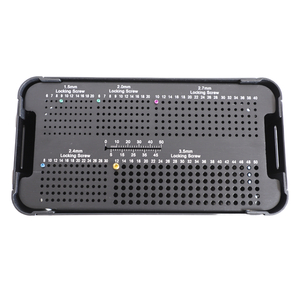
Veterinary Mini Micro Fragment System
- Biocompatible 316L Stainless Steel
- Plates & Self-Tapping Locking Screws
- High-durability sterilization tray
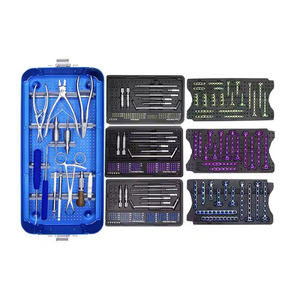
Manual Mini Micro Modular Fixation Set
- CE & ISO 13485 Certified Standard
- Anatomical profile pre-bent plates
- Precision manual instrumentation
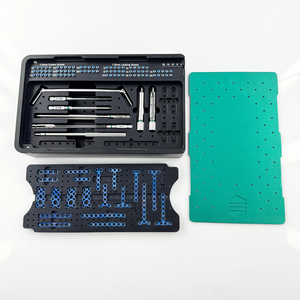
Veterinary 1.5mm Titanium Locking Kit
- Grade 5 Titanium (Ti-6Al-4V ELI)
- Ultra-low profile design
- Includes benders & depth gauges
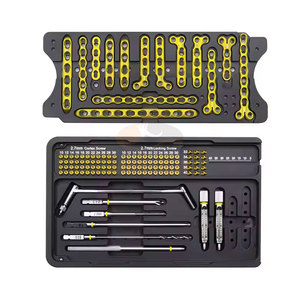
2.7mm Stainless Steel Locking Set
- Class II Medical Device ISO 13485
- High torsional stability design
- Full set of drill guides & taps
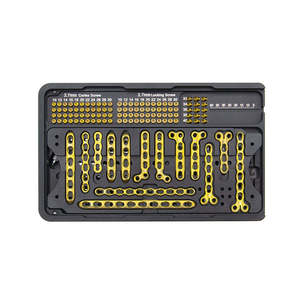
Manual 2.7mm Steel Locking Set
- High-durability stainless construction
- Passivated for corrosion resistance
- OEM private label packaging available
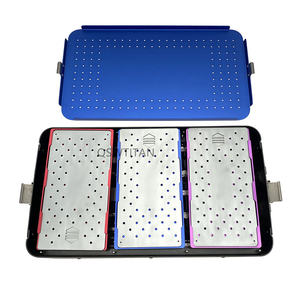
Hand & Palm Bone Implant Kit
- Ergonomic hand-held instruments
- Micro osteotome compatibility
- Precision thread-locking screws
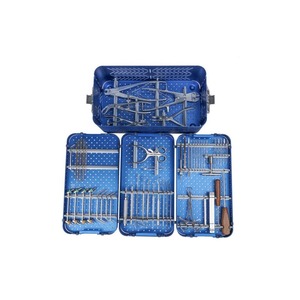
Hand, Foot & Wrist Surgical Kit
- Multi-functional container tray
- Micro bone chisel & osteotome slots
- Strict dimensional tolerances
Canine Trauma Fixation System
- Heavy-duty 316L Stainless Steel
- Autoclave resistant up to 134°C
- Customized ODM branding options
Engineering Next-Generation Surgical Osteotomes: Metallurgy, Edge Retention & Biomechanical Performance
An authoritative evaluation of raw material selection, heat treatment protocols, laser-assisted micro-machining, and ergonomic blade dynamics for global medical device procurement officers.
Martensitic Stainless Steel vs. Titanium Alloy
Modern osteotomy demands surgical cut precision without micro-fracturing adjacent bone structures. High-grade AISI 420 martensitic stainless steel provides an optimal hardness range (52–56 HRC) following vacuum quenching, guaranteeing razor-sharp bevel retention. For non-magnetic or specialized CMF applications, Ti-6Al-4V titanium alloys offer superior strength-to-weight ratios and zero artifact interference during intraoperative imaging.
Sub-Micron Bevel Calibration
Through automated 5-axis CNC grinding and electrochemical polishing, blade edges achieve a mirror surface finish with surface roughness Ra < 0.1 µm. Double-bevel (Lambotte type) and straight single-bevel geometries are calibrated to minimize tissue drag, reduce axial mallet force requirement, and eliminate heat generation during high-frequency bone resections.
Passivation & Corrosion Resistance
All OEM surgical osteotomes undergo rigorous chemical passivation in compliance with ASTM F86 standards. Nitric acid or citric acid immersion builds a uniform chromium oxide surface film, protecting instruments against pitting, crevice corrosion, and degradation during repeated autoclave sterilizations at 134°C (273°F).
Comparative Metallurgical Specifications for Surgical Osteotomes
| Material Grade | Hardness (HRC) | Tensile Strength (MPa) | Primary Clinical Application | Corrosion Resistance |
|---|---|---|---|---|
| AISI 420 Stainless Steel | 52 – 56 HRC | 1600 – 1900 | Standard Trauma, Joint Reconstruction, Lambotte Osteotomes | High (Passivated ASTM F86) |
| AISI 630 (17-4 PH) SS | 40 – 48 HRC | 1100 – 1300 | Heavy-Duty Bone Chisels, High-Impact Striking Handles | Exceptional |
| Ti-6Al-4V ELI (Grade 5) | 36 – 40 HRC | 900 – 1050 | CMF Surgery, Pediatric Osteotomy, MRI-Compatible Tools | Maximum / Immune to Saline |
| AISI 316L Stainless Steel | 25 – 30 HRC | 600 – 800 | Implant Plates, Fixation Screws, Non-Cutting Tool Shafts | Outstanding Biocompatibility |
Future B2B Procurement Trends in Orthopedic Surgical Instruments
Understanding shift factors in global medical device supply chains: custom OEM manufacturing, regulatory harmonize, and ergonomic tool integration.
1. Shift Toward Modular & Patient-Specific Tool Sets
Global healthcare buyers, hospital networks, and orthopedic distributors are increasingly moving away from bulk generic inventory toward targeted modular instrumentation sets. Procurement trends show a 40% growth in demand for pre-configured trays that pair specialized mini osteotomes with matching anatomical locking plates (such as 1.5mm/2.0mm/2.7mm systems). OEM contract manufacturers capable of delivering custom laser-engraved sizing markers and tailored sterilization caddies are seizing market share.
Additionally, 3D printing and CT-to-CAD modeling are driving patient-specific osteotomy guides that require custom-curved osteotomes tailored to exact patient anatomy in complex joint reconstruction.
2. Stringent Regulatory & Traceability Mandates (EU MDR & FDA UDI)
Regulatory barriers are tightening globally. The transition from MDD to EU MDR (2017/745) alongside FDA Unique Device Identification (UDI) mandates requires every surgical tool—including reusable bone chisels and osteotomes—to feature ultra-durable micro laser-etched matrix codes.
Leading hospital procurement teams now mandate comprehensive technical documentation: batch-level raw material mill certificates, ISO 13485 quality management compliance, CDSCO licensing, and full sterilization validation protocols (ISO 11137 for gamma irradiation or ISO 17665 for steam autoclaving).
3. Enhanced Ergonomics & Vibration-Damping Handles
Surgeon fatigue and repetitive stress injury (RSI) during prolonged orthognathic, spinal, or pelvic osteotomies have elevated handle ergonomics to a primary procurement decision parameter. Modern osteotome designs feature silicone-molded, textured ergonomic handles or hollow, anti-reflective matte-finished shafts.
Integrated shock-absorbing striking caps dampen tactile recoil from mallet blows, preserving tactile sensitivity while protecting hand joints during delicate bone reshaping.
4. Supply Chain De-Risking via Experienced Indian Exporters
In response to global geopolitical shifts and tariff volatility, medical device brand owners are actively diversifying their contract manufacturing footprint. India has emerged as a premier global hub for precision orthopedic forging, CNC milling, and high-volume export.
By leveraging state-of-the-art multi-axis machining facilities, ISO Class 7 cleanroom packaging, and cost-effective skilled engineering labor, Indian OEM suppliers deliver medical-grade products meeting Western quality benchmarks at a 30% to 50% cost advantage.
Why Partner With Us for OEM/ODM Contract Manufacturing?
From raw material ingot testing to final sterile barrier packaging, our vertically integrated manufacturing facility guarantees flawless quality control and regulatory compliance.
CDSCO & ISO 13485 Certified
Our state-of-the-art plant is fully CDSCO-approved and ISO 13485:2016 certified. We maintain over 1,000 active medical device approvals across trauma plates, interbody spine cages, CMF systems, and surgical tools, offering turnkey market access for international buyers.
In-House CNC & Cleanroom
Equipped with 5-axis DMG MORI CNC milling machines, Swiss sliding-head lathes, automated wire-EDM cutting, and an ISO Class 7 cleanroom packaging line, we ensure dimensional tolerances up to ±0.005 mm for intricate cutting tools.
Custom OEM/ODM Private Labeling
We provide full-spectrum contract manufacturing services: rapid 3D prototyping, customized blade curvatures, fiber-laser logo etching, custom color anodization for titanium instruments, and branded blister or pouch packaging ready for hospital shelf delivery.
Frequently Asked Questions (FAQ) for OEM/ODM Procurement
Clear, direct answers regarding metallurgical standards, customized production, minimum order quantities (MOQs), and global shipping compliance.
Partner with a World-Class OEM/ODM Orthopedic Tool Manufacturer
Elevate your medical product catalog with precision-crafted osteotomes, bone chisels, and mini-fragment locking systems. Download our comprehensive product catalog or request a customized OEM quotation today.
Get Catalog