Featured Orthopedic & Rib Fixation Systems
Custom OEM/ODM Solutions Certified Under ISO 13485 & International Quality Standards
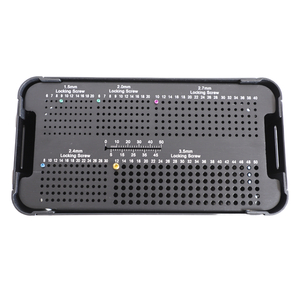
System: 1.5mm / 2.0mm Locking Screws
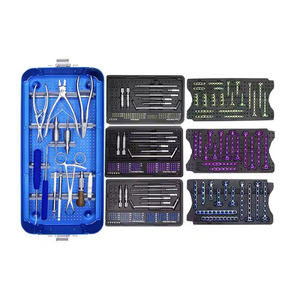
Profiles: 1.5mm / 2.0mm / 2.4mm Modular
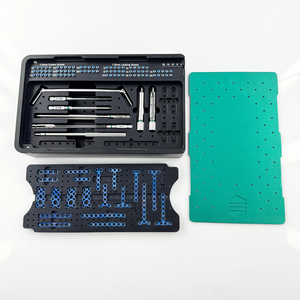
Application: Small Fragment & Thoracic
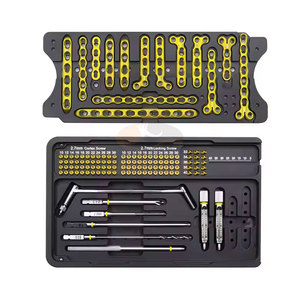
Usage: Rib & Small Bone Osteosynthesis
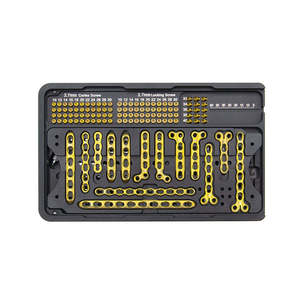
Sterilization: Autoclavable Trays
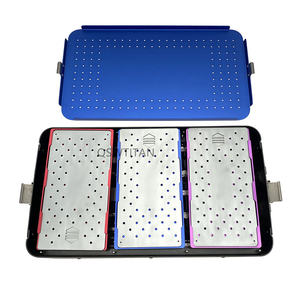
Screw Diameter: 1.5mm - 2.7mm
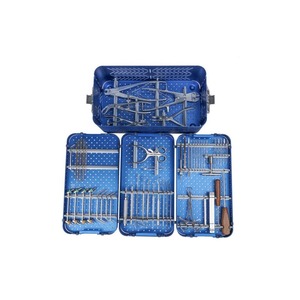
Substrate: Pure Titanium Grade 4/5
Biocompatibility: ISO 10993 Tested
Executive Industry Report: Surgical Stabilization of Rib Fractures (SSRF)
Rib fractures represent one of the most prevalent trauma manifestations in blunt chest injuries, accounting for up to 10% to 15% of all polytrauma surgical admissions worldwide. Historically managed through non-operative mechanical ventilation and analgesia, modern thoracic surgery has evolved toward active surgical stabilization of rib fractures (SSRF). Clinical evidence demonstrates that internal fixation of severe chest wall deformities—specifically flail chest and displaced multi-rib fractures—dramatically reduces ventilator duration, length of Intensive Care Unit (ICU) stay, incidence of acute respiratory distress syndrome (ARDS), and chronic post-traumatic pain.
As a leading OEM/ODM Rib Fracture Fixation System Manufacturer and Factory, our facility bridges high-precision biomechanical engineering with clinical requirements. Designing rib trauma plates presents a unique physiological challenge: unlike non-weight-bearing static bones, human ribs undergo continuous cyclic flexing (over 20,000 respiratory cycles daily). Therefore, internal fixation systems must provide robust primary mechanical stability while matching the physiological elastic modulus of cortical bone to prevent stress shielding, screw pull-out, or construct fatigue failure.
Information Gain Insight: Modern OEM rib fixation engineering has transitioned from rigid fracture splinting to dynamic anatomical osteosynthesis. Micro-locking plate systems engineered from Titanium Grade 5 (Ti-6Al-4V ELI) allow controlled micro-motion that stimulates periosteal callus formation while preserving intercostal neurovascular structures.
Biomechanical & Material Engineering Innovations
Choosing the correct raw materials and geometric cross-sections is critical when manufacturing thoracic surgical implants. Ribs possess a thin cortical shell surrounding soft cancellous bone, with the neurovascular bundle running along the inferior costal groove. OEM manufacturing must prioritize low-profile designs with rounded construct edges to eliminate soft-tissue irritation and intercostal nerve impingement.
| Engineering Parameter | Titanium Alloy (Ti-6Al-4V ELI) | Stainless Steel (316L Medical Grade) | Clinical & Procurement Benefit |
|---|---|---|---|
| Tensile Strength (MPa) | 860 - 960 MPa | 620 - 750 MPa | Higher yield strength prevents permanent deformation under chest impact. |
| Elastic Modulus (GPa) | 110 GPa (Closer to cortical bone ~18 GPa) | 200 GPa | Titanium reduces stress shielding; supports natural chest expansion. |
| Fatigue Resistance | High cyclic flex endurance (> 5 million cycles) | Moderate cyclic flex endurance | Prevents implant breakage during continuous breathing dynamics. |
| Imaging Compatibility | Minimal MRI / CT Artifacts | Significant Artifact Shadowing | Titanium enables superior post-operative radiographic evaluation. |
| Biocompatibility | Superior passivated oxide layer (TiO2) | High resistance to physiological corrosion | Eliminates risk of nickel-allergy reactions in sensitive patients. |
Core Technological Features of Our OEM Rib Systems
Anatomically Pre-Contoured Profile
Plates feature 3D anatomical curves mimicking the natural curvature of ribs 3 through 10, drastically minimizing intraoperative bending time and residual internal stresses.
Monocortical Locking Mechanism
Threaded locking screw-to-plate interface prevents screw back-out while allowing safe monocortical fixation, protecting underlying lung parenchyma from puncture.
Low-Profile Edge Chamfering
Plate profiles under 1.6mm thickness with fully deburred, smooth edges prevent soft tissue friction, intercostal neuralgia, and palpable post-op hardware awareness.
OEM/ODM Custom Manufacturing Process Blueprint
From custom prototype development to mass cleanroom production, our factory adheres to rigorous Quality Management Systems (QMS) compliant with FDA QSR 21 CFR Part 820 and ISO 13485:2016 standards. We support contract manufacturing for global medical device brands seeking private-label rib trauma systems.
DFM & CAD Modeling
Collaborative engineering review optimizing plate geometry, thread pitch, and bending zones using FEA (Finite Element Analysis).
5-Axis Swiss CNC Machining
Ultra-precision machining of titanium plates and locking screws with tolerances maintained within ±0.005mm.
Anodization & Surface Prep
Type II anodization and electropolishing to create a stable corrosion barrier and color-code implant sizes.
Cleanroom Packaging
Class 100,000 cleanroom cleaning, double-sterile pouch sealing, and full lot-number traceability setup.
Future Procurement Trends in Thoracic Fixation (2025–2030)
Procurement directors and hospital purchasing managers must anticipate key shifts in the thoracic trauma landscape over the coming decade. As surgical techniques evolve toward Minimally Invasive Rib Stabilization (MIRS), implant specifications are adapting accordingly:
Patient-Specific 3D Implants
Integration of CT-driven 3D titanium printing for complex sternocostal reconstructions and non-union revisions where standard pre-contoured plates fail to fit atypical rib morphologies.
Bioabsorbable Polymer Matrix
Development of magnesium alloy and PLA/PGA composite rib fixation plates that provide initial mechanical stability during bone healing and gradually resorb, eliminating permanent hardware.
Minimally Invasive Delivery Systems
Transition toward flexible, sub-muscular insertion tools and right-angle drill/driver systems designed for thoracoscopic-assisted fixation through small 3-4cm skin incisions.
Why Partner With Our OEM/ODM Manufacturing Facility
Navigating global regulatory landscapes and maintaining stringent medical device quality demands an experienced manufacturing partner. Our factory integrates complete vertically integrated production capacities—from raw bar stock inspection to finished sterile-packaged surgical kits.
CDSCO & ISO 13485
Full regulatory compliance with audited Quality Systems supporting rapid international registration and CE/FDA submission technical files.
1,000+ Approved Products
Extensive existing portfolio across trauma plates, cannulated screws, spine implants, and CMF systems, allowing turn-key sourcing bundling.
100% In-House Testing
Equipped with static bending, axial fatigue (ASTM F382 equivalent), and optical comparator measuring systems for zero-defect output.
Global Supply Network
Exporting to over 30 countries across Latin America, Southeast Asia, the Middle East, and Europe with flexible MOQ and private labeling.
Frequently Asked Sourcing & Technical Questions
Partner With a Trusted OEM/ODM Rib Fixation Factory
Request engineering consultations, factory audit schedules, or custom quotation packages for your brand's orthopedic portfolio today.