Precision Mandibular & Micro-Fragment Systems
Explore certified surgical locking plate assemblies, mini-micro fragment systems, and orthopedic trauma kits manufactured to ISO 13485 and CDSCO standards.
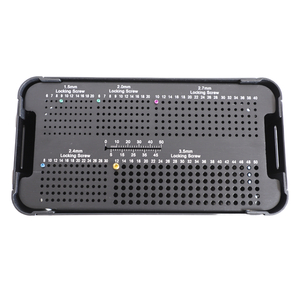
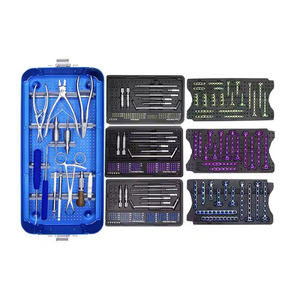
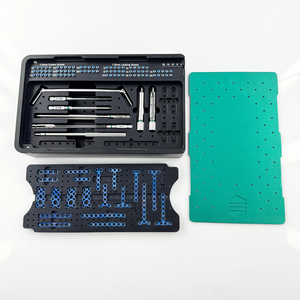
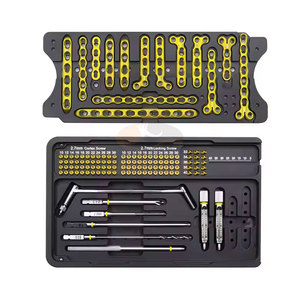
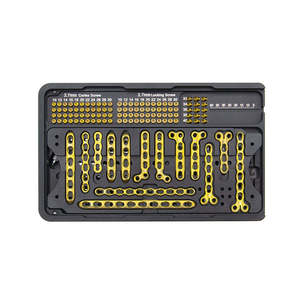
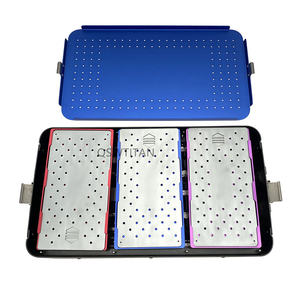
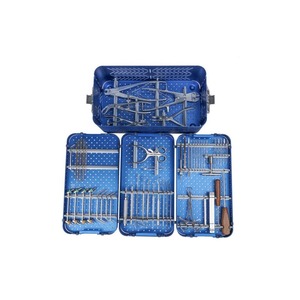
Biomechanics & Technical Specifications of Mandibular Reconstruction Locking Plates
Understanding load-bearing kinematics, angular stability, and material integrity in craniomaxillofacial (CMF) surgical intervention.
Mandibular reconstruction represents one of the most complex challenges within craniomaxillofacial (CMF) and head-and-neck reconstructive surgery. The human mandible is subject to multi-directional dynamic forces, including strong bite forces generated by the masseter, temporalis, and pterygoid muscles. When segmental defects occur as a result of oncological resection, high-energy ballistic trauma, or severe osteonecrosis, restoring both anatomical contour and masticatory function demands rigid internal fixation provided by high-performance mandibular reconstruction locking plate systems.
The transition from conventional non-locking plates to threaded locking plate-screw constructs has revolutionized modern reconstructive outcomes. In a locked system, the screw head features fine machine threads that engage directly with matching female threads inside the plate hole. This mechanical arrangement creates a rigid single-unit structural framework (a fixed-angle construct). Clinical evidence indicates that angle-stable locking mechanisms reduce the incidence of plate exposure, non-union, and infection, particularly in compromised vascular beds following adjuvant radiation therapy.
Biocompatible Metallurgy
Fabricated from Commercial Pure (CP) Titanium Grade 4 or Ti-6Al-4V ELI (Grade 23) alloy, offering superior strength-to-weight ratio, low magnetic susceptibility for artifact-free post-op MRI/CT, and exceptional osseointegration properties.
3D Anatomical Pre-Bending
Engineered with continuous structural bridges and contourable segment zones, allowing precision bending along multiple spatial planes (horizontal, vertical, and transverse) to mirror patient-specific mandibular curvature.
Dual-Lock Thread Technology
Incorporates dual-lead precision machining inside plate holes, preventing cross-threading while ensuring stable insertion torque and zero back-out under cyclic masticatory fatigue stress.
Technical Specification Matrix: Mandibular Reconstruction Systems
Comparative structural benchmark for surgical procurement officers and OEM evaluators.
| System Parameter | 2.4mm Reconstruction System | 2.7mm Heavy-Duty Reconstruction | Patient-Specific 3D Printed Plate |
|---|---|---|---|
| Primary Indication | Segmental defects, mandibular body fractures, trauma | Extended defects, fibula free-flap transfer, radiation necrosis | Complex oncological resection, revision CMF procedures |
| Material Grade | Titanium Grade 4 / Ti-6Al-4V ELI | Titanium Grade 4 / 316L VM Stainless Steel | Ti-6Al-4V ELI (Selective Laser Melting / EBM) |
| Plate Profile Thickness | 2.0mm – 2.8mm low-profile design | 2.8mm – 3.5mm reinforced load-bearing profile | 1.8mm – 2.5mm topology-optimized variable profile |
| Screw Diameters | 2.4mm / 2.7mm emergency screws | 2.7mm / 3.0mm locking & cortex screws | 2.0mm / 2.4mm locking screws |
| Fatigue Resistance (ASTM F382) | > 1,000,000 cyclic loads @ 350 N | > 1,000,000 cyclic loads @ 550 N | Engineered to patient-specific stress modeling (FEA) |
| Sterilization Standard | Gamma / Autoclave (134°C) ISO 11137 compliant | Gamma / Autoclave (134°C) ISO 11137 compliant | EO Sterilization / Gamma pre-packaged sterile |
Top 10 Global Mandibular Reconstruction Locking Plate Factories & Manufacturing Criteria
Evaluating OEM/ODM capability, cleanroom standards, 5-axis CNC machining, and quality assurance benchmarks.
When hospital procurement departments, medical device importers, and OEM contract distributors evaluate global mandibular reconstruction plate factories, adherence to international quality management systems is paramount. Mandibular implants fall under Class IIb (CE MDD/MDR) and Class II (US FDA) medical device classifications, necessitating rigorous manufacturing controls.
Essential Evaluation Criteria for Tier-1 CMF Implants Manufacturers:
1. Swiss-Type Multi-Axis CNC Precision Machining
Top factories utilize high-precision 5-axis and 9-axis Swiss sliding-headstock CNC turning machines (e.g., Citizen, Tornos) capable of achieving tolerances within ±0.005mm. This guarantees absolute thread pitch consistency for smooth intraoperative locking engagement.
2. Class 100,000 (ISO Class 8) Cleanroom Processing
Manufacturing operations, ultrasonic cleaning, and primary blister packaging must take place in validated cleanrooms compliant with ISO 14644-1. Bioburden levels, particulate counts, and endotoxin thresholds (LAL testing) must meet stringent global pharmacopeia standards.
3. Surface Anodization & Electrolytic Treatment
Advanced factories implement Type II color anodization (Type II hard anodizing per AMS 2488). This process increases fatigue strength, reduces friction coefficient during screw insertion, and allows color-coded identification for distinct screw diameters during surgery.
4. Finite Element Analysis (FEA) & Mechanical Testing
Leading manufacturers employ computational FEA modeling to optimize stress distribution along plate segments, eliminating sharp stress concentration nodes. Every batch undergoes four-point bending and fatigue testing per ASTM F382 standards.
Future Procurement Trends & Technological Advances in CMF Manufacturing
Strategic insights into additive manufacturing, patient-specific implants (PSI), and supply chain evolution (2025–2032).
The global market for craniomaxillofacial reconstruction plates is undergoing rapid technological advancement driven by digital surgical planning, artificial intelligence, and additive manufacturing. Procurement directors must align their sourcing strategies with several transformative industry trends:
Trend 1: Convergence of CT-guided Virtual Surgical Planning (VSP) & PSI
The industry is shifting from standard off-the-shelf contourable plates toward Patient-Specific Implants (PSI). Utilizing DICOM data from high-resolution multi-slice CT scans, 3D printing factories construct custom-milled or direct metal laser sintered (DMLS) titanium plates. This completely eliminates manual intraoperative bending, reduces operative room (OR) time by up to 40 minutes per procedure, and optimizes functional aesthetic reconstruction of the lower facial third.
Trend 2: Integrated Surgical Cutting Guides & Reconstruction Kits
Procurement is transitioning from purchasing standalone plates to bundled, patient-matched surgical kits. These kits integrate mandibular resection guides, vascularized free-flap (vascularized fibular graft) cutting jigs, and pre-contoured locking plates into a single sterile-packaged delivery system, enhancing surgical accuracy to within sub-millimeter tolerances.
Trend 3: Bioabsorbable & Bioactive Surface Innovations
Emerging R&D focuses on surface modifications featuring hydroxyapatite (HA) plasma-sprayed coatings and magnesium-based biodegradable alloys. These developments aim to stimulate bone healing at graft interfaces and reduce secondary surgery hardware removal rates in pediatric and young adult CMF cases.
Enterprise Strengths: Uteshiya Medicare / Kaisen Medical Care
Empowering global healthcare providers with CDSCO & ISO-certified orthopedic and CMF fixation systems.
Uteshiya Medicare is a recognized leader in orthopedic implant manufacturing, possessing an extensive regulatory compliance framework and a global footprint across more than 30 countries. With over 1,000 regulatory-approved products covering trauma, spine, CMF, joint reconstruction, and external fixation systems, Uteshiya Medicare provides reliable engineering for demanding clinical environments.
- CDSCO Approved & ISO 13485 Certified Manufacturing Facility
- In-House Cleanroom & ETO/Gamma Sterile Packaging Facilities
- Custom Patient-Specific Implant (PSI) CAD/CAM Workflow
- High-Grade Titanium (Ti-6Al-4V ELI) & 316L Stainless Steel



Mandibular Reconstruction Plate Sourcing FAQs
Critical answers for hospital purchasing committees, OEM brand managers, and medical distributors.
Ready to Source Premium Mandibular Reconstruction Systems?
Partner with an ISO 13485 & CDSCO certified manufacturer. Download complete product catalogs, request sample evaluation kits, or submit CT scan DICOM data for Patient-Specific Implant customization.
Get Catalog