Featured Posterior Lumbar Interbody Systems & Toolkits
Explore high-precision spinal fusion cages and specialized surgical instrumentation sets certified for global clinical deployment.
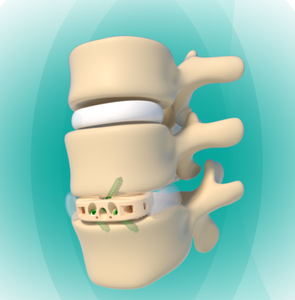
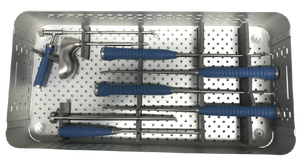
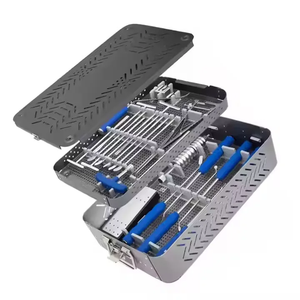
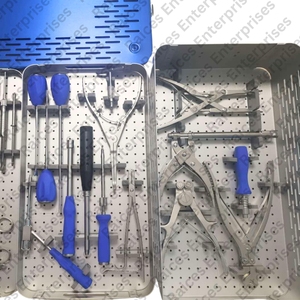
Industry Overview: Posterior Lumbar Interbody Fusion (PLIF) Landscape
The global market for spinal interbody fusion devices continues to expand rapidly, driven by the increasing prevalence of lumbar degenerative disc disease, spinal stenosis, and spondylolisthesis. Posterior Lumbar Interbody Fusion (PLIF) and Transforaminal Lumbar Interbody Fusion (TLIF) procedures represent the gold standard in restoring disc height, decompressing neural structures, and establishing sagittal alignment. As hospital procurement teams, medical device distributors, and surgical groups look to source PLIF/TLIF interbody cages, evaluating manufacturer competence, bio-material purity, engineering accuracy, and regulatory compliance is paramount.
Selecting a manufacturing partner involves evaluating advanced material processing—such as medical-grade Polyetheretherketone (PEEK-OPTIMA®) and additive-manufactured 3D porous titanium alloys (Ti-6Al-4V ELI)—alongside strict cleanroom packaging protocols and full technical dossier support (STED format) for seamless registration in global markets.
Procurement Information Gain: Key Assessment Parameters
When sourcing Posterior Lumbar Fusion Cages, hospital procurement departments and OEMs must prioritize suppliers capable of delivering: (1) Biomechanical load-sharing profile to eliminate stress shielding, (2) Radiopaque marker integration (Tantalum pins) for precise intraoperative imaging, (3) High-friction surface geometry to prevent cage migration, and (4) Comprehensive instrument kits matched perfectly to the cage insertion profile.
Top 10 Posterior Lumbar Fusion Cage Factories & Suppliers
An authoritative analysis of premier medical manufacturers specializing in spine implants, OEM custom fabrication, and complete surgical instrument sets.
1. Uteshiya Medicare (Kaisen Medical)
Core Strengths: CDSCO & ISO 13485 certified manufacturer holding over 1,000 product approvals. Operates state-of-the-art cleanroom production facilities specializing in PEEK and Titanium spinal implants, locking plates, and custom patient-matched devices.
Capabilities: Full OEM/ODM service, 5-axis Swiss CNC machining, in-house gamma/ETO sterilization validation, exporting to 30+ countries across Latin America, Asia, and Europe.
2. Fule Medical Technology
Core Strengths: Renowned for high-durability Class III PEEK ALIF/PLIF interbody devices certified under CE and ISO standards. Features standardized bullet-nose designs to facilitate smooth posterior disc space insertion.
Capabilities: High-precision injection molding, integrated tantalum marker placement, dynamic fatigue testing according to ASTM F2077 specifications.
3. GripSurgical Instrument Co.
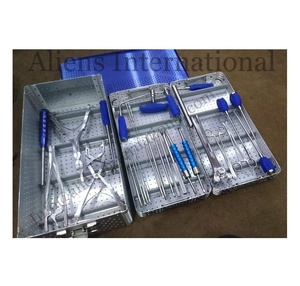
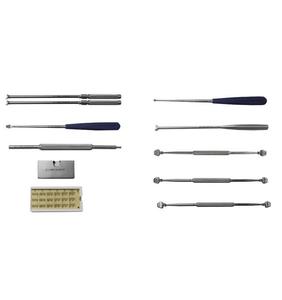
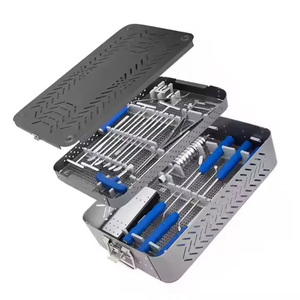
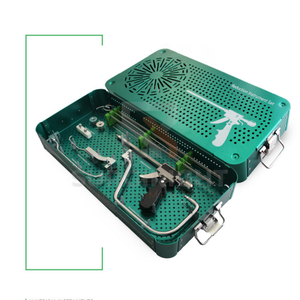
Core Strengths: Specializes in comprehensive stainless steel manual instrument sets tailored for TLIF and PLIF surgical maneuvers. Supplies ergonomic trial spacers, distractors, and quick-connect inserters.
Capabilities: German-standard stainless steel processing, custom tray design, autoclavable container systems, custom surgical branding.
4. Blush Surgical Devices
Core Strengths: Pioneer in arc-shaped and anatomical posterior interbody fusion devices utilizing high-grade PEEK and 3D printed porous titanium with trabecular lattice structures.
Capabilities: Advanced electron beam melting (EBM), porous surface osteointegration coating, anatomical lordotic angle customizing.
5. MedSpine Europe Technologies
Core Strengths: Focuses on premium MIS (Minimally Invasive Surgery) TLIF/PLIF cages equipped with expanding mechanism technology to maximize anterior column restoration.
Capabilities: Micro-machining, cleanroom sterile blister packaging, CE mark technical documentation, international clinical registry backing.
6. Apex Ortho Implants
Core Strengths: Robust industrial-scale production capabilities delivering cost-effective 316L Stainless Steel and Titanium interbody cages alongside spine pedicle screw systems.
Capabilities: Mass production, rapid prototyping, ISO 14644 Class 7 cleanroom assembly, strict batch-traceability systems.
7. BioFit Spine Systems
Core Strengths: Highly acclaimed for carbon-reinforced PEEK and hybrid Titanium-PEEK cages engineered to replicate the Young's modulus of cortical and cancellous bone.
Capabilities: Biocompatibility testing (ISO 10993), surface roughening treatment, custom lordosis angles (0° to 15°).
8. Novus Medical Implants
Core Strengths: Innovator in steerable and articulate TLIF/PLIF cages designed for minimal tissue disruption during unilateral posterior insertion pathways.
Capabilities: Steerable inserter mechanism engineering, dynamic expansion validation, comprehensive surgeon training kits.
9. Precision Spine Solutions
Core Strengths: Specialized contract supplier delivering tailored interbody solutions based on patient CT scan DICOM data for complex deformity correction.
Capabilities: 3D CAD bone modeling, rapid custom titanium sintering, expedited regulatory clearance pathways.
10. Zenith Ortho Implants
Core Strengths: Reliable wholesale manufacturer offering customizable white-label PLIF/TLIF kits, trial sets, and container boxes for global distributors.
Capabilities: Flexible MOQs, complete OEM laser etching, international regulatory dossier support, rapid logistics support.
Technical Evaluation: Material Science & Biomechanical Comparison
Selecting the optimal cage material directly impacts fusion rates, radiolucency, and post-operative subsidence risk.
In modern lumbar spine surgery, interbody fusion cages serve as load-bearing space maintainers until solid bony arthrodesis is achieved. The mechanical performance depends heavily on material selection. PEEK (Polyetheretherketone) remains popular due to its modulus of elasticity (~3.6 GPa) closely matching human cancellous bone (0.5 to 3.0 GPa), minimizing stress shielding according to Wolff’s Law. Conversely, 3D-printed porous titanium implants offer superior initial cellular attachment and osseointegration due to controlled pore sizes (300–700 microns).
| Material / Tech | Elastic Modulus | Radiolucency | Osseointegration | Subsidence Risk | Primary Clinical Application |
|---|---|---|---|---|---|
| PEEK-OPTIMA® | ~3.6 GPa (Bone-like) | Excellent (Requires Tantalum Pins) | Moderate (Fibrous Encapsulation) | Low | Standard PLIF / TLIF Procedures |
| 3D Porous Titanium | ~5 - 10 GPa (Engineered) | Opaque / High Artifact | Superior (Bone Ingrowth) | Very Low | Complex Deformity / Revision Fusion |
| Ti-Coated PEEK | ~3.6 GPa (Core) | Good Image Clarity | High (Surface Anchoring) | Low | High-Risk Osteoporotic Cases |
| Expandable Titanium Cages | Variable Titanium | Opaque | High Structural Contact | Minimal (Custom Height) | MIS Minimal Invasive Approaches |
Manufacturing excellence demands strict adherence to ISO 14801 and ASTM F2077 standards for static compression, dynamic compression, and static shear testing. Leading factories ensure that every cage batch exhibits minimal wear debris and maximum axial fatigue resistance over 5 million cycles.
Global Procurement & Sourcing Trends (2025–2030)
Key technological shifts reshaping medical device supply chains and hospital purchasing protocols.
Additive Manufacturing Dominance
Traditional subtractive CNC milling is increasingly giving way to 3D selective laser melting (SLM) for titanium cages. Sourcing managers now prefer suppliers with in-house 3D printing capabilities that allow rapid adjustment of lattice density and anatomical contouring.
Pre-Sterilized Sterile Packaging
Hospitals are migrating from reusable tray systems to single-use, pre-sterilized double-blister packaging. This eliminates hospital processing costs, reduces surgical site infection (SSI) risks, and guarantees 100% implant integrity upon opening.
Stricter Global Regulatory Compliance
With EU-MDR stringent enforcement and increased scrutiny by the US FDA and CDSCO, suppliers must offer comprehensive design history files (DHF), risk management reports (ISO 14971), and robust clinical evaluation reports (CER).
Why Partner with Uteshiya Medicare (Kaisen Medical)
A trusted CDSCO & ISO certified global orthopedic implants manufacturer with proven supply chain capabilities.
State-of-the-Art Production Facility
Operating dedicated CNC machining centers, Swiss turning lathes, and automated polishing lines designed specifically for implantable grade 316L Stainless Steel, Ti-6Al-4V ELI Titanium, and PEEK materials. All operations are housed in cleanrooms conforming to international sterility standards.
Rigorous Quality Management System
Our quality assurance protocol follows ISO 13485 and CDSCO guidelines. Each production batch undergoes 100% optical coordinate measurement machine (CMM) inspection, ultrasonic cleaning, and strict bioburden testing to ensure zero-defect delivery.
Comprehensive OEM/ODM White-Labeling
From custom laser marking of lot numbers and brand logos to designing tailored anodized color-coded instrument trays, Uteshiya Medicare provides turnkey contract manufacturing support for worldwide medical distributors.
Global Export Footprint & Logistic Support
With an active export network spanning over 30 countries across Latin America, Asia, Europe, and the Middle East, our regulatory team assists partners with swift import clearances, certificate of free sale (CFS), and technical dossier submissions.
Procurement & Clinical Technical FAQ
Essential answers for hospital buyers, supply chain executives, and OEM partners sourcing PLIF systems.
What is the difference between PLIF and TLIF interbody cages?
Posterior Lumbar Interbody Fusion (PLIF) typically utilizes two straight or slightly curved cages inserted via a bilateral posterior approach after a full laminectomy. Transforaminal Lumbar Interbody Fusion (TLIF) utilizes a single banana-shaped or curved cage inserted unilaterally through the intervertebral foramen, causing less neural retraction and tissue trauma.
Why are Tantalum markers embedded in PEEK interbody cages?
PEEK is radiolucent, meaning it appears invisible on standard X-ray or fluoroscopic imaging. Tantalum pins are inserted at the anterior and posterior margins of the PEEK cage to provide clear radiopaque landmarks, allowing surgeons to accurately verify implant position intraoperatively.
What certifications are required to import PLIF cages into international markets?
Key global certifications include ISO 13485 for medical device quality management, CE Marking (under EU-MDR for European distribution), CDSCO approval (for Indian manufacturing & export clearance), and US FDA 510(k) registration for North American distribution. Suppliers must also provide ISO 10993 biocompatibility test reports.
What is the typical Minimum Order Quantity (MOQ) for OEM cage manufacturing?
Standard catalog items generally have low MOQs starting at 20–50 units per size specification. For custom white-label OEM manufacturing involving unique geometry, custom packaging, or private brand laser etching, MOQs typically range from 100 to 500 units depending on tooling requirements.
How do suppliers ensure the dynamic dynamic fatigue strength of fusion cages?
Factories test cage designs in according with ASTM F2077 (Test Methods for Intervertebral Body Fusion Devices) and ASTM F2267 (Standard Test Method for Measuring Load-Induced Subsidence). Cages must endure 5 million cycles of dynamic compression-shear loading without structural failure or deformation.
Can custom lordotic angles be manufactured for patient-specific needs?
Yes. Leading manufacturers offer standard lordotic angles ranging from 0° (flat), 4°, 8°, to 12°, while offering custom CNC/3D manufacturing capabilities for hyper-lordotic cages (up to 15°–20°) designed for sagittal realignment in complex deformity surgeries.