Verified Orthopedic Trauma & Micro Fixation Systems
Explore our ISO 13485 & CDSCO-certified precision fixation modules, engineered in 316L Surgical Stainless Steel and Titanium Alloy for trauma, pediatric, and specialized micro-reconstruction.
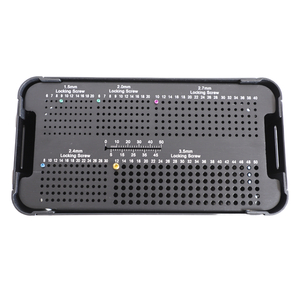
Veterinary Mini Micro Fragment System Stainless Steel Trauma Kit
Contact Us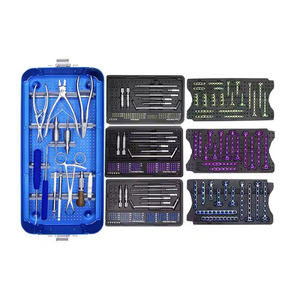
Stainless Steel Manual Mini Micro Fragment Locking Set (1.5/2.0/2.4mm)
Contact Us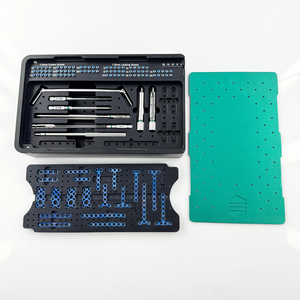
1.5mm Mini Micro Fragment Locking Kit with Titanium Plates & Screws
Contact Us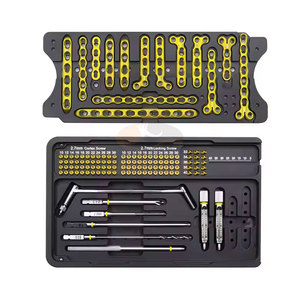
Premium Orthopedic 2.7mm Stainless Steel Locking Plate & Screws
Contact Us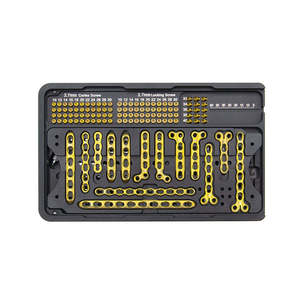
Manual Mini Fragments 2.7mm Steel Locking Instrument Tray
Contact Us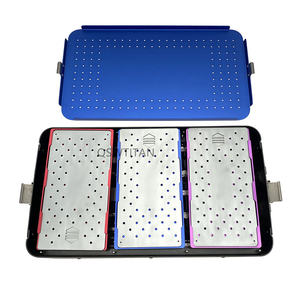
Mini Fragment Instrument System for Small Bone & Hand Reconstruction
Contact Us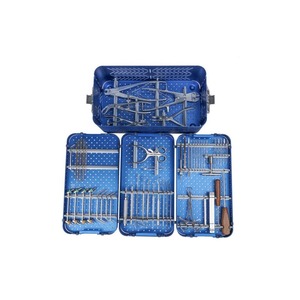
Complete Micro Fragment System Hand, Foot & Maxillofacial Kit
Contact Us
Universal Mini Micro Trauma Locking System (Vet & Human Modular)
Contact UsGlobal Scoliosis Spinal Fixation Sourcing: Executive Industry Analysis
Spinal deformity correction—specifically for Adolescent Idiopathic Scoliosis (AIS), Early Onset Scoliosis (EOS), and Adult Degenerative Scoliosis—represents one of the most demanding sub-specialties within orthopedic and neurosurgical device manufacturing. The mechanical integrity of a spinal fixation system directly dictates clinical outcomes, surgical correction preservation, and long-term fusion success rates.
For hospital procurement officers, regional distributors, and OEM brand owners, navigating the global export market requires evaluating suppliers not merely by unit cost, but by stringent biomechanical parameters including axial pullout force, fatigue endurance under cyclic loading (ASTM F1717), metallurgic purity, and international regulatory compliance (FDA 510(k), CE MDR 2017/745, ISO 13485:2016, and CDSCO approvals).
Information Gain Key Takeaway: Modern scoliosis corrective surgery relies heavily on 3D spinal deformity correction. Top global exporters are transitioning from rigid 5.5mm/6.0mm stainless steel constructs to dynamic multi-axial titanium alloy and Cobalt-Chromium (CoCr) hybrid systems that allow segmental derotation while preserving sagittal balance.
Biomechanical Integrity
Superior screw-to-rod friction locking mechanisms eliminate intraoperative set-screw slippage and post-operative construct failure under multi-planar torsional strain.
Regulatory Quality Standards
Export-ready spinal hardware must maintain rigorous technical documentation (DHF/DMR), full material batch traceability, and cleanroom ISO Class 7 packaging compliance.
Global Supply Network
Leading exporters provide comprehensive surgical instrumentation trays, OEM custom manufacturing, and agile international freight logistics across 30+ countries.
Evaluation Benchmarks: Top 10 Scoliosis Fixation Exporters
When selecting a primary export partner for complex spine hardware, hospital networks and medical device buyers evaluate companies across five critical capabilities. Below is an expert-level benchmark analysis reflecting global export capabilities.
| Exporter Benchmark Category | Primary Material Grades | Regulatory Certifications | Fatigue Testing Standard | OEM & Custom Capability |
|---|---|---|---|---|
| Uteshiya Medicare (India) | Ti-6Al-4V ELI (Grade 5), 316L SS | CDSCO, ISO 13485:2016, FDA Reg. | ASTM F1717 (5 Million Cycles) | Full OEM/ODM & Custom Implants |
| North American Tier-1 Manufacturers | Ti6Al4V, Cobalt-Chromium (CoCr) | US FDA 510(k), CE MDR | ASTM F1717 / ISO 12189 | Limited OEM (Proprietary Focus) |
| Central European Precision Suppliers | Medical Grade Titanium, PEEK | CE MDR 2017/745, ISO 13485 | ASTM F1717 / ISO 14801 | High-Cost Custom Engineering |
| East Asian High-Volume Exporters | Pure Titanium, Stainless Steel | NMPA, ISO 13485, Select CE | Domestic Standard Compliance | High Volume Batch OEM |
| Latin American Regional Exporters | 316L SS, Ti-6Al-4V | ANVISA, ISO 13485 | ASTM F1717 Equivalent | Regional Contract Manufacturing |
Why Uteshiya Medicare Leads Global Procurement Value
Combining state-of-the-art Swiss DMG MORI multi-axis CNC machining center precision with India's competitive manufacturing ecosystem, Uteshiya Medicare bridges the gap between ultra-premium engineering and cost-effective bulk healthcare sourcing. Holding over 1,000 CDSCO-approved medical products, our spinal systems undergo identical quality controls as top Western brands at a significantly more sustainable procurement expenditure.
Biomechanics & Metallurgy of Scoliosis Fixation Systems
Scoliosis correction constructs are subject to severe static and dynamic forces. The structural integrity of pedicle screws, spinal rods, and cross-links determines whether the surgical construct will maintain 3D deformity correction throughout the bone fusion timeline.
1. Pedicle Screw Engineering & Thread Topography
Modern scoliosis fixation requires pedicle screws with dual-thread pitches: a coarse thread for cancellous bone within the vertebral body and a fine thread for maximum purchase within the dense cortical pedicle. Key features include:
- Polyaxial Angle Motion: Up to ±30° cone of friction movement, allowing smooth rod placement without applying excessive shear forces on pedicle walls.
- Dual-Lead Threads: Reduce insertion time by 50% while improving pullout resistance by up to 28% compared to single-lead screws.
- Buttress & Square Set Screws: Engineered specifically to eliminate flange splaying under high tightening torque values (up to 12 Nm).
2. Spinal Rod Metallurgy: Ti6Al4V ELI vs. Cobalt-Chromium
Selecting the appropriate rod material depends on patient bone quality, magnitude of thoracic kyphosis/lumbar lordosis correction, and body mass index (BMI):
- Ti-6Al-4V ELI (Grade 5 Titanium): High biocompatibility, lower elastic modulus closer to cortical bone, reducing stress shielding at adjacent un-fused segments.
- Cobalt-Chromium-Molybdenum (CoCr): Exceptional bending stiffness and yield strength. Recommended for severe adult deformities requiring high-force translation maneuvers and apex derotation.
- 316L Stainless Steel: Renowned for superior ductility and ease of intraoperative contoured bending without notch sensitivity.
Future Procurement Trends in Scoliosis & Spinal Fixation (2025–2030)
As surgical techniques advance toward minimally invasive deformity correction and dynamic motion preservation, global exporters are altering their manufacturing and product development roadmaps. B2B medical buyers must align with suppliers investing in next-generation spine tech.
1. Vertebral Body Tethering (VBT)
Non-fusion scoliosis correction using flexible polyethylene tethers allows skeletally immature pediatric patients to achieve progressive correction while maintaining spinal mobility and growth potential.
2. 3D-Printed Porous Titanium Cages
Additive manufacturing enables titanium spinal cages with inter-connected porous architectures (50–70% porosity) that mimic trabecular bone, drastically accelerating osseointegration and interbody fusion rates.
3. AI-Guided Pre-Bent Rods & MIS Navigation
Integration of pre-operative CT imaging with robotic navigation allows exporters to supply patient-matched pre-contoured spinal rods and custom patient-specific drilling guides (PSI).
Enterprise Excellence in Medical Device Exporting
Uteshiya Medicare is an ISO 13485:2016 certified and CDSCO-approved orthopedic and spinal implant manufacturer based in Gujarat, India. With a robust global footprint spanning over 30 countries, we specialize in high-precision trauma plates, pedicle screw systems, CMF hardware, external fixators, and customized patient-specific implants.
Quality System Infrastructure
Our manufacturing complex houses automated optical inspection systems, coordinate measuring machines (CMM), and mechanical static/dynamic fatigue testing benches. Every lot produced undergoes strict bio-burden and endotoxin testing prior to release.
CDSCO Manufacturing License: Fully compliant with Indian Medical Devices Rules (MDR 2017) and harmonized with GHTF global standards.
Procurement FAQs for Importers & Hospital Buyers
Essential technical and regulatory answers for sourcing scoliosis fixation and trauma systems globally.
What regulatory compliance documentation accompanies export shipments?
Every commercial export order includes comprehensive Quality Assurance documentation: Certificate of Analysis (CoA), Raw Material Mill Certificates (ASTM F136 Titanium or ASTM F138 316L Stainless Steel), ISO 13485:2016 Factory Certificate, Batch Sterilization Validation Certificates (if supplied sterile), and complete Certificate of Origin (COO).
What is the biomechanical difference between 5.5mm and 6.0mm spinal rod constructs?
5.5mm rod constructs are primarily indicated for Adolescent Idiopathic Scoliosis (AIS) and smaller pediatric patients where anatomical real estate is constrained. 6.0mm rod constructs offer substantially higher bending stiffness and structural rigidity, making them the gold standard for heavy adult degenerative scoliosis and long-segment fusion revisions.
Can Uteshiya Medicare manufacture customized OEM instrument sets and private label implants?
Yes. We offer turnkey OEM/ODM contract manufacturing services. Our engineering team can translate your 3D CAD files or physical samples into market-ready implants, customized autoclavable graphic trays, and private-labeled packaging compliant with destination country labeling regulations.
Are implants supplied non-sterile or pre-sterilized in ISO Class 7 cleanroom packaging?
We provide both options depending on importer requirements. Implants can be shipped non-sterile for hospital tray sterilization or pre-sterilized via Ethylene Oxide (ETO) / Gamma Irradiation sealed in medical-grade double blister Tyvek packaging with a 5-year shelf-life stability validation.
How does ASTM F1717 fatigue testing safeguard against construct failure?
ASTM F1717 standardizes static and dynamic bending testing on spinal pedicle screw constructs submerged in saline environments. Our spinal systems successfully endure over 5 million cycles of continuous flexural stress without fatigue cracking or set-screw looseness.
What are the lead times and Minimum Order Quantities (MOQ) for international orders?
Standard catalog items maintain a typical production and dispatch lead time of 2 to 4 weeks. For OEM or customized bulk runs, lead times range between 4 to 6 weeks. MOQs are flexible and tailored to accommodate regional trial evaluations and distributor tender submissions.
Partner with a World-Class Spinal Hardware Exporter
Request complete CAD specifications, certified material test reports, or bulk distribution quotation pricing today. Our medical engineering team is standing by to support your surgical tender requirements.
Contact Us