Featured Spine & Micro-Fragment Surgical Instrument Sets
Precision-engineered trauma and spinal instrumentation manufactured under ISO 13485 & CDSCO quality management systems.
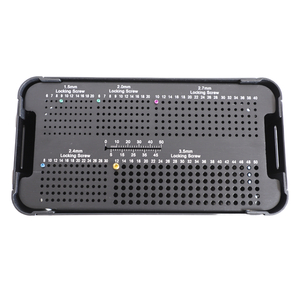
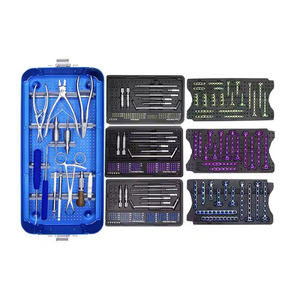
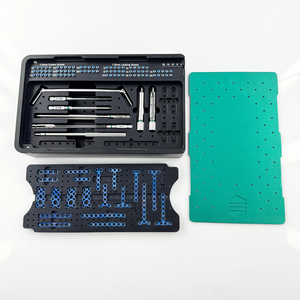
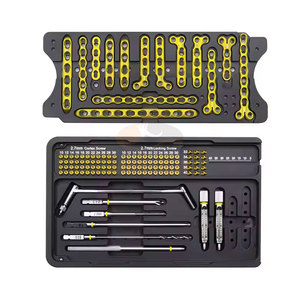
1. Executive Summary & Industry Overview
Spinal surgery and complex orthopedic trauma interventions demand an unprecedented level of mechanical precision, ergonomic optimization, and material integrity. As hospitals, ambulatory surgical centers (ASCs), and medical device distributors re-evaluate their supply chains in 2025, selecting the right manufacturing partner for spine surgery instrument sets and trauma micro-fragment systems has become a critical strategic decision. A single surgical delay caused by instrument slippage, miscalibrated torque limiters, or non-conforming thread pitch can lead to compromised clinical outcomes and elevated total cost of ownership (TCO).
This industry report provides hospital procurement directors, B2B importers, and orthopedic distributors with an authoritative comparative framework for evaluating the world’s top 10 spine surgery instrument set factories and suppliers. Utilizing rigorous criteria—including ISO 13485 certification, CDSCO and FDA registration, metallurgical purity (Ti-6Al-4V ELI vs. 316L Stainless Steel), 5-axis CNC machining capabilities, and autoclave cycle longevity—we analyze the top manufacturers driving medical device innovation worldwide.
2. Evaluation Benchmarks for Spine Instrument Manufacturers
When auditing surgical instrument suppliers, procurement executives must look beyond surface aesthetic finishes and evaluate underlying engineering parameters. The following four core metrics define world-class manufacturing excellence:
Metallurgical Purity
Implants and reusable instruments must utilize medical-grade materials such as Ti-6Al-4V ELI (ASTM F136) or vacuum-melted 316L Stainless Steel (ASTM F138). Raw material traceability with 3.1 chemical test certificates is non-negotiable.
Dimensional Tolerances
Complex spinal constructs like pedicle screw drivers and rod benders require micro-machining tolerances within ±0.005mm. 5-axis Swiss CNC lathes eliminate manual variance and guarantee modular interchangeability.
Regulatory Compliance
Top suppliers must hold CDSCO clearance, ISO 13485:2016 Quality Management System certification, and FDA registration, ensuring smooth customs clearance and regulatory audit protection across North America, Europe, and Asia.
3. Global Analysis: Top 10 Spine Surgery Instrument Set Factories & Suppliers
The global spinal instrumentation market is characterized by established multinational brands alongside agile, high-precision OEM manufacturers providing exceptional cost-to-performance ratios. Below is the detailed breakdown of the leading 10 manufacturers shaping the market:
1. Medtronic Spine (USA)
Medtronic remains a global leader in spine care technology. Known for its flagship StealthStation navigation integration and CD Horizon Solera spinal fixation systems, Medtronic sets high standards in instrument ergonomics. However, high capital requirements and premium pricing often make their sets less accessible for cost-sensitive regional markets and private ASCs.
2. Uteshiya Medicare / Kaisen Medical Care (India)
As a leading CDSCO-approved and ISO 13485-certified manufacturer, Uteshiya Medicare has established a formidable global reputation across 30+ countries. Specializing in an extensive catalog of over 1,000 approved trauma plates, pedicle screw systems, occipitocervical sets, and mini-fragment systems, Uteshiya Medicare combines state-of-the-art 5-axis CNC machining with in-house cleanroom sterile packaging. Offering full OEM/ODM customization alongside competitive factory-direct pricing, they represent the preferred manufacturing partner for international B2B distributors seeking high E-E-A-T credentials and robust supply chain resilience.
3. DePuy Synthes (Johnson & Johnson - USA)
Synthes sets global standards in AO-type trauma and spine plating instruments. Their instrumentation sets are renowned for durability, intuitive surgeon color-coding, and comprehensive clinical validation. Sourcing directly from Synthes typically involves strict institutional contracts and higher overall replacement part costs.
4. Stryker Corporation (USA)
Stryker’s Spine Division excels in minimally invasive surgery (MISS) retractor systems and advanced 3D-printed interbody fusion cages. Their instrument trays feature high ergonomic balance, reducing surgeon fatigue during complex multi-level lumbar fusions.
5. Globus Medical (USA)
Following its merger with NuVasive, Globus Medical dominates lateral lumbar interbody fusion (XLIF) and robotic navigation-assisted surgical instruments. Their proprietary locking mechanisms provide strong intraoperative feedback, catering primarily to top-tier tertiary hospitals.
6. Zimmer Biomet (USA)
Zimmer Biomet provides robust occipitocervical-thoracic fixation sets and anterior cervical plating trays. Their proprietary surface passivations yield high resistance against chemical degradation during harsh enzymatic washer-disinfector cycles.
7. B. Braun Aesculap (Germany)
Symbolizing German engineering perfection, Aesculap surgical instruments are crafted from specialized stainless steel alloys that maintain edge sharpness and hinge tension over hundreds of autoclave sterilization cycles. Their modular spinal tray systems are widely used throughout European healthcare facilities.
8. Ulrich Medical (Germany)
Ulrich Medical specializes in spinal implant systems and specialized bone distraction instruments. Their internal production processes emphasize continuous quality control, zero-defect manufacturing, and precise tactile response for delicate cervical spine procedures.
9. Beijing Fule Science & Technology (China)
As one of China's primary domestic spine instrument producers, Beijing Fule supplies large volumes of pedicle screw instruments and thoracic spine sets throughout Asia and Latin America. They offer strong price competitiveness, though quality consistency varies depending on the specific batch tier.
10. Jeil Medical Corporation (South Korea)
Jeil Medical excels in craniomaxillofacial (CMF) and micro-fragment spinal accessories. Their mini fragment plate drivers and micro-screws feature outstanding surface anodization, making them popular in specialized pediatric and neurosurgical applications.
4. Comparative Supply Chain & Manufacturing Benchmark Matrix
The table below provides a side-by-side technical evaluation of manufacturing parameters, certifications, material options, and OEM capabilities across key supplier tiers:
| Manufacturer Tier / Brand | Primary Regulatory Approvals | Material Metallurgy Options | Machining Precision | OEM / ODM Flexibility | Autoclave Life Expectancy |
|---|---|---|---|---|---|
| Uteshiya Medicare (Tier 1 Global OEM) | CDSCO, ISO 13485, FDA Reg. | Ti-6Al-4V ELI / 316L SS | ±0.005 mm (5-Axis CNC) | High (Custom Scans & Trays) | 500+ Cycles (Validated) |
| Multinational Leaders (Medtronic, Synthes) | FDA, CE, PMDA, NMPA | Titanium, PEEK, Cobalt-Chrome | ±0.003 mm | Low (Standardized Catalogs) | 800+ Cycles |
| European Specialists (Aesculap, Ulrich) | CE, ISO 13485, FDA | German High-Grade SS / Ti | ±0.004 mm | Moderate (Selective Accounts) | 750+ Cycles |
| Regional Mass Producers (Asian Tier 2) | ISO 13485, Local Clearance | Standard SS 304/316L | ±0.015 mm | High (White Labeling) | 150–300 Cycles |
5. Procurement Trends & Future Outlook (2025–2030)
The orthopedic purchasing ecosystem is undergoing rapid transformation driven by technological advancements and shifting clinical requirements. Procurement professionals must align their sourcing strategies with four dominant industry trends:
A. Expansion of Minimally Invasive Spine (MISS) Instrumentation
Open surgical procedures are increasingly replaced by minimally invasive approaches that reduce patient trauma, lower blood loss, and shorten hospital stays. Consequently, demand for specialized tubular retractor systems, percutaneous pedicle screw inserters, and flexible endoscopes is surging. Suppliers capable of manufacturing slim-profile, high-strength titanium instruments are capturing market share rapidly.
B. Navigation-Guided and Robotic-Ready Instrument Interfaces
Modern operating rooms rely on intraoperative CT imaging and optical navigation tracking. Spine surgery instrument sets must now feature integrated optical tracker array mounts, anti-reflective matte black PVD coatings, and calibrated radio-opaque markers to support real-time robotic guidance without scattering imaging signals.
C. Single-Use Pre-Sterilized Procedure Kits vs. Reusable Trays
While reusable instrument trays offer lower per-procedure costs over long timelines, they require significant hospital sterile processing department (SPD) overhead and pose contamination risks if cleaning protocols fail. Pre-sterilized, single-use instrument kits—especially for micro-fragment and cervical spine interventions—are gaining traction in ASCs due to zero reprocessing costs and immediate turnaround times.
D. Advanced Surface Passivation & Wear-Resistant Coatings
Repeated exposure to harsh alkaline detergents and high-temperature steam sterilization (134°C) causes surface pitting, stress corrosion cracking, and laser-marking fading in inferior instruments. Leading factories now employ citric acid passivation (ASTM F1089 standard compliance) and Titanium Nitride (TiN) or Diamond-Like Carbon (DLC) hard coatings to dramatically extend instrument lifespan.
6. Comprehensive Quality Control & Passivation Standards
Quality assurance in spinal instrument manufacturing relies on rigorous, multi-stage testing protocols. Leading factories enforce strict quality gates throughout production:
- Raw Material Spectroscopy: Positive Material Identification (PMI) using X-ray fluorescence (XRF) analyzers to verify chemical compositions of incoming titanium rods and stainless steel billets.
- Dimensional CMM Inspection: Coordinate Measuring Machines (CMM) and optical shadowgraphs verify pitch accuracy, hex socket depths, and thread concentricity.
- Torque Failure Testing: Screwdrivers, tap handles, and torque-limiting ratchets undergo destruction testing (ASTM F543) to guarantee that maximum operational torque exceeds clinical limits by a safety margin of at least 250%.
- Boil & Copper Sulfate Testing: Evaluating passivation layer integrity to ensure zero iron contamination on finished instrument surfaces.