Top-Rated Titanium Cranial & CMF Mesh Systems
Precision-engineered neurosurgical implants compliant with international CE, CDSCO, and ISO 13485 quality frameworks.

Ultra-Malleable Titanium Cranial Mesh (0.4mm - 0.6mm)
Send an Inquiry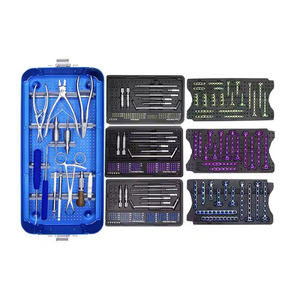
Modular Micro Fragment Fixation Mesh Set (1.5mm / 2.0mm)
Send an Inquiry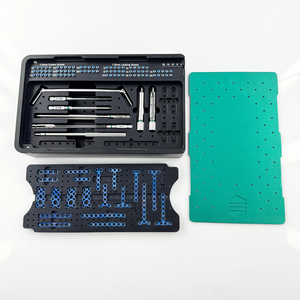
1.5mm Titanium Micro Mesh & Locking Screw Instrument Kit
Send an Inquiry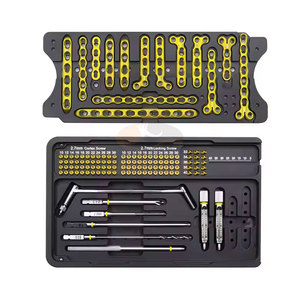
Pre-Contoured Anatomical Titanium Cranial Vault Reconstruction Mesh
Send an Inquiry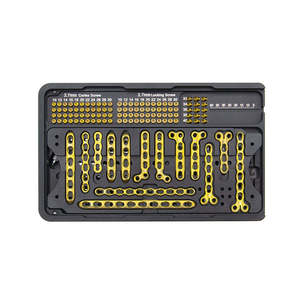
Patient-Specific Custom 3D Printed Titanium Cranial Mesh
Send an Inquiry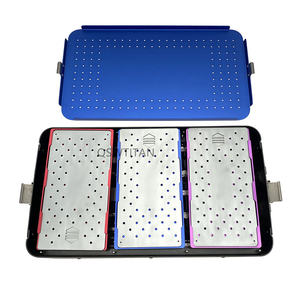
Craniomaxillofacial (CMF) Micro Fragment Locking Plate System
Send an Inquiry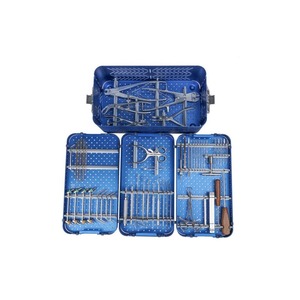
Orbital & Cranial Floor Micro Titanium Mesh Fixation Kit
Send an Inquiry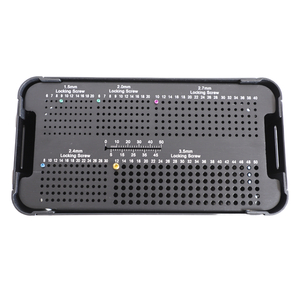
Universal Mini-Micro Fragment Titanium Locking Mesh Set
Send an InquiryExecutive Whitepaper: Titanium Cranial Mesh Implants in Modern Cranioplasty
Biomechanical Engineering, Material Standards (ASTM F136 / ASTM F67), and Procurement Quality Metrics
Cranioplasty—the surgical repair of bone defects in the skull caused by traumatic brain injury (TBI), tumor resection, decompressive craniectomy, or congenital deformities—demands implants that exhibit exceptional biocompatibility, structural rigidity, corrosion resistance, and artifact-minimized radiolucency. Over the past three decades, standard medical practice has evolved from autologous bone grafts and acrylic resins (PMMA) toward high-purity medical-grade titanium (specifically Commercially Pure Titanium Grade 2 and Ti-6Al-4V ELI Grade 5 titanium alloys).
As a leading global B2B supplier and exporter of craniomaxillofacial (CMF) implants, Uteshiya Medicare combines advanced multi-axis CNC machining, CAD/CAM 3D anatomical modeling, and ISO Class 7 cleanroom sterile packaging to manufacture superior titanium mesh systems trusted by neurosurgeons, trauma centers, and medical device distributors across 30+ countries.
Biocompatibility & Osseointegration
Medical Grade Titanium automatically forms a passive, stable oxide layer (TiO2) upon atmospheric exposure. This inert passivated layer prevents ion release, guarantees zero systemic toxicity, and fosters active cellular adhesion for natural bone tissue integration.
Low Profile & CT/MRI Compatibility
With mesh thicknesses engineered between 0.4mm and 0.8mm, our cranial mesh plates eliminate tangible scalp bulging while minimizing scatter artifacts during post-operative Computed Tomography (CT) and Magnetic Resonance Imaging (MRI) monitoring.
Structural Intra-Operative Malleability
Precision 3D honeycomb and hexagonal pore matrices allow surgeons to manually bend, contour, and shear the mesh intraoperatively to match intricate calvarial contours without compromising tensile strength or structural fatigue limits.
Material Engineering: Commercially Pure (CP) Titanium vs. Ti-6Al-4V ELI Alloy
Understanding material selection is crucial for hospital purchasing committees and B2B distributors. The table below outlines the mechanical and clinical distinctions between CP Grade 2 Titanium and Grade 5 Ti-6Al-4V ELI used in titanium cranial mesh manufacturing:
| Technical Parameter | Commercially Pure Titanium (Grade 2) | Titanium Alloy Ti-6Al-4V ELI (Grade 5) | Clinical & Surgical Impact |
|---|---|---|---|
| Standard Compliance | ASTM F67 / ISO 5832-2 | ASTM F136 / ISO 5832-3 | Guarantees medical-grade chemical purity. |
| Tensile Strength (MPa) | 345 - 480 MPa | 860 - 960 MPa | Grade 5 yields double mechanical load capacity. |
| Elastic Modulus (GPa) | 105 GPa | 110 GPa | Matches natural bone modulus (15-30 GPa) closer than steel. |
| Intra-Operative Malleability | Ultra-High (Easy hand contouring) | Moderate (Requires bending pliers/templates) | Grade 2 is preferred for complex 3D orbital/temporal curves. |
| Corrosion Resistance | Superior (Passivated TiO2 oxide layer) | Excellent (Passivated coating) | Zero degradation under physiological fluid exposure. |
| Primary Clinical Focus | Standard cranial defect & orbital floor mesh | Patient-Specific 3D custom load-bearing plates | Provides tailored options based on defect geometry. |
B2B Product Selection Guide: Cranial Mesh Implants & Instrument Systems
When procuring cranial mesh implants for institutional hospital tenders or orthopedic distribution networks, buyers must match specific anatomical requirements with correct implant configurations:
1. 2D Standard Malleable Mesh Plates
Available in flat sheet dimensions (e.g., 50x50mm, 100x100mm, 150x150mm) with thickness choices of 0.4mm, 0.6mm, and 0.8mm. Ideal for trauma emergency rooms requiring versatile, cut-to-fit implants for small-to-medium calvarial defects.
Recommended Fixation: 1.5mm or 2.0mm Micro Self-Tapping Screws2. Pre-Formed Anatomical Cranial Vault Mesh
Engineered using population-average skull curvature metrics. Pre-shaped for parietal, frontal, and occipital regions to reduce operative time and manual bending stress during trauma cranioplasty.
Recommended Fixation: 1.5mm Low-Profile Locking Screws3. Patient-Specific Custom 3D Printed Implants (PSI)
Directly manufactured from patient DICOM CT-scan data using Selective Laser Melting (SLM) additive manufacturing. Ensures 100% margin precision for large complex skull defects (>100 cm²).
Lead Time: 5 to 7 Days (Including 3D CAD Approval)Future Market & Manufacturing Trends in Cranial Implants
The global craniomaxillofacial (CMF) implants market is undergoing significant technological disruption driven by digital healthcare integration, additive manufacturing, and strict global regulatory updates (such as EU MDR and US FDA QMSR requirements). Strategic B2B procurement managers should prepare for the following industry trends:
A. Dominance of Additive Manufacturing (3D SLM Printing)
Traditional subtractive machining is rapidly giving way to 3D Direct Metal Laser Sintering (DMLS). Additive processes allow the creation of controlled porous matrix structures that encourage vascularization and bone ingrowth directly into the implant core.
B. Bio-Active & Antibacterial Surface Modifications
Post-op infection remains a primary concern in neurosurgery. Next-generation titanium mesh implants feature Micro-Arc Oxidation (MAO) combined with silver nanoparticle or hydroxyapatite coatings to drastically lower bacterial colonization rates.
C. AI-Driven Virtual Surgical Planning (VSP)
Hospitals are increasingly pairing titanium mesh procurement with cloud-based AI pre-operative software. AI algorithms convert raw CT DICOM images into contoured cut-guides and pre-shaped mesh templates within hours, reducing OR time by up to 35%.
Why Global Healthcare Buyers Trust Uteshiya Medicare
As a CDSCO-approved, ISO 13485-certified, and FDA-registered medical device manufacturer with over 1,000 product approvals, Uteshiya Medicare stands as a premier global exporter of orthopedic and craniomaxillofacial implants:
Procurement & Technical FAQ
Common questions answered by our neurosurgical engineering & export compliance teams
What titanium grades are utilized for Uteshiya Medicare cranial mesh implants?
Our standard malleable cranial mesh plates are manufactured from Commercially Pure Titanium (CP Grade 2, ASTM F67), offering optimal hand-contouring flexibility. For heavy structural load applications and 3D custom patient-specific implants, we utilize high-tensile Titanium Alloy Ti-6Al-4V ELI (Grade 5, ASTM F136).
Are the titanium cranial mesh kits supplied pre-sterilized or non-sterile?
We supply both options depending on importer requirements. Implants can be delivered individually packaged in ISO Class 7 cleanroom Ethylene Oxide (ETO) sterile pouches, or supplied non-sterile for autoclave sterilization within full modular surgical tray kits.
What screw diameters are compatible with your cranial and micro fragment mesh systems?
Our cranial mesh plates feature precision counter-sunk screw holes designed for 1.5mm, 2.0mm, and 2.4mm self-tapping or self-drilling micro screws. Low-profile screw heads sit completely flush within the mesh to prevent soft tissue irritation.
How do I place an order for Custom Patient-Specific Cranial Implants (PSI)?
For custom 3D cranial mesh manufacturing, hospitals or distributors upload the patient's thin-slice DICOM CT scan (slice thickness < 1.0mm) to our technical portal. Our biomedical engineers render a 3D CAD model, obtain surgical sign-off, and manufacture the implant via additive SLM technology within 5-7 working days.
What international quality certifications do your CMF implants hold?
All Uteshiya Medicare manufacturing operations comply strictly with ISO 13485:2016 (Medical Devices Quality Management Systems) and ISO 9001. Our products hold CDSCO manufacturing licenses and regulatory dossiers formatted for rapid registration in international healthcare markets.
What is your minimum order quantity (MOQ) and lead time for bulk global exports?
We offer flexible B2B procurement terms. Standard stock items (mesh sheets, micro plates, and screws) ship within 48-72 hours. For customized bulk distributor orders or private label OEM orders, production lead time typically ranges between 2 to 4 weeks.