Featured Orthopedic Implant & Surgical Instrument Systems
Explore our CE / ISO 13485 certified joint reconstruction, trauma plating, and micro-fragment fixation systems engineered for superior biomechanical stability.
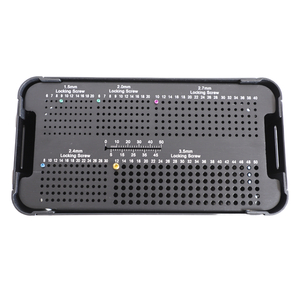
Veterinary Mini Micro Fragment System Stainless Steel Trauma Plates & Screws
Inquire Now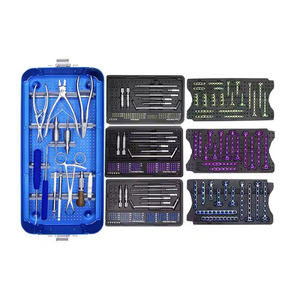
Stainless Steel Manual Mini Micro Fragment Locking Plate System 1.5/2.0/2.4mm
Inquire Now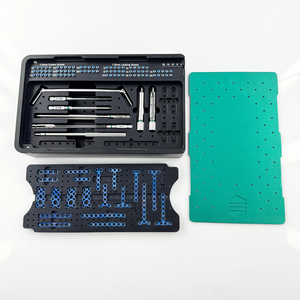
Veterinary 1.5mm Mini Micro Fragment Locking Kit with Titanium Plates & Screws
Inquire Now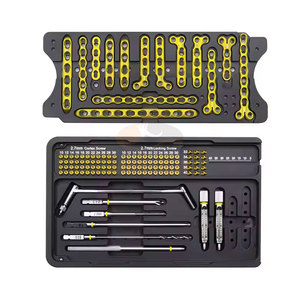
Premium Orthopedic Mini Fragments 2.7mm Stainless Steel Manual Locking Set
Inquire Now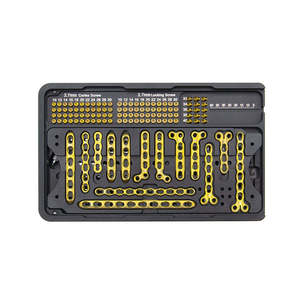
Orthopedic Manual Mini Fragments 2.7mm Steel Locking Plate Instrument Set
Inquire Now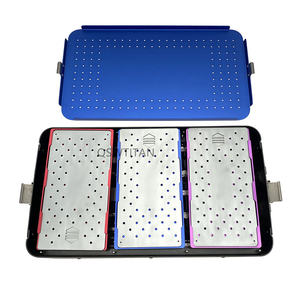
Orthopedic Mini Fragment Plate & Screw System for Hand & Foot Surgery
Inquire Now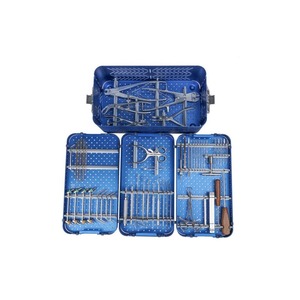
Premium Micro Fragment Locking System Hand Foot Wrist Maxillofacial Kit
Inquire Now
Eaven Mini Micro Fragment Trauma Plate Veterinary Stainless Steel Locking Kit
Inquire NowExecutive Summary: Strategic Evolution of China's Total Knee Replacement Industry
The global Total Knee Arthroplasty (TKA) market is undergoing a paradigm shift driven by demographic aging, expanding healthcare access in emerging economies, and the urgent need for cost-efficient, high-durability orthopedic implants. Historically dominated by traditional Western legacy OEMs, the industry has witnessed a major structural realignment over the past decade. China’s premier orthopedic implant manufacturers have matured into critical global hub suppliers, combining advanced biomaterial metallurgy, state-of-the-art 5-axis CNC Swiss machining, and rigorous compliance with international regulatory frameworks (EU MDR, US FDA 510(k), ISO 13485, and CDSCO approvals).
As a leading China Total Knee Replacement System Manufacturer & Supplier, our manufacturing architecture integrates high-precision cobalt-chromium-molybdenum (CoCrMo) alloy casting, Ti-6Al-4V ELI titanium forging, highly cross-linked polyethylene (XLPE) stabilization, and patient-specific anatomical profiling. This technical whitepaper evaluates the engineering fundamentals, tribological dynamics, quality control protocols, and procurement strategies necessary for hospital purchasing networks, medical device distributors, and private-label OEM partners seeking high-gain commercial advantages.
Key Procurement Takeaway: Modern Chinese knee replacement systems match Tier-1 global wear rates (<15 mg/million cycles per ISO 14243) while offering 40% to 60% procurement cost optimizations, complete technical documentation, and agile ODM customization turnaround times.
Biomaterial Engineering & Metallurgy Standards
The mechanical longevity of a total knee joint system is fundamentally dictated by its raw material integrity. High-load joint arthroplasty demands materials with exceptional yield strength, low modulus of elasticity, dynamic fatigue limit, and absolute biological inertness:
CoCrMo Femoral Components
Cast and forged Cobalt-Chromium-Molybdenum per ASTM F75 and ISO 5832-4. Delivers an ultra-smooth surface finish (Ra < 0.02 µm) to minimize poly insert wear during knee articulation.
Ti-6Al-4V ELI Tibial Trays
Extra Low Interstitial Titanium Alloy conforming to ASTM F136. Offers bio-compatibility, reduced stress shielding against native bone, and optimized strength-to-weight ratios.
Vitamin E XLPE Inserts
Ultra-High Molecular Weight Polyethylene infused with alpha-tocopherol (Vitamin E) and cross-linked via gamma irradiation to eliminate free radicals and oxidative degradation.
Biomechanical Engineering: Kinematic Alignment & Component Tribology
Modern Total Knee Replacement systems are designed to recreate the complex natural kinematics of the human tibiofemoral joint, accommodating roll-back, axial rotation, and flexional stability up to 155 degrees. Our engineering team prioritizes two primary prosthetic configurations: Posterior-Stabilized (PS) systems for cases requiring posterior cruciate ligament resection, and Cruciate-Retaining (CR) systems for preserving natural soft tissue tension.
Femoral Component Geometry & Trochlear Groove Optimization
The femoral implant design features a continuous, multi-radius anatomical J-curve geometry that optimizes quad muscle leverage throughout range-of-motion. A deepened, widened trochlear groove guides smooth patellar tracking, minimizing patellofemoral shear forces and drastically reducing post-operative anterior knee pain.
Tibial Component Stability & Locking Mechanism
Modular tibial components require absolute mechanical fixation between the metallic tray and the polyethylene bearing insert to prevent micro-motion and backside wear. Our proprietary perimeter locking mechanism—augmented by a central anti-rotation post—eliminates micromotion down to < 10 microns under dynamic multiaxial shear stress tests.
| Performance Parameter | China OEM Benchmark | ISO / ASTM Test Standard | Clinical Relevance |
|---|---|---|---|
| Femoral Surface Roughness (Ra) | ≤ 0.015 μm | ISO 7207-2 | Prevents abrasive wear on polyethylene inserts. |
| Insert Volumetric Wear Rate | 8.2 to 12.4 mg / 1M cycles | ISO 14243-1 / ISO 14243-3 | Ensures 20+ year implant lifespan in active patients. |
| Tibial Tray Fatigue Strength | > 10 Million Cycles @ 2.5 kN | ASTM F1800 / ISO 14879-1 | Eliminates risk of tibial tray fracture under heavy loads. |
| Locking Mechanism Micromotion | < 8.5 μm | ASTM F1814 | Prevents backside debris generation and osteolysis. |
Manufacturing Rigor: 5-Axis CNC Precision & Cleanroom Protocols
Quality assurance in orthopedic implant manufacturing is non-negotiable. Operating out of state-of-the-art manufacturing campuses equipped with German DMG MORI 5-axis CNC machining centers, Swiss Citizen lathes, and automated robotic mirror-polishing systems, our facilities ensure micron-level manufacturing tolerances across every batch.
In-House Cleanroom Packaging & Sterilization Validation
All implants undergo multi-stage automated ultrasonic cleaning to eliminate hydrocarbon residue before transfer into ISO Class 7 (Class 100,000) environmental cleanrooms. Implants are sealed in double-barrier Tyvek blister packaging and subjected to validated Ethylene Oxide (EO) or Gamma Irradiation sterilization procedures in accordance with ISO 11135 and ISO 11137 standards.
CMM Optical Inspection
Zeiss 3D Coordinate Measuring Machines scan 100% of critical dimensions to guarantee inter-component modular fit and taper integrity.
Spectroscopic Verification
X-ray fluorescence (XRF) and optical emission spectrometry verify raw material chemical composition against strict metallurgical limits.
Full Lot Traceability
Every single knee component, trauma plate, and micro-screw is laser-etched with a unique UDI code tracking raw material melt heats through final distribution.
Global Sourcing & Procurement Trends: 2025–2030 Outlook
The international landscape for joint reconstruction products is evolving rapidly. Buyers must align with manufacturers that actively invest in next-generation surgical paradigms:
1. Cementless Porous Titanium Arthroplasty
Biological fixation is replacing polymethyl methacrylate (PMMA) bone cement in younger, high-demand patient cohorts. Leading Chinese manufacturers utilize Selective Laser Melting (SLM) 3D-printing technologies to construct trabecular porous titanium structures directly integrated into tibial trays and femoral pegs, yielding pore sizes between 300 to 500 microns and 65% open porosity for optimal osseointegration.
2. Robotic-Assisted Surgery & PSI Readiness
Total Knee Systems must interface seamlessly with optical and image-free robotic surgical navigation platforms. China OEMs are now co-developing open-architecture instrument trays, patient-specific cutting blocks (PSI), and digital registration markers compatible with major robotic platforms.
3. Comprehensive Trauma & Micro-Fragment Integration
High-capacity suppliers provide unified supply chains spanning total joint replacement down to micro-fragment trauma plating systems (1.5mm, 2.0mm, 2.4mm, 2.7mm locking plates and screws for hand, foot, maxillofacial, and veterinary applications), dramatically simplifying hospital vendor management.
Comparative Analysis: China OEM vs. Western Legacy Manufacturers
Medical procurement directors often evaluate China suppliers against traditional European or American brands. The table below outlines how top-tier China manufacturers provide distinct competitive advantages across key operational metrics:
| Evaluation Parameter | Top China Tier-1 Manufacturer | Traditional Western Legacy OEM | B2B Buyer Advantage |
|---|---|---|---|
| Unit Procurement Cost | Highly Competitive (Direct Manufacturer Pricing) | High Premium (Includes heavy SG&A overheads) | 40-60% Margin Improvement / System Efficiency |
| OEM/ODM Customization | Agile; CAD prototypes in 7-14 Days | Rigid; 6-12 Months for minor tray modifications | Accelerated time-to-market for regional brands |
| Raw Material Sourcing | Certified US/European Imported Alloys (ASTM) | US/European Sourced Alloys | Identical metallurgical baseline & biocompatibility |
| Regulatory Dossiers | CE MDR, ISO 13485, FDA 510(k), STED Files | CE MDR, FDA 510(k) | Seamless registration in global target markets |
| Minimum Order Quantity (MOQ) | Flexible Batch Sizes per SKU | High Volume Commitments Required | Lower inventory carrying costs for distributors |
Industry Procurement Frequently Asked Questions (FAQ)
Our total knee systems utilize medical-grade Cobalt-Chromium-Molybdenum alloy (CoCrMo per ASTM F75) for femoral components, Titanium alloy (Ti-6Al-4V ELI per ASTM F136) for tibial trays, and Highly Cross-Linked Polyethylene (XLPE) or Vitamin E infused UHMWPE (per ASTM F648) for articular inserts and patellar domes.
Top manufacturers operate under ISO 13485 certified Quality Management Systems (QMS) with cleanroom facilities certified to ISO Class 7. Full compliance is verified via periodic third-party audits by EU Notified Bodies, FDA inspections, and CDSCO approvals. Comprehensive technical files (STED format) are provided for local market registrations.
Under ISO 14243 joint simulator testing conditions (5 million continuous cycles of axial load and flexion/extension), our highly cross-linked polyethylene inserts show an average volumetric wear rate of under 10 mg/1M cycles, matching the wear reduction performance of leading tier-1 global brands.
Yes. We specialize in contract manufacturing services including custom laser etching, patient-specific instrumentation (PSI), modified instrument tray layouts, private label packaging, and modified implant sizing profiles to match regional anatomical demographics.
Each TKA system comes with complete reusable stainless steel surgical instrumentation sets, including femoral alignment guides, 4-in-1 cutting blocks, adjustable tibial reaming guides, patellar resurfacing clamps, and trial components. All instruments are manufactured from German 17-4PH / 420 stainless steel.
Absolutely. Our trauma product portfolio—including 1.5mm, 2.0mm, 2.4mm, and 2.7mm micro-fragment locking plates, cortical screws, and veterinary orthopedic kits—is produced using the exact same ISO 13485 cleanroom machining and inspection processes as our primary joint replacement systems.
Standard catalog items maintain buffer stock for rapid dispatch within 7–14 days. For customized OEM production runs or large tender orders, standard lead times range from 30 to 45 calendar days inclusive of cleanroom pouching and sterile processing validation.
You can directly click the "Inquire Now" button on any product card or bottom panel. Our regulatory affairs team will supply complete material certificates, fatigue test reports, biocompatibility data (ISO 10993), and sample demonstration kits upon request.
Partner with China’s Leading Orthopedic Implant Manufacturer
Elevate your medical product portfolio with ISO 13485 & CE-compliant Total Knee Replacement Systems, custom implants, and high-precision trauma instrumentation. Contact our technical sales engineering team today for catalog access, OEM pricing schedules, and regulatory support.
Inquire Now