Veterinary Trauma
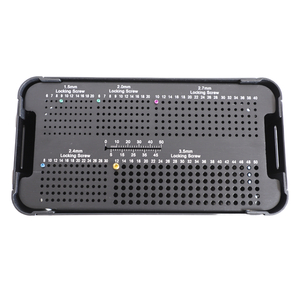
Explore our certified range of titanium and 316L stainless steel micro fragment systems designed for hand, foot, CMF, and veterinary surgical reconstructive applications.
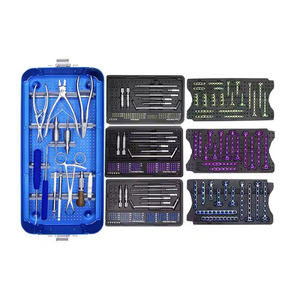
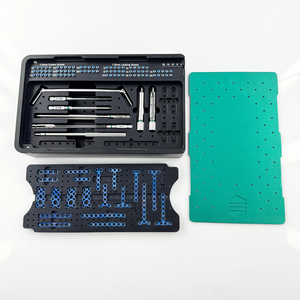
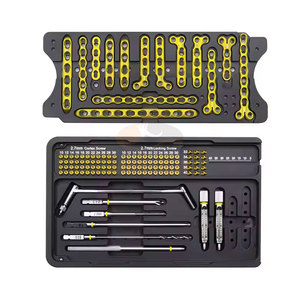
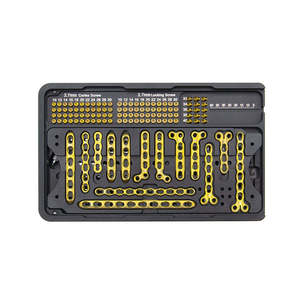
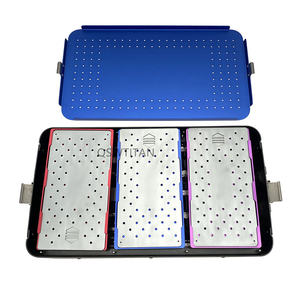
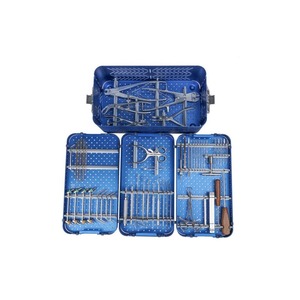
Why leading healthcare networks, orthopedic distributors, and surgical centers globally select Uteshiya Medicare as their direct factory partner.
Operates under CDSCO approval, ISO 13485:2016 certification, and FDA registration. Manufacturing is integrated with ISO Class 7 cleanrooms and automated ultrasonic washing stations to guarantee pyrogen-free, sterile-ready orthopedic implants.
Utilizing high-precision Swiss-type lathe turning and multi-axis CNC milling centers, we maintain ultra-tight tolerances (±0.005mm) on micro screw thread pitch, locking head tapers, and low-profile plate counter-bores.
With an active presence across 30+ countries, our international logistics framework delivers customizable surgical sets, private-label OEM manufacturing, and dedicated regulatory dossier assistance (CE tech files, STED documents).
An authoritative deep-dive into internal fixation mechanics for small bones, hand/wrist fractures, craniomaxillofacial reconstructive procedures, and veterinary orthopedic applications.
In modern traumatology and small-fragment orthopedic reconstruction, the Micro Bone Plating System serves as the definitive mechanical solution for stabilization of non-load-bearing and light-load-bearing osseous structures. These include the metacarpals, metatarsals, phalanges, distal radius, mandible, orbital rim, and veterinary appendicular skeletons of companion animals.
Traditional non-locking mini-plates rely entirely on friction generated between the undersurface of the plate and the periosteum. Compression created by tightening cortex screws forces the plate against the bone. While effective in healthy bone stock, this friction-dependent construct poses risks of periosteal blood supply compromise and screw loosening in osteopenic bone.
In contrast, modern Mini/Micro Fragment Locking Systems feature threaded screw heads that engage mechanically with internal threads inside the plate holes. This creates a fixed-angle construct that acts as an internal extramedullary fixator. Biomechanical advantages include:
Material selection is critical to preventing galvanic corrosion, metal fatigue, and adverse tissue reactions. Uteshiya Medicare manufactures micro plating systems using implant-grade materials adhering strictly to ASTM and ISO international standards:
| Implant Material Grade | Standard Specification | Yield Strength (MPa) | Elongation (%) | Primary Clinical Application |
|---|---|---|---|---|
| 316L Stainless Steel | ASTM F138 / ISO 5832-1 | ≥ 690 MPa | ≥ 12% | Cost-effective trauma sets, temporary fixation, high-rigidity veterinary kits. |
| Titanium Alloy (Ti-6Al-4V ELI) | ASTM F136 / ISO 5832-3 | ≥ 795 MPa | ≥ 10% | MRI-compatible micro plating, hand/wrist reconstructive, permanent CMF implants. |
| Pure Titanium (CP Ti Grade 2/4) | ASTM F67 / ISO 5832-2 | 275 - 480 MPa | ≥ 15% | Highly malleable cranial and facial contouring plates requiring intraoperative bending. |
Micro fragment systems are categorized by screw shaft diameter, plate profile thickness, and spatial geometry. Standardized modular configurations supplied by global factories include:
Key strategic vectors shifting hospital purchasing, medical device sourcing, and factory contract manufacturing globally.
Global procurement offices are transitioning away from buying individual screws and plates in bulk. Future tenders demand fully integrated, color-coded modular trays containing color-matched drill bits, taps, bending pliers, depth gauges, and locking/cortex implants in single autoclavable containers.
With the FDA alignment toward ISO 13485 under QMSR and the strict enforcement of EU MDR (2017/745), health authorities now demand complete material traceability (melt heat numbers), automated 100% optical inspection data, and validated cleaning protocol certifications directly from the original export factory.
Companion animal healthcare spend is experiencing exponential growth worldwide. Specialty veterinary surgical centers are increasingly adopting human-grade titanium micro locking systems (1.5mm/2.0mm/2.7mm) to treat complex fractures and perform corrective osteotomies (TPLO/TPOA).
Innovations transforming micro bone fixation design, surface chemistry, and intraoperative efficiency.
First-generation locking plates restricted screw insertion strictly along a fixed central trajectory perpendicular to the plate hole. Next-generation micro fragment systems integrate Variable-Angle (VA) locking technology, allowing the surgeon to angle the locking screw up to 15 degrees in any direction off-axis. This flexibility enables precise targeting of specific bone fragments, avoidance of joint capsules or existing hardware, and optimized screw trajectory in micro-anatomical structures.
Surface chemistry has evolved far beyond basic mechanical polishing. Type II Anodization (grey/dark anodization) on titanium micro plates enhances surface hardness, reduces micro-frictional wear, and minimizes soft tissue adhesion. Type III Color Anodization provides visual color-coding (e.g., Blue for 1.5mm, Gold for 2.0mm, Green for 2.7mm), allowing surgical teams to instantly identify matching drill guides, taps, and screws during high-stress operating room conditions.
R&D efforts are advancing bio-resorbable magnesium-based metal alloys and 3D-printed patient-specific titanium micro meshes. While traditional non-absorbable titanium remains the gold standard for structural load distribution, patient-specific micro-contouring via pre-operative CT scan data is fast becoming standard practice for complex CMF reconstruction and severe hand trauma cases.
Essential insights for procurement managers, medical device distributors, and hospital purchasing committees.
Titanium (Ti-6Al-4V ELI / ASTM F136) offers higher strength-to-weight ratio, superior biocompatibility, complete MRI compatibility (minimal imaging artifact), and lower modulus of elasticity closer to cortical bone. 316L Stainless Steel (ASTM F138) provides higher ductility for severe intraoperative contouring, excellent mechanical stiffness, and a more economical cost structure suitable for high-volume trauma centers and veterinary markets.
No. Each plate diameter system utilizes specific hole geometry, thread pitch, and counter-sink dimensions. A 1.5mm locking plate requires 1.5mm locking or cortex screws with matching 1.1mm core drill bits. Inserting an incorrect screw size will strip the internal locking threads of the plate hole and jeopardize construct rigidity.
As an established factory exporter, Uteshiya Medicare provides comprehensive regulatory dossiers including ISO 13485 certificates, CDSCO manufacturing licenses, Certificate of Free Sale (CFS), raw material mill test certificates (ASTM F138 / F136 compliance), biocompatibility reports (ISO 10993), sterilization validation, and CE technical files.
Yes. We offer complete OEM/ODM solutions including laser-marking custom logos, custom catalog numbering, tailored graphic sterilization trays, specialized box packaging, and custom plate geometry prototyping based on CAD files or CT scans.
Our quality control protocol incorporates 100% optical coordinate measuring machine (CMM) inspection for thread pitch, core diameter, and locking head taper geometry. Every lot undergoes destructive torque-to-failure testing (ASTM F543) and dynamic fatigue testing (ASTM F382) prior to cleanroom packaging.
Standard catalog items in titanium or stainless steel are maintained in cleanroom inventory for rapid dispatch within 7 to 14 business days. Custom OEM orders, proprietary branding, or custom surgical tray configurations typically require 30 to 45 days from technical sign-off.
Elevate your orthopedic portfolio with CDSCO & ISO 13485 certified micro fragment plates, screws, and modular instrumentation kits. Contact our engineering and export team today.
Contact Us