Flagship Surgical Sagittal Saw Systems
ISO 13485 & CDSCO Certified Power Tool Platforms for Trauma, Joint Arthroplasty & Veterinary Orthopedics
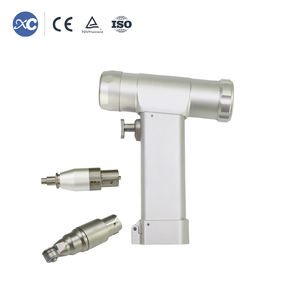
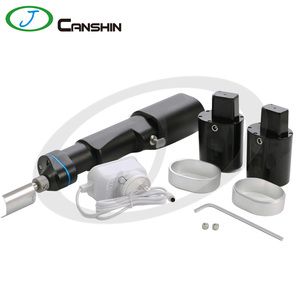
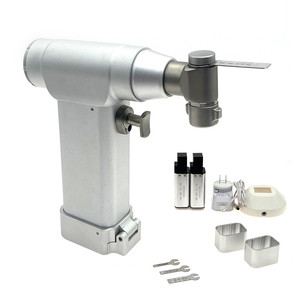
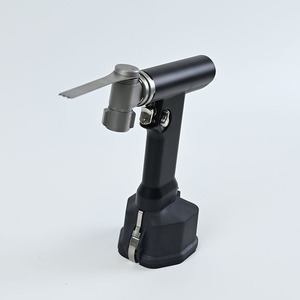
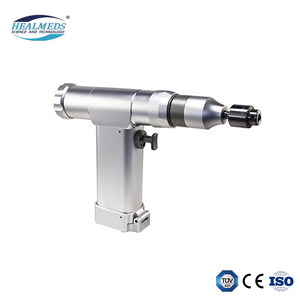
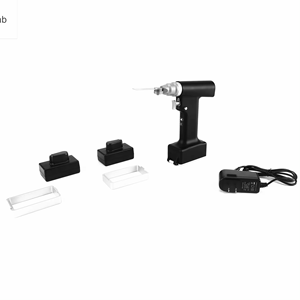
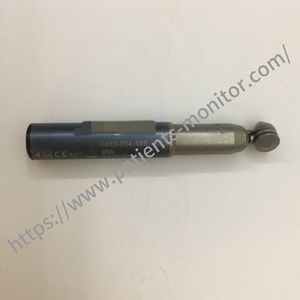
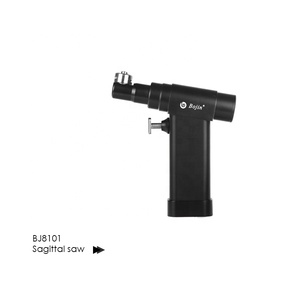
Executive Overview: The Evolution of Modern Surgical Sagittal Bone Saws
Surgical sagittal bone saws are the fundamental cornerstone of modern orthopedic reconstruction, traumatology, craniomaxillofacial (CMF) procedures, and advanced veterinary surgery. Engineered to execute high-precision osteotomies, resection of joint surfaces, and bone contouring, these motorized power tools must achieve an exacting dynamic equilibrium: maximizing cutting velocity while eliminating thermal necrosis, minimizing soft-tissue disruption, and ensuring total ergonomic control for operating surgeons.
For hospital procurement officers, clinical engineering directors, and global medical device distributors, sourcing from qualified surgical sagittal bone saw manufacturers and suppliers requires evaluating core technological matrices beyond basic mechanical specifications. Modern surgical standards demand brushless DC motor efficiency, hermetically sealed autoclavable enclosures, battery energy density compliance, and seamless quick-connect coupling systems compatible with international blade geometry standards.
Strategic Procurement Insight: The global transition from legacy pneumatic power systems to high-torque cordless brushless battery platforms has reduced surgical setup times by 35% while increasing osteotomy positional accuracy across joint replacement and trauma interventions.
As healthcare facilities optimize capital equipment expenditure, the strategic shift toward OEM/ODM modular power tool platforms—capable of rapidly swapping sagittal saw heads, micro-reciprocating heads, and cannulated drill attachments—has emerged as the preferred procurement model. Sourcing directly from verified manufacturers ensures compliance with ISO 13485 quality management systems, CDSCO regulatory clearances, and FDA registration frameworks.
Core Engineering Principles & Technological Trends
The biomechanical performance of a surgical sagittal bone saw depends on several interlinked engineering parameters. Understanding these parameters is essential for clinical evaluation and commercial supply chain planning.
Brushless DC Motor Dynamics
Next-generation electronic commutation eliminates carbon dust contamination, maximizes torque-to-weight ratios, and delivers stable cutting momentum under heavy cortical bone resistance.
Thermal Necrosis Mitigation
By optimizing high oscillating frequencies (12,000 to 18,000 CPM) with restricted angular excursion arcs (4.2° to 5.2°), bone tissue temperature is maintained below the critical 47°C enzymatic denudation threshold.
IPX8 Hermetic Sealing
Precision-engineered silicone seals and O-rings protect internal drive gears and microprocessors against steam pressure vacuum cycles during 134°C high-pressure autoclave sterilization.
Detailed Technical Specification Matrix: Human vs. Veterinary Sagittal Platforms
To assist technical evaluation teams, the matrix below details the standardized mechanical specifications across multi-specialty sagittal power tool units.
| Performance Parameter | Small Bone & Hand/Foot Systems | Heavy Trauma & Joint Arthroplasty | Veterinary Mini & TPLO Systems |
|---|---|---|---|
| Oscillating Frequency (CPM) | 12,000 – 16,000 CPM | 14,000 – 18,000 CPM | 10,000 – 15,000 CPM |
| Oscillating Arc Angle | 3.5° – 4.5° | 4.5° – 5.5° | 4.0° – 5.0° |
| Drive Motor Architecture | Micro Brushless DC (BLDC) | High-Torque Heavy-Duty BLDC | Precision DC / Cordless Motor |
| Sterilization Capability | Steam Autoclave (134°C / 0.22MPa) | Steam Autoclave & Plasma Sterilization | Steam Autoclave & Chemical Immersion |
| Noise Level Output | ≤ 60 dB(A) | ≤ 68 dB(A) | ≤ 65 dB(A) |
| Coupling Compatibility | Keyless Micro Quick-Coupling | Universal Stryker/Synthes Locking Hub | Multi-Fit / Universal Hub |
Preventing Osteonecrosis through Blade Dynamics and Material Science
Bone tissue is sensitive to thermal elevation during surgical resections. Mechanical friction between the stainless steel saw blade and dense cortical bone elevates local tissue temperature. Exceeding 47°C for more than one minute induces permanent osteonecrosis, resulting in delayed osteointegration, micro-sequestrum formation, and implant loosening.
Top surgical sagittal bone saw suppliers address this challenge through a dual approach: optimizing motor frequency dynamics and precision blade manufacturing. Modern blades constructed from medical-grade 316L Stainless Steel or Titanium-nitride coated alloys feature diamond-ground tooth geometries with progressive pitch angles. These designs clear bone slurry efficiently, minimizing thermal build-up and preserving microscopic osteocyte viability.
Future Procurement Trends in Surgical Power Tools (2025–2030)
The global market for surgical power tools is undergoing a technological phase shift driven by value-based healthcare models, ASC (Ambulatory Surgical Center) expansion, and advancements in energy storage and smart sensor technology. B2B purchasers must position their procurement strategy around several emerging macro-trends:
1. Transition to Lithium-Iron Phosphate & Smart Battery Packs
Legacy Nickel-Cadmium (NiCd) and Nickel-Metal Hydride (NiMH) battery platforms have been phased out due to memory degradation and lower power density. Saws powered by high-capacity Lithium-ion and LiFePO4 chemistry provide stable current discharge under load, enabling continuous operation across long total knee and hip procedures. Integrated microchips monitor charge-discharge cycles, battery cell temperature, and internal impedance to ensure predictable sterile pack performance.
2. Modular Universal Power Tool Platforms
Hospitals are moving away from single-function power tools in favor of modular handpiece chassis systems (such as the B100 series). A single brush-free motorized core can be rapidly reconfigured with dedicated attachments—including sagittal saws, sternal saws, Jacobs chuck drills, and K-wire drivers. This architecture lowers capital equipment investment by up to 40% while standardizing maintenance and sterile processing routines across surgical departments.
3. Real-Time Torque Sensing and Haptic AI Feedback
Emerging sagittal saw systems feature real-time load monitoring. When transitioning from hard cortical bone to soft cancellous tissue or adjacent soft-tissue structures, the motorized control board detects resistance changes and automatically adjusts oscillation frequency. This capability helps mitigate unintended soft-tissue contact during complex trauma resections.
Enterprise Manufacturing Competence & Quality Architecture
When selecting a primary OEM/ODM partner for surgical power tool systems, manufacturing capacity, cleanroom capabilities, and international regulatory backing represent non-negotiable criteria. Sourcing from accredited facilities ensures clinical performance and long-term supply stability.
Leading manufacturing facilities operate under strict ISO 13485 quality management systems, backed by CDSCO approvals, FDA registrations, and comprehensive CE documentation. Fully integrated production facilities encompass 5-axis CNC machining centers, automated blade grinding suites, dynamic motor balance testing, and Class 100,000 cleanroom packaging environments.
Frequently Asked Questions (FAQ) for Medical Procurement & Distributors
Answers to common questions regarding technical compliance, custom manufacturing, blade cross-compatibility, and international shipment protocols for surgical sagittal saws.
Ready to Upgrade Your Surgical Power Tool Portfolio?
Connect with our technical engineering team to request factory-direct pricing, technical datasheets, OEM customization options, or full product catalogues for our complete surgical sagittal saw lineup.