Featured Extremity & Ankle Fixation Products
Precision-engineered locking compression plates, micro-fragment systems, and orthopedic trauma solutions certified under ISO 13485 and CDSCO standards.
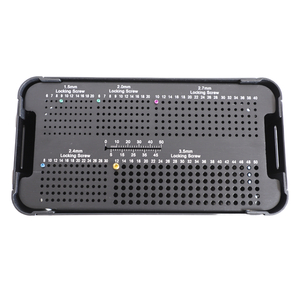
Veterinary Mini Micro Fragment Stainless Steel Trauma Plate System
Ultra-low profile 1.5mm/2.0mm locking instrumentation crafted from medical-grade 316L SS for complex extremity osteotomies.
Contact Us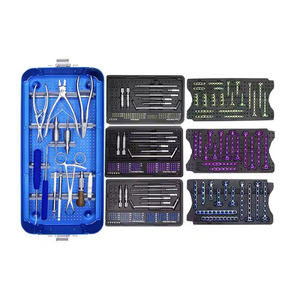
Modular Micro Fixation System (1.5mm / 2.0mm / 2.4mm)
Complete modular container set engineered for precision reduction of distal fibula and metatarsal fractures. Fully CE / ISO 13485 compliant.
Contact Us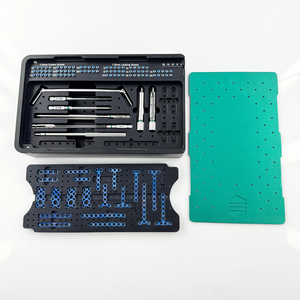
1.5mm Titanium Mini Micro Fragment Locking Plate & Screw Set
Ti-6Al-4V ELI biocompatible anatomical plates designed to minimize soft-tissue irritation during small-bone arthrodesis.
Contact Us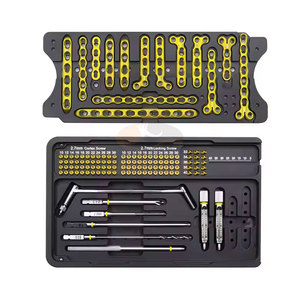
2.7mm Premium Stainless Steel Manual Locking Compression Set
High-torsional stability 2.7mm locking constructs tailored for pylon fractures, calcaneal reconstruction, and talar neck fixations.
Contact Us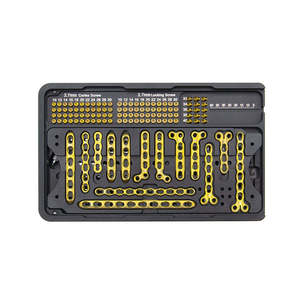
Class II Surgical Mini Fragment 2.7mm Steel Locking Plate Set
Ergonomic manual surgical kit featuring self-tapping cortical and locking screws engineered for maximum pull-out force resistance.
Contact Us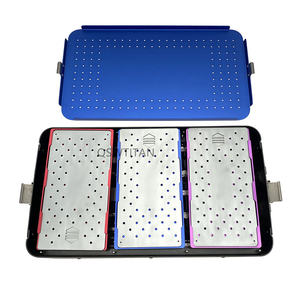
Extremity & Small Bone Locking System for Foot, Hand & Palm
Multi-directional variable angle locking mechanism allowing precise alignment during intricate joint reconstruction and trauma care.
Contact Us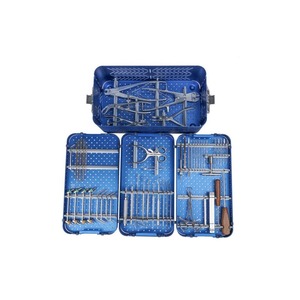
Comprehensive Foot, Ankle & Maxillofacial Surgical Implants Kit
All-in-one sterilizable tray system housing T-plates, L-plates, and straight locking strips with matching precise drill guides.
Contact Us
Multi-Specialty Small Bone Trauma Plate & Instrument System
Corrosion-resistant, high-fatigue strength 316L SS implants optimized for both veterinary and human orthopedic extremity repair.
Contact Us1. Biomechanical Engineering & Metallurgical Foundations of Total Ankle & Extremity Implants
Total Ankle Arthroplasty (TAA) and complex periarticular foot and ankle reconstruction represent some of the most biomechanically demanding challenges in modern orthopedic surgery. Unlike total hip or knee replacements, the tibiotalar joint experiences immense shear forces relative to its small surface area—often up to 5.5 times body weight during heel-strike and stance phases of movement. Consequently, evaluating prospective manufacturers and exporters of total ankle replacement implants and associated small-fragment trauma fixation systems requires a rigorous examination of metallurgical properties, contact surface tribology, and mechanical stress distribution.
Leading international factories utilize advanced medical-grade alloys compliant with rigorous ISO and ASTM standards to prevent premature fatigue failure, aseptic loosening, and stress shielding:
- Titanium-6Aluminum-4Vanadium ELI (ASTM F136 / ISO 5832-3): Favored for tibial components and bone-abutting locking plates due to its exceptional modulus of elasticity close to human cortical bone. The low elastic modulus reduces stress shielding while promoting long-term biological fixation.
- 316L Surgical Stainless Steel (ASTM F138 / ISO 5832-1): Renowned for high tensile yield strength and superior ductility. It remains the gold standard material for temporary micro/mini fragment trauma plates and load-bearing calcaneal internal fixation devices.
- Ultra-High Molecular Weight Polyethylene (UHMWPE) & Cross-linked Polyethylene (XLPE): Utilized for the mobile or fixed bearing inserts in total ankle prostheses. Advanced highly cross-linked formulations infused with Vitamin E demonstrate significantly lower volumetric wear rates (< 15 mm³/million cycles), substantially reducing osteolysis risks.
Modern third- and fourth-generation total ankle implants feature porous plasma-sprayed titanium surfaces paired with hydroxyapatite (HA) coatings. This dual-layer surface treatment accelerates early osteointegration, ensuring primary stability without relying heavily on PMMA bone cement. When sourcing from certified manufacturing exporters, procurement officers must verify that surface roughness ($Ra$) and porosity levels adhere to ASTM F1854 standards for porous coatings.
2. Enterprise Manufacturing Competency & International Regulatory Compliance
As a global leader in orthopedic manufacturing, our production ecosystem is engineered around zero-defect quality control protocols, precise traceability, and scalable supply chain operations. Operating out of state-of-the-art facilities compliant with CDSCO, ISO 13485:2016, and US FDA Quality System Regulations (QSR 21 CFR Part 820), our factories deliver clinical precision across thousands of standardized and custom implant references.
CDSCO & ISO Certified
Full regulatory clearance with over 1,000+ approved medical devices under stringent international bio-safety guidelines.
In-House Sterile Cleanrooms
Class 10,000 (ISO Class 7) cleanroom packaging environments guaranteeing sterility assurance levels (SAL) of $10^{-6}$.
Global OEM/ODM Export
Active supply chains across 30+ countries delivering contract manufacturing, custom packaging, and private label solutions.
Our machining architecture leverages Swiss 9-axis CNC automatic lathes, 5-axis high-speed vertical machining centers, and wire EDM technology. This precision setup allows micro-tolerances of less than ± 5 microns ($\mu m$) on complex thread profiles, variable-angle locking holes, and contoured articulating surfaces. Every batch undergoes rigorous inspection via Coordinate Measuring Machines (CMM), optical profilers, and non-destructive dye-penetrant testing prior to release.
3. Future Global Procurement Trends in Ankle & Extremity Arthroplasty
The global ankle replacement market is undergoing a paradigm shift driven by demographic aging, higher incidence of post-traumatic ankle osteoarthritis, and a consensus migration away from tibiotalar arthrodesis (joint fusion) toward motion-preserving total joint replacement. Hospitals, surgical centers, and medical device distributors must adapt their sourcing strategies to reflect these four key industry trends:
Trend 1: Rise of Patient-Specific Instrumentation (PSI) & 3D Printed Implants
Preoperative CT-based 3D modeling and additive manufacturing (electron beam melting and direct metal laser sintering) are converting total ankle replacement from a complex operation into a predictable, reproducible procedure. Factories capable of manufacturing patient-specific cutting guides and custom porous titanium components are capturing significant market share in North America and Western Europe.
Trend 2: Low-Profile & Variable-Angle Locking Micro-Plating
Surgeons increasingly demand low-profile locking compression plates (1.5mm to 2.7mm systems) for complex distal tibia and calcaneal fractures. Soft tissue coverage around the ankle is minimal; hence, implants with dynamic contouring and polyaxial locking screw capability minimize skin tension and wound dehiscence while ensuring rigid rigid mechanical stability.
Trend 3: Supply Chain Reshoring & Value-Based Sourcing
Global healthcare systems face increasing budget constraints. Procurement heads are actively replacing overpriced Tier-1 brands with high-quality, ISO-certified medical device exporters from established manufacturing hubs in India. Indian factories like Uteshiya Medicare offer identical metallurgical purity and precision tolerances at 30% to 50% lower unit costs, offering superior profit margins for regional distributors.
Trend 4: Stringent MDR & Traceability Mandates
Regulatory frameworks such as EU MDR (2017/745) require complete Unique Device Identification (UDI) laser marking, biological evaluation reports (ISO 10993), and comprehensive post-market surveillance (PMS). Leading exporters maintain fully digitised quality management systems providing instant batch traceability from raw titanium billet to final sterile barrier pouch.
4. Comprehensive B2B Procurement & Technical FAQ
Answers to critical engineering, quality assurance, and commercial inquiries for hospital purchasing committees, OEM brand owners, and global distributors.
Q1: What material certifications are provided with bulk total ankle and small fragment implant orders?
Every shipment is accompanied by complete raw material mill test certificates (MTC) proving compliance with ASTM F136 (Ti-6Al-4V ELI) or ASTM F138 (316L Stainless Steel). Additionally, we provide Certificate of Conformance (CoC), mechanical test validation data, and chemical analysis reports upon request.
Q2: How do your factories validate mechanical fatigue resistance for ankle joint locking plates?
All implant designs undergo static and dynamic fatigue testing in accordance with ASTM F382 (for metallic bone plates) and ASTM F1264 (for intramedullary nails). Dynamic cyclic fatigue tests are performed up to 5 million cycles under maximum load physiological simulation to ensure zero structural failure.
Q3: Can your factory support custom OEM/ODM branding for micro fragment instrument kits?
Yes. We provide complete OEM/ODM white-label services including custom fiber laser logo marking, customized anodization colors for titanium plates/screws, customized graphic sterilization trays, and tailored blister packaging matching your brand specifications.
Q4: What is the Minimum Order Quantity (MOQ) and typical lead time for international exports?
Standard catalog items maintain low MOQs (typically 10 to 50 units per SKU) to facilitate initial distributor market sampling. Standard stock orders ship within 7-14 business days, while custom OEM production runs typically require 30-45 days depending on batch complexity.
Q5: Are your implants delivered non-sterile or pre-sterilized?
We offer both options. Products can be supplied non-sterile in protective cleanroom packaging for hospital autoclave sterilization, or pre-sterilized via validated Gamma Irradiation / Ethylene Oxide (EtO) process in double-peel Tyvek pouches ready for immediate operating room use.
Q6: How do you ensure compatibility between locking screws and plate threads?
Our precision CNC threading tools enforce strict pitch tolerances on both conical locking screw heads and internal plate thread bushings. This prevents cross-threading during surgical insertion and ensures rigid dynamic locking engagement under heavy shear forces.
Partner with a World-Class Orthopedic Implants Exporter
Whether expanding your distribution portfolio or seeking reliable contract manufacturing for foot, ankle, and trauma systems, our engineering team is ready to support your technical and commercial requirements.