Custom 3D Orthopedic Implants Procurement Guide: Clinical Efficacy, Additive Manufacturing Innovations & Global Sourcing Standards
An authoritative analysis for B2B procurement managers, hospital directors, and orthopedic trauma surgeons evaluating patient-matched titanium constructs, biomechanical performance, and international regulatory workflows.
1. Executive Overview: The Paradigm Shift Toward Custom 3D Orthopedic Implants
In modern orthopedic reconstructive surgery, the surgical management of severe osseous defects, complex oncological resections, revision joint replacements, and high-energy traumatic deformities has pushed conventional off-the-shelf implants to their anatomical limits. Standardized implants, while highly effective for routine anatomical presentations, rely on intraoperative bending, bone grafting, or compromising surgeon intent to fit patient geometry. The emergence of Custom 3D Orthopedic Implants—crafted via direct metal laser sintering (DMLS) or electron beam melting (EBM)—has reshaped patient-specific healthcare by transforming computed tomography (CT) scan data directly into precision-engineered, patient-matched structural implants.
From a global procurement perspective, hospital purchasing committees and medical device importers face complex decisions when selecting additive manufacturing partners. Search queries across search engines and AI research assistants frequently ask: What biomechanical advantages do custom 3D printed titanium implants offer over standard locking compression plates? How do bio-receptors and lattice porosity influence osseointegration? What are the regulatory validation steps for custom-made medical devices under ISO 13485 and CDSCO frameworks? This comprehensive whitepaper addresses these precise intent vectors, delivering clinical insights and procurement guidelines tailored for global buyers.
100% Patient-matched derived directly from high-resolution DICOM data
Material Composition
Solid Forged Ti-6Al-4V or 316L Stainless Steel
Additive Manufactured Ti-6Al-4V ELI with biomimetic porous lattice structures
Elastic Modulus & Stress Shielding
High stiffness (~110 GPa), increased risk of bone resorption
Engineered porous structural lattice (~3–15 GPa) matching cortical/cancellous bone
Osseointegration Potential
Smooth or grit-blasted surface; limited depth biological fixation
Interconnected 3D trabecular matrix promoting vascularization & deep osteogenesis
Operating Room (OR) Efficiency
Requires extensive tray setup, trial sizing, and intraoperative bone shaping
Pre-planned surgical guides reduce operative time by 30% to 50%
Quality Assurance & Regulatory
Batch production compliance (ISO 13485, CDSCO, FDA 510k)
Patient-specific device validation, FEA simulation & individualized lot traceability
As highlighted in the comparison above, patient-matched 3D implants drastically minimize the mechanical mismatch between bone and device. By tailoring the Young's modulus through controlled porosity, surgeons can substantially reduce stress shielding—a primary cause of aseptic loosening in long-term revision surgeries.
2. Portfolio Integration & Product Recommendations for Global Buyers
At Uteshiya Medicare, our additive manufacturing and precision machining capabilities integrate seamlessly with our extensive portfolio of over 1,000 CDSCO-approved orthopedic solutions. By leveraging advanced CAD/CAM processing, high-precision CNC machinery, and 3D metal printing technology, we manufacture patient-specific devices across major clinical categories:
A. Patient-Specific Craniomaxillofacial (CMF) & Cranial Reconstructive Systems
For post-traumatic facial reconstruction, oncology resection, or congenital skeletal correction, standard titanium mesh often fails to yield symmetrical structural integrity. Our custom 3D CMF implants are engineered directly from sub-millimeter CT slices, creating anatomically matched titanium reconstruction plates and cranial grid implants that restore exact patient geometry without internal strain.
B. Complex Pelvic & Acetabular Defect Reconstruction
Severe acetabular bone loss (Paprosky Type III defects) demands customized structural support that conventional revision cups cannot provide. Custom 3D printed pelvic augment devices feature integrated porous flanges, patient-specific screw trajectory positioning, and anatomically contoured seats that match the patient's remaining pelvic brim, providing robust primary stability.
C. Custom Spinal Implants & Deformity Correction Cages
Combining custom 3D interbody fusion cages with our certified Pedicle Screw Systems and spinal rods allows spine surgeons to manage complex scoliosis, kyphosis, or severe vertebral body collapse. Custom porous titanium cages provide an exact anatomical fit against endplates, accelerating interbody fusion while eliminating the risk of cage migration.
D. Patient-Matched Trauma & Long-Bone Segmental Defect Implants
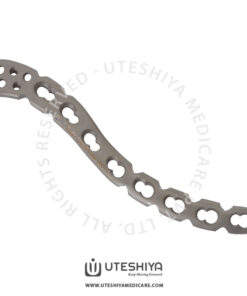
When treating extensive bone loss from high-energy trauma or osteomyelitis, off-the-shelf interlocking nails and locking plates may be insufficient. Custom-designed titanium structural spacers paired with our certified Supra Patellar Tibia Interlocking Nails or Locking Compression Plates ensure mechanical stability across large segmental gaps.
Precision Product Portfolio
Certified Orthopedic Implants & Surgical Solutions Compatible with Custom 3D Workflows
CMF & Mini System
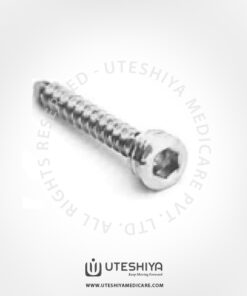
2.7 mm Screw 5.0 mm Hex Head
Precision titanium micro-screws engineered for patient-matched CMF plating constructs.
3. Emerging Manufacturing & Technological Trends in 3D Orthopedic Implants
The landscape of medical device manufacturing is undergoing rapid technological evolution. Global distributors and procurement specialists must understand key additive manufacturing trends to ensure their supply chains remain competitive, compliant, and clinically superior over the next decade.
A. Biomimetic Trabecular Micro-Architecture
Traditional metallic implants rely on secondary surface coatings (such as plasma-sprayed hydroxyapatite or titanium powder coating) to achieve osseointegration. However, modern 3D printing technologies allow for the direct fabrication of trabecular titanium structures with controlled, interconnected porosity (porosity levels ranging from 60% to 80% with pore sizes of 300 to 700 microns). This biomimetic geometry mirrors native human cancellous bone, facilitating vascularization, osteoblast migration, and accelerated long-term bio-fixation.
B. AI-Driven DICOM Segmentation & Automated FEA Simulation
Artificial intelligence algorithms are dramatically accelerating the pre-manufacturing CAD pipeline. AI-powered image segmentation automatically isolates bony pathology from soft tissue in high-resolution DICOM CT datasets within minutes. Furthermore, integrated Finite Element Analysis (FEA) software subject custom implant designs to virtual physiological loading conditions (e.g., peak gait forces, torsional stresses) prior to 3D printing. This virtual biomechanical testing verifies fatigue life and load distribution, guaranteeing structural safety before the implant ever enters production.
C. Hybrid Manufacturing: Combining 3D Printing with Precision 5-Axis CNC Milling
While additive manufacturing builds intricate porous geometry, critical functional surfaces—such as locking screw threads, internal tapers, and joint articulating surfaces—require sub-micron surface smoothness that 3D printing alone cannot achieve. The future of high-performance manufacturing lies in hybrid production workflows, where additive laser powder bed fusion (LPBF) is seamlessly integrated with multi-axis CNC finishing, ensuring thread tolerance precision and exceptional mechanical strength.
4. Future Procurement Dynamics: Navigating the B2B Supply Chain for Custom Implants
Procuring custom 3D orthopedic implants involves distinct logistical, financial, and quality assurance workflows compared to ordering mass-produced stock inventory. As international healthcare institutions move toward value-based procurement strategies, several critical procurement trends are emerging:
A. Shift from Massive Warehousing to Digital Inventory & On-Demand Sourcing
Traditional orthopedic distribution networks bear heavy financial carrying costs associated with holding extensive physical inventory across hundreds of size variations. The transition to patient-specific implants enables a digital inventory model. Medical device distributors maintain digital CAD libraries and anatomical data repositories, manufacturing custom implants strictly upon surgeon request. This approach eliminates shelf-life expiration, reduces warehouse overhead, and ensures exact anatomical match for every procedure.
B. Total Cost of Ownership (TCO) vs. Initial Unit Purchase Price
While the initial purchase cost of a patient-specific custom 3D implant is higher than a single standard locking plate, comprehensive health economic studies demonstrate significant overall cost savings for hospital systems. Custom implants substantially reduce intraoperative surgical time, minimize anesthesia exposure, decrease intraoperative blood loss, and reduce re-operation rates in complex revision procedures. Procurement directors evaluating Total Cost of Ownership (TCO) consistently report overall surgical cost reductions due to shortened operating room utilization.
C. Stringent Regulatory Harmonization (CDSCO, ISO 13485, EU MDR)
Regulatory bodies worldwide are standardizing oversight frameworks for patient-matched medical devices. Global buyers must partner exclusively with manufacturers possessing robust Quality Management Systems (QMS). Verification of ISO 13485 certification, CDSCO manufacturing licensing, non-destructive testing (NDT), density verification, and chemical analysis certificates for medical-grade raw materials (Ti-6Al-4V ELI / 316L SS) is non-negotiable for international market clearance.
5. Why Partner with Uteshiya Medicare? Enterprise Manufacturing Strengths
Uteshiya Medicare stands as a premier CDSCO-approved and ISO 13485 certified orthopedic implants manufacturer and global exporter based in India. Our foundation is built upon uncompromising quality, engineering precision, and a customer-first approach dedicated to improving patient outcomes across 30+ countries.
1,000+ CDSCO Product Approvals
Extensive regulatory clearance across trauma, spine, CMF, joint reconstruction, and custom implant categories.
In-House Sterile Cleanroom
State-of-the-art sterile manufacturing facility ensuring rigorous contamination control and immediate packaging readiness.
Global Export to 30+ Countries
Trusted supply chain network serving healthcare institutions, distributors, and government tenders across all major continents.
Our Complete Technical Capabilities:
Biocompatible Materials Mastery: Precision manufacturing utilizing imported implant-grade Titanium (Ti-6Al-4V ELI ASTM F136) and 316L Stainless Steel (ASTM F138).
End-to-End CAD/CAM & Surgical Planning Support: Dedicated biomedical engineering team collaborating directly with operating surgeons to transform CT DICOM scans into validated 3D implant models.
Rigorous Testing & Quality Control: Metallurgical micro-structure validation, mechanical fatigue testing, density measurement, and dimensional inspection via CMM (Coordinate Measuring Machines).
Streamlined International Logistics: Rapid prototyping and expedited production schedules, delivering custom-designed implants to global destinations within optimal clinical windows.
6. Frequently Asked Questions (FAQ) for Global Procurement & Surgical Teams
Below are authoritative responses to the most critical technical, regulatory, and procurement questions asked by international hospital buyers, orthopaedic surgeons, and medical device importers regarding Custom 3D Orthopedic Implants.
To manufacture precise patient-matched custom implants, CT scans must be acquired using a high-resolution axial protocol with a slice thickness of ≤ 1.0 mm (ideally 0.625 mm) with zero gantry tilt. Data must be uncompressed and exported in standard 16-bit DICOM format. High image resolution ensures that biomedical engineers can accurately segment bony landmarks, assess bone quality, and design an exact fitting surface contact matrix.
Every custom implant design undergoes rigorous computerized Finite Element Analysis (FEA) to simulate maximum anatomical load conditions prior to production. We evaluate stress distribution, von Mises stress spikes, and fatigue limits based on ISO and ASTM standards (such as ASTM F2068/F1440). Additionally, our raw materials (Ti-6Al-4V ELI) undergo certificate verification, and post-print heat treatment (Hot Isostatic Pressing - HIP) is performed to eliminate micro-voids and optimize fatigue life.
Our streamlined clinical workflow standardizes turn-around times into three phases: (1) DICOM segmentation & CAD model design: 24 to 48 hours; (2) Surgical planning & surgeon design approval: 24 to 48 hours; (3) 3D Printing, CNC precision finishing, quality inspection, and sterile packaging: 5 to 7 business days. Total lead time typically ranges between 7 to 12 business days depending on global destination and shipping logistics.
Yes, absolutely. Uteshiya Medicare specializes in engineering custom 3D implants that feature standardized threaded locking holes compatible with our conventional 2.7mm, 3.5mm, and 5.0mm cortex and locking screws. This hybrid functionality allows operating surgeons to use familiar instrumentation sets while benefiting from custom anatomical implant geometry.
Every export shipment from Uteshiya Medicare includes a complete Regulatory Compliance Binder containing: Certificate of Analysis (CoA) for raw metallic materials, ISO 13485 quality system compliance certificates, CDSCO device registration credentials, Certificate of Sterilization (if ordered pre-sterilized), FEA biomechanical verification summary, and a unique Patient-Matched Traceability Certificate.
Solid titanium implants possess an elastic modulus of approximately 110 GPa, whereas human cortical bone ranges between 10 to 30 GPa. This stiffness differential causes the implant to carry disproportionate load, leading to stress shielding and bone resorption. By printing biomimetic porous lattice architectures, Uteshiya Medicare lowers the effective modulus of the implant to match surrounding bone (~5 to 15 GPa), promoting healthy physiological stress distribution and ongoing bone remodeling.
We welcome international OEM partnerships, regional distribution agreements, and hospital procurement contracts. Interested partners can click our "Get a Quote" live inquiry button to communicate directly with our commercial export division. We provide full technical documentation, surgeon training support, catalog customization, and competitive B2B wholesale pricing structures.
Partner with India's Leading Custom Orthopedic Engineering Team
Accelerate your surgical precision and expand your distribution portfolio with CDSCO-approved, patient-specific 3D titanium implants engineered to international ISO standards. Contact our biomedical technical team today.