Executive Summary: Cannulated Compression Screw Ecosystem in Japan
The Japanese orthopedic trauma and reconstructive surgery market represents one of the most technologically demanding and quality-sensitive healthcare environments globally. Driven by Japan’s demographic reality—where over 29.1% of the population is aged 65 or older—the clinical demand for advanced trauma fixation systems has reached an all-time high. In particular, the Cannulated Compression Screw System has emerged as an indispensable surgical modality for treating femoral neck fractures, scaphoid nonunions, osteoporotic fragility fractures, and complex intra-articular disruptions.
Japanese orthopedic surgeons heavily favor Minimally Invasive Surgery (MIS) techniques to minimize soft tissue trauma, reduce intraoperative blood loss, and shorten post-operative rehabilitation periods. Cannulated compression screws—featuring hollow central shafts that allow precise placement over guide wires (K-wires) under fluoroscopic control—are central to these protocols. However, supplying the Japanese medical market requires strict adherence to international metallurgical standards, precise dimensional tolerances, and compliance with the Pharmaceuticals and Medical Devices Act (PMDA) under the Ministry of Health, Labour and Welfare (MHLW).
Information Gain Insight: Japanese medical device distributors and hospital procurement boards are actively diversifying their supply chains away from hyper-inflated traditional Western brands. By establishing direct OEM/ODM partnerships with certified global manufacturers capable of producing high-precision 316L Stainless Steel and Ti-6Al-4V ELI titanium cannulated screws, Japanese importers achieve cost reduction of 35% to 50% without compromising mechanical integrity or surface biocompatibility.
29.1%
Japan Population Aged >65
1000+
CDSCO Approved SKUs
±0.005mm
Swiss CNC Thread Precision
30+
Global Export Markets
Biomechanical Engineering & Design Architecture of Cannulated Screws
Modern cannulated compression screw systems rely on sophisticated thread physics to convert rotational torque into controlled axial compression across fracture planes. Unlike traditional solid cortex screws, cannulated screws feature a central longitudinal lumen ranging from 1.1mm to 2.8mm, allowing surgical insertion over pre-positioned Kirschner wires (K-wires).
Differential Thread Lead Pitch
Headless cannulated compression screws utilize variable thread pitches between the distal leading threads and proximal trailing threads. As the screw advances, the differential pitch pulls bone fragments together, generating high interfragmentary compression without requiring an enlarged countersunk screw head.
Concentric Lumen Honing
Achieving true axial alignment during high-speed gun drilling prevents K-wire binding or bending during intraoperative insertion. Advanced Swiss 9-axis CNC lathes maintain inner cannulated wall concentricity within ±0.008mm across lengths up to 120mm.
Self-Drilling Cutting Flutes
Reverse-cutting flutes integrated into both distal tip and proximal end facilitate easy insertion and removal. The sharp cutting geometries minimize thermal necrosis during high-RPM drilling in dense cortical bone typical of Asian patient anatomical profiles.
Metallurgical Selection: Titanium Alloy vs. Stainless Steel
Selecting the optimal raw material is a vital consideration for Japanese hospital procurement officers. Factory production must strictly adhere to international implantable grade standards:
| Parameter |
Ti-6Al-4V ELI (ISO 5832-3 / ASTM F136) |
316L Implant Stainless Steel (ISO 5832-1) |
| Biocompatibility |
Superior; forms stable passive TiO2 layer; MRI compatible |
High; excellent clinical history; slight magnetic susceptibility |
| Modulus of Elasticity |
110 GPa (Closer to cortical bone, reduces stress shielding) |
210 GPa (Higher rigidity for maximum static bending loads) |
| Tensile Strength |
≥ 860 MPa |
≥ 690 MPa |
| Japanese Market Preference |
Dominates osteosynthesis, spinal & permanent bone fixation |
Preferred in trauma centers for temporary fixation & cost sensitivity |
| Surface Finishing |
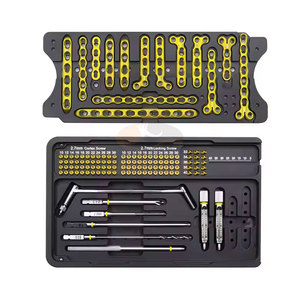
Type II Anodization (Color-coded by diameter: Gold, Blue, Green) |
Electropolished mirror finish (Ra < 0.2 μm) |
Localized Application Scenarios in Japan’s Clinical Ecosystem
To succeed in the Japanese medical marketplace, cannulated screw system designs must directly address the specific clinical workflows of Japanese orthopedic surgeons across various medical sectors.
3. Forefoot Hallux Valgus & Deformity Correction
Japanese lifestyle preferences—such as traditional tatami seating and narrow footwear—lead to a high prevalence of foot and ankle pathologies. Partially threaded 3.5mm and 4.0mm cannulated screws are widely utilized in Scarf and Akin osteotomies for hallux valgus correction. Self-drilling tips allow rapid bone engagement without requiring separate pre-drilling steps.
4. Veterinary Trauma & Orthopedics in Japan
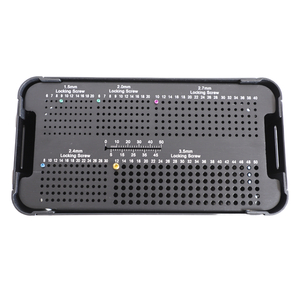
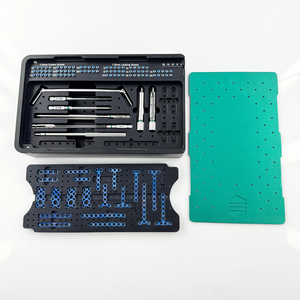
Japan boasts a flourishing veterinary healthcare sector where pet owners demand human-grade surgical treatment for companion animals. Veterinary orthopedic clinics across Tokyo utilize 1.5mm, 2.0mm, and 2.7mm mini fragment cannulated screws and locking plates for small breed canine bone fracture repair and arthrodesis procedures.
Japan Market Trends & Regulatory Procurement Architecture
The regulatory and commercial landscape for importing orthopedic medical devices into Japan is regulated by the Pharmaceuticals and Medical Devices Agency (PMDA). Foreign medical device manufacturers seeking to supply Japanese distributors must align with rigorous quality management standards.
PMDA Approval & Shonin Pathway
Class II and Class III medical implants require comprehensive Technical Documentation (STED), bio-compatibility reports according to ISO 10993, mechanical fatigue test data (ASTM F543 for bone screws), and proof of ISO 13485 quality system certification.
Cleanroom & Sterile Packaging
Japanese hospitals are rapidly shifting toward pre-sterilized, single-pack packaging solutions (Gamma or EtO sterilized in ISO Class 7 cleanrooms) to reduce hospital central sterile supply department (CSSD) workloads and minimize nosocomial infection risks.
Shift to Direct OEM Sourcing
Rising national healthcare spending has prompted Japanese medical supply companies to bypass expensive tier-1 Western brand intermediaries, sourcing directly from high-volume, CDSCO & ISO-certified orthopedic manufacturing plants.
Factory Manufacturing Excellence & Enterprise Strengths
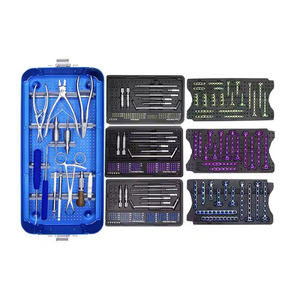
As a global leader in orthopedic implant manufacturing, our state-of-the-art facility integrates advanced metallurgy, automated CNC machining, and rigorous quality inspection protocols to supply high-precision implants to over 30 countries.
Technical Specifications Matrix: Cannulated Screw Portfolio
The table below highlights standard engineering specifications available for custom OEM production and direct export to the Japanese market:
| System Type |
Screw Diameters (mm) |
Available Lengths (mm) |
K-Wire Guide Size |
Material Option |
Clinical Applications |
| Micro Cannulated Screw |
2.0mm / 2.4mm / 2.7mm |
8mm - 30mm (2mm increments) |
0.8mm / 1.0mm K-Wire |
Ti-6Al-4V ELI / 316L SS |
Scaphoid, Phalanges, Metatarsals, Wrist Arthrodial Fixation |
| Mini Cannulated Compression |
3.0mm / 3.5mm / 4.0mm |
12mm - 50mm (2mm increments) |
1.2mm / 1.4mm K-Wire |
Ti-6Al-4V ELI / 316L SS |
Radial Head, Medial Malleolus, Osteotomies, Calcaneal Fractures |
| Large Cannulated Screw |
6.5mm / 7.0mm / 7.3mm |
30mm - 120mm (5mm increments) |
2.0mm / 2.8mm K-Wire |
Ti-6Al-4V ELI / 316L SS |
Femoral Neck, Slipped Capital Femoral Epiphysis (SCFE), Sacroiliac Joint |
| Headless Compression (HCS) |
2.5mm / 3.0mm / 4.5mm |
10mm - 45mm |
0.9mm / 1.2mm K-Wire |
Ti-6Al-4V ELI Anodized |
Intra-articular fractures where countersunk profile is required |